ABS / CLO Model
Capital Markets Financial Model (Free Excel Download)
Structure ABS and CLO cash flows through collateral balances, defaults, recoveries, reinvestment, tranche waterfalls, credit enhancement, and investor yield outcomes.



professionals from Deloitte
Used by professionals from






About this model
An ABS/CLO cash flow model projects the financial performance of asset-backed securities or collateralized loan obligations by simulating a diversified loan pool through prepayment, default, and recovery scenarios. The model answers whether a CLO structure can generate target returns for equity investors (typically 12% cash-on-cash) while protecting each rated tranche through interest and principal waterfalls, overcollateralisation (OC) tests, and interest coverage (IC) mechanics that trigger automatic amortisation when leverage ratios breach trigger levels. The pool performance is driven by weighted average coupon (WAC), conditional prepayment rate (CPR), conditional default rate (CDR), and recovery rates, all of which vary by credit cycle and economic assumptions.
The workbook contains a detailed collateral pool roll-forward tracking performing balances, scheduled amortisation, prepayments, defaults, and reinvested principal during the reinvestment period, plus a combined interest and principal waterfall that prioritises senior fee recovery and sequential tranche payments according to the deal's capital structure. Overcollateralisation and interest coverage tests divert excess cash to senior tranche pay-down (turbo amortisation) whenever credit metrics weaken, automatically protecting rated investors. Equity returns are tracked separately from tranche payments, with incentive fee mechanics that align the CLO manager's upside with equity holder returns above a specified hurdle.
Structured credit investors, rating agencies, and commercial lenders rely on CLO models to stress test collateral performance, confirm that DSCR and subordination levels will weather recession scenarios, and project equity distribution waterfalls across the reinvestment and amortisation periods.
What every model includes
Live formulas, no hardcoded values
Outputs are driven by live formulas, so the workbook updates from its assumptions instead of relying on hardcoded results.
All assumptions in one tab
Inputs are clearly marked in the Assumptions tab and separated from calculations, making it clear what to change and what to leave intact.
Statements always balancing
For integrated-statement models, the balance sheet, cash flow, and supporting schedules tie through properly.
Distinct schedules for clarity
Debt, working capital, taxes, and cash flow can get messy quickly. We group calculations in clear schedules, not across disconnected tabs.
No hidden macros or external links
There are no unexplained external workbook links or macros to undermine auditability or portability.
Changes flow through the model
Update a key driver and see the impact carry through the forecast, financing, and return outputs. We never use hardcoded numbers in formulas.
What's inside the ABS / CLO Model
- Loan pool detail with coupon, maturity, and amortisation schedule
- Prepayment and default assumptions using CPR and CDR curves
- Combined interest and principal waterfall with priority rules
- OC and IC test mechanics with turbo amortisation triggers
- Tranche-level IRR, MOIC, and equity distribution waterfall
- Waterfall mechanics with priority rules and tranche definitions
- Interest and principal distributions across tranches
- Expected loss and recovery timing scenarios
ABS/CLO Cash Flow Waterfall Model: Key Mechanics and Outputs
This ABS/CLO model specification explains how one annual cash flow engine builds collateral performance, waterfall allocations and tranche-level returns for a deal. It sets out the drivers of interest and principal, the seniority rules that redirect cash when coverage ratios breach, and the equity and incentive mechanics, so readers can judge how closely the structure mirrors real managed deals.
The Operating Drivers Behind Collateral Cash Flow
This ABS/CLO model is built around a collateral pool of leveraged loans that generates cash in three ways: interest on the performing balance at a weighted average coupon, principal from scheduled amortisation and prepayments, and recoveries on defaulted loans that arrive with a lag.
- The pool roll-forward applies annual prepayment and default rates to an opening balance, adds reinvestment while the deal is still in its reinvestment period, and produces a closing performing balance that drives the next period. Defaulted loans stop accruing interest, so weak credit immediately suppresses income rather than only affecting principal.
- Reinvestment, default, prepayment, recovery and coupon assumptions are all named inputs, which makes stress testing specific credit and prepayment views straightforward.
How the Cash Flow Waterfall Allocates Proceeds
Once period cash is available, the waterfall applies fees first, then steps through tranches in rating order, running overcollateralisation and interest coverage tests at successive levels. Each test compares available collateral or interest against the tranches it protects, and a breach diverts everything remaining in the waterfall into turbo amortisation of the most senior outstanding tranche.
- That cure continues until the breached test passes again, which means junior noteholders lose interest and equity receives nothing during a cure. Principal follows a separate rule: reinvested while the deal is inside its reinvestment period, then paid sequentially from the top of the capital structure down.
- Because the whole pass is computed in one sequential sheet, waterfall payments and tranche balances stay internally consistent.
What the Model Tracks Across Tranches and Equity
Every rated tranche is tracked with an opening balance, interest paid, principal paid, closing balance and weighted average life, allowing a reviewer to see how each layer of the capital structure behaves as collateral seasons.
- Equity is treated differently: its notional remains constant, distributions accumulate separately, and cash-on-cash and internal rate of return are derived from the distribution stream.
- The manager's incentive fee is calculated on equity distributions above a cumulative hurdle that grows with the equity notional each year, so the fee only appears once a defined excess is generated rather than reducing equity from the first period.
- Together these outputs describe protective and return dynamics rather than individual deal results.
Practical Use and Documented Model Integrity Checks
The model is organised with an assumptions area, a collateral cash flow sheet, a combined waterfall sheet, a returns summary and a checks sheet covering ten integrity tests.
- A single waterfall pass avoids the circularity between payments and balances, and the checks confirm that cash is conserved, balances tie out, tranche balances never turn negative and no tranche is overpaid.
- The assumption layout is positioned to support sensitivity work on default rate, prepayment rate, recovery, coupon compression and reinvestment period length, though these are not shipped as scenario toggles.
- A practical reading is to focus on how defaults, coverage breaches and reinvestment decisions interact, since those relationships drive tranche outcomes more than any single input.
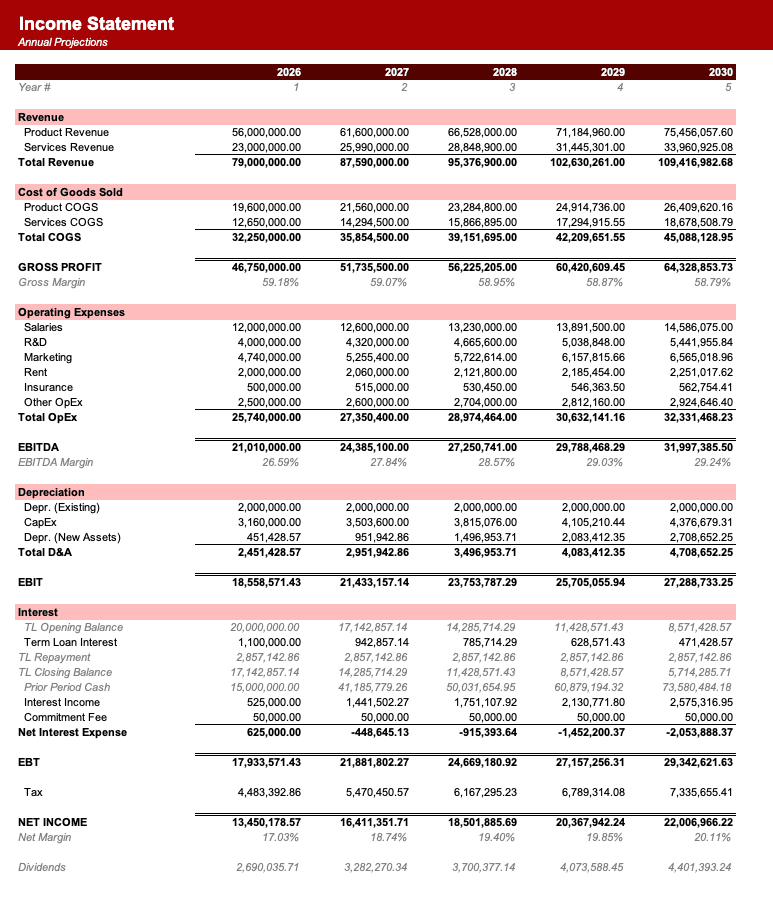
Formatted to IB standards
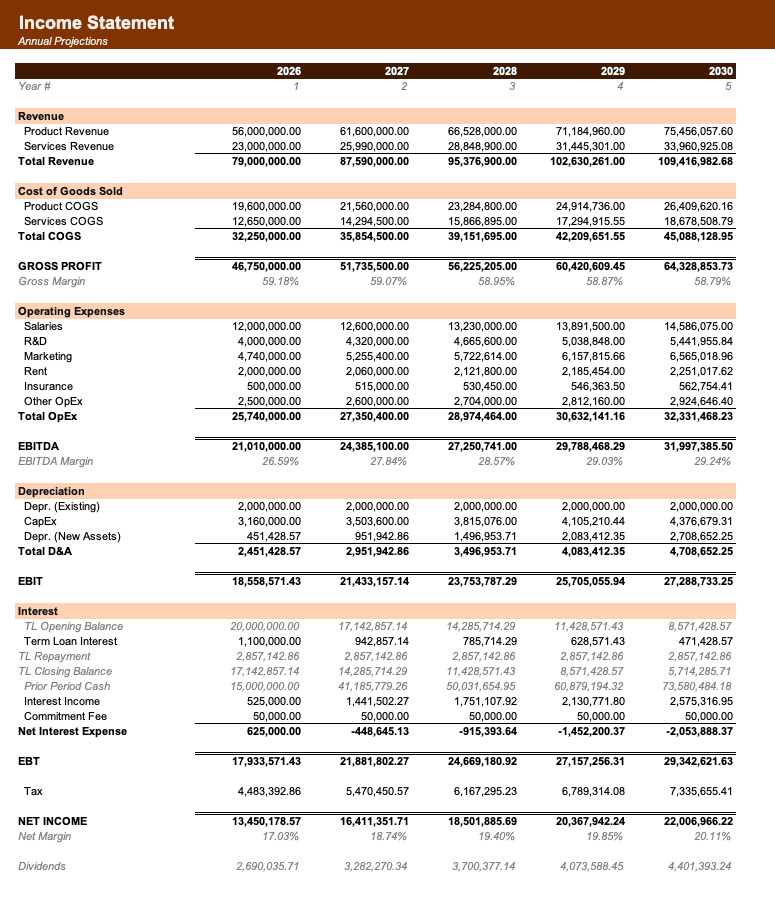
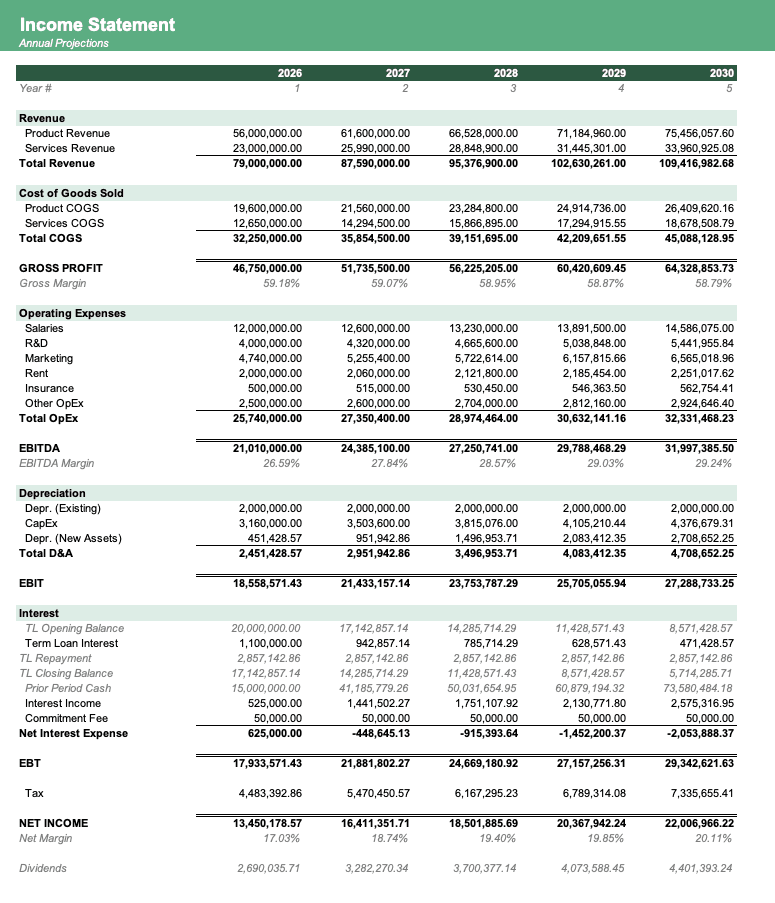
Named theme colors repaint the whole workbook in one click, on top of an investment-banking structure with clear input, output, and cross-sheet reference styling - brand-ready, institutional-grade, and fully auditable.

Created by ex-finance professionals
Hey, I’m Alex and I created Finamodel.
Over my years in the finance industry I kept building the same models over and over again. Same structure, same assumptions, different logo. So I started building frameworks to turn them into clean, reusable templates.
Every model here is one I’d actually use for a client, and I personally vet each one before it goes up.
I’m not an expert in every industry, but I’ve built enough models to know what belongs in one. And when something is completely foreign to me, I reach out to my network for experts to work on our models with us.
Having a template library on hand cuts a first build from hours to minutes.
Need help finding your model? You’ll find me in the Finamodel app!
Frequently asked
What is an ABS/CLO cash flow model?+
It is a model that projects pool cash flows through a deal waterfall, allocating interest and principal to each tranche under prepay, default, and recovery assumptions.
What are CPR and CDR?+
CPR (Conditional Prepayment Rate) and CDR (Conditional Default Rate) are the annualised percentages of the remaining loan balance that prepay or default each period.
How does the waterfall prioritise payments?+
Senior interest is paid first, then senior principal, then mezzanine interest and principal, then reserves, then equity - with any shortfall cascading down priority.
What are OC and IC tests?+
Overcollateralisation and interest coverage tests divert excess cash to senior tranche pay-down when leverage or coverage ratios breach trigger levels, protecting rated investors.
Can I model multiple tranches?+
Yes. The model supports senior, mezzanine, and equity tranches with real deal subordination, coupon spreads, and reserve account rules.
Have more financial modelling questions? Contact us
Related templates
Loan Portfolio CDR Model
Credit default risk model for loan portfolios with cumulative default rates and loss severity analysis.
Mortgage Portfolio Model
Mortgage loan portfolio analysis with prepayment speeds, default rates, and cash flow projections.
Credit Portfolio CDO Model
Model credit default swap portfolio, tranching, and waterfall for CDO securitization.
DCF Model
Discounted cash flow valuation model with explicit forecast, terminal value, and WACC.