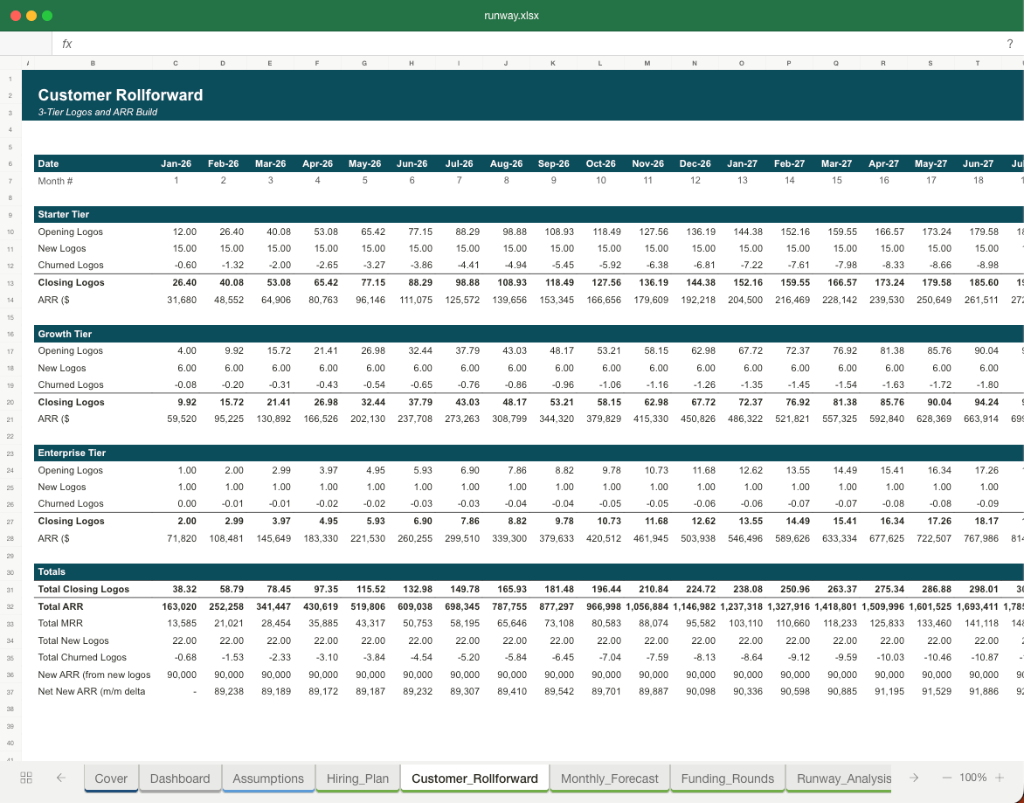
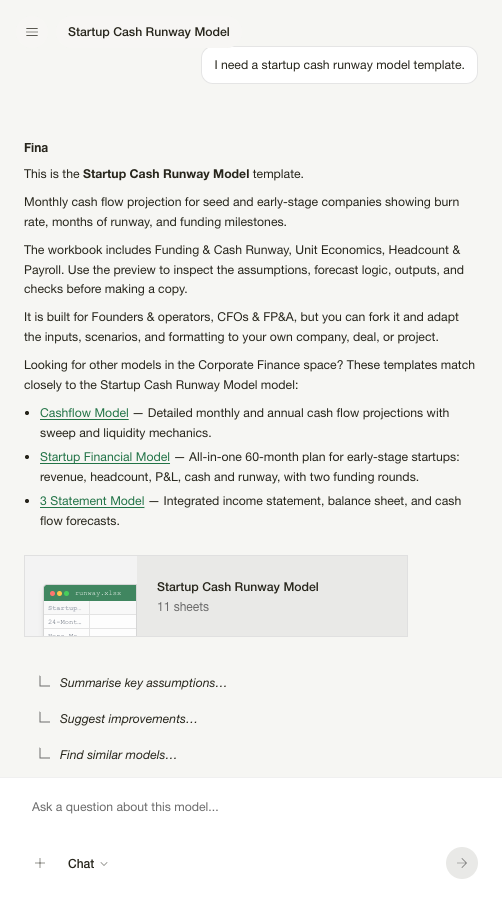
Carbon Credit Model
Energy Financial Model (Free Excel Download)
Forecast carbon-credit issuance, verification, pricing, project costs, delivery timing, and financing to evaluate emissions-reduction project economics.



professionals from Deloitte
Used by professionals from






About this model
This carbon credit model answers whether a project developer should invest in or acquire emission reduction or removal credit operations. It projects voluntary carbon market revenue across spot sales, forward offtake contracts, and trading margins, accounting for buffer pool deductions, verification fees, and community revenue share. The model projects gross tonnes, net tradable tonnes, registry deductions, and haircuts across a crediting period of up to 20 years, with typical spot prices ranging from $15 to $35 per tonne.
The model includes a full three-statement build: a revenue schedule separating spot allocations and forward contracts by year with timing lags for credit issuance; a COGS section tracking VVB audit fees, registry fees, and community share obligations; and working capital schedules for credit inventory (measured in tonnes), receivables, and deferred revenue unwinding. A capex schedule models the project development cost per hectare and MRV equipment, with amortisation over the crediting period. The balance sheet tracks capitalised project costs, carbon credit inventory, and project finance debt with DSCR covenants.
This model is used by venture capital and climate impact funds evaluating early-stage or scale-stage carbon credit developers, lenders sizing project finance facilities, and strategic acquirers assessing platform margin expansion. The structure handles the unique timing mismatch in carbon markets - credits issued years after project start - making it ideal for market entrants without mature cash flow predictability.
What every model includes
Live formulas, no hardcoded values
Outputs are driven by live formulas, so the workbook updates from its assumptions instead of relying on hardcoded results.
All assumptions in one tab
Inputs are clearly marked in the Assumptions tab and separated from calculations, making it clear what to change and what to leave intact.
Statements always balancing
For integrated-statement models, the balance sheet, cash flow, and supporting schedules tie through properly.
Distinct schedules for clarity
Debt, working capital, taxes, and cash flow can get messy quickly. We group calculations in clear schedules, not across disconnected tabs.
No hidden macros or external links
There are no unexplained external workbook links or macros to undermine auditability or portability.
Changes flow through the model
Update a key driver and see the impact carry through the forecast, financing, and return outputs. We never use hardcoded numbers in formulas.
What's inside the Carbon Credit Model
- Carbon credit inventory by vintage and type
- Issuance and retirement schedule with tracking
- Trading market price assumptions and P&L impact
- Regulatory compliance and offset eligibility matrix
- Blended cost per credit and cumulative spend tracking
- Customisable assumptions for your own case
Carbon Credit Model: How the Template Evaluates Project Economics
This carbon credit model template provides a structured framework for evaluating investments in carbon credit project developers and trading platforms. It captures the unique operating drivers, revenue streams, cost structures, and cash flow characteristics of voluntary carbon market businesses, enabling users to assess financial viability and key risks.
Core Operating Drivers: Pipeline, Yields, and Issuance
The model begins with project-level assumptions that determine credit generation. Gross tonnes are calculated from project hectares and carbon yield per hectare, then reduced by a buffer pool deduction to arrive at net tradable tonnes.
- A time-to-first-issuance lag of two to three years reflects the delay between project start and credit verification. The project pipeline sheet builds these volumes annually, incorporating hectare growth and crediting period limits.
- These drivers directly feed revenue, inventory, and cost calculations, making them critical for accurate forecasts.
Revenue Calculation Flow: Spot, Forward, and Trading
Revenue is consolidated from three streams: proprietary spot sales, forward offtake agreements, and trading margin. Spot revenue depends on net tonnes sold on spot, while forward revenue uses contracted tonnes at a discounted price.
- Trading revenue is based on third-party volume and margin. The model allocates net tonnes between spot and forward sales, applies respective prices, and recognizes forward payments as deferred revenue until delivery.
- This structure captures the hybrid nature of carbon credit businesses, blending project development with trading activities.
Cost Structure and Margin Dynamics
Costs are split into variable COGS and operating expenses. COGS includes verification audit fees, registry issuance fees, community revenue share, and third-party credit purchases.
- Operating expenses cover MRV, headcount, legal, marketing, technology, and insurance. The model calculates gross margin by revenue stream, highlighting the high margins of proprietary credits versus low margins in trading.
- Operating expenses are largely fixed or semi-variable, leading to negative EBITDA in early years as projects scale. Margin profiles stabilise as the portfolio matures and economies of scale are realised.
Practical Use: Valuation, Returns, and Risk Checks
The template integrates a full three-statement model with supporting schedules for working capital, debt, and capex. It produces outputs such as DCF valuation, project IRR, MOIC, and unit economics per tonne.
- Built-in validation checks ensure balance sheet integrity, tonne reconciliation, deferred revenue floor, and DSCR compliance. Users can assess cash flow characteristics, including working capital cycles and cash conversion.
- The model is designed to evaluate investment decisions, financing structures, and operational trade-offs within the voluntary carbon market context.
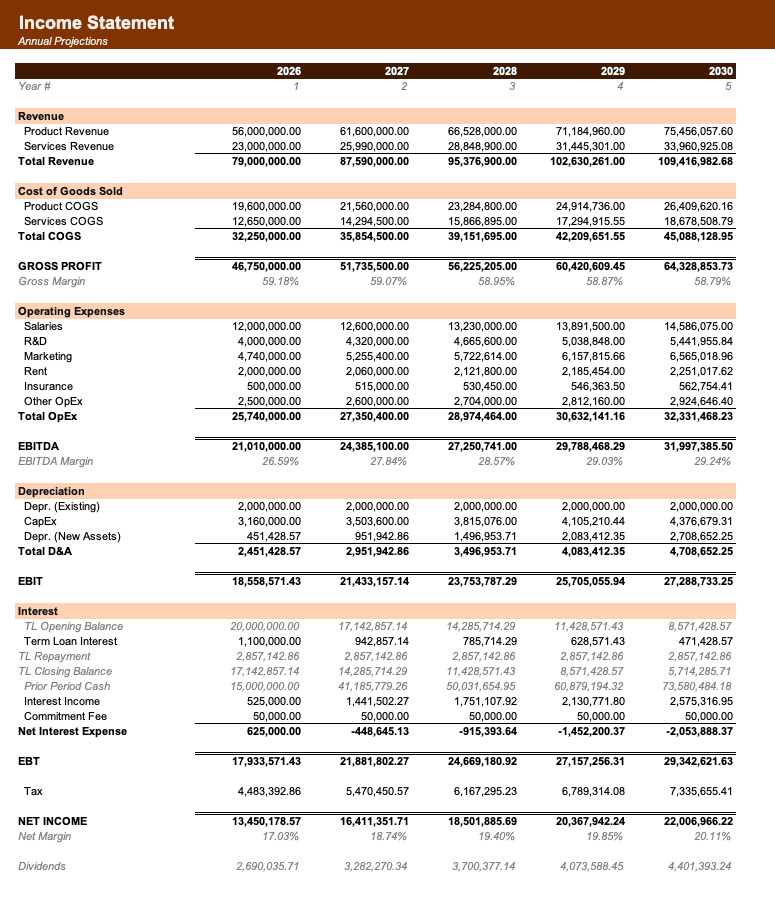
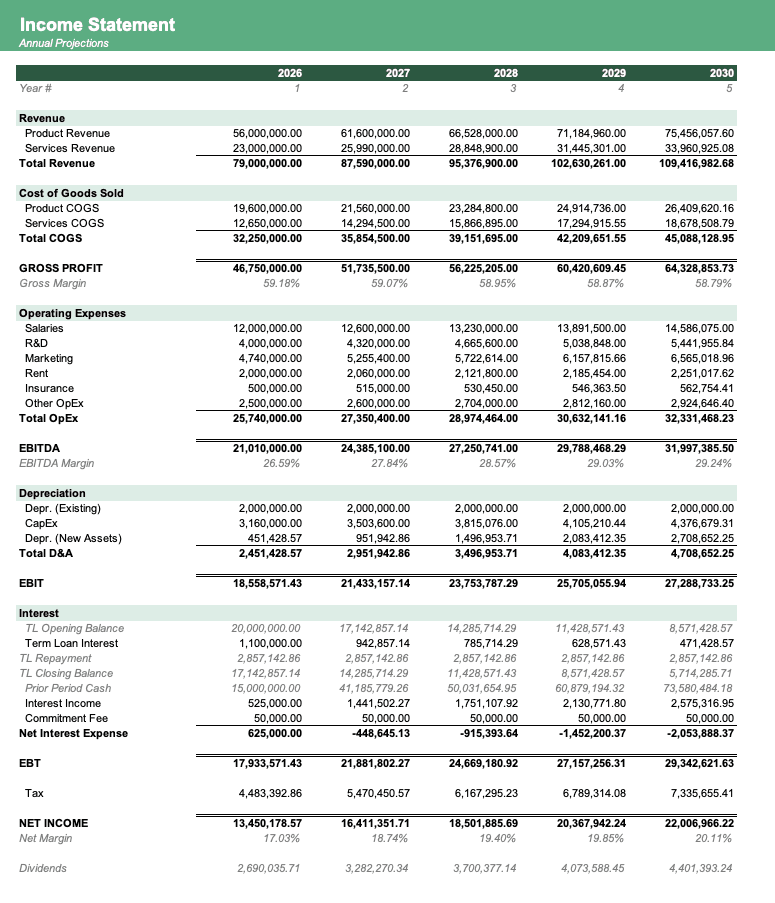
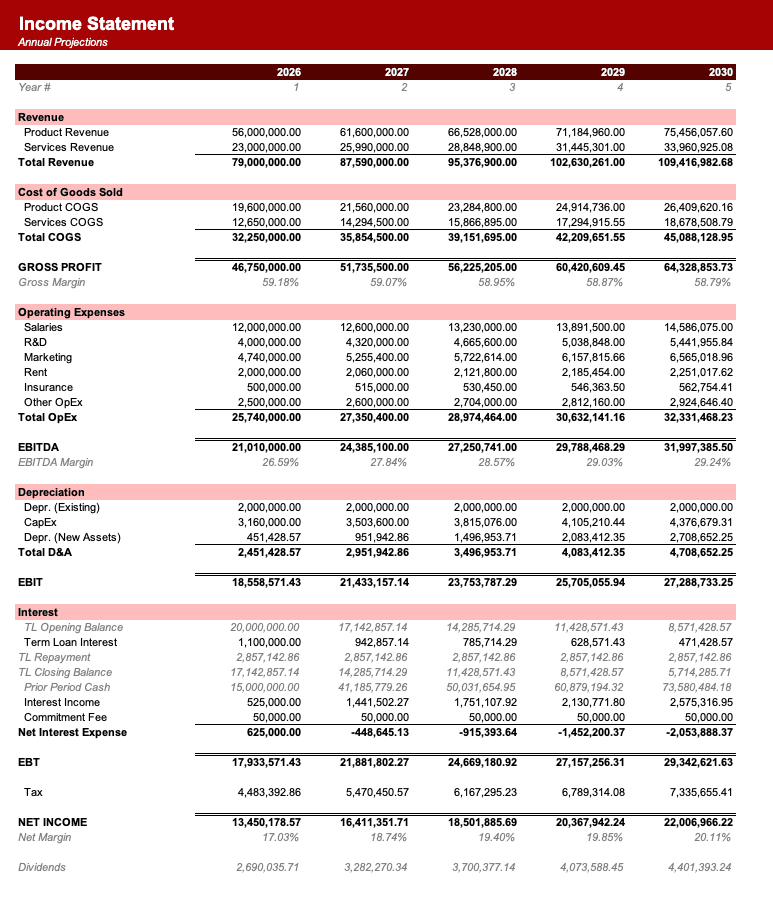
Formatted to IB standards
Named theme colors repaint the whole workbook in one click, on top of an investment-banking structure with clear input, output, and cross-sheet reference styling - brand-ready, institutional-grade, and fully auditable.

Created by ex-finance professionals
Hey, I’m Alex and I created Finamodel.
Over my years in the finance industry I kept building the same models over and over again. Same structure, same assumptions, different logo. So I started building frameworks to turn them into clean, reusable templates.
Every model here is one I’d actually use for a client, and I personally vet each one before it goes up.
I’m not an expert in every industry, but I’ve built enough models to know what belongs in one. And when something is completely foreign to me, I reach out to my network for experts to work on our models with us.
Having a template library on hand cuts a first build from hours to minutes.
Need help finding your model? You’ll find me in the Finamodel app!
Frequently asked
What is a carbon credit model?+
It is a model that tracks carbon credit procurement, retirement, and P&L across compliance and voluntary offset programmes.
What credit types are supported?+
Compliance credits (EU ETS, RGGI), voluntary offsets (VCS, Gold Standard), and emerging programmes. The eligibility matrix is customisable.
How do I model price volatility?+
Use historical curves and scenario tables to stress procurement costs across bull, base, and bear price paths.
Can I track regulatory changes?+
Yes. The eligibility matrix updates quickly and credits are tagged by programme so compliance can be recalculated instantly.
Is this useful for ESG reporting?+
Yes. It produces the audit trail and net offset position required for ESG disclosures and regulatory submissions.
Have more financial modelling questions? Contact us
Related templates
Renewable Energy Project Economics Model
Solar, wind, or hydro project generation, power purchase agreements, operating costs, and project IRR.
Electric Utility Tariff Model
Model utility revenue based on customer class, usage levels, and tariff rate schedules.
Commodity Hedging Model
Structure and monitor hedges for commodity price exposure with effectiveness metrics.
Oil & Gas Upstream Model
Integrated production, cost, and project economics for upstream oil and gas assets.