Ride-Hailing P&L Model
Consumer Financial Model (Free Excel Download)
Model trips, driver supply, utilisation, fares, take rate, incentives, insurance, and city-level contribution margin for a ride-hailing platform.



professionals from Deloitte
Used by professionals from






About this model
This model determines fleet operator viability by forecasting vehicle unit economics, fleet utilisation, and asset financing across 50-1,000 vehicle fleets generating £2M-£50M annual bookings. It projects gross revenue from rides, corporate accounts, and advertising; calculates driver payouts (45-55% of bookings), platform commissions, and fuel costs; and models vehicle depreciation, maintenance (£1,500-£4,000 per vehicle annually), and asset-backed debt at 3-4.5x EBITDA leverage. Output: 5-year cash flow, DSCR covenant compliance (1.2x minimum), vehicle payback (36-48 months), and capital requirements for fleet expansion.
The model distinguishes B2C passenger fares from B2B corporate accounts, each with different payment terms (7 days vs 30-45 days). Vehicle downtime, platform commission applied to gross bookings (not net), and EV charging costs replace ICE fuel logic. Fleet roll-forward tracks vehicle acquisitions, retirements, and salvage value to avoid depreciation errors. EBITDA margins range 10-18% given tight cost control in asset-heavy operations.
Ideal for transport operators, fleet investors, and acquirers evaluating small-to-mid-market ride-hailing platforms. Also applicable to taxi fleet securitisations, SBA 7(a) lending decisions, and asset-based finance scenarios.
What every model includes
Live formulas, no hardcoded values
Outputs are driven by live formulas, so the workbook updates from its assumptions instead of relying on hardcoded results.
All assumptions in one tab
Inputs are clearly marked in the Assumptions tab and separated from calculations, making it clear what to change and what to leave intact.
Statements always balancing
For integrated-statement models, the balance sheet, cash flow, and supporting schedules tie through properly.
Distinct schedules for clarity
Debt, working capital, taxes, and cash flow can get messy quickly. We group calculations in clear schedules, not across disconnected tabs.
No hidden macros or external links
There are no unexplained external workbook links or macros to undermine auditability or portability.
Changes flow through the model
Update a key driver and see the impact carry through the forecast, financing, and return outputs. We never use hardcoded numbers in formulas.
What's inside the Ride-Hailing P&L Model
- User acquisition funnel and cohort retention curves
- Ride volume modeling with price elasticity assumptions
- Driver supply scheduling and commission mechanics
- Variable ride costs and platform take rate
- Marketplace contribution margin and geographic expansion forecasting
- Marketplace contribution margin and unit economics
- Expansion geography cash flow forecasting
Inside the Ride-Hailing Fleet Operator Model: Unit Economics, Fleet Utilisation and Debt Service
This ride-hailing model forecasts vehicle unit economics, fleet utilisation and asset financing for a fleet operator, evaluating whether the business generates enough cash to service its debt. It links driver supply, trip volumes and net revenue into integrated P&L, balance sheet, cash flow and covenant schedules, helping readers assess investment, lending or acquisition cases.
Demand and Fleet Utilisation Drivers
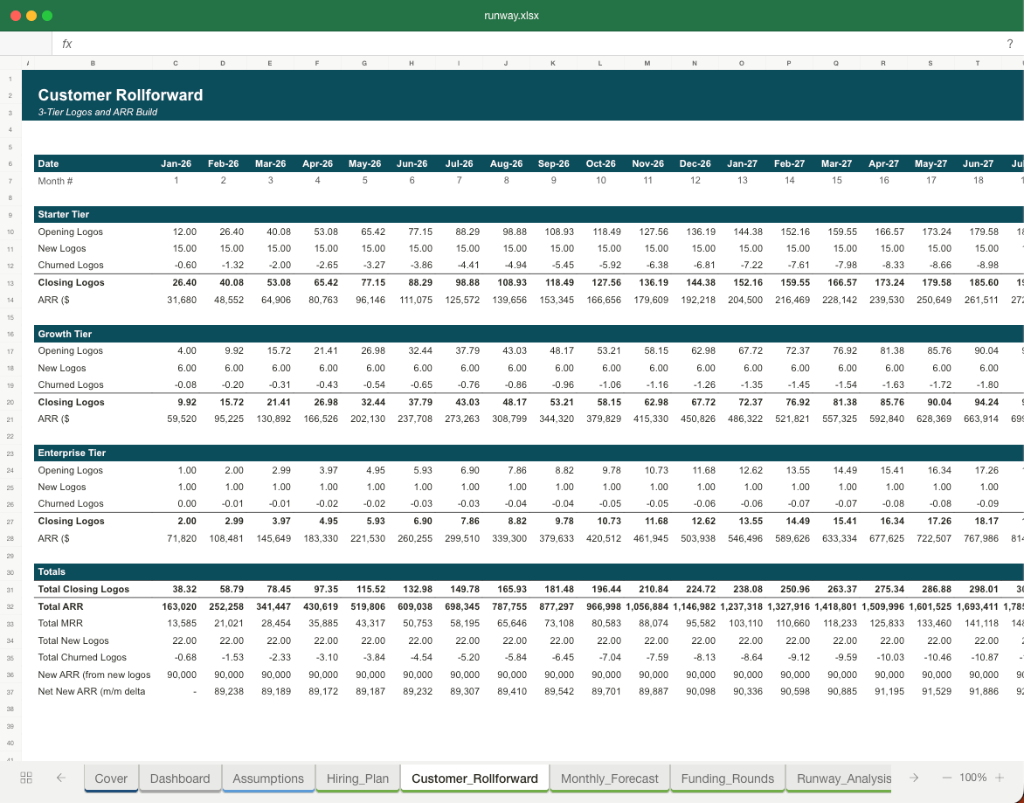
The model starts from the physical fleet rather than a demand curve. Revenue is driven by total vehicles, less planned downtime to arrive at an active fleet, multiplied by shifts per day, trips per shift and average fare.
- A driver-supply engine converts the closing fleet into required drivers with a supply buffer, rolls active drivers forward with churn, and uses a recruitment funnel to derive recruitment cost. The supply ratio of active to required drivers caps utilisation: a shortage idles vehicles, so the driver-utilised fleet, net of mechanical downtime, is what actually earns revenue.
- This makes driver availability a first-class operating constraint, not an afterthought.
Revenue Streams and Net Revenue Mechanics
Revenue is split into consumer passenger fares, corporate accounts and vehicle advertising. Consumer fares flow from the active fleet and maturing trips per shift, while corporate revenue is account-driven with longer collection terms.
- Gross bookings are then reduced by driver incentives and rider promotions or referrals as contra-revenue, producing net bookings and income-statement net revenue. The resulting take rate, net revenue divided by gross bookings, is always below 100% and is shown as an explicit line.
- Driver payouts and platform commission are applied to gross bookings, not net revenue, which keeps the calculation of contribution consistent with how fleet partners actually pay platform fees.
Cost Structure, Capex and Cash Conversion
Operating costs separate variable and fixed elements. Fuel or charging costs are calculated per active vehicle using miles, shifts and energy efficiency, with electric and internal-combustion vehicles handled distinctly.
- Insurance and maintenance are per-vehicle rather than flat, while depot, technology, tolls and recruitment scale with activity. Capital expenditure covers vehicle purchases and charging infrastructure, with a roll-forward of opening fleet, additions and replacements, retirements and closing fleet.
- Depreciation follows useful lives and residual values, so it stops at residual. The cash flow statement uses the indirect method, converting EBITDA through working capital, interest and tax into operating cash flow, then investment and financing flows, including dividends and asset-finance amortisation.
Financing, Covenant Testing and Practical Use
The model finances vehicles through asset finance, drawing debt against vehicle purchases and amortising it on a fixed schedule, with interest based on opening balances to avoid circularity. Key ratios include DSCR, Debt/EBITDA, fleet LTV and margins calculated on net revenue.
- Validation checks confirm the balance sheet balances, cash stays positive, DSCR remains above the covenant input, active vehicles do not exceed the total fleet, gross margin stays within its band and retirements do not exceed additions plus opening fleet. Scenario toggles flex fleet growth, electric mix, trips per shift, average fare and cost inflation.
- Use this model to test whether a fleet operator's cash generation supports its debt, to compare financing structures, and to identify when driver supply, not vehicle count, becomes the binding constraint.
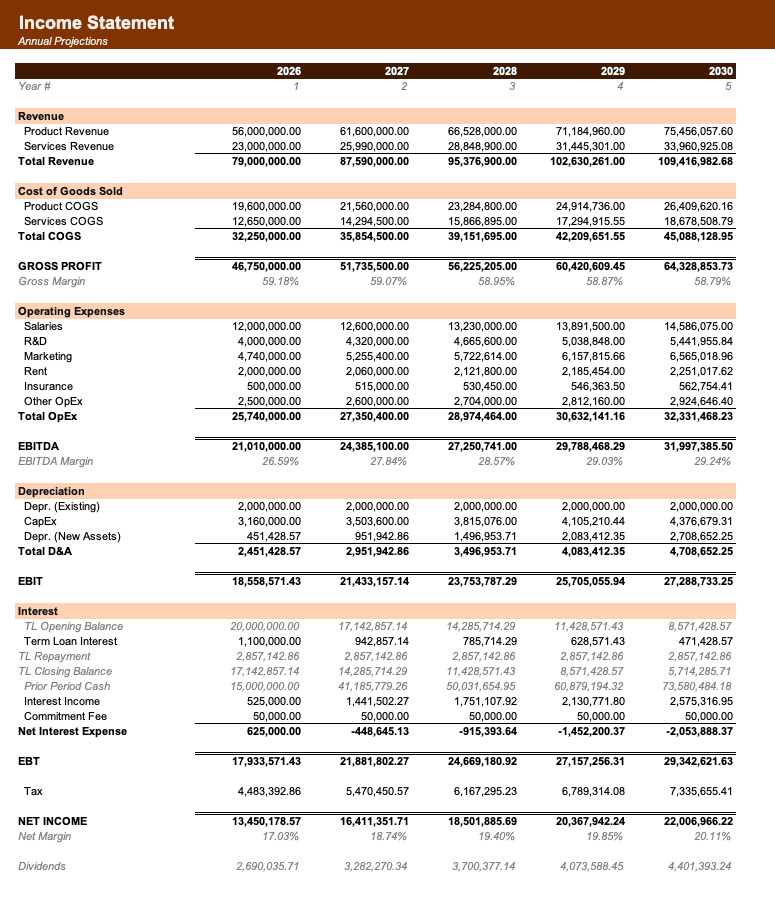
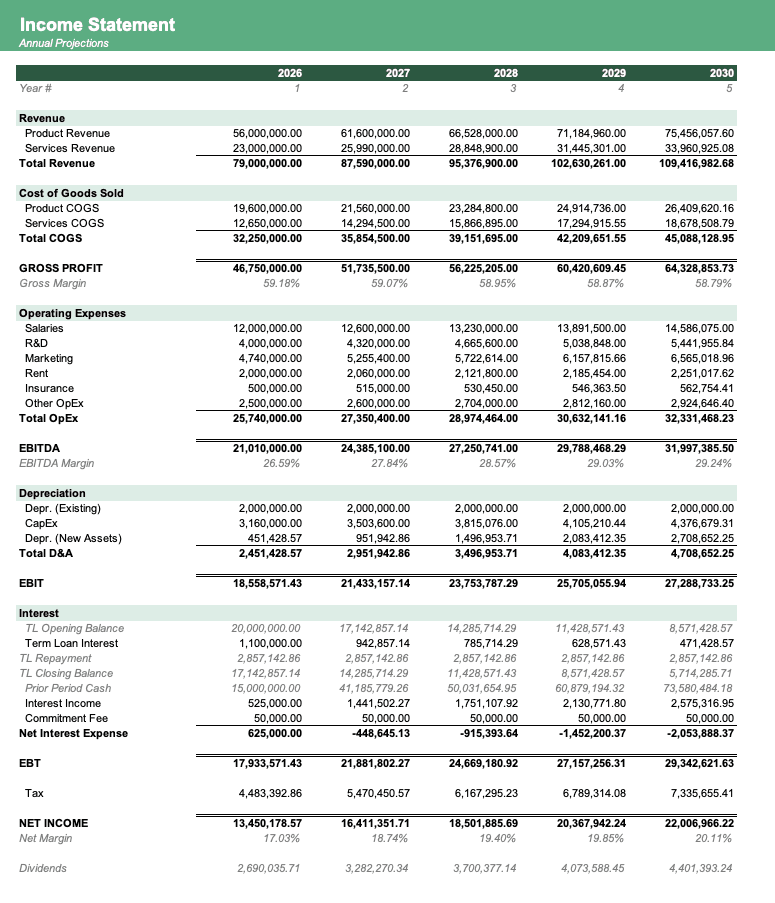
Formatted to IB standards
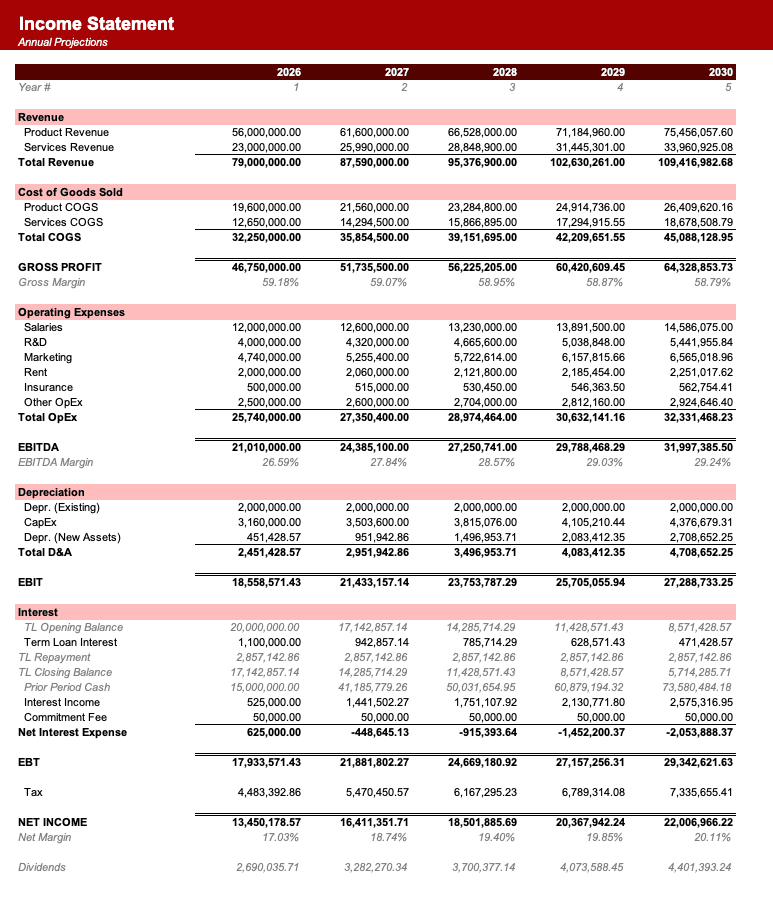
Named theme colors repaint the whole workbook in one click, on top of an investment-banking structure with clear input, output, and cross-sheet reference styling - brand-ready, institutional-grade, and fully auditable.

Created by ex-finance professionals
Hey, I’m Alex and I created Finamodel.
Over my years in the finance industry I kept building the same models over and over again. Same structure, same assumptions, different logo. So I started building frameworks to turn them into clean, reusable templates.
Every model here is one I’d actually use for a client, and I personally vet each one before it goes up.
I’m not an expert in every industry, but I’ve built enough models to know what belongs in one. And when something is completely foreign to me, I reach out to my network for experts to work on our models with us.
Having a template library on hand cuts a first build from hours to minutes.
Need help finding your model? You’ll find me in the Finamodel app!
Frequently asked
What is a ride-hailing financial model?+
An operating model that forecasts rider and driver growth, ride volume, platform take rate, contribution margin, and cash burn for a ride-hailing marketplace.
How do I model driver supply?+
Use a supply curve indexed to driver commission rate and hourly earnings. As commissions rise, supply increases. Model elasticity based on local competition and ride frequency.
What drives unit economics for ride-hailing?+
CAC, LTV, driver take rate, and ride frequency. Contribution margin equals take rate times ride value minus driver acquisition and support costs per ride.
How do I account for incentive and promotional spending?+
Model incentives as a percentage of GMV or rides, tied to competitive pressure and growth targets. Track ROI by cohort to see payback period on acquisition spend.
Can I model multiple city launches simultaneously?+
Yes. The model templates city-level launches with separate assumptions for driver recruitment, demand seeding, and time to contribution breakeven in each geography.
Have more financial modelling questions? Contact us
Related templates
Marketplace Economics Model
Financial model for two-sided or multi-sided marketplace platforms with transaction volumes, take rates, and unit economics.
Food Delivery Unit Economics
P&L model for food delivery with order volume, take rates, delivery costs, and unit economics by cohort.
Subscription Box Economics
Model recurring revenue, churn, customer acquisition, and fulfillment costs for a subscription service.
E-Commerce Unit Economics
P&L model for e-commerce business with CAC, LTV, gross margin, and unit economics.