Infrastructure Fund Operating Model
Infrastructure Financial Model (Free Excel Download)
Model infrastructure fund performance from commitments and capital calls through asset acquisitions, distributions, fees, recycling, and investor-level IRR and MOIC.



professionals from Deloitte
Used by professionals from






About this model
This fund-of-funds model projects cash flows and returns for a closed-end infrastructure fund (£2 billion size, 10-year investment period + 2-year harvest) by forecasting asset deployment, operating yields, exit proceeds, and calculating LP and GP returns under a whole-fund waterfall. Answer: what net IRR (10–12%), net MOIC (1.7–2.0x), and distributed income will LPs achieve after management fees and GP carried interest?
The workbook tracks five deployment vintages (Years 1–5, £500M–£200M each), applies ramp-up yield factors (40–60% of stabilised rate in Years 1–2 of asset operation, 100% by Year 3), and assumes £1.85x exit MOIC on cost basis at vintage hold-period exit (typically 5–7 years). Management fees: 1.5% p.a. on committed capital (investment period), 1.25% on outstanding invested capital (harvest period). Fund expenses: 0.20% p.a. + £10M one-time org costs Year 1. Returns computed via whole-fund waterfall: return of capital (100% LP), preferred return (8% compound hurdle tranche-weighted), GP catch-up (100% to GP until GP receives 20% of total profits), residual (80% LP / 20% GP).
Used by LPs (pension funds, sovereign wealth, family offices) evaluating infrastructure fund commitments, GPs structuring new vehicles (Brookfield Infrastructure, Macquarie, Global Infrastructure Partners, KKR Infrastructure), and secondaries investors acquiring LP stakes. The model reveals fee drag impact: gross IRR 12–15% becomes net 10–12% after 1.5% management fee + 0.2% expenses over 10-year investment period. Lumpy realisation schedule (bunched exits in Years 8–10) creates J-curve: negative cash flow Years 1–6, large distributions Years 7–10. Benchmarks: infrastructure yields 5–9% p.a. on equity (lower than PE/VC 15–25%), compensated by lower risk, inflation linkage, and long duration matching liability profiles.
What every model includes
Live formulas, no hardcoded values
Outputs are driven by live formulas, so the workbook updates from its assumptions instead of relying on hardcoded results.
All assumptions in one tab
Inputs are clearly marked in the Assumptions tab and separated from calculations, making it clear what to change and what to leave intact.
Statements always balancing
For integrated-statement models, the balance sheet, cash flow, and supporting schedules tie through properly.
Distinct schedules for clarity
Debt, working capital, taxes, and cash flow can get messy quickly. We group calculations in clear schedules, not across disconnected tabs.
No hidden macros or external links
There are no unexplained external workbook links or macros to undermine auditability or portability.
Changes flow through the model
Update a key driver and see the impact carry through the forecast, financing, and return outputs. We never use hardcoded numbers in formulas.
What's inside the Infrastructure Fund Operating Model
- Portfolio company cash flows including toll revenue, concession fees, and dividends
- Debt refinancing and maturity scheduling across portfolio assets
- Distributions to LPs and GP carried interest waterfall
- Management fees typically 1-1.5% of AUM or commitments
- Gross and net fund IRR and MoIC
- Monitoring fees and transaction fees
Infrastructure Fund Model: Using the Template to Evaluate Fund Returns
This infrastructure fund model template allows users to explore how portfolio-level returns respond to asset yields, exits, and fees. It consolidates multiple vintages into a single waterfall, tracking LP and GP cash flows.
The model outputs net IRR, DPI, and TVPI, helping GPs and LPs assess fund economics under a European waterfall structure.
Deployment Schedule and Capital Calls Drive Fund Cash Flows
The fund deploys capital over five vintage years, each representing a distinct set of infrastructure assets. Deployment percentages determine how much capital is invested annually, with a hard cap ensuring cumulative calls never exceed the total fund size.
- Capital calls combine investment amounts with management fees and fund expenses, subject to this cap. This structure maintains discipline in fundraising and aligns with standard closed-end fund mechanics.
- The model captures the timing of investments and fee payments, which directly affect the J-curve profile of LP cash flows and the eventual return metrics.
Asset Yields and Exit Proceeds Generate Distributable Cash
Cash flows to the fund come from asset operating yields and exit proceeds. Yields ramp up from a lower initial rate to a stabilised level, then grow with inflation through the CPI rate multiplied by indexation percentage.
- Each vintage's invested capital drives its yield contribution, so earlier deployments contribute more cash over time. Exits occur when each vintage reaches its designated hold period, with proceeds calculated as invested cost multiplied by an exit MOIC assumption.
- These two sources combine to form gross distributions, which then pass through the waterfall after deducting management fees and fund expenses.
Waterfall Mechanics and Fee Structure Determine LP Net Returns
The European whole-fund waterfall distributes net cash flows sequentially: first returning LP capital, then a compound preferred return (hurdle) with tranche-weighted accrual, followed by a GP catch-up and an 80/20 residual split. Management fees step down from a rate on committed capital during the investment period to a lower rate on invested capital during harvest.
- Fund expenses and organisational costs also reduce distributable cash. The waterfall output feeds into LP and GP distribution totals, which are then used to calculate net IRR, DPI, and TVPI.
- This flow highlights how fee drag and hurdle timing impact net returns.
Outputs and Practical Use for Fund Evaluation
The model produces a range of outputs on the Returns sheet, including annual LP net cash flows, net IRR, gross IRR, and multiple metrics such as DPI, RVPI, and TVPI. A GP Economics sheet details management fee income, co-investment returns, and carried interest.
- Sensitivity tables allow users to examine how net IRR and GP carry vary with exit MOIC, yield, hurdle rate, and carry rate. The Checks sheet verifies consistency across sheets, helping users catch common errors.
- This makes the template useful for GPs structuring a fund or LPs evaluating a commitment, as it translates assumptions into clear performance indicators without hiding the underlying mechanics.
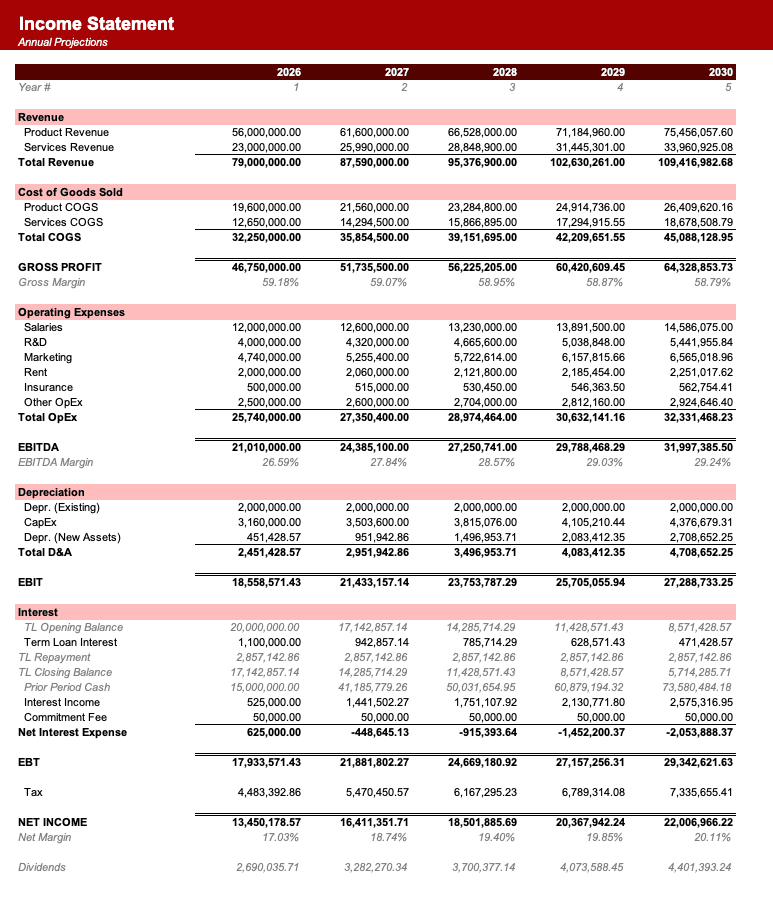
Formatted to IB standards
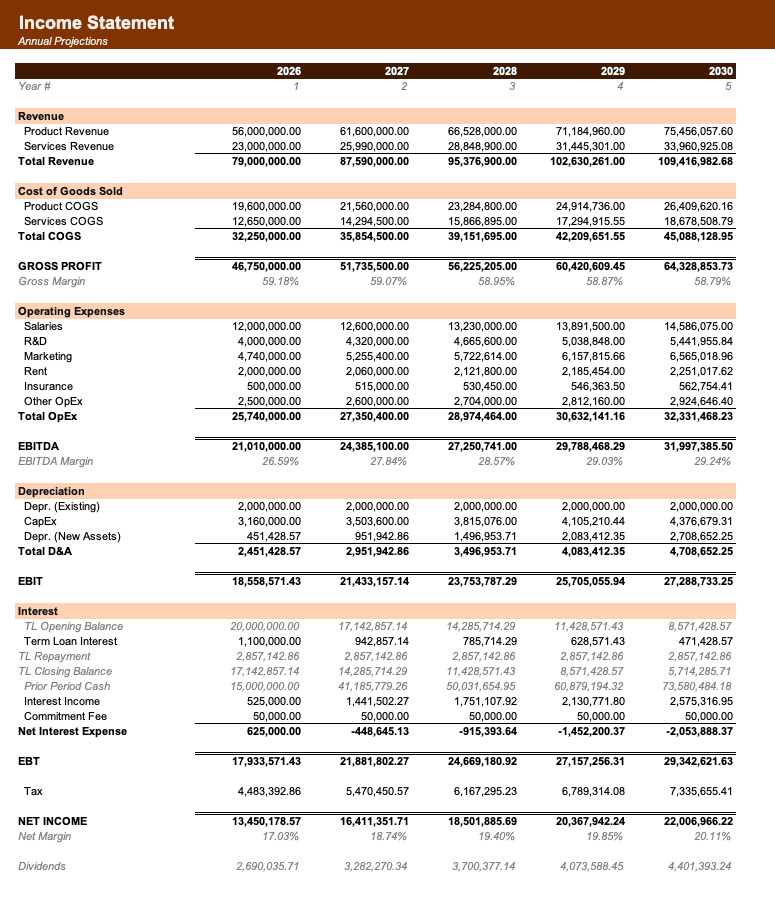
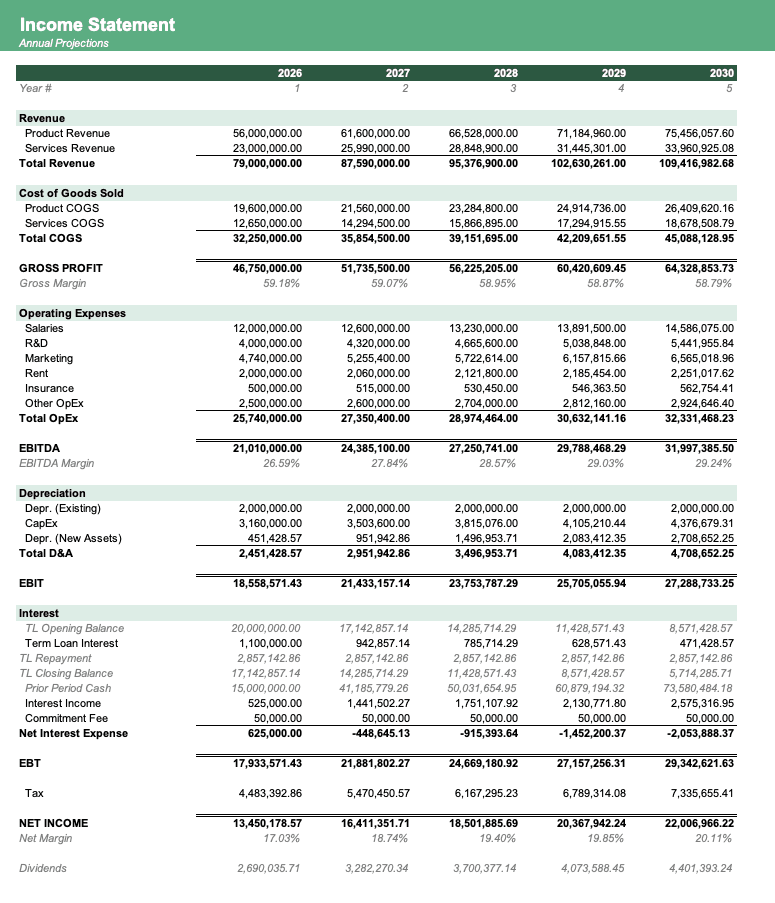
Named theme colors repaint the whole workbook in one click, on top of an investment-banking structure with clear input, output, and cross-sheet reference styling - brand-ready, institutional-grade, and fully auditable.

Created by ex-finance professionals
Hey, I’m Alex and I created Finamodel.
Over my years in the finance industry I kept building the same models over and over again. Same structure, same assumptions, different logo. So I started building frameworks to turn them into clean, reusable templates.
Every model here is one I’d actually use for a client, and I personally vet each one before it goes up.
I’m not an expert in every industry, but I’ve built enough models to know what belongs in one. And when something is completely foreign to me, I reach out to my network for experts to work on our models with us.
Having a template library on hand cuts a first build from hours to minutes.
Need help finding your model? You’ll find me in the Finamodel app!
Frequently asked
What is a typical infrastructure fund fee structure?+
Management fees are 1-1.5% of commitments, declining in later years. Carry is 10-20% of net profits above a preferred return of 5-8%. GP co-investment is typically 1-3% of fund commitments.
How do I model leverage across a diversified portfolio?+
Set leverage targets by asset class, for example 60% LTV for utilities and 70% for toll roads. Consolidate portfolio debt and forecast refinancing needs assuming accessible debt markets.
When should a fund distribute versus reinvest proceeds?+
Distribute excess cash above reinvestment needs and debt covenant requirements. Typical infrastructure funds target 4-6% annual yield to LPs from distributions, balancing income and long-term growth.
Who uses infrastructure fund models?+
Infrastructure fund managers, institutional LPs, asset allocators, and fund advisors use these models for fund launch, portfolio performance reporting, and capital allocation planning.
How is infrastructure fund performance measured?+
Primary metrics are net IRR and MoIC after fees. Infrastructure funds typically target net IRRs of 8-12% for core assets and 12-15% for value-add strategies, with distributions providing yield alongside capital appreciation.
Have more financial modelling questions? Contact us
Related templates
Private Equity Fund Model
Fund-level cash flow, investment allocation, and LP returns including fees, distributions, and net IRR.
Fund of Funds Portfolio Model
Portfolio construction and performance tracking model for fund-of-funds vehicles investing across multiple manager-run funds.
Infrastructure Bond Valuation Model
Valuation model for infrastructure bonds including project cash flows, debt service coverage, and credit rating sensitivity.
Fibre Network Deployment Model
Capital and financial model for fiber optic network buildout with capex, subscribers, and ARPU.