Land Banking Model
Real Estate Financial Model (Free Excel Download)
Underwrite land banking projects using acquisition cost, entitlement timing, infrastructure spend, parcel sales, carrying costs, financing, and development margin.



professionals from Deloitte
Used by professionals from






About this model
A Land Banking Model projects the financial returns on raw land acquisition, holding periods, and eventual disposition as development becomes feasible. The model captures land acquisition costs, carrying expenses (property tax, insurance, maintenance), entitlement and zoning costs, and multi-phase value appreciation. It answers the core question: How long should we hold the land before exiting, and what is the IRR given different holding periods and development timing scenarios? Land values typically appreciate 3-5% annually in stabilising markets, but the model tests sensitivity to development timing, which is the primary driver of hold-period returns.
The workbook builds three key output schedules. The Land Balance sheet tracks cumulative cost basis including all carrying costs capitalised each period. The Valuation sheet computes exit proceeds under multiple sale scenarios, calculating effective annual returns (IRR) for 5, 7, 10, and 15-year holds. Working capital requirements are minimal - primarily title insurance and legal reserves. The sensitivity dashboard shows IRR across holding period and development timeline, critical for determining optimal exit timing.
This model applies to real estate investors, family offices, and development companies evaluating land positions in growth corridors or opportunity zones. A typical $10-30M land acquisition with 5-10 year hold periods and modest development costs often targets 12-18% unlevered IRR, requiring appreciation of 300-400 bps above baseline to justify holding costs.
What every model includes
Live formulas, no hardcoded values
Outputs are driven by live formulas, so the workbook updates from its assumptions instead of relying on hardcoded results.
All assumptions in one tab
Inputs are clearly marked in the Assumptions tab and separated from calculations, making it clear what to change and what to leave intact.
Statements always balancing
For integrated-statement models, the balance sheet, cash flow, and supporting schedules tie through properly.
Distinct schedules for clarity
Debt, working capital, taxes, and cash flow can get messy quickly. We group calculations in clear schedules, not across disconnected tabs.
No hidden macros or external links
There are no unexplained external workbook links or macros to undermine auditability or portability.
Changes flow through the model
Update a key driver and see the impact carry through the forecast, financing, and return outputs. We never use hardcoded numbers in formulas.
What's inside the Land Banking Model
- Land acquisition cost and financing assumptions
- Carrying costs including property tax, maintenance, and insurance
- Development feasibility and infrastructure build-out timing
- Zoning variances and entitlement costs
- Multi-phase value appreciation and exit analysis
- Sensitivity to holding period and development timing
Land Banking Model: How the Investment Cash Flow Works
This land banking model evaluates acquiring, entitling, holding, and disposing of raw land parcels over an 11-year horizon. It captures carry costs, entitlement spend, financing, and capital-gains tax, then reports unlevered and levered IRR, MOIC, payback, and profit-on-cost against target hurdles.
The model is designed to show the strategy’s true cash-flow profile rather than flatter the deal.
Operating drivers of a raw-land portfolio
The model centers on a portfolio of up to five land tracts, each defined by acreage, cost per acre, entitlement start year and duration, and target sale year. These per-tract inputs drive acquisition cost and the timing of dispositions.
- Appreciation is applied to a weighted-average cost per acre, while the entitlement premium—a one-time uplift for rezoned land—is calculated per tract based on whether that tract’s entitlement has completed. Because raw land produces no operating income, the economics depend entirely on appreciation and the entitlement uplift, offset by years of holding costs such as property tax, insurance, maintenance, and HOA fees.
- The model also sizes a conservative loan facility at a set loan-to-value ratio to part-fund the acquisition.
Calculation flow from acquisition to net proceeds
The calculation flow starts with land acquisition in Year 0, including acquisition costs. Entitlement spend is spread over each tract’s entitlement duration.
- Holding costs accrue annually on acres still held, escalated over time. When a tract sells, gross proceeds equal acres sold times the appreciated raw value per acre times the applicable entitled premium, which is sale-weighted by the proportion of entitled acres sold.
- Selling costs reduce gross proceeds to net proceeds. The model then releases a pro-rata share of total capitalised cost—land, acquisition costs, and entitlement spend—to determine taxable gain, and applies a blended capital-gains tax rate.
Financing interest and commitment fees flow through a debt schedule, and an equity plug funds any cash shortfall each year.
Outputs and performance metrics
The model outputs a full cash-flow waterfall and a returns summary. The Returns sheet reports unlevered and equity IRR, MOIC, payback year, total equity profit, and profit-on-cost, alongside benchmark checks against target hurdles.
- The Dashboard presents ten KPI cards, a year-by-year summary table, and four trend charts covering acres sold, gross proceeds, portfolio value, and cumulative cash flow. A checks sheet validates that final inventory and debt are zero, all acres are sold, equity profit is positive, LTV stays within the assumption, cash never goes negative, and equity IRR is positive.
- These checks confirm mechanical integrity but do not imply the deal meets its return targets; the model explicitly reports whether it does.
Practical use and sensitivity analysis
Practically, the model serves as a single-case valuation tool for raw-land banking strategies. It lets users flex key assumptions—appreciation rate, hold period, sales pace, and sales start year—to see how equity IRR responds.
- Two native Excel data tables on the Sensitivity sheet show equity IRR across appreciation versus hold period, and across sales pace versus sales start year. The model does not include scenario toggles or phased acquisitions; all tracts are acquired in Year 0 and sold according to their target sale years.
- It also omits NPV discounting and operating income, reflecting the pure carry-and-dispose nature of land banking. These constraints make it most useful for testing hold-period and exit-timing decisions within a single static case.
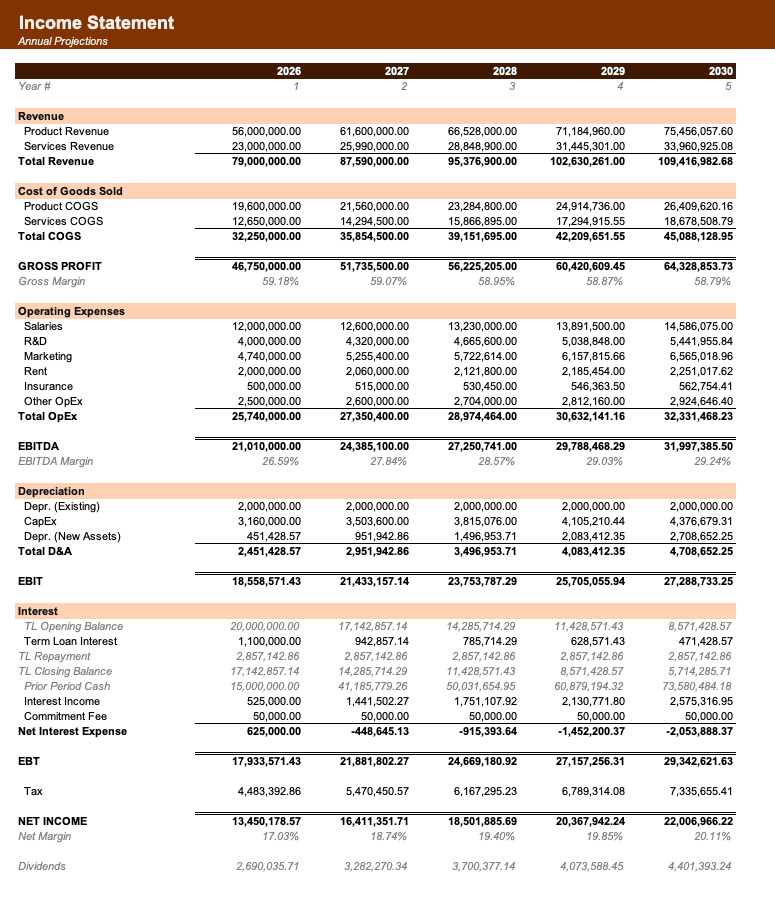
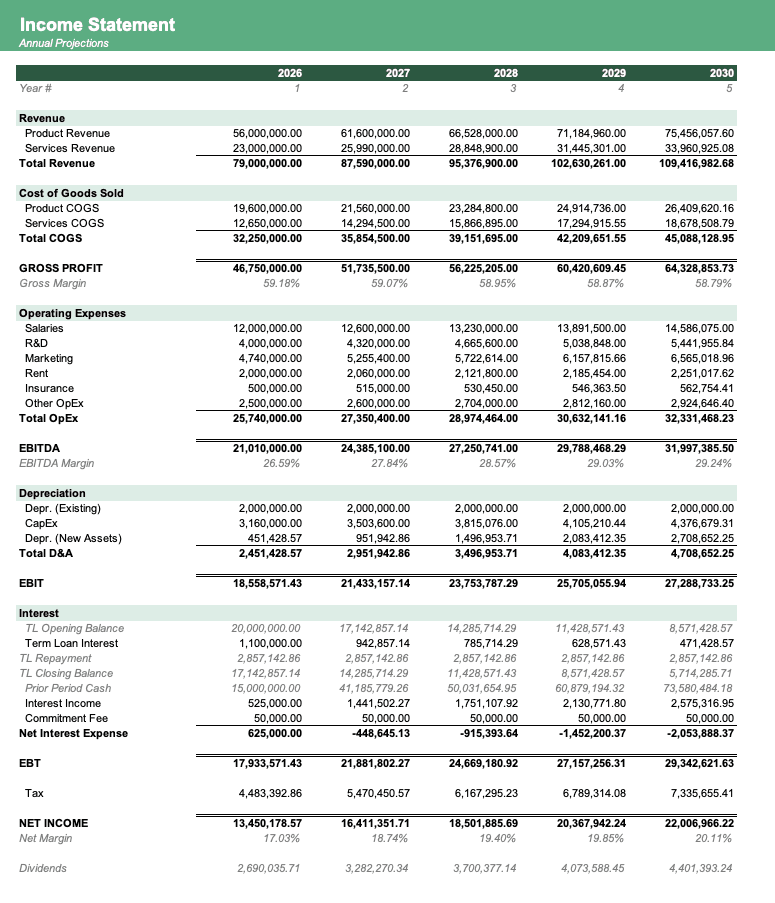
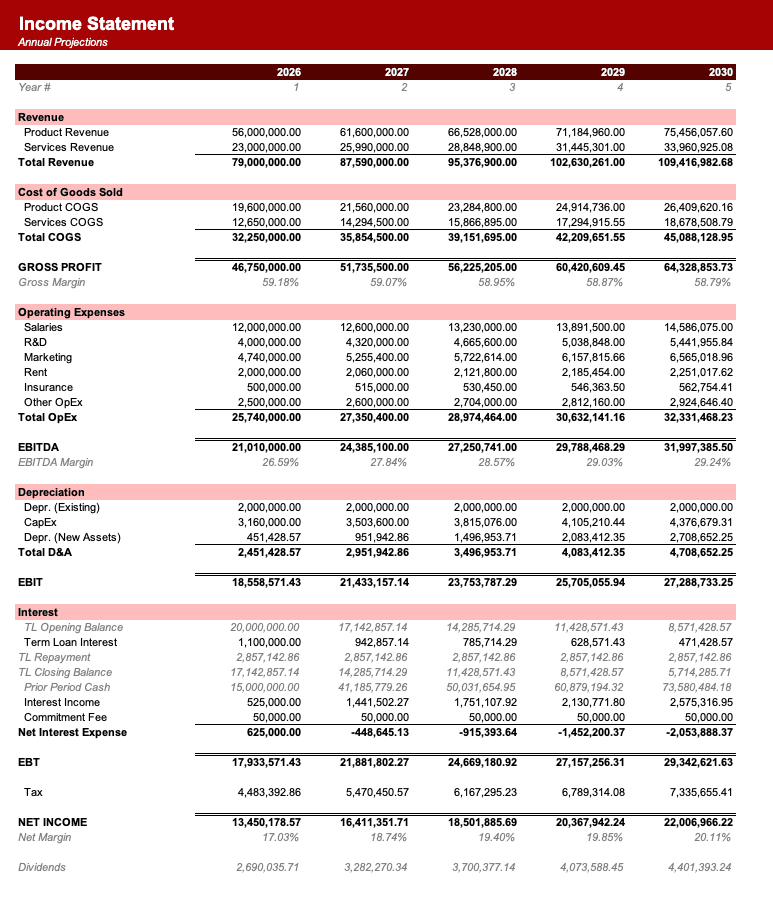
Formatted to IB standards
Named theme colors repaint the whole workbook in one click, on top of an investment-banking structure with clear input, output, and cross-sheet reference styling - brand-ready, institutional-grade, and fully auditable.

Created by ex-finance professionals
Hey, I’m Alex and I created Finamodel.
Over my years in the finance industry I kept building the same models over and over again. Same structure, same assumptions, different logo. So I started building frameworks to turn them into clean, reusable templates.
Every model here is one I’d actually use for a client, and I personally vet each one before it goes up.
I’m not an expert in every industry, but I’ve built enough models to know what belongs in one. And when something is completely foreign to me, I reach out to my network for experts to work on our models with us.
Having a template library on hand cuts a first build from hours to minutes.
Need help finding your model? You’ll find me in the Finamodel app!
Frequently asked
What costs should I include in a land banking model?+
Include acquisition price, property taxes, insurance, maintenance, environmental assessments, zoning variances, and any infrastructure work. Carrying costs accumulate over the hold period and directly reduce IRR.
How do I model appreciation and value creation?+
Combine market appreciation rates with value created from infrastructure completion, rezoning benefits, and supply-demand dynamics. Sensitivity analysis shows how returns change under different appreciation assumptions.
How long should I hold land?+
Run a sensitivity table showing IRR and equity multiple at different hold periods. The optimal hold balances accumulating carrying costs against value creation from appreciation and entitlement progress.
Who uses land banking financial models?+
Real estate developers, land investors, project managers, and real estate finance teams use these models for acquisition strategy, development planning, and investor presentations.
How does zoning affect land value?+
Rezoning from agricultural or industrial to residential or mixed-use can multiply land value several times. The model captures this as a step-change in value upon entitlement, offset by the cost and time of the permitting process.
Have more financial modelling questions? Contact us
Related templates
Real Estate Development Pro Forma Model
Land cost, construction budget, lease assumptions, and project IRR for commercial and residential development.
Development Pro Forma
Real estate development underwriting model with lot acquisition, construction, presales, and cash flow timing.
Mixed-Use Real Estate Development
Financial model for mixed-use projects combining residential, commercial, and retail with phased development.
Hotel Operating Model
Operating model for hotel properties including occupancy rates, average daily rate (ADR), RevPAR optimization, and facility-level profitability.


