LNG Terminal Model
Energy Financial Model (Free Excel Download)
Evaluate LNG-terminal economics through throughput, capacity reservations, tolling fees, utilization, operating costs, expansion capex, debt service, and project returns.



professionals from Deloitte
Used by professionals from






About this model
An LNG Terminal Model evaluates the project finance viability of a liquefied natural gas import or export terminal with ship-or-pay tolling contracts. The model captures capacity reservation fees (fixed, regardless of volume), variable throughput fees, and ancillary revenue (berthing, truck loading) to project 20-30 year cash flows. A typical 3 MTPA terminal generates $300-500M revenue annually at full utilization, with 75-90% gross margin because the variable cost (gas shrinkage, power, water) is minimal and the capacity fee is largely decoupled from operational costs. EBITDA margins of 55-75% support 5.0-7.0x debt-to-EBITDA leverage, requiring strict DSCR covenants (minimum 1.20-1.35x) and loan-life coverage ratios (minimum 1.30x).
The workbook models a 3-5 year construction phase with capex draws, capitalized interest, and IDC (interest during construction). Commercial operations begin at a defined COD (Commercial Operations Date), gating all revenue and opex. Revenue derives from contracted capacity × tariff (fixed, inflation-escalated) for contracted shippers, plus variable volume × tariff on spot cargoes. Capex is split by component: jetty/marine ($60-80M), LNG tanks ($75-100M), vaporizers ($45-60M), and balance of plant. Maintenance capex (1-2% of initial capex annually) sustains operations; major turnarounds every 4-5 years add step-up costs. The Debt Schedule models construction period drawdowns and interest capitalization, then post-COD amortizing repayments sculpted to maintain target DSCR (typically 1.25-1.30x). A Debt Service Reserve Account (6 months forward) ensures covenant cushion.
This model applies to infrastructure funds, sponsors, lenders, and NOCs evaluating terminal investments or expansions. Typical equity IRR targets 10-15%; project IRR 7-12%. Key sensitivities are LNG spreads (contracted vs. spot prices), utilization rates, and commodity price pass-through mechanisms embedded in contracts.
What every model includes
Live formulas, no hardcoded values
Outputs are driven by live formulas, so the workbook updates from its assumptions instead of relying on hardcoded results.
All assumptions in one tab
Inputs are clearly marked in the Assumptions tab and separated from calculations, making it clear what to change and what to leave intact.
Statements always balancing
For integrated-statement models, the balance sheet, cash flow, and supporting schedules tie through properly.
Distinct schedules for clarity
Debt, working capital, taxes, and cash flow can get messy quickly. We group calculations in clear schedules, not across disconnected tabs.
No hidden macros or external links
There are no unexplained external workbook links or macros to undermine auditability or portability.
Changes flow through the model
Update a key driver and see the impact carry through the forecast, financing, and return outputs. We never use hardcoded numbers in formulas.
What's inside the LNG Terminal Model
- Terminal capacity and utilization assumptions by ship and storage cycle
- Fixed throughput fees and commodity-based pricing
- Regasification, vaporization, and processing costs
- Long-term supply contracts and spot market balancing volumes
- Debt service schedule and liquidity reserve requirements
- LNG carrier scheduling and queue management
How the LNG Terminal Model Evaluates Contracted Throughput and Debt Service
This lng terminal model shows how a regasification project earns money from long-term ship-or-pay tolling agreements, layered with variable throughput fees and smaller ancillary income. It walks through contracted versus spot capacity, construction funding, operating costs and project-finance debt service, so you can see how utilization and tariff assumptions translate into coverage ratios and investor returns.
Contracted Capacity and the Revenue Build
Revenue starts with capacity reservation fees under ship-or-pay tolling agreements, where shippers pay for reserved capacity whether or not they actually deliver cargoes. The model tracks five anchor contract tranches, each with its own volume, tariff, escalator and active window; as tranches expire, contracted capacity steps down and the blended tariff re-weights toward the remaining live agreements.
- A nomination rate sets physical send-out as a share of reserved capacity, ramping over several years and floored by a take-or-pay threshold. Expired tranches can renew at a fraction of their prior volume and tariff, with the residual space sold into the spot market at a separate utilization assumption.
- Physical throughput then drives variable and ancillary fees, and everything is gated to start at commercial operation.
Where Costs and Capital Come From
On the cost side, variable expenses scale with throughput, mainly fuel gas consumed in regasification, electricity for sendout and water for vaporizers, leaving a high gross margin typical of a tolling business.
- Fixed operating costs cover staff, maintenance and turnarounds, insurance, land or concession fees, overhead and regulatory compliance, with major overhauls arriving on a multi-year cycle.
- Capital spending is split across site and marine works, storage tanks, regasification equipment, pipeline interconnection, utilities and contingency, and it draws down over a multi-year construction profile.
- Interest during construction and commitment fees on undrawn debt are capitalized into the asset base rather than expensed, and the resulting project cost sizes the senior debt facility at a fixed share of total funded cost.
Debt Service, Coverage Ratios and Distributions
Debt draws during construction, then runs interest-only before converting to a re-amortizing annuity over the remaining tenor. Cash flow available for debt service is built from EBITDA less tax, working capital movement and maintenance capex, which is a stricter base than EBITDA alone.
- DSCR, LLCR and PLCR are all measured against that same figure, and the checks compare them to target thresholds and confirm the loan repays before the concession ends. Cash sweep, if switched on, prepays from surplus cash and re-amortizes scheduled principal.
- Distributions are released only when coverage stays above a lock-up level while debt is outstanding, so equity cash flow responds directly to utilization and tariff outcomes.
Timing, Terminal Value and How to Use It
The model follows a full concession sequence: construction years with negative free cash flow, an operating period where contracted revenue covers costs and debt service, and a final-year terminal value of net book value at a salvage percentage less decommissioning cost.
- Depreciation runs across several asset classes from commercial operation, including a pool for capitalized maintenance capex, and a no-loss carry-forward block handles tax in downside cases. Use it to test whether the contracted book, tariff escalation and utilization assumptions support the required coverage ratios and returns.
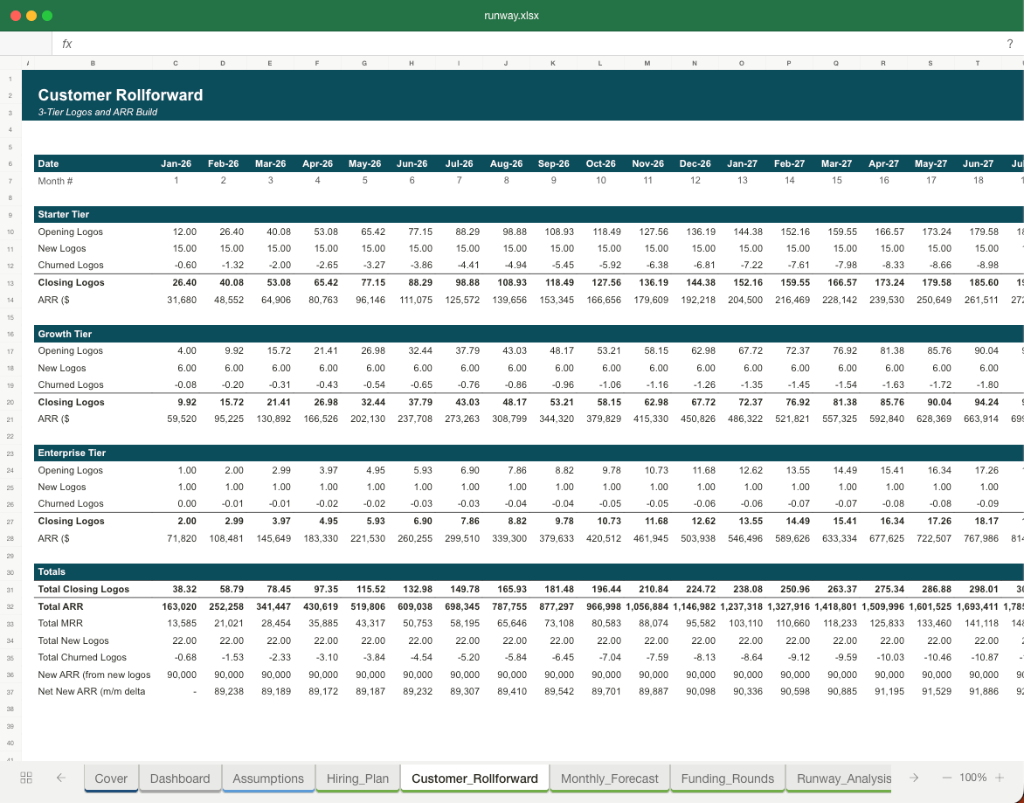
- The public download is a values-only preview, so the sheet structure and driver relationships are shown without live formulas.
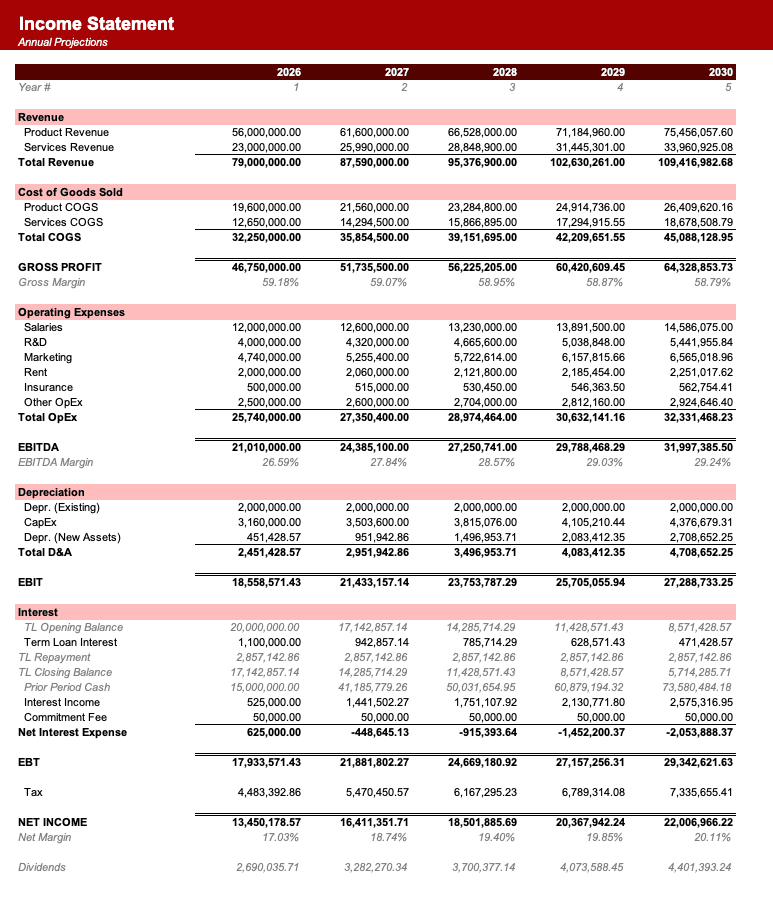
Formatted to IB standards
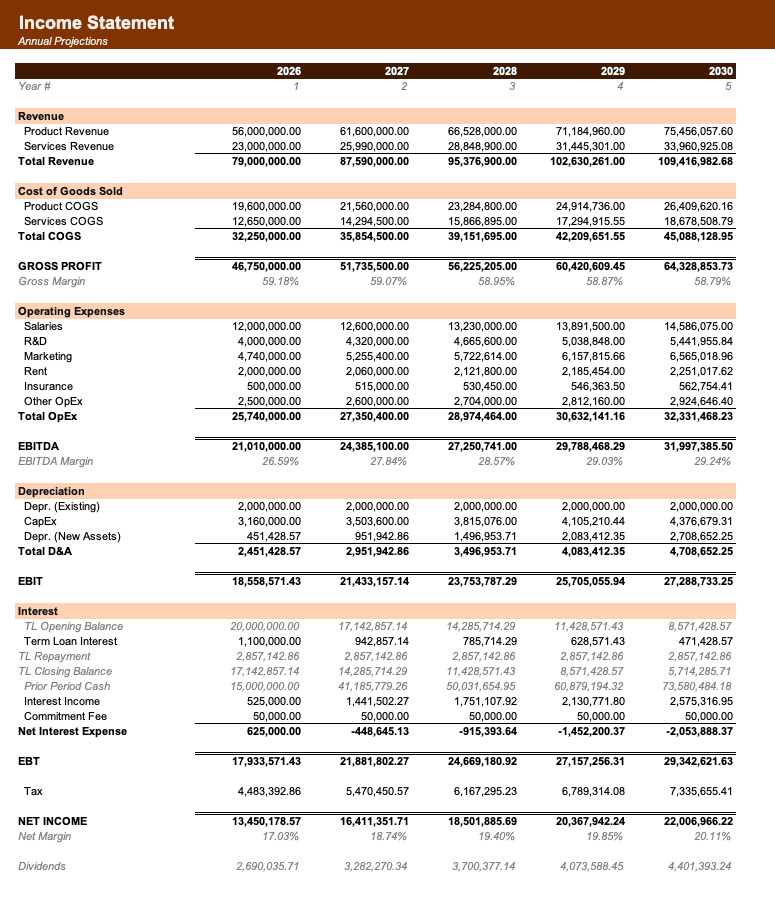
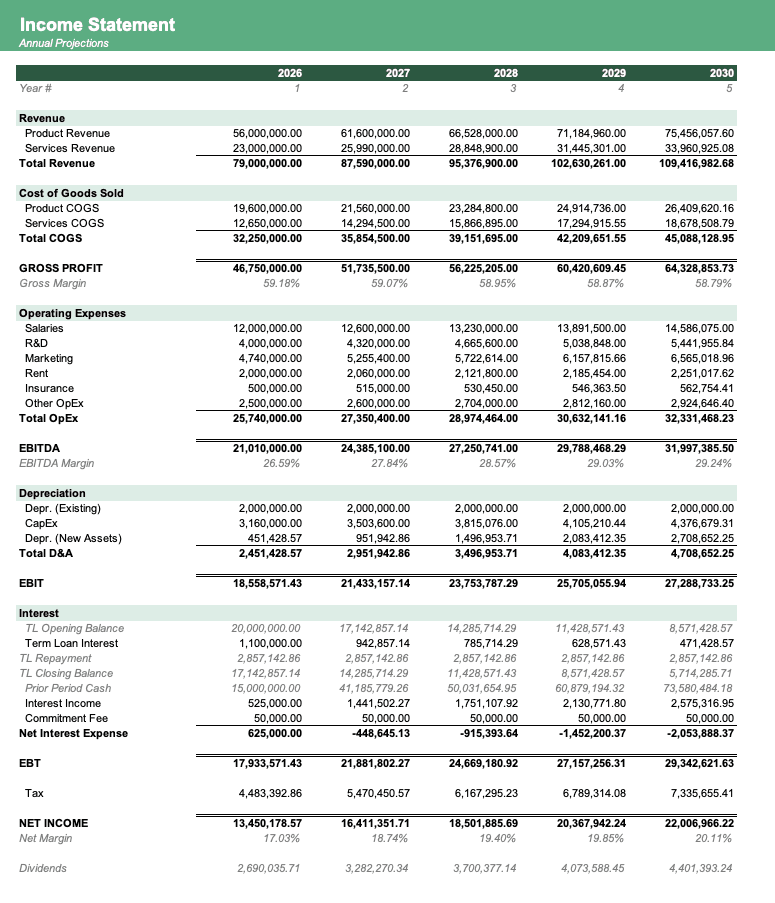
Named theme colors repaint the whole workbook in one click, on top of an investment-banking structure with clear input, output, and cross-sheet reference styling - brand-ready, institutional-grade, and fully auditable.

Created by ex-finance professionals
Hey, I’m Alex and I created Finamodel.
Over my years in the finance industry I kept building the same models over and over again. Same structure, same assumptions, different logo. So I started building frameworks to turn them into clean, reusable templates.
Every model here is one I’d actually use for a client, and I personally vet each one before it goes up.
I’m not an expert in every industry, but I’ve built enough models to know what belongs in one. And when something is completely foreign to me, I reach out to my network for experts to work on our models with us.
Having a template library on hand cuts a first build from hours to minutes.
Need help finding your model? You’ll find me in the Finamodel app!
Frequently asked
What is throughput in an LNG terminal model?+
Throughput is the volume of LNG flowing through the terminal from ship unloading through regasification. It is measured in mmBtu or tonnes per year and determines revenue when pricing is set on a fixed-per-unit basis.
What are the main cost drivers for an LNG terminal?+
Regasification costs including energy and compression, storage losses, operating labor, maintenance, and utilities are the primary drivers. Floating or import terminals also carry capacity rental, demurrage, and shipping costs.
How do long-term contracts affect returns?+
Long-term contracts provide revenue certainty and reduce leverage ratios, making debt financing cheaper. However, they cap upside when commodity prices spike. Spot market sales offer flexibility and higher potential margins but add cash flow volatility.
Who uses LNG terminal financial models?+
Energy finance teams, project finance advisors, utilities, and infrastructure investors use these models for project sanctioning, contract negotiation, and operational optimization decisions.
What is a take-or-pay clause and how does it affect the model?+
A take-or-pay clause requires the customer to pay a minimum fee whether or not they take delivery of the gas. This provides a revenue floor that supports debt service and reduces demand risk in the financial model.
Have more financial modelling questions? Contact us
Related templates
Oil & Gas Upstream Model
Integrated production, cost, and project economics for upstream oil and gas assets.
Hydrogen Production and Storage Model
Financial model for hydrogen production facilities (electrolysis, SMR, gasification) including capex, operating costs, and offtake agreement revenue.
Electric Utility Tariff Model
Model utility revenue based on customer class, usage levels, and tariff rate schedules.
Commodity Hedging Model
Structure and monitor hedges for commodity price exposure with effectiveness metrics.