Pre-Seed Startup Financial Projection Model
Corporate Finance Financial Model (Free Excel Download)
Prepare pre-seed funding decisions with startup assumptions, milestone planning, cash needs, ownership outcomes, and investor return scenarios that strengthen the financing case.



professionals from Deloitte
Used by professionals from






About this model
Model early-stage startup cash flow with monthly granularity, tracking customer acquisition, retention, and unit economics through to cash runway and funding milestones. This template projects revenue growth from near-zero to profitability, models headcount and payroll expansion by function (product, sales, support), and forecasts monthly burn rate with explicit operating expense budgeting for fixed and discretionary costs. It calculates runway (months of cash at burn rate), identifies funding milestone timing, and models dilution from future equity rounds.
The workbook contains a revenue sheet showing customer growth curves and cohort retention, a payroll budget with function-level headcount and salary assumptions, an operating expense ledger (rent, cloud services, marketing), and cash flow projections showing monthly movements. The model produces key metrics for investor pitch decks: CAC (customer acquisition cost), LTV (lifetime value), CAC payback period, and path-to-profitability months. It explicitly handles pre-launch burn, ramp curves, and multiple scenario states (worst-case, base, upside on growth rate or CAC).
Target users are startup founders, seed-stage VCs, and angel investors evaluating pre-revenue companies or early-revenue startups with post-money valuations typically $5M to $50M.
What every model includes
Live formulas, no hardcoded values
Outputs are driven by live formulas, so the workbook updates from its assumptions instead of relying on hardcoded results.
All assumptions in one tab
Inputs are clearly marked in the Assumptions tab and separated from calculations, making it clear what to change and what to leave intact.
Statements always balancing
For integrated-statement models, the balance sheet, cash flow, and supporting schedules tie through properly.
Distinct schedules for clarity
Debt, working capital, taxes, and cash flow can get messy quickly. We group calculations in clear schedules, not across disconnected tabs.
No hidden macros or external links
There are no unexplained external workbook links or macros to undermine auditability or portability.
Changes flow through the model
Update a key driver and see the impact carry through the forecast, financing, and return outputs. We never use hardcoded numbers in formulas.
What's inside the Pre-Seed Startup Financial Projection Model
- Monthly revenue forecast with customer acquisition and retention
- Payroll and headcount planning by function
- Operating expense budget with discretionary and fixed costs
- Cash burn rate and runway calculations
- Funding milestone planning and dilution analysis
- Key unit economics and growth metrics
Pre-Seed Startup Financial Projection Model: How the Pre-Seed Pitch Model Works
This pre-seed pitch model is a 24-month Excel planning workbook for subscription startups preparing a seed round. It connects customer growth, hiring, costs, cash and fundraising into a single operating forecast, so founders can see how acquisition, churn, salaries and burn interact with runway and seed-readiness targets over time.
Operating Drivers That Shape the Forecast
The model runs on a small set of drivers. A case selector chooses Bear, Base or Bull, which changes monthly customer growth, ARPU and churn.
- The sample Base case uses illustrative values of 12% growth, $175 ARPU and 4% churn, but you replace these with your own. Growth decays over the 24 months.
- Each month, closing customers equal prior customers plus rounded new customers, minus rounded churn. ARPU converts customers into MRR, and ARR equals MRR times twelve.
- Setup fees add a one-off revenue stream for new customers. Hiring is driven by seven predefined roles, each with a salary multiplier, a start month, salary escalation and benefits.
Hosting has fixed and MRR-variable parts. These drivers feed every downstream calculation.
Calculation Flow From Assumptions to Cash
Assumptions feed the Revenue_Build and Hiring_Plan. Hiring then feeds Cost_Build, which combines payroll, hosting COGS, internal tools, marketing and G&A into EBITDA.
- Revenue and costs flow into Cash_Flow, where monthly cash equals prior cash plus funding and revenue, less operating expenditure. Pre-seed funding occurs in its selected month.
- Seed funding occurs at its selected month when a separate funding toggle is on. Unit economics derive from these same flows: CAC divides marketing spend by new customers, LTV divides monthly customer contribution by churn, and runway divides closing cash by the trailing three-month average net burn, or displays Profitable when that burn is zero.
The Cap_Table reads funding and ARR to estimate seed dilution.
Outputs for Monitoring and Decision-Making
The Dashboard reports ending ARR, customers, runway, recent CAC, LTV:CAC, the first seed-ready month and monthly trends. Milestones compare ARR, customer and runway targets once the planned seed month arrives.
- Annual_Summary and Checks provide two-year summaries and selected integrity tests. Unit_Economics gives CAC, customer margin, LTV, payback, employee efficiency and burn multiple.
- The Cap_Table shows pre-seed and seed ownership percentages. Together these outputs help you see whether acquisition economics, hiring pace and cash balance support a fundable seed story.
Because the model is a cash/operating forecast, not a full three-statement accrual model, receipts equal recognised revenue and taxes, capex, receivables and payables are absent.
Practical Use and Documented Boundaries
Use the model to test how changing growth, ARPU, churn, hiring timing or marketing spend alters runway and seed-readiness. However, several limitations matter.
- The funnel is a parallel diagnostic; new customers come from the growth formula, not MQL or trial conversion. Seven role slots exist, and a hires-per-round input scales reported headcount but does not multiply individual salary formulas.
- ARPU and some overheads share the salary-escalation assumption. Seed cash is controlled by month and toggle, not gated by milestone readiness, so review that manually when inputs are unavailable.
Non-recurring revenue is approximated as one minus churn, with no expansion cohorts or SAFE conversion mechanics.
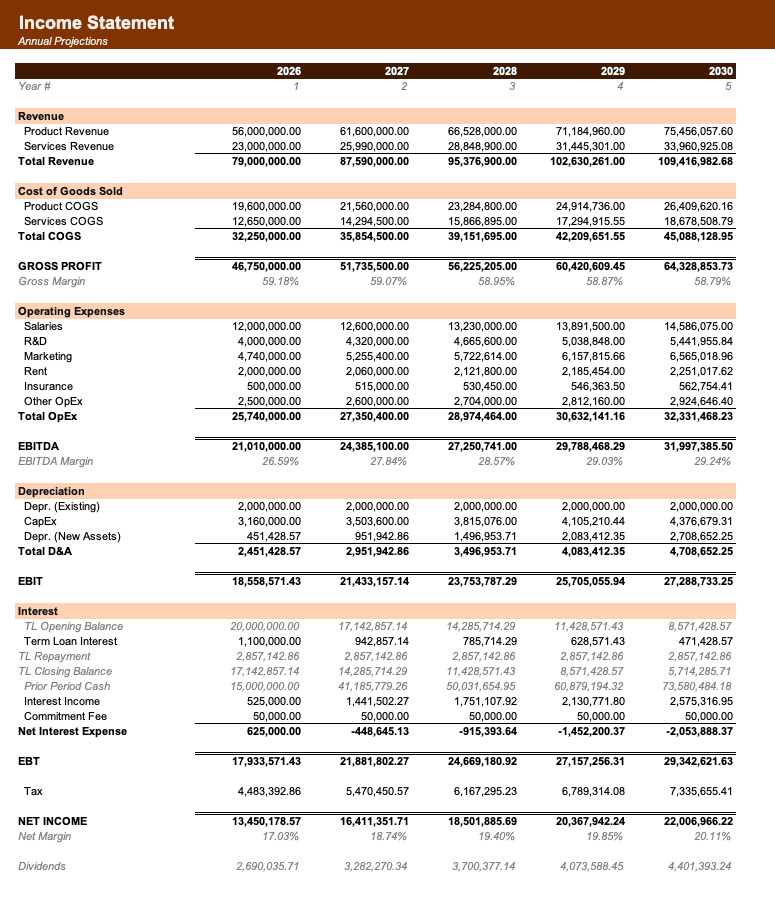
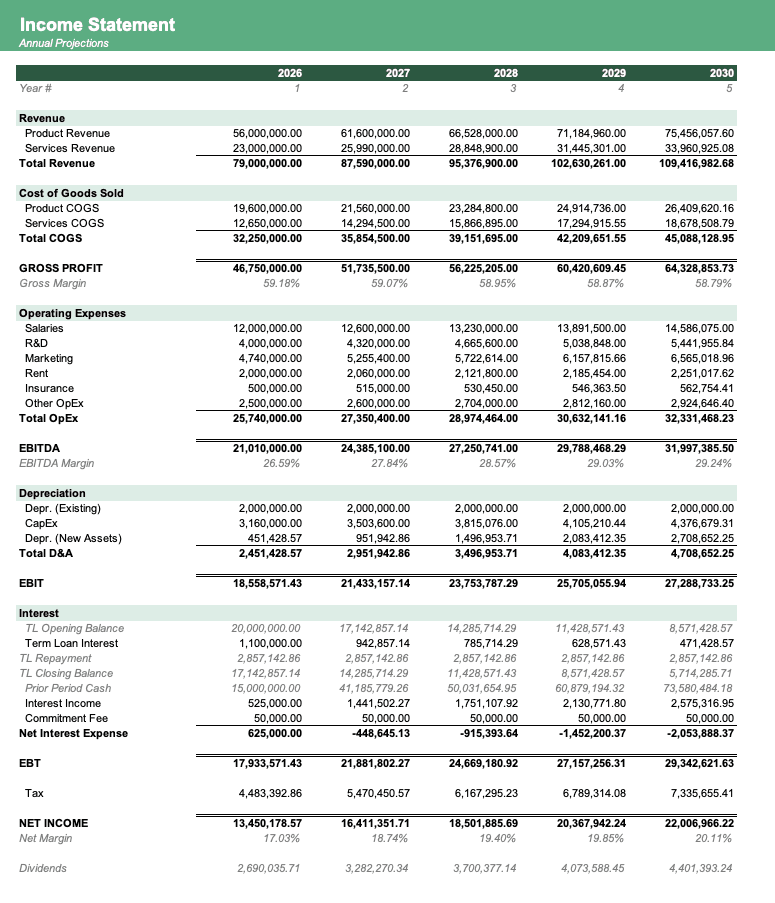
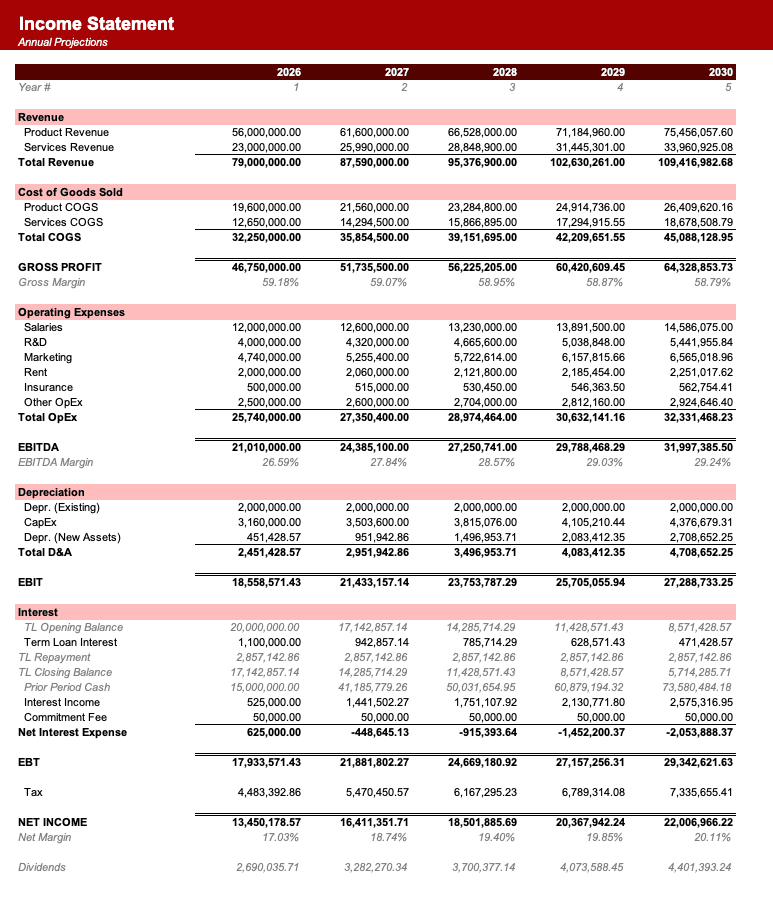
Formatted to IB standards
Named theme colors repaint the whole workbook in one click, on top of an investment-banking structure with clear input, output, and cross-sheet reference styling - brand-ready, institutional-grade, and fully auditable.

Created by ex-finance professionals
Hey, I’m Alex and I created Finamodel.
Over my years in the finance industry I kept building the same models over and over again. Same structure, same assumptions, different logo. So I started building frameworks to turn them into clean, reusable templates.
Every model here is one I’d actually use for a client, and I personally vet each one before it goes up.
I’m not an expert in every industry, but I’ve built enough models to know what belongs in one. And when something is completely foreign to me, I reach out to my network for experts to work on our models with us.
Having a template library on hand cuts a first build from hours to minutes.
Need help finding your model? You’ll find me in the Finamodel app!
Frequently asked
What is a pre-seed financial model?+
A 24-month bottom-up forecast covering revenue ramp, headcount, operating expenses, burn rate, and runway, built to support fundraising conversations at the pre-seed or seed stage.
What is a good CAC payback period for a startup?+
CAC payback under 12 months is strong for SaaS, indicating that revenue from a customer covers acquisition cost quickly and the model scales efficiently.
How do I model customer growth?+
Start with a realistic monthly activation rate and cohort retention, then apply monthly growth acceleration as the team scales marketing spend.
How do I calculate runway?+
Runway equals current cash balance divided by monthly net burn rate. The model calculates this automatically from your revenue and expense assumptions each month.
Can I model multiple product lines?+
Yes. The model includes separate line items for different revenue streams and shows blended unit economics across all products.
Have more financial modelling questions? Contact us
Related templates
Bridge Round Financing Model
Convertible note and SAFE financing analysis.
Convertible Note and SAFE Model
Model SAFE and convertible note terms with conversion triggers and equity rounds.
Venture Capital Fund Model
Model VC fund cash flows, distributed returns, and IRR by vintage year and exit scenario.
3 Statement Model
Integrated income statement, balance sheet, and cash flow forecasts.


