Preferred Equity Waterfall Model
Corporate Finance Financial Model (Free Excel Download)
Compare preferred equity exit outcomes through liquidation preferences, participation caps, conversion choices, share classes, and proceeds allocated to each investor group.



professionals from Deloitte
Used by professionals from






About this model
Allocate exit proceeds through a multi-class equity waterfall with preferred return compounding, return-of-capital priority, sponsor catch-up, and residual split mechanics. This template models Class A, B, and C preferred equity alongside common equity (sponsor), with each class accruing a preferred return (e.g., Class A at 6%, Class B at 10%) on unreturned capital, and distributions flowing through strict tiers. The model handles preferred return compounding when operating cash flows are insufficient for full payment in a given year.
The workbook includes a project cash flow sheet (NOI growth and exit proceeds based on entry/exit cap rates), capital account tracking for each class (contributed capital, returned capital, accrued but unpaid preferred, distributions received), and a full waterfall schedule showing cash allocation each year. The model validates that Class B receives zero preferred until Class A's accrued preferred is satisfied, and that catch-up payments properly equalize GP share of cumulative profits. Returns sheets calculate IRR and equity multiple for each class and document the J-curve effect (common equity receiving nothing until preferred classes are made whole).
Target users are real estate sponsors structuring joint ventures, institutional LPs evaluating preferred equity tranches, and capital markets teams modeling multi-tranche equity offerings in the $10M to $500M equity range.
What every model includes
Live formulas, no hardcoded values
Outputs are driven by live formulas, so the workbook updates from its assumptions instead of relying on hardcoded results.
All assumptions in one tab
Inputs are clearly marked in the Assumptions tab and separated from calculations, making it clear what to change and what to leave intact.
Statements always balancing
For integrated-statement models, the balance sheet, cash flow, and supporting schedules tie through properly.
Distinct schedules for clarity
Debt, working capital, taxes, and cash flow can get messy quickly. We group calculations in clear schedules, not across disconnected tabs.
No hidden macros or external links
There are no unexplained external workbook links or macros to undermine auditability or portability.
Changes flow through the model
Update a key driver and see the impact carry through the forecast, financing, and return outputs. We never use hardcoded numbers in formulas.
What's inside the Preferred Equity Waterfall Model
- Preferred stock series with liquidation preferences and multiples
- Conversion thresholds and anti-dilution adjustments
- Participation and accrued dividend calculations
- Exit price scenarios and waterfall distributions
- Common equity holder returns and fully diluted allocation
- Return analysis and sensitivity to exit multiple
Preferred Equity Waterfall Model: How Tiered Exit Proceeds Are Allocated
This preferred equity waterfall model shows how cash from a real estate or private equity project flows to multiple equity classes after debt service. It answers who gets paid, when, and at what IRR and MOIC under a tiered structure.
The template suits sponsors and institutional investors evaluating preferred equity tranches.
What Drives Distributions in the Preferred Equity Waterfall Model
Distributions depend on project-level cash flows and contractual equity terms. Annual net operating cash flow is NOI less capex.
- In the exit year, sale proceeds are added, calculated as exit NOI divided by exit cap rate, net of selling costs. Debt service sits above the equity waterfall, so it is already removed before cash enters.
- The equity stack orders Class A, B, and C preferred, then common. Each class has a contribution amount and a preferred rate.
Hold periods typically run five to ten years, with six years as a common default. Current-pay or accruing preferred returns are available.
The Four-Tier Calculation Flow
The waterfall applies strict priority. Tier 1 returns contributed capital to Class A, then B, then C, then common.
- Tier 2 pays accrued preferred return in the same order. Tier 3 is a sponsor catch-up calculated on total preferred paid, not on residual profits.
- Tier 4 splits residual cash between limited partners and the sponsor using a tiered promote that steps at LP equity-multiple hurdles. A distribution policy toggle controls whether the full waterfall runs every year or only on exit, while operating cash mid-hold pays preferred only.
Accrued preferred compounds annually on unreturned capital plus unpaid carry. Year zero accrues nothing.
Outputs and Returns by Equity Class
The model reports per-class IRR, MOIC, and DPI, with capital accounts showing unreturned capital, accrued preferred, and cumulative distributions.
- A preferred shortfall block surfaces unpaid carry.
- The distribution waterfall sheet shows remaining cash after each tier, and the checks sheet confirms that all distributions sum to total distributable cash, capital accounts reconcile, and preferred is fully paid before any residual.
- Scenario toggles for base, bull, and bear adjust year-one NOI, NOI growth, and exit cap rate, while equity sizes, preferred rates, hold period, promote splits, and hurdles stay constant.
Practical Use and Scope
Use this template to structure or evaluate multi-tranche equity investments where preferred holders need transparency on payment priority and promote mechanics. It is designed for joint ventures and co-investments with equity of roughly $10M to $500M, and for capital markets teams structuring tiered equity offerings.
- The model isolates real-asset risk from waterfall structure through scenario inputs. It helps answer whether preferred classes are made whole and how sponsor promote crystallizes at exit.
- The public download is a values-only preview; it does not contain live formulas or automatically recalculate.
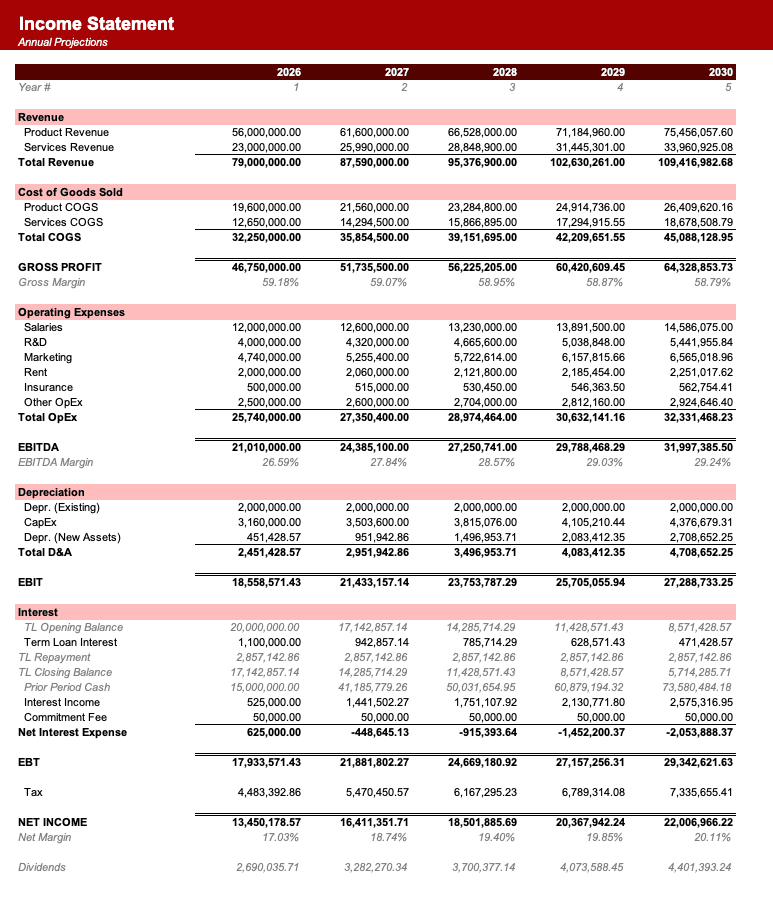
Formatted to IB standards
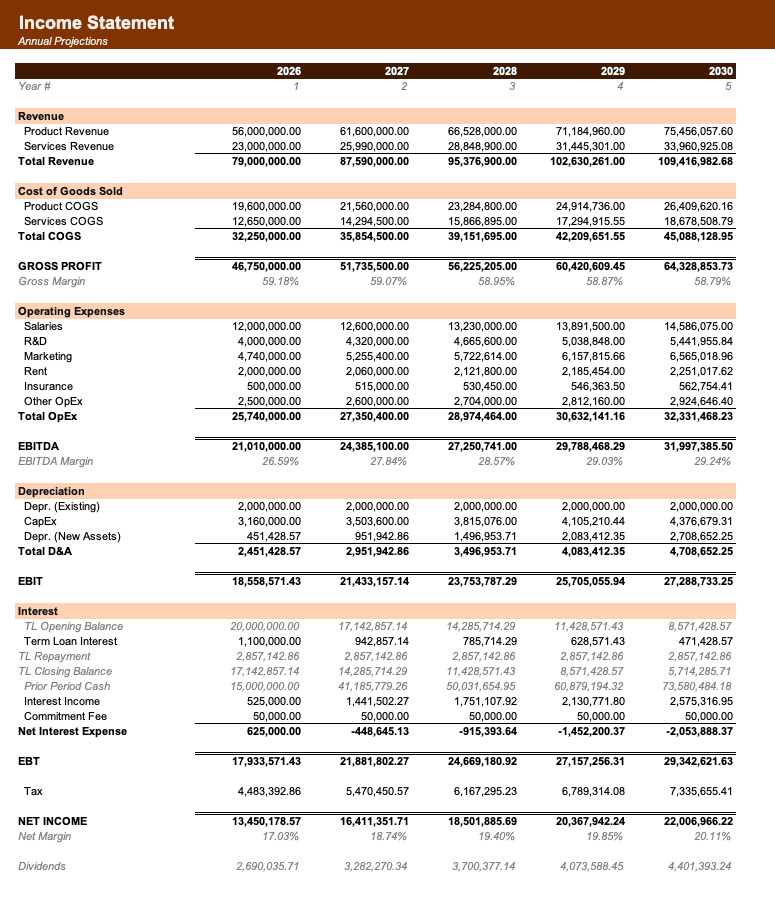
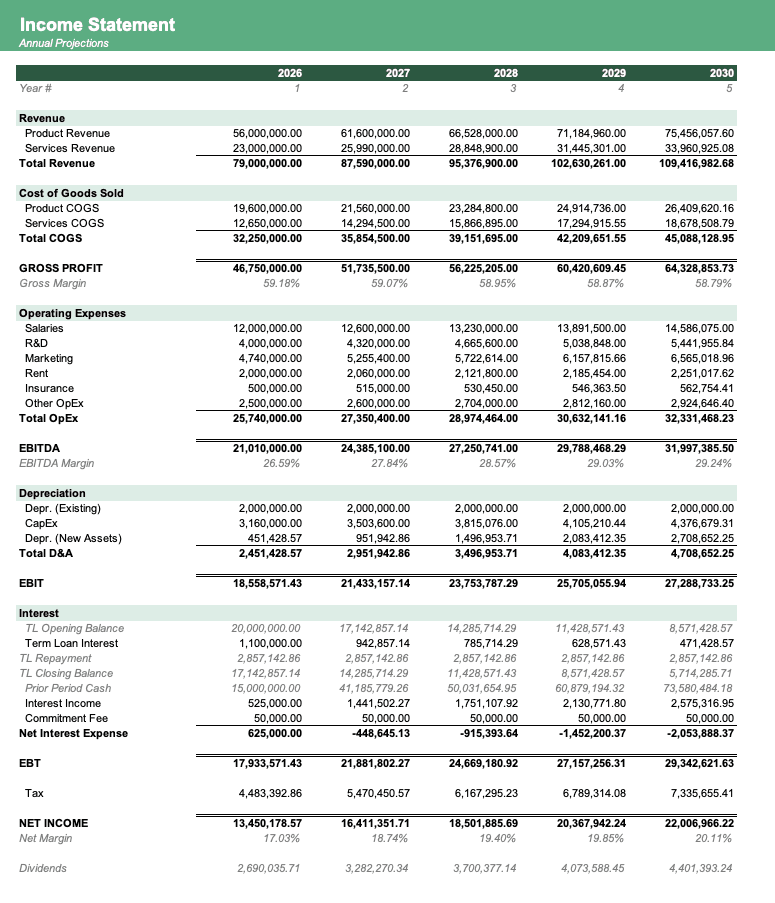
Named theme colors repaint the whole workbook in one click, on top of an investment-banking structure with clear input, output, and cross-sheet reference styling - brand-ready, institutional-grade, and fully auditable.

Created by ex-finance professionals
Hey, I’m Alex and I created Finamodel.
Over my years in the finance industry I kept building the same models over and over again. Same structure, same assumptions, different logo. So I started building frameworks to turn them into clean, reusable templates.
Every model here is one I’d actually use for a client, and I personally vet each one before it goes up.
I’m not an expert in every industry, but I’ve built enough models to know what belongs in one. And when something is completely foreign to me, I reach out to my network for experts to work on our models with us.
Having a template library on hand cuts a first build from hours to minutes.
Need help finding your model? You’ll find me in the Finamodel app!
Frequently asked
What is a preferred equity waterfall model?+
A model that calculates how exit or liquidation proceeds are distributed across preferred share classes and common equity holders, accounting for preferences, participation, and conversion rights.
What is a liquidation preference?+
A liquidation preference specifies the order and formula by which preferred shareholders receive proceeds before common shareholders in an exit or winding down event.
What is 1x non-participating preferred?+
The investor receives the greater of 1x their investment or the common stock equivalent at exit - they cannot receive both the preference and participate in remaining upside.
How does anti-dilution work?+
Anti-dilution adjusts the conversion price of preferred stock downward if future fundraising occurs at a lower valuation, protecting investor ownership percentage and return.
Who uses a preferred equity waterfall model?+
Founders, investors, M&A advisors, and board members use it to understand exit outcomes, plan liquidity events, and evaluate term sheet structures.
Have more financial modelling questions? Contact us
Related templates
Cap Table Management Model
Equity ownership tracking and scenario modeling.
Exit Waterfall Model
Waterfall analysis for M&A, IPO, or sale with proceeds distributed to shareholders and securities holders.
Convertible Bond Model
Model convertible bond economics with conversion scenarios, dilution, and bond value.
3 Statement Model
Integrated income statement, balance sheet, and cash flow forecasts.