Exit Waterfall Model
Corporate Finance Financial Model (Free Excel Download)
Analyze exit proceeds across liquidation preferences, participation, conversion, option pools, and management carve-outs to understand stakeholder outcomes at each valuation.



professionals from Deloitte
Used by professionals from






About this model
An exit waterfall model allocates M&A or IPO proceeds through the cap table according to liquidation preferences. When a startup worth $500 million exits, the proceeds are distributed first to pay off debt (with accrued interest), then to preferred stockholders according to their liquidation preference (non-participating, participating, or capped multiple), and finally to founders and common stockholders. The model is essential because a common founder assumption - "I own 20% of the company, so I get 20% of proceeds" - is often catastrophically wrong if preferred investors have 1x, 2x, or capped multiple liquidation preferences.
The workbook shows the per-founder economics across different exit values: how much does a founder receive at $200 million versus $1 billion? It highlights scenarios where junior investors receive zero (underwater rounds). Sensitivity analysis shows the impact of different exit values and down-round scenarios on founder and early investor returns. The model accounts for transaction costs (investment banking fees, legal, taxes) that reduce net proceeds available for distribution.
This template is standard for venture boards, angel investors, and founders during exit negotiations - where clarity on who gets what is non-negotiable.
What every model includes
Live formulas, no hardcoded values
Outputs are driven by live formulas, so the workbook updates from its assumptions instead of relying on hardcoded results.
All assumptions in one tab
Inputs are clearly marked in the Assumptions tab and separated from calculations, making it clear what to change and what to leave intact.
Statements always balancing
For integrated-statement models, the balance sheet, cash flow, and supporting schedules tie through properly.
Distinct schedules for clarity
Debt, working capital, taxes, and cash flow can get messy quickly. We group calculations in clear schedules, not across disconnected tabs.
No hidden macros or external links
There are no unexplained external workbook links or macros to undermine auditability or portability.
Changes flow through the model
Update a key driver and see the impact carry through the forecast, financing, and return outputs. We never use hardcoded numbers in formulas.
What's inside the Exit Waterfall Model
- Seniority-aware preference stack across seed, Series A, Series B, and later rounds
- Participating preferred versus common conversion logic by shareholder class
- Proceeds distribution by investor, founder, employee option pool, and other stakeholders
- Scenario testing across low, mid, and high exit values to show breakpoints in payout outcomes
- Visibility into preference overhang, common participation, and effective take-home by group
- Transaction proceeds and transaction costs (fees, taxes)
- Debt payoff with accrued interest
- Preferred stock liquidation preferences: non-participating, participating, multiple
Exit Waterfall Model: How the Template Allocates Exit Proceeds
This exit waterfall model template helps you allocate M&A or IPO proceeds across a startup cap table. It handles multi-class equity, liquidation preferences, participation caps, anti-dilution, SAFE and note conversion, warrants, and transaction fees.
The public download is a values-only preview, but the underlying model captures the full distribution logic for evaluating who gets paid at each exit valuation.
Operating Drivers and Assumptions
The model is driven by inputs on the Assumptions sheet, including a cap-table snapshot, deal terms for each priced round, SAFE and convertible-note slots, anti-dilution toggle, transaction parameters, tax settings, and exit scenarios. Each priced round has a seniority rank, liquidation preference multiple, participation cap, warrant coverage, and investor name.
- Seniority defaults to reverse-vintage, with Series E most senior and Seed most junior, and pari-passu handling when ranks tie. SAFE and note conversion depends on seed price, discount, valuation cap, or accrued interest.
- These drivers feed the Waterfall and Returns sheets.
Calculation Flow Through the Distribution Chain
The Waterfall sheet processes seven exit scenarios through a defined chain. It starts with gross proceeds, subtracts debt payoff and transaction fees to arrive at available proceeds.
- Then it walks seniority tiers from most to least senior, paying each class its liquidation preference where funds allow. For participating classes, payout is the lesser of paid preference plus pro-rata share of remainder, or the cap multiple times invested capital.
- The model performs a conversion election, converting to common when as-converted pro-rata exceeds the capped payout. A distribution check ensures total payouts equal available proceeds.
Anti-dilution adjustments and SAFE or note conversions are applied on the Cap_Table before the waterfall.
Outputs and Diagnostic Reports
The Waterfall sheet outputs per-class distributions and a totals row with a check. A 'Cap Triggered?'
- diagnostic row flags classes hitting participation caps per scenario, and a stack-underwater diagnostic highlights when total liquidation preferences exceed available proceeds. The Returns sheet reports MOIC and gain or loss by class, plus pre- and post-tax founder payouts, with a split between common and preferred.
- Founder net-of-tax block incorporates QSBS eligibility, LTCG rate, and exclusion cap. Investor-name labels customize cap-table and returns labels.
These outputs support exit-negotiation analysis.
Practical Use and Documented Limitations
This template is designed as a board-ready exit-negotiation tool.
- It helps stakeholders compare outcomes across exit valuations and capital structures.
- Users should note documented limitations: the conversion election uses a single-shot approach, which may show small mismatches on aggressive stacks where multiple classes interact; anti-dilution adjustments apply only against the immediately-following round; and SAFE conversion uses a post-ESOP fully-diluted denominator excluding SAFE shares.
- The model includes checks for distribution consistency and named-range errors, but the public download is a values-only preview and does not recalculate.
Formatted to IB standards
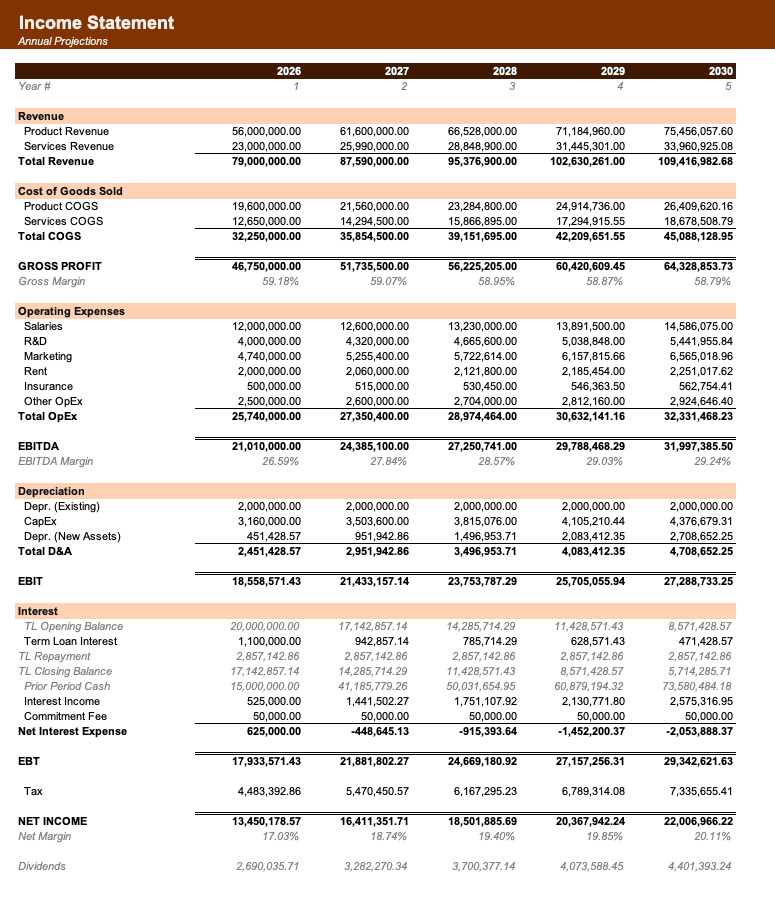
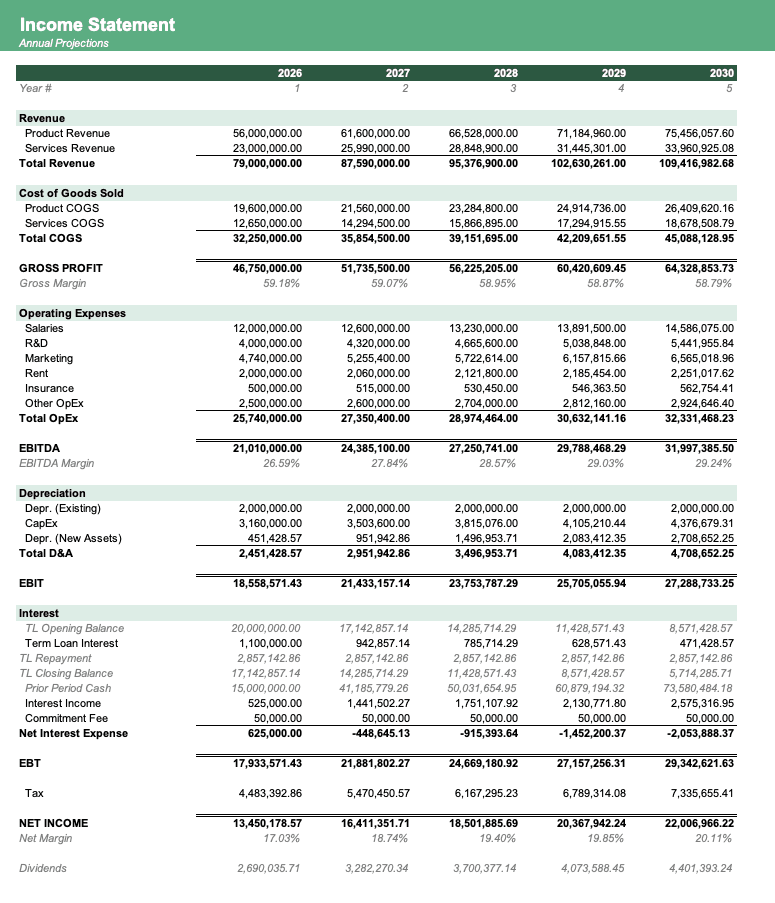
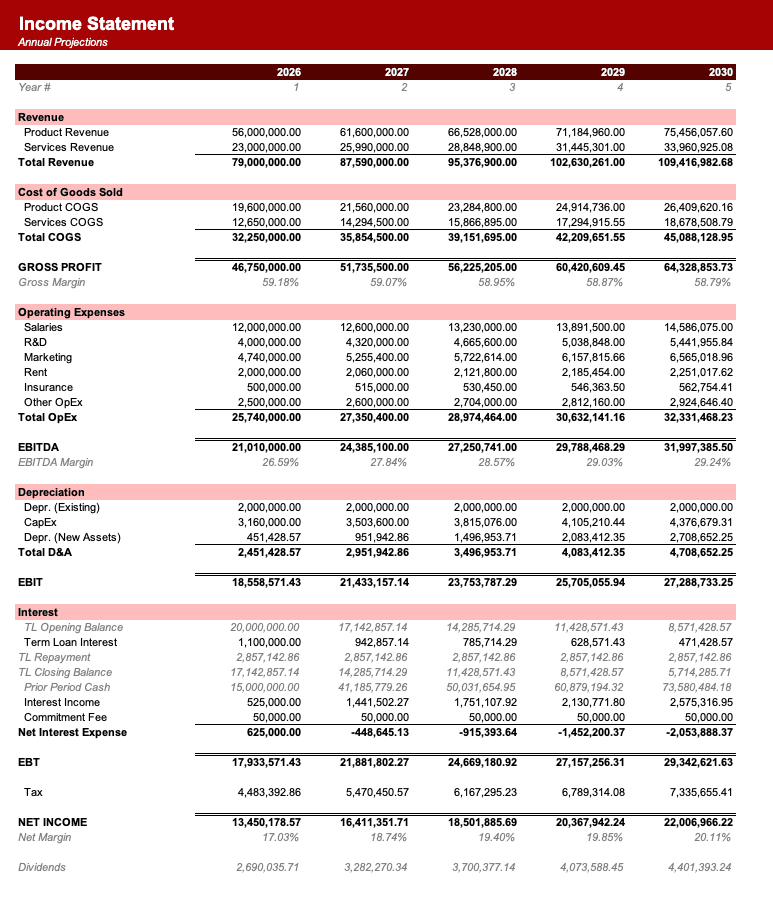
Named theme colors repaint the whole workbook in one click, on top of an investment-banking structure with clear input, output, and cross-sheet reference styling - brand-ready, institutional-grade, and fully auditable.

Created by ex-finance professionals
Hey, I’m Alex and I created Finamodel.
Over my years in the finance industry I kept building the same models over and over again. Same structure, same assumptions, different logo. So I started building frameworks to turn them into clean, reusable templates.
Every model here is one I’d actually use for a client, and I personally vet each one before it goes up.
I’m not an expert in every industry, but I’ve built enough models to know what belongs in one. And when something is completely foreign to me, I reach out to my network for experts to work on our models with us.
Having a template library on hand cuts a first build from hours to minutes.
Need help finding your model? You’ll find me in the Finamodel app!
Frequently asked
What is an exit waterfall model?+
It is a model that shows how sale proceeds are distributed across equity holders, preferred investors, and other stakeholders.
Why is it important?+
Because liquidation preferences and participation rights can materially change founder and investor outcomes.
What should an exit waterfall model include?+
It should include preference stacks, participation rules, conversion logic, and proceeds distribution by stakeholder.
Who uses exit waterfall models?+
Founders, investors, legal advisers, and finance teams use them when exit proceeds may be complex to interpret.
When is this most useful?+
It is especially useful when multiple rounds of preferred equity or participation rights make outcomes hard to estimate intuitively.
Have more financial modelling questions? Contact us
Related templates
Cap Table Management Model
Equity ownership tracking and scenario modeling.
Leveraged Buyout Model
Complete LBO analysis with debt financing structures, sponsor returns, and sensitivity to exit scenarios.
Preferred Equity Waterfall Model
Multi-class capital stack, liquidation preferences, and equity holder returns for preferred and common stock.
3 Statement Model
Integrated income statement, balance sheet, and cash flow forecasts.


