Student Housing Development Model
Real Estate Financial Model (Free Excel Download)
Evaluate student housing returns with beds, lease-up, occupancy, rent growth, operating costs, construction funding, and exit valuation driving project cash flow.



professionals from Deloitte
Used by professionals from






About this model
This student housing development model follows a project from land and construction costs through opening, lease-up, and a future sale. It gives you a clear view of how rents, occupancy, operating costs, and financing shape the investment case over time.
Use it to compare different rental, occupancy, and exit assumptions before deciding whether a project is worth pursuing. The summary brings together the development budget, cash flow, income once the property is operating, and the potential return to investors.
What every model includes
Live formulas, no hardcoded values
Outputs are driven by live formulas, so the workbook updates from its assumptions instead of relying on hardcoded results.
All assumptions in one tab
Inputs are clearly marked in the Assumptions tab and separated from calculations, making it clear what to change and what to leave intact.
Statements always balancing
For integrated-statement models, the balance sheet, cash flow, and supporting schedules tie through properly.
Distinct schedules for clarity
Debt, working capital, taxes, and cash flow can get messy quickly. We group calculations in clear schedules, not across disconnected tabs.
No hidden macros or external links
There are no unexplained external workbook links or macros to undermine auditability or portability.
Changes flow through the model
Update a key driver and see the impact carry through the forecast, financing, and return outputs. We never use hardcoded numbers in formulas.
What's inside the Student Housing Development Model
- Land acquisition and development costs
- Construction period and carrying cost
- Lease-up assumptions and occupancy ramp curve
- Rental rate assumptions by bed type and location
- Stabilized NOI and exit valuation scenarios
- Operating expense and student housing-specific costs
Student Housing Development Model: How the PBSA Template Works
This student housing development model template supports early-stage evaluation of a UK purpose-built student accommodation scheme. It spans a two-year construction phase and a ten-year operating hold, letting you weigh development risk against potential returns before committing capital to a full underwriting exercise.
What Drives the PBSA Operating Case
The model treats the asset as a bed-level rental business. Each year, academic revenue follows directly from the number of beds, the split between en-suite and studio rooms, weekly rents for each type, a 44-week academic period and academic occupancy.
- Summer lettings run separately across a shorter eight-week window at a discounted blended rent, so the two seasons are deliberately kept apart. A small ancillary income line captures modest laundry or amenity charges.
- This is a return-sensitive core of the model. Small movements in occupancy or weekly rent change gross revenue very quickly.
From Revenue to Net Operating Income
Operating costs are expressed primarily as percentages of gross revenue, which keeps the cost base tied to scale rather than fixed assumptions. The management fee follows revenue, while other lines such as maintenance, insurance, rates, security and marketing escalate with inflation but remain proportional to turnover.
- Utility costs are split, with a fixed share that does not move with occupancy and a variable share that tracks it. Total operating costs, deducted from gross revenue, gives a net operating income that stabilises as occupancy settles.
- This structure makes the stabilised margin a central output rather than an afterthought.
Development Cost, Debt and Exit Pricing
On the investment side, the template builds total development cost from land, hard construction, professional fees, contingency and capitalised interest during construction. A senior loan sized against that cost funds part of the development, with interest capitalised using an average-draw logic over the build period and added into the cost base.
- The remaining equity is contributed during construction. At exit, value is derived by applying a forward net operating income figure to a chosen exit cap rate, with selling costs deducted before equity proceeds are shared.
- This yield-on-cost versus exit-yield relationship is the development spread a developer relies on.
What the Template Outputs and Checks
The model produces a ten-year operating and cash flow view, with debt service coverage, equity cash flows and an equity IRR as its headline outputs.
- Checks are built in to confirm the balance sheet balances, that bed counts reconcile by room type, that cash does not turn negative and that the minimum debt service coverage stays within a defined threshold.
- The structure keeps the model simple enough to audit, with no circularity in the debt schedule.
- Practical use is early-stage evaluation: testing whether yield on cost sits above the exit cap rate and whether the levered return is worth the construction risk.
Formatted to IB standards
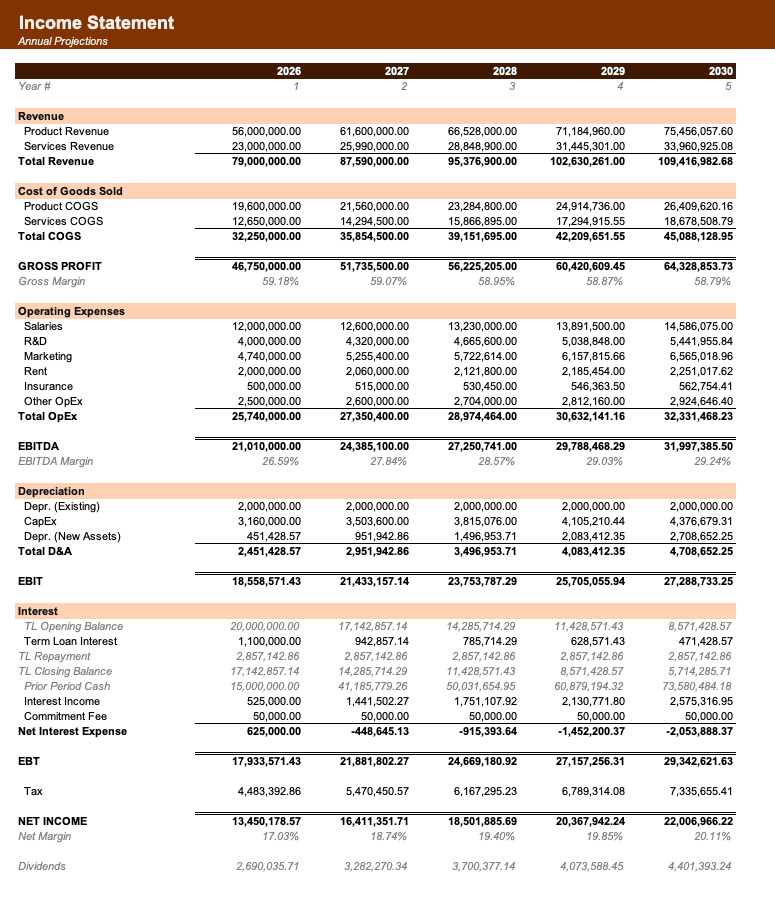
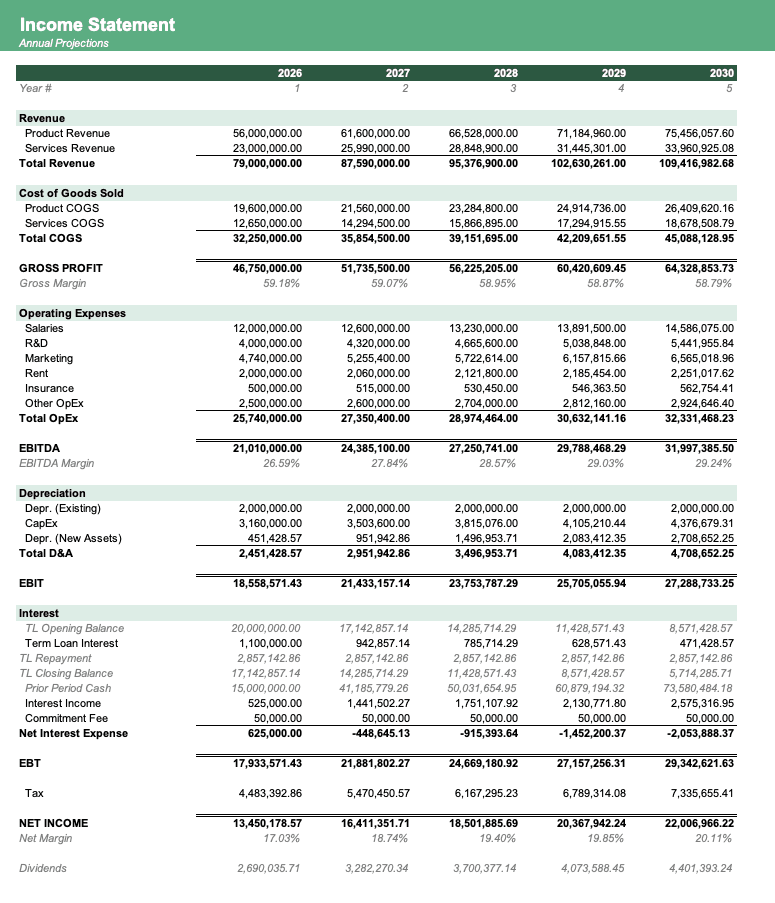
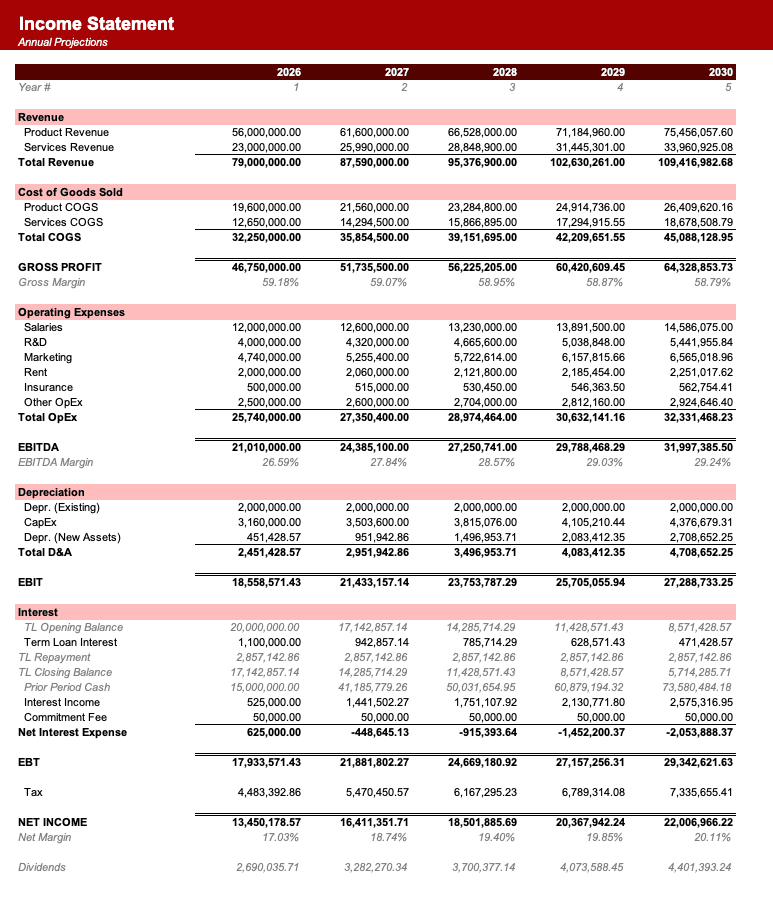
Named theme colors repaint the whole workbook in one click, on top of an investment-banking structure with clear input, output, and cross-sheet reference styling - brand-ready, institutional-grade, and fully auditable.

Created by ex-finance professionals
Hey, I’m Alex and I created Finamodel.
Over my years in the finance industry I kept building the same models over and over again. Same structure, same assumptions, different logo. So I started building frameworks to turn them into clean, reusable templates.
Every model here is one I’d actually use for a client, and I personally vet each one before it goes up.
I’m not an expert in every industry, but I’ve built enough models to know what belongs in one. And when something is completely foreign to me, I reach out to my network for experts to work on our models with us.
Having a template library on hand cuts a first build from hours to minutes.
Need help finding your model? You’ll find me in the Finamodel app!
Frequently asked
What does this model help me decide?+
It helps you test whether a project can support its development cost, financing, and expected return before you commit capital.
How does it handle lease-up?+
Set the opening date and expected occupancy ramp. The model shows how the property moves from opening to a stabilised level of occupancy and income.
How is rental income forecast?+
Enter rents by bed type and your assumptions for academic and summer lets. The model converts those assumptions into revenue over the hold period.
Does it include development financing?+
Yes. It includes development costs, construction-period interest, and debt so you can see their effect on cash flow and returns.
Who is this template for?+
It is built for developers, investors, and lenders evaluating a student housing project.
Have more financial modelling questions? Contact us
Related templates
Multifamily Residential Model
Investment model for multifamily apartment communities with unit economics, rents, occupancy, and NOI.
Mixed-Use Real Estate Development
Financial model for mixed-use projects combining residential, commercial, and retail with phased development.
Real Estate Development Pro Forma Model
Land cost, construction budget, lease assumptions, and project IRR for commercial and residential development.
Hotel Operating Model
Operating model for hotel properties including occupancy rates, average daily rate (ADR), RevPAR optimization, and facility-level profitability.


