Secondary Private Company Sale Model
Private Equity Financial Model (Free Excel Download)
Analyze private-company secondary sales with transaction pricing, shareholder liquidity, dilution, cap table changes, and buyer or seller returns.



professionals from Deloitte
Used by professionals from






About this model
Model secondary sales of private company stakes across buyer types (strategic, secondary fund, secondary buyer) and exit multiples. The model evaluates valuation ranges by buyer cohort, calculates holding period returns under different exit scenarios (1x to 2x MOIC), and shows tax impact on net proceeds by equity holder class. It helps secondaries traders, employee option holders, and early-stage investors understand downside (buyer walk-away prices) vs upside (strategic premium) without optimism bias.
The model supports multi-buyer valuation scenarios: strategics price based on synergy (often 1.0-1.5x cost basis in down markets); secondary funds use NAV-based pricing (typically 0.8-1.0x recent round valuation); and secondary buyers demand distressed discounts (0.5-0.8x). Holding period sensitivity shows how an additional 12-24 months of company growth changes exit multiples. Tax treatment distinguishes ordinary income from capital gains and models the impact of preferred vs common liquidation preferences.
Essential for founders evaluating partial liquidity, early employees considering option exercises, and secondaries traders building LPs for secondary funds. Avoids the "optimistic exit multiple" error that plagues early-stage valuations.
What every model includes
Live formulas, no hardcoded values
Outputs are driven by live formulas, so the workbook updates from its assumptions instead of relying on hardcoded results.
All assumptions in one tab
Inputs are clearly marked in the Assumptions tab and separated from calculations, making it clear what to change and what to leave intact.
Statements always balancing
For integrated-statement models, the balance sheet, cash flow, and supporting schedules tie through properly.
Distinct schedules for clarity
Debt, working capital, taxes, and cash flow can get messy quickly. We group calculations in clear schedules, not across disconnected tabs.
No hidden macros or external links
There are no unexplained external workbook links or macros to undermine auditability or portability.
Changes flow through the model
Update a key driver and see the impact carry through the forecast, financing, and return outputs. We never use hardcoded numbers in formulas.
What's inside the Secondary Private Company Sale Model
- Buyer profile analysis (strategic, secondary fund, direct buyer)
- Valuation range by buyer type and company stage
- Holding period and return scenarios (1x, 1.5x, 2x multiples)
- Tax impact and net proceeds by equity holder
- Secondary market pricing trends and benchmarks
- Liquidity analysis and timing considerations
Secondary Private Company Sale Model: A Buyer and Seller Valuation Framework
Use this secondary private company sale model to evaluate the transfer of an existing LP interest in a private equity or venture fund. The model computes the buyer's IRR and solves for the implied fair price that meets a target hurdle.
It also provides a seller's sale-versus-hold counterfactual, a multi-stake portfolio aggregator, and GP-led terms.
Scenario-Driven Assumptions and Operating Drivers
The model centralises all inputs on a single Assumptions tab, with a scenario toggle that selects Base, Bull, or Bear values via CHOOSE. Scenario-sensitive drivers include the discount to NAV, exit ramp weights, gross MOIC targets for winners, write-off percentages, and partial recovery MOIC.
- A second toggle switches between LP-led and GP-led transaction types. The active value for each input is held in a dedicated column, so downstream sheets and named ranges reference the selected scenario automatically.
- This structure lets you test how changes in pricing, portfolio performance, and transaction form affect both buyer and seller outcomes without rebuilding formulas.
Calculation Flow From Portfolio Runoff to Fund Economics
The calculation starts with a portfolio runoff schedule that applies the exit ramp to generate gross distributions and a capital-call ramp to project remaining commitments. These cash flows feed into a four-tier European waterfall.
- Tier one returns capital to LPs, tier two pays an 8 percent preferred return on called capital, tier three provides a GP catch-up, and tier four splits residual proceeds 80/20. The waterfall tracks cumulative allocations per tier, and an accrued preferred return row compounds the unreceived hurdle properly over time.
- A weighted holding period row is included as a diagnostic. This flow ensures the buyer inherits a fund with a known position in the waterfall and a clear distribution trajectory.
Buyer and Seller Outputs: IRR, Implied Price, and Sale-vs-Hold
For the buyer, the model builds a cash flow vector from the purchase price, capital calls, net distributions, deferred payments, escrow, and transaction costs. It then calculates the buyer's IRR and solves algebraically for the implied price at which that IRR equals a target hurdle.
- The summary block reports implied price in dollars and as a percentage of NAV, pricing headroom, and a BID/WATCH/PASS recommendation. For the seller, a separate schedule produces a lifetime cash flow under both a sale case and a hold case, using proper IRR calculations.
- The comparison block outputs a SELL or HOLD recommendation. Additional metrics include PME and the value of the J-curve the buyer avoids, though these are diagnostics rather than cash-flow inputs.
Practical Use: Portfolio Aggregation, GP-Led Terms, and Validation
The model extends beyond single-stake analysis with a five-stake portfolio aggregator. You can input per-stake NAV, commitment, called capital, distributions, discount, and target IRR to compute a blended price, MOIC, and IRR weighted by NAV.
- When the transaction type is set to GP-led, the GP_Led_Terms sheet surfaces continuation-vehicle terms such as new life, fee, carry, stapled commitment, and lead buyer allocation, showing the incremental commitment drag on the buyer's Year-1 cash flow. Twelve built-in checks validate exit and call ramps, waterfall tie-outs, pricing reasonableness, and fund life consistency.
- Some checks are designed to fail at base assumptions, prompting you to adjust inputs such as discount or target IRR to clear hurdles.
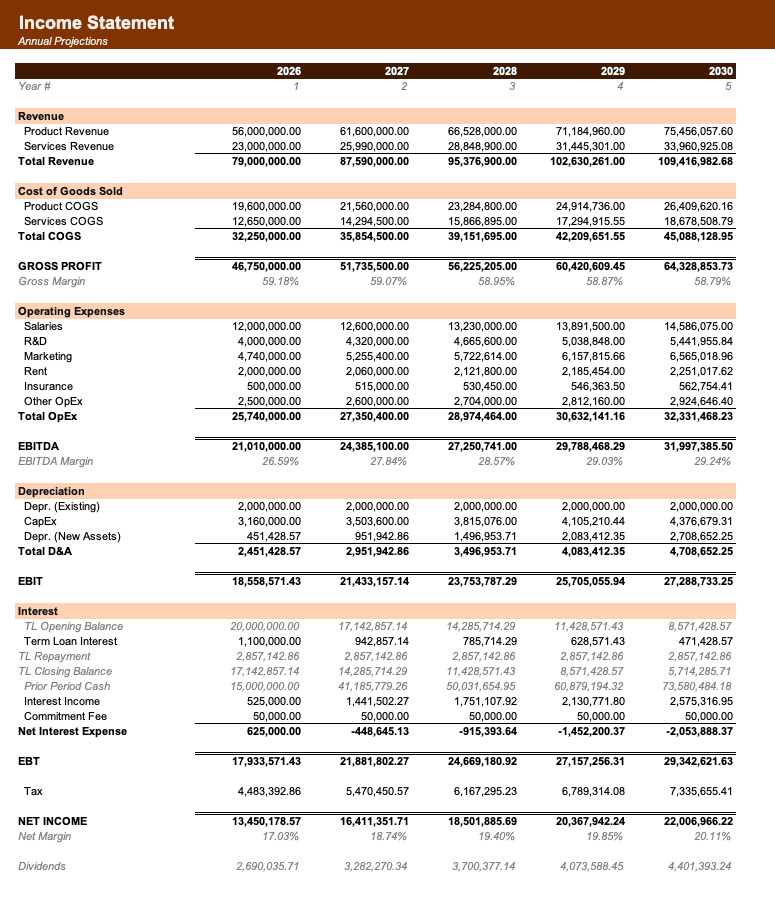
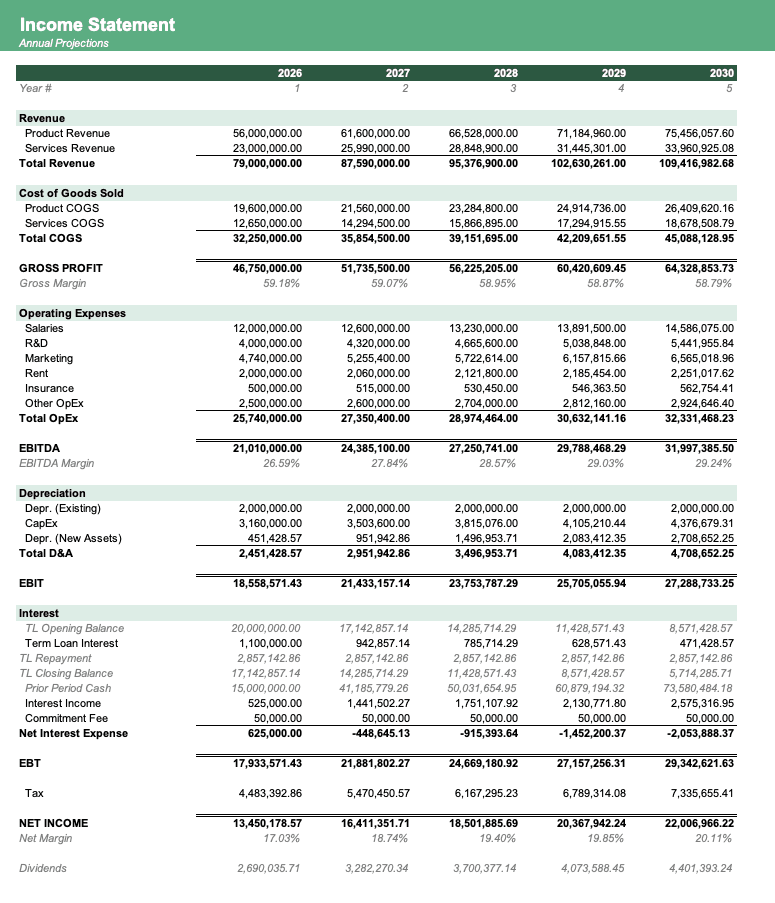
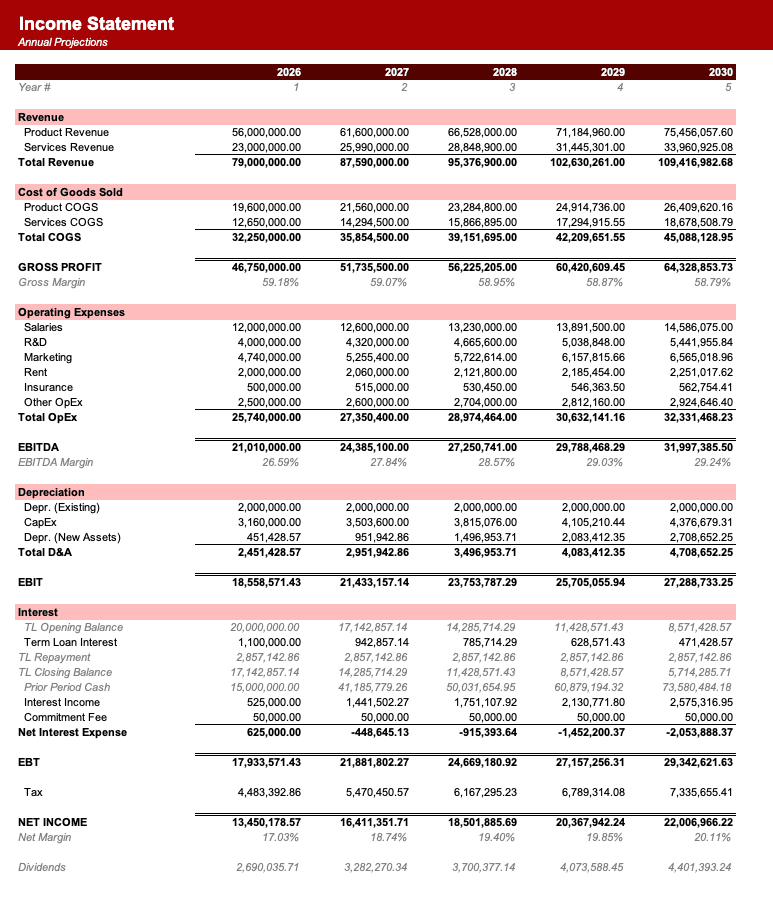
Formatted to IB standards
Named theme colors repaint the whole workbook in one click, on top of an investment-banking structure with clear input, output, and cross-sheet reference styling - brand-ready, institutional-grade, and fully auditable.

Created by ex-finance professionals
Hey, I’m Alex and I created Finamodel.
Over my years in the finance industry I kept building the same models over and over again. Same structure, same assumptions, different logo. So I started building frameworks to turn them into clean, reusable templates.
Every model here is one I’d actually use for a client, and I personally vet each one before it goes up.
I’m not an expert in every industry, but I’ve built enough models to know what belongs in one. And when something is completely foreign to me, I reach out to my network for experts to work on our models with us.
Having a template library on hand cuts a first build from hours to minutes.
Need help finding your model? You’ll find me in the Finamodel app!
Frequently asked
What is a secondary sale of a private company stake?+
An existing shareholder sells their stake to a secondary buyer before the company exits, usually at a discount to the last primary valuation, providing liquidity without waiting for an IPO or acquisition.
How much of a discount do secondary buyers pay?+
Secondary buyers typically pay 60-80% of the last primary round valuation, depending on company stage, growth trajectory, and revenue visibility.
Who are typical secondary buyers?+
Secondary funds (Coller, Partners Group, Thrive), mutual funds (Fidelity, Tiger), and direct buyers each have different return requirements and risk tolerances.
When does a secondary sale make sense over waiting for a primary exit?+
When the expected primary exit is more than 3-5 years away, the discount is modest, or investors need liquidity for fund distribution purposes before fund termination.
Who should use this model?+
Venture investors, secondary buyers evaluating pricing, founders weighing liquidity options, and early employees planning around their equity compensation.
Have more financial modelling questions? Contact us
Related templates
Venture Capital Fund Model
Model VC fund cash flows, distributed returns, and IRR by vintage year and exit scenario.
Secondary Fund Economics Model
LP-view model for secondary fund performance showing portfolio composition, J-curve, IRR, and return contribution by vintage and asset class.
Exit Waterfall Model
Waterfall analysis for M&A, IPO, or sale with proceeds distributed to shareholders and securities holders.
Leveraged Buyout Model
Complete LBO analysis with debt financing structures, sponsor returns, and sensitivity to exit scenarios.


