Financial Model Examples of Real Public Companies
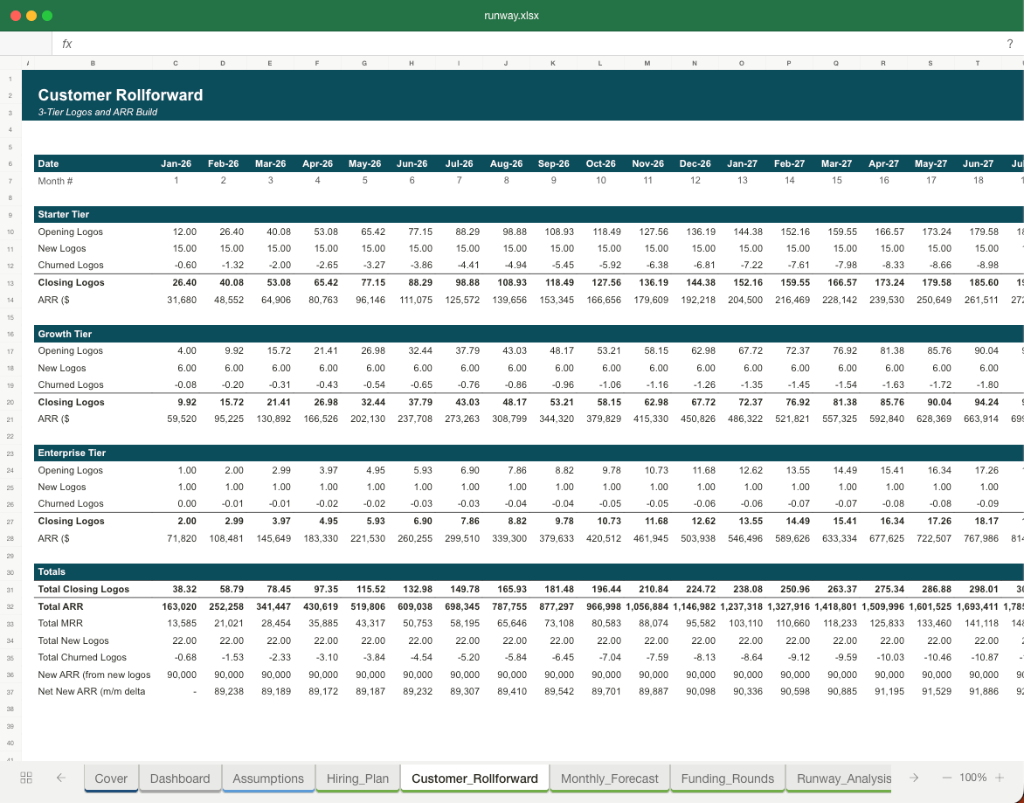
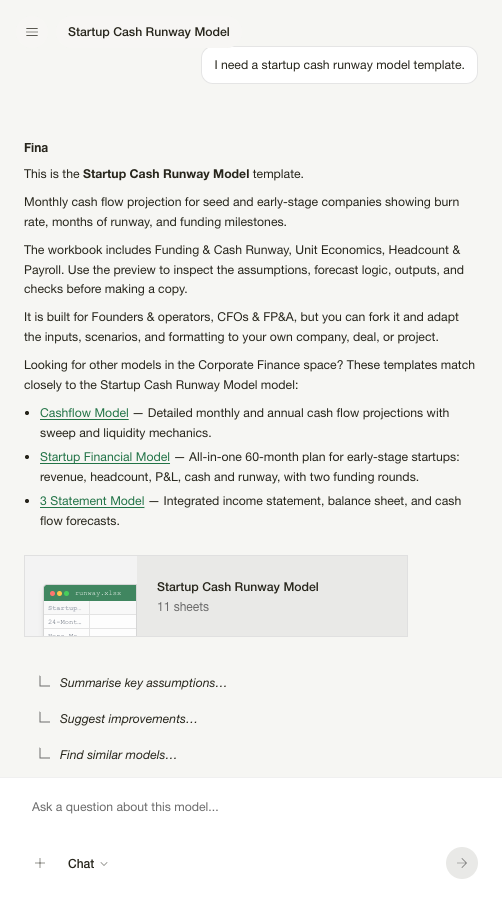
500 companies - with a downloadable 3-statement and full DCF model. Built from SEC EDGAR filings with five years of historicals and a five-year forecast.
Used by professionals from






Financial Model Examples by Industry
Aerospace and Defence
12Aerospace financial models that put order backlogs in context: delivery delays tie up cash, while engines in service generate recurring maintenance revenue.






Asset Management
9Asset management forecasts need to distinguish market gains from client inflows, and recurring management fees from income earned on investment exits.






Automotive
8Automotive financial models connect vehicle pricing and factory investment to cash flow, with replacement parts offering a different demand cycle.





Banking
20Banking forecasts connect loan growth to deposit costs, credit provisions, and capital needs to explain how lending translates into shareholder earnings.






Beverages
7Beverage financial models examine how premium pricing translates into profit after bottling, packaging, and distribution costs across production models.






Building Products
9Building products forecasts separate new construction from replacement demand and recurring service income on equipment already installed.





Business Services
9Business services financial models examine the cost of serving another customer, from data subscriptions to operations that need vehicles and crews.






Capital Markets
13Capital markets forecasts distinguish trading activity from asset prices and debt issuance, explaining why market volatility affects earnings unevenly.






Chemicals
14Chemical company forecasts examine the gap between selling prices and feedstock costs, including contract repricing and the effect of plant utilisation.






Construction
8Construction financial models connect project backlogs to billing milestones, labour payments, and the cash tied up in land and unfinished homes.






Consumer Goods
14Consumer goods forecasts separate price increases from volume growth and account for promotions, changing product mix, and seasonal inventory markdowns.






Cybersecurity
6Cybersecurity financial models explain how upfront subscriptions, renewals, and customer acquisition costs create differences between profit and cash flow.






Electronics
11Electronics forecasts connect customer production schedules to component inventory, factory utilisation, and the margins earned on manufacturing commitments.






Energy Equipment
6Energy equipment forecasts connect order backlogs to factory expansion, project delivery schedules, and the time needed to convert orders into cash.





Food
13Food company financial models examine how input cost increases pass through to customers, and when higher prices start to reduce sales volumes.






Hardware
13Hardware forecasts balance equipment replacement cycles and inventory obsolescence against recurring support income from the installed customer base.






Health Insurance
6Health insurance financial models examine whether premiums keep pace with medical claims, and how membership growth affects that earnings gap.






Healthcare Services
11Healthcare services forecasts distinguish hospital reimbursement, thin distribution margins, and clinical research contracts rather than treating revenue alike.






Industrial Equipment
24Industrial equipment forecasts separate new machinery demand from aftermarket sales and weigh rental fleet utilisation against replacement spending.





Insurance
24Insurance financial models connect premium income to uncertain future claims, reserve revisions, and investment returns, alongside brokerage fee earnings.






IT Services
7IT services financial models distinguish billable staff utilisation from the working capital of technology resale and the renewal economics of hosting.






Laboratory Equipment
7Laboratory equipment forecasts separate new instrument placements from the recurring consumable purchases and maintenance income they support over time.






Marketplaces
7Marketplace financial models distinguish transaction value from recognised revenue, and commission economics from the inventory costs of owning the sale.






Materials
8Materials forecasts connect selling prices to fixed production costs and transport economics across global metals markets and local construction demand.






Media
16Media financial models examine when content spending turns into subscription, advertising, or ticket revenue and how that timing affects cash generation.






Medical Devices
20Medical device forecasts connect equipment placements to recurring procedure revenue, while distinguishing implants and regularly replaced sensors.






Oil and Gas
22Oil and gas financial models distinguish production margins, refining spreads, and contracted pipeline fees, with different reinvestment needs for each.






Packaging
6Packaging forecasts examine the delay between rising input costs and contract price resets, alongside shipment volumes and factory utilisation.






Payments
8Payments financial models separate network fees from processing costs and card lending, including the effect of rewards, funding costs, and defaults.





Pharmaceuticals
15Pharmaceutical financial models examine how product launches replace income lost after patent expiry, while research spending precedes uncertain returns.






Real Estate
26Real estate financial models connect lease renewals and occupancy to cash available after debt refinancing, maintenance, and property investment.





Restaurants
6Restaurant financial models examine how traffic, menu prices, and wages affect store profits, and how franchising changes margins and expansion costs.






Retail
15Retail financial models connect sales growth to inventory turnover, markdowns, and supplier payment terms to explain why profit and cash can diverge.






Semiconductors
17Semiconductor financial models examine the mismatch between chip demand and factory investment across designers, manufacturers, and equipment suppliers.






Software
20Software financial models connect subscription renewals and customer expansion to acquisition costs, cloud spending, and the timing of cash receipts.






Telecom
9Telecom financial models examine subscriber retention against fixed network costs, upgrade spending, and the income from sharing tower infrastructure.






Transportation
12Transportation financial models balance passenger and freight volumes against pricing, fixed network costs, fuel spending, and fleet replacement.






Travel
11Travel financial models distinguish booking fees from the cost of owning hotels and ships, including occupancy and cash received before a trip begins.






Utilities
31Utility financial models connect infrastructure spending to rate recovery and financing needs, while separating regulated returns from market power prices.






Search Company Financial Model Examples

Walmart
Walmart is an omnichannel retailer operating stores, clubs, and e-commerce platforms globally, offering a broad assortment of merchandise and services at everyday low prices through Walmart U.S., Walmart International, and Sam's Club.
Amazon
Amazon is a multinational technology and retail conglomerate that operates the world's largest e-commerce marketplace and the leading cloud computing platform.
Apple
Apple designs, manufactures, and markets smartphones, personal computers, tablets, and wearables, alongside a growing suite of subscription and transaction-based services.
UnitedHealth Group
UnitedHealth Group is a diversified health care company operating through two distinct but complementary platforms: UnitedHealthcare (health benefits) and Optum (health services).

McKesson
McKesson Corporation is a leading global healthcare services and information technology company that distributes pharmaceuticals and medical supplies.
CVS Health
CVS Health is a vertically integrated health solutions company that operates across the entire healthcare spectrum, providing health insurance, pharmacy benefit management, and retail pharmacy services.

ExxonMobil
ExxonMobil is a multinational integrated oil and gas corporation that explores for, produces, and refines crude oil and natural gas, while also manufacturing petroleum products and basic petrochemicals.
Alphabet
Alphabet is a global technology holding company known for its core Google internet products including Search, YouTube, Android, and Chrome, generating revenue primarily through digital advertising while scaling cloud computing and AI infrastructure.
Cencora
Cencora, formerly AmerisourceBergen, is one of the largest global pharmaceutical sourcing and distribution services companies.
Costco
Costco Wholesale Corporation operates an international chain of membership warehouses that offer high-quality, brand-name merchandise at substantially lower prices than are typically found at conventional wholesale or retail sources.

Microsoft
Microsoft is a global technology company that develops, licenses, and supports a wide range of software products, services, and devices.
Cardinal Health
Cardinal Health is a global healthcare services and products company that provides customised solutions for hospitals, healthcare systems, pharmacies, ambulatory surgery centres, and clinical laboratories.
Chevron
Chevron Corporation is a premier global integrated energy company engaged in every aspect of the oil, natural gas, and geothermal energy industries.
Cigna
The Cigna Group is a global health company that operates a massive pharmacy benefit manager (PBM) and a major commercial health insurance business.
Ford Motor
Ford Motor Company designs, manufactures, markets, and services a full line of connected, increasingly electrified passenger and commercial vehicles.
Elevance Health
Elevance Health (formerly Anthem) is one of the largest managed healthcare companies in the United States, serving approximately 45.2 million medical members as of December 2025.

JPMorgan Chase
JPMorgan Chase is a leading global financial services firm and the largest bank in the United States by total assets, providing investment banking, consumer and commercial banking, financial transaction processing, and asset management.
General Motors
General Motors Company is a global automotive manufacturer that designs, builds, and sells trucks, crossovers, cars, and automobile parts.
Home Depot
The Home Depot is the world's largest home improvement retailer, selling building materials, home improvement products, lawn and garden products, and decor.
Kroger
Kroger operates supermarkets, multi-department stores, and fulfillment centres across the United States, manufacturing and processing a significant portion of the food sold in its stores.

Marathon Petroleum
Marathon Petroleum Corporation (MPC) is a leading independent downstream energy company operating primarily in the United States.

Phillips 66
Phillips 66 is a leading diversified and integrated downstream energy provider that manufactures, transports, and markets refined petroleum products, petrochemicals, and renewable fuels.

Valero Energy
Valero Energy Corporation (VLO) is a multinational manufacturer and marketer of petroleum-based and low-carbon liquid transportation fuels and petrochemical products.
Centene
Centene Corporation is a leading managed care organisation (MCO) focused primarily on government-sponsored healthcare programmes, serving uninsured and under-insured individuals.
Frequently asked
What is included in each company financial model?+
Company pages include historical financial statements, a five-year forecast, valuation analysis, and a downloadable Excel workbook where available.
Where does the company data come from?+
Historical financial data is sourced from public SEC EDGAR filings and then organized into a consistent modeling format.
Can I download the company models for free?+
Yes. The company models are free Excel downloads. Enter your email on a company page to receive the workbook.
Which companies are covered?+
The catalog covers hundreds of public companies across industries including banking, software, pharmaceuticals, aerospace and defence, and real estate.
Can I change the assumptions and forecast?+
Yes. The downloadable models are editable, so you can update drivers, forecast periods, valuation assumptions, and scenario cases.
Are these models investment advice?+
No. They are educational modeling examples built from public information and should not be treated as investment research or a recommendation.
Have more financial modelling questions? Contact us