Broker Premium Receivable Reconciliation Tracker
Insurance Financial Model (Excel Download)
Agree each broker statement with your insurer ledger, line by line. The workbook matches premiums and commissions, applies broker cash to documents and shows what is still open to collect.



professionals from Deloitte






About this model
A broker receivable reconciliation for an insurer's collections team. It compares the premiums, commissions, cancellations and remittances that each broker reports with the insurer's own records, for one month of fictional activity across three brokers.
Each document is matched by ID, and gross and commission gaps are shown by line. Bank receipts are split across documents through keyed, dated cash allocations, so the same cash is never deducted twice. A collections sheet ages each open document against a review date, and an exception bridge explains the gap for each broker.
On the shipped case the closing broker balances are 44,500 USD against 43,600 USD in the insurer ledger, a gap of 900 USD across three open documents. All 84,000 USD of bank receipts are applied. Controls flag receipt splits, duplicate IDs, overallocated cash and insurer-only items that still need broker evidence.
What every model includes
Live formulas, no hardcoded values
Outputs are driven by live formulas, so the workbook updates from its assumptions instead of relying on hardcoded results.
All assumptions in one tab
Inputs are clearly marked in the Assumptions tab and separated from calculations, making it clear what to change and what to leave intact.
Statements always balancing
For integrated-statement models, the balance sheet, cash flow, and supporting schedules tie through properly.
Distinct schedules for clarity
Debt, working capital, taxes, and cash flow can get messy quickly. We group calculations in clear schedules, not across disconnected tabs.
No hidden macros or external links
There are no unexplained external workbook links or macros to undermine auditability or portability.
Changes flow through the model
Update a key driver and see the impact carry through the forecast, financing, and return outputs. We never use hardcoded numbers in formulas.
What's inside the Broker Premium Receivable Reconciliation Tracker
- Broker statement and insurer ledger on separate input sheets
- Document-level matching of gross premium and commission
- Opening and closing balance tie-out by broker
- Cash application sheet with keyed and dated allocations
- Bank receipts with applied and unapplied cash
- Collections aging by document against a review date
- Exception bridge with gross, commission and remittance gaps
- Controls for receipt splits, duplicate IDs and overallocated cash



Formatted to IB standards
Named theme colors repaint the whole workbook in one click, on top of an investment-banking structure with clear input, output, and cross-sheet reference styling - brand-ready, institutional-grade, and fully auditable.

Created by ex-finance professionals
Hey, I’m Alex and I created Finamodel.
Over my years in the finance industry I kept building the same models over and over again. Same structure, same assumptions, different logo. So I started building frameworks to turn them into clean, reusable templates.
Every model here is one I’d actually use for a client, and I personally vet each one before it goes up.
I’m not an expert in every industry, but I’ve built enough models to know what belongs in one. And when something is completely foreign to me, I reach out to my network for experts to work on our models with us.
Having a template library on hand cuts a first build from hours to minutes.
Frequently asked
What is a broker premium reconciliation?+
It is a check that the premiums, commissions and cash a broker reports agree with the insurer's own records. Differences are found document by document and followed up before the receivable is reported.
How is broker cash applied?+
Each bank receipt is split across documents on the Cash application sheet. Every allocation has an ID, a date and a bank advice reference. Only allocations dated on or before the review date count as applied.
Why keep timing and disputes separate?+
A balance can be current by age but still unmatched. The workbook shows aging and matching status apart, so an insurer-only item does not look agreed just because it is not yet overdue.
What does the workbook not do?+
It does not post entries to a ledger or send statements to brokers. It is a review workpaper for one statement period.
How do I add more brokers or documents?+
Add rows to the broker statement and insurer ledger with the same document keys. Extend the formulas, validations and controls on the other sheets together with the new rows.
Have more financial modelling questions? Contact us
Related templates
Cash Application Reconciliation
Match customer bank receipts to remittance advice and invoices, isolate unapplied cash and approve new allocations.
Supplier Statement Reconciliation
Reconcile a supplier statement to your AP ledger document by document, explain every difference and track each fix to closure.
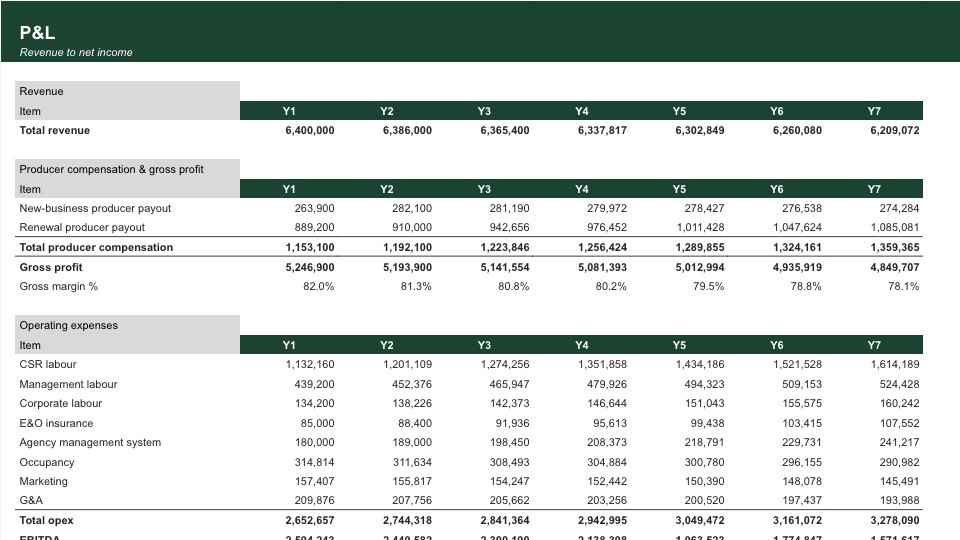
Insurance Agency (P&C Broker) Model
Plan and value a P&C insurance agency using premiums in force, policy retention, contingent commissions, and a DCF.
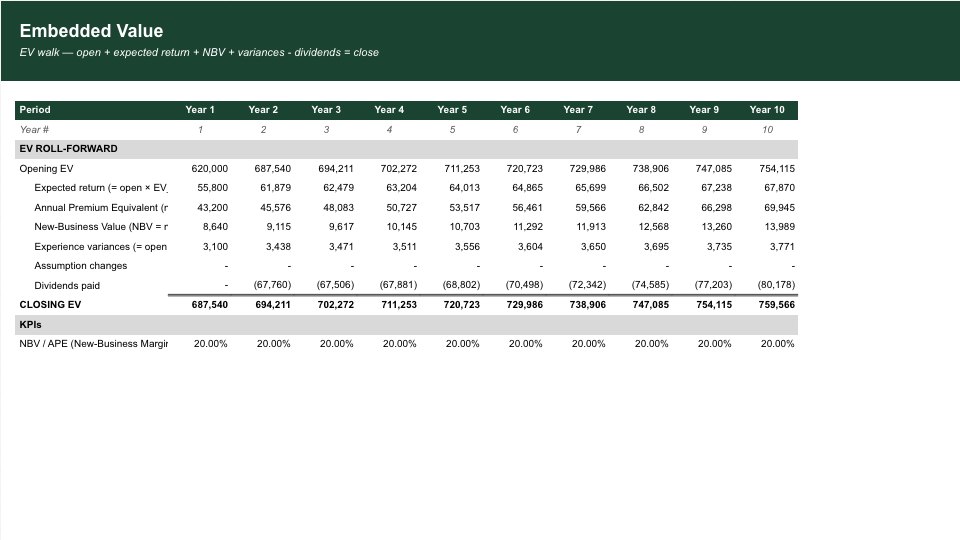
Life Insurance Valuation Model
Valuation model for life insurance products and in-force book value using mortality assumptions and surrender rates.







