Runway Model Example
Corporate Finance Financial Model (Free Excel Download)
Plan hiring, spending, and fundraising timing with monthly burn, cash-balance, break-even, and runway outputs that clarify when capital is needed.



professionals from Deloitte
Used by professionals from






About this model
Track monthly cash burn and forecast runway for seed and early-stage companies without complex financial statements. The model projects revenue by product line and customer cohort; breaks down headcount planning by function with salary and equity compensation; details operating expenses (G&A, marketing, infrastructure); and calculates monthly cumulative runway in days of cash remaining. Output: when to raise next round, sensitivity to growth rate vs expense timing, and funding event impact (dilution, new cash on balance sheet).
Revenue forecasting allows for multiple customer cohorts with different churn and expansion rates. Headcount builds apply role-level salaries, benefits, and payroll tax. Operating expenses are granular (travel, tools, legal) rather than lumped percentages. Monthly visibility reveals lumpy items (marketing campaigns, conferences) that quarterly models miss. Scenario variants show best-case, base-case, and worst-case runway - critical for board presentations and investor updates.
Built for founders, CFOs, and seed-stage investors who need transparency on cash position and hiring trade-offs. Works with SAFe, burn-rate metrics, and venture planning workflows. No complex debt, no complex tax; focus is on operational cash flow.
What every model includes
Live formulas, no hardcoded values
Outputs are driven by live formulas, so the workbook updates from its assumptions instead of relying on hardcoded results.
All assumptions in one tab
Inputs are clearly marked in the Assumptions tab and separated from calculations, making it clear what to change and what to leave intact.
Statements always balancing
For integrated-statement models, the balance sheet, cash flow, and supporting schedules tie through properly.
Distinct schedules for clarity
Debt, working capital, taxes, and cash flow can get messy quickly. We group calculations in clear schedules, not across disconnected tabs.
No hidden macros or external links
There are no unexplained external workbook links or macros to undermine auditability or portability.
Changes flow through the model
Update a key driver and see the impact carry through the forecast, financing, and return outputs. We never use hardcoded numbers in formulas.
What's inside the Runway Model Example
- Monthly cash runway forecast
- Revenue growth and churn assumptions
- Headcount and operating expense planning
- Funding round timing and cash impact
- Burn rate and break-even analysis
- Revenue forecasting by product line and customer cohort
- Headcount planning with salary and comp assumptions
- Operating expense detail by function (G&A, marketing, infrastructure)
Runway Model: A 24-Month Cash Planning Template for SaaS Startups
This runway model helps SaaS founders and finance teams answer a critical question: when will cash run out? It projects monthly cash balances over 24 months using operating assumptions for customer tiers, hiring, funding rounds, and working capital.
The model surfaces a Cash Zero Date and other key metrics to support board discussions and funding decisions. It is designed for institutional seed to Series A SaaS companies seeking clarity on cash runway.
Key Operating Drivers
The model's forecast is driven by a focused set of operating inputs. Revenue is built from three customer tiers with distinct starting logos, annual contract values, monthly new-logo additions, and churn rates.
- Net revenue retention (NRR) and gross retention (GRR) shape expansion and churn dynamics. Hiring assumptions cover five departments, with monthly hire rates, start delays, salaries, benefits load, and productivity ramp factors.
- Working capital inputs include days sales outstanding, days payable outstanding, and annual prepay percentages that influence cash timing. A scenario toggle lets you switch between Base, Bull, and Bear cases, adjusting 12 sensitive drivers like new logos, churn, hires, and sales commission.
The structure keeps assumptions centralized and traceable.
How Calculations Flow
The model follows a logical flow from assumptions to outputs. Inputs on the Assumptions sheet feed into Hiring_Plan and Customer_Rollforward, which compute headcount and customer counts by tier.
- Monthly_Forecast then consolidates revenue, cost of goods sold, operating expenses by department, EBITDA, and cash flow. Cash flow incorporates net income, stock-based compensation addback, working capital changes, and funding inflows from Seed, SAFE, and Series A rounds.
- Funding rounds are modeled discretely with pre-money valuations and dilution effects on founder ownership. The cash balance is calculated monthly, and a sticky flag marks the first month cash turns negative.
This integrated approach ensures that changes in operating drivers propagate consistently through the P&L and cash flow.
Primary Outputs and Metrics
The model produces several key outputs for decision-making. The Cash Zero Date and Months Until Cash Zero are prominently displayed on the Cover and Runway_Analysis sheets, indicating when cash is projected to run out.
- The M24 Runway shows the number of months of cash remaining at the end of the 24-month horizon, or labels the company as profitable if net burn turns negative. Other metrics include Burn Multiple, Magic Number, CAC Payback, and LTV/CAC ratio, with benchmark labels based on SaaS industry rubrics.
- The Cover sheet also presents high-level KPIs like ARR, EBITDA margin, headcount, and total capital raised. These outputs give a comprehensive picture of financial health and efficiency.
Practical Use and Limitations
This runway model is intended for internal planning and board communication. It allows users to test how different funding timings or hiring plans affect cash runway, and to compare scenarios by toggling between Base, Bull, and Bear cases.
- The model includes validation checks to ensure data integrity, such as OPEX and ARR reconciliation, cash positivity, and cap table accuracy. However, it has limitations: cohort retention uses a blended churn rate rather than tier-specific curves, CAC payback uses a simplified methodology, and tax is treated as a memo line without net operating loss carryforwards.
- The model also does not link sales productivity ramp directly to revenue. These simplifications make it suitable for early-stage runway analysis but not for full financial statement modeling.
The public download provides a values-only preview; the live formulas remain in the original template.
Formatted to IB standards
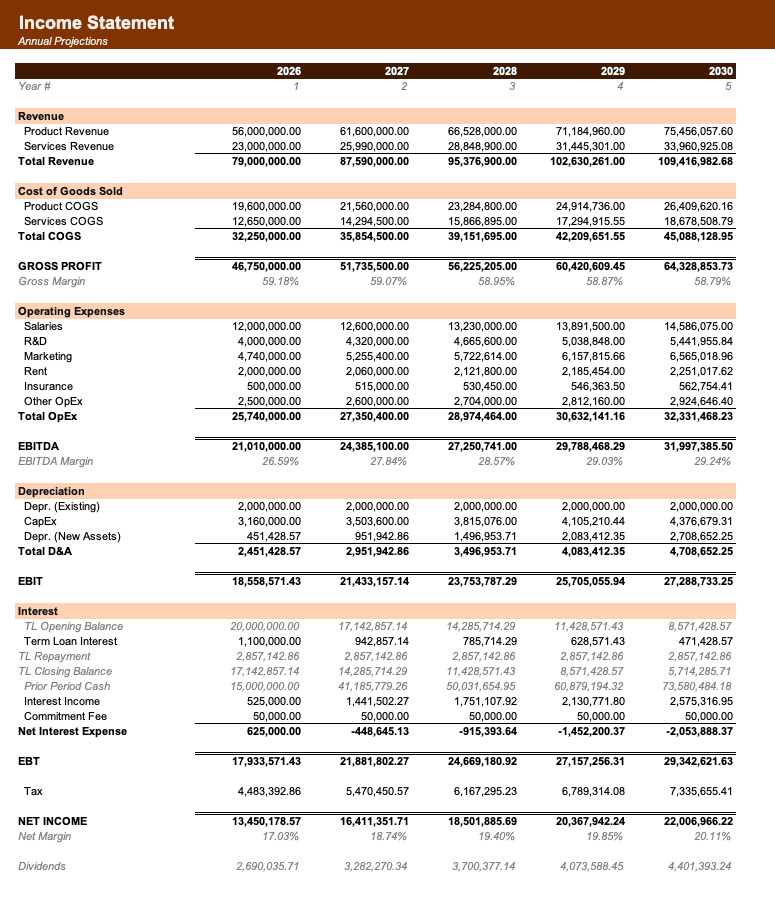
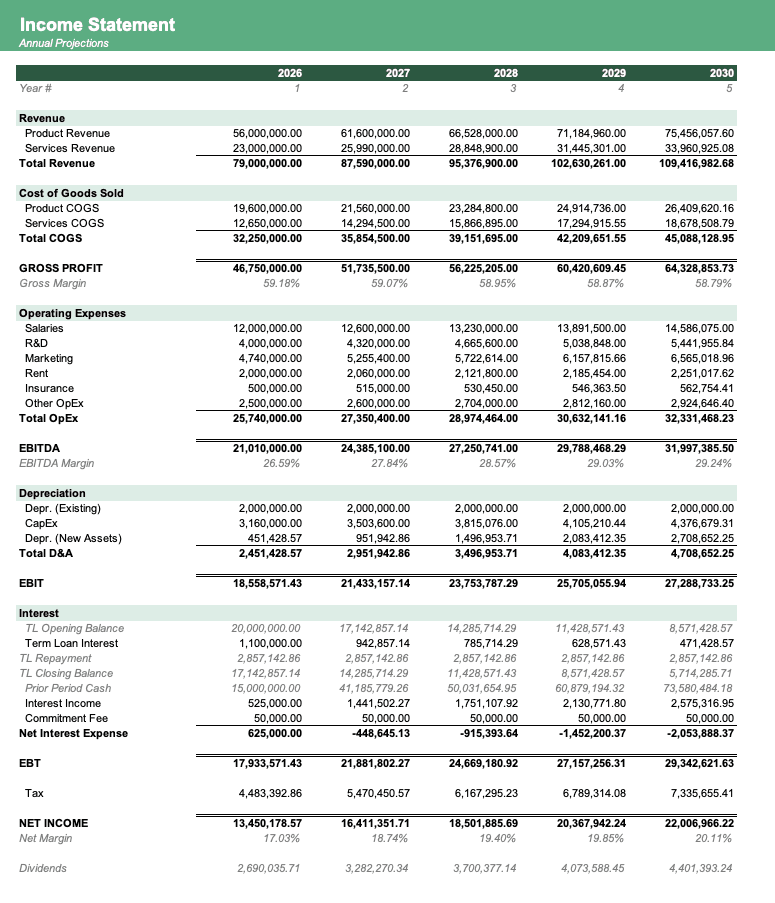
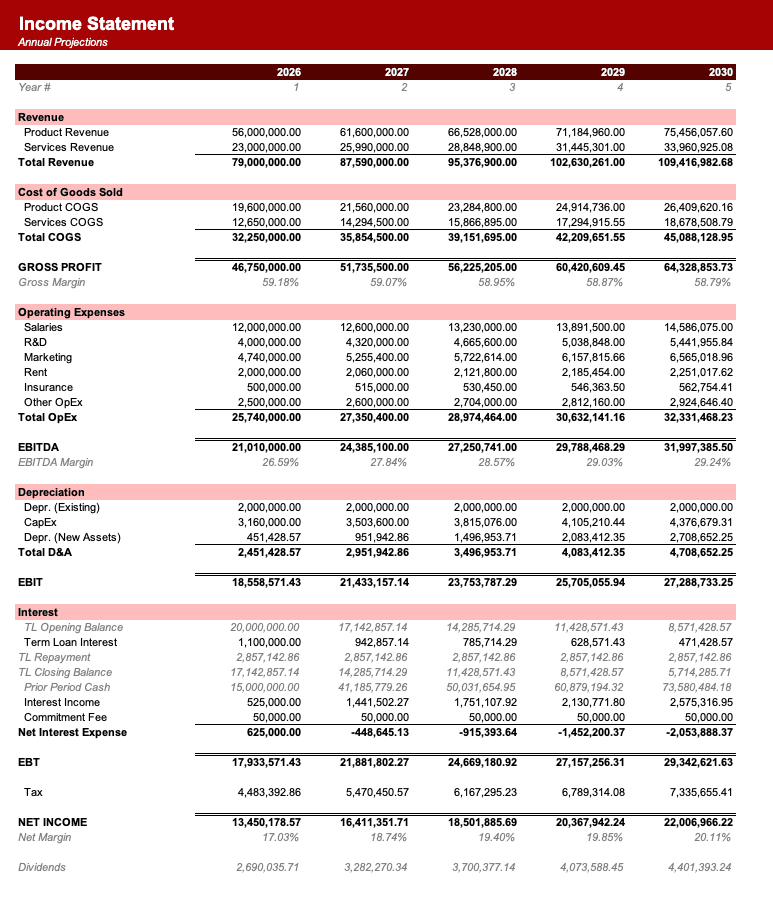
Named theme colors repaint the whole workbook in one click, on top of an investment-banking structure with clear input, output, and cross-sheet reference styling - brand-ready, institutional-grade, and fully auditable.

Created by ex-finance professionals
Hey, I’m Alex and I created Finamodel.
Over my years in the finance industry I kept building the same models over and over again. Same structure, same assumptions, different logo. So I started building frameworks to turn them into clean, reusable templates.
Every model here is one I’d actually use for a client, and I personally vet each one before it goes up.
I’m not an expert in every industry, but I’ve built enough models to know what belongs in one. And when something is completely foreign to me, I reach out to my network for experts to work on our models with us.
Having a template library on hand cuts a first build from hours to minutes.
Need help finding your model? You’ll find me in the Finamodel app!
Frequently asked
What is a runway model?+
A runway model estimates how many months a company can operate before it runs out of cash, based on burn and funding assumptions.
Who uses runway models?+
They are commonly used by startup founders, finance leads, advisers, and investors.
What should a runway model include?+
It should include cash burn, revenue assumptions, hiring plans, operating expenses, and any expected funding events.
Why is a runway model different from a full financial model?+
A runway model is usually more tactical and focused on cash survival, burn, and near-term planning rather than full long-range reporting.
Can this help with fundraising timing?+
Yes. It helps show when cash may run low and how fundraising timing affects survival and milestones.
Have more financial modelling questions? Contact us
Related templates
3 Statement Model
Integrated income statement, balance sheet, and cash flow forecasts.
Pre-Seed Startup Financial Projection Model
Bootstrapped growth, burn rate, path to profitability, and funding milestone planning for early-stage startups.
Bridge Round Financing Model
Convertible note and SAFE financing analysis.
M&A Modeling & Valuation
Comprehensive M&A valuation with DCF, comparable companies, and precedent transactions analysis.


