Dilution-Adjusted Warrant Pricing Excel Model
Capital Markets Financial Model (Excel Download)
Price equity warrants when exercise creates new shares. The model links exercise cash and dilution to the warrant value and shows how count, strike, volatility and maturity change it.



professionals from Deloitte






About this model
A warrant pricing model for European warrants on a stock with no dividends. Unlike a plain call option, a warrant creates new shares when it is exercised, so it dilutes the existing holders. The shipped case is a fictional industrial company with 40 million shares and 8 million warrants.
The model solves the warrant value and the dilution together. The Black-Scholes value depends on an equity value that includes the warrants, so the workbook finds the fixed point with 60 explicit bisection steps. Exercise proceeds and the ownership of the new shares then reconcile. A maturity payoff sheet splits pre-money equity, exercise cash and post-money claims.
On the shipped case a warrant is worth $5.49 and the total warrant claim is $43.9m. At 20 million warrants with the same $28 strike, each warrant falls to $5.01 while the total claim rises to $100.25m. Checks show the claim reconciliation, the pricing residual, convergence and input readiness.
What every model includes
Live formulas, no hardcoded values
Outputs are driven by live formulas, so the workbook updates from its assumptions instead of relying on hardcoded results.
All assumptions in one tab
Inputs are clearly marked in the Assumptions tab and separated from calculations, making it clear what to change and what to leave intact.
Statements always balancing
For integrated-statement models, the balance sheet, cash flow, and supporting schedules tie through properly.
Distinct schedules for clarity
Debt, working capital, taxes, and cash flow can get messy quickly. We group calculations in clear schedules, not across disconnected tabs.
No hidden macros or external links
There are no unexplained external workbook links or macros to undermine auditability or portability.
Changes flow through the model
Update a key driver and see the impact carry through the forecast, financing, and return outputs. We never use hardcoded numbers in formulas.
What's inside the Dilution-Adjusted Warrant Pricing Excel Model
- Warrant value per warrant and total warrant claim
- Coupled Black-Scholes pricing solved by 60 bisection steps
- Dilution-adjusted underlying value per old share
- Exercise proceeds, issued shares and new share ownership
- Maturity payoff table for pre-money equity, exercise cash and post-money claims
- Volatility and maturity sensitivity grid
- Warrant count and strike comparison with total claim and exercise cash
- Claim reconciliation, pricing residual and convergence checks



Formatted to IB standards
Named theme colors repaint the whole workbook in one click, on top of an investment-banking structure with clear input, output, and cross-sheet reference styling - brand-ready, institutional-grade, and fully auditable.

Created by ex-finance professionals
Hey, I’m Alex and I created Finamodel.
Over my years in the finance industry I kept building the same models over and over again. Same structure, same assumptions, different logo. So I started building frameworks to turn them into clean, reusable templates.
Every model here is one I’d actually use for a client, and I personally vet each one before it goes up.
I’m not an expert in every industry, but I’ve built enough models to know what belongs in one. And when something is completely foreign to me, I reach out to my network for experts to work on our models with us.
Having a template library on hand cuts a first build from hours to minutes.
Frequently asked
What is a dilution-adjusted warrant price?+
A warrant is a call option issued by the company. When it is exercised, the company issues new shares and receives the strike price. The new shares dilute existing holders, so a warrant is worth less than a plain call option with the same terms. The dilution adjustment captures this.
How does the model solve the price?+
The warrant value equals the share of new shares times a Black-Scholes call on an underlying that already includes the warrant value. Because the value appears on both sides, the model uses 60 bisection steps to find it. A residual and a convergence flag show that the solution holds.
Why does a larger warrant issue lower the value per warrant?+
More warrants mean more new shares at exercise, so each warrant holder gets a smaller part of the equity. On the shipped case, moving from 8 million to 20 million warrants lowers the value per warrant but raises the total claim.
What is not included?+
The model covers European warrants with no dividends. It does not model early exercise, vesting or employee option plans. Volatility is an entered estimate for the combined equity claim, not a market feed.
Can I use my own inputs?+
Yes. Enter the share price, share count, warrant count, strike, maturity, rate and volatility in the blue cells on the Assumptions sheet. The solver, payoff table and checks update at once.
Have more financial modelling questions? Contact us
Related templates
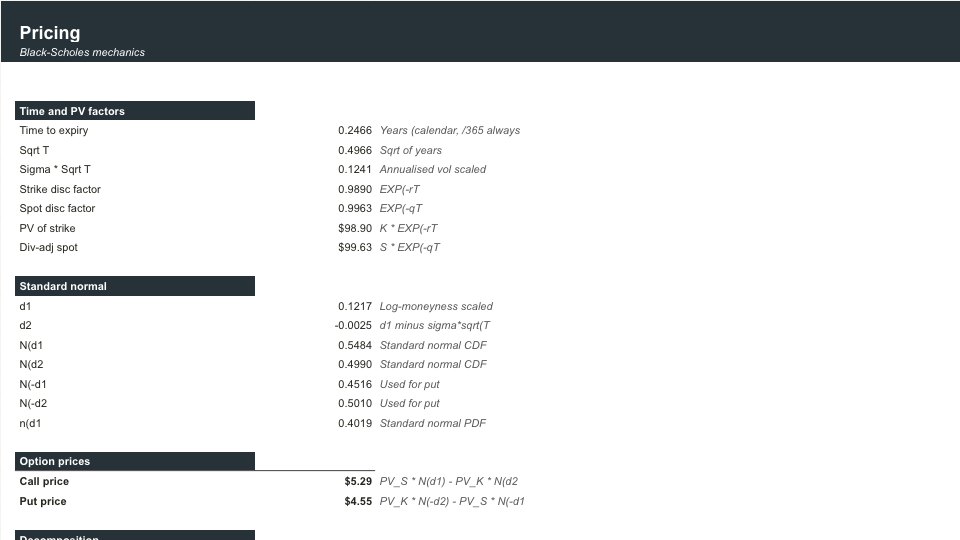
Option Pricing
Black-Scholes call and put prices with Greeks, payoff grid, and two-way sensitivity.
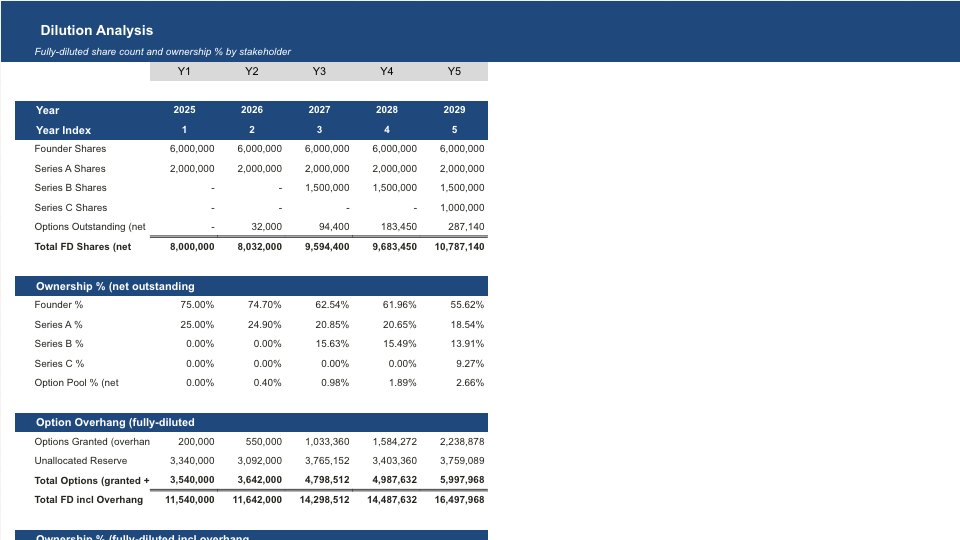
ESOP Pool Model
Employee Stock Ownership Plan model with vesting, allocation, and dilution impact.
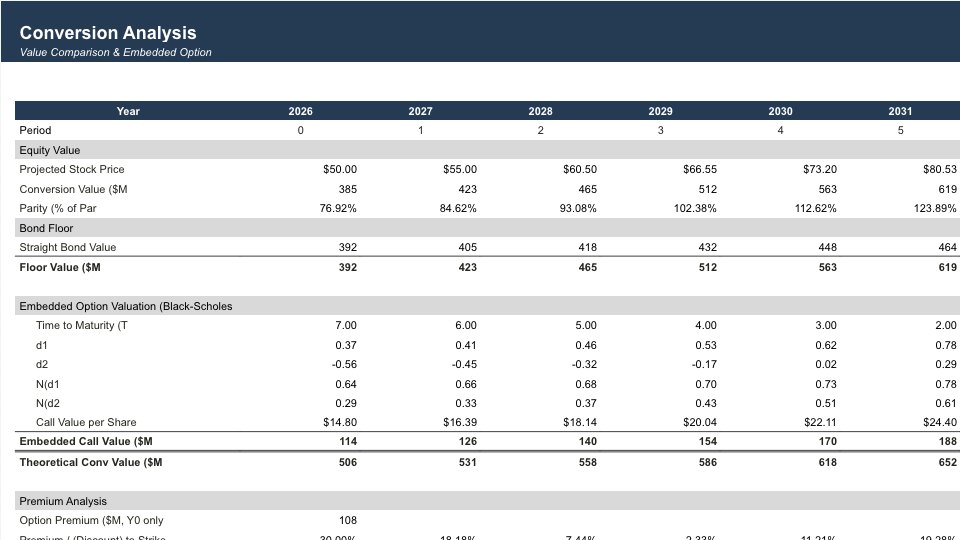
Convertible Bond Model
Model convertible bond economics with conversion scenarios, dilution, and bond value.
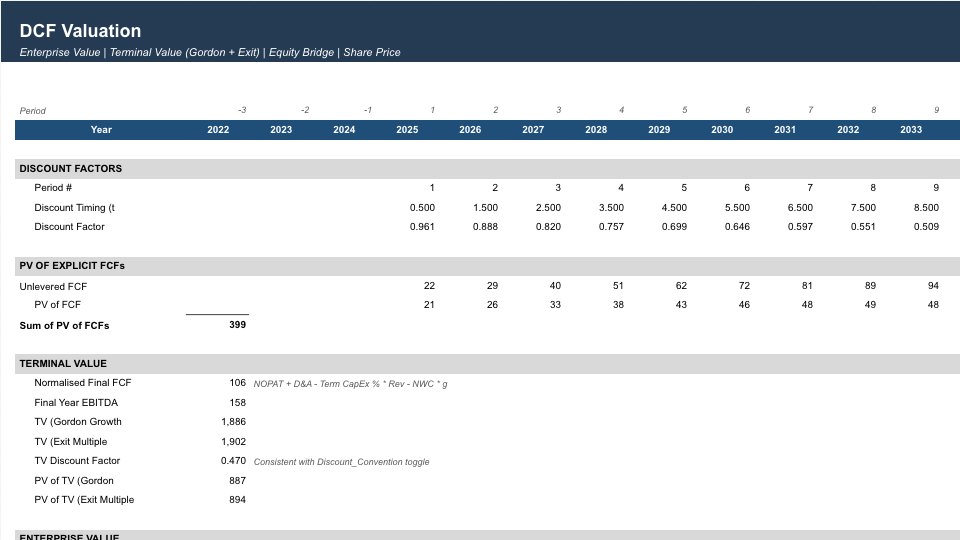
DCF Model
Discounted cash flow valuation model with explicit forecast, terminal value, and WACC.







