Retail Centre Model
Real Estate Financial Model (Free Excel Download)
Underwrite a retail centre using leasable area, tenant mix, occupancy, rent escalations, recoveries, capex, financing, and exit yield to price the asset.



professionals from Deloitte
Used by professionals from






About this model
Evaluate retail centre acquisition by modeling tenant rent roll, lease expirations, occupancy dynamics, and NOI with debt service coverage. This template projects base rent from occupied GLA at market rent PSF, applies occupancy and vacancy allowances, calculates CAM (common area maintenance) recovery from tenants, and adds percentage rent (overage rent when tenant sales exceed a breakpoint). Operating expenses include property tax, insurance, utilities, maintenance, and a management fee that is EGI-dependent but excluded from CAM recovery base (to prevent circularity).
The workbook contains a tenant schedule showing lease rates by tenant type (anchor, specialty, F&B), occupancy assumptions with realistic lease-up and rollover timing, a detailed opex build distinguishing fixed recoverable costs from non-recoverable, a debt schedule with interest-only period and amortisation, and cash flow projections to equity IRR and multiple. The model handles lease rollovers with rent reversion assumptions and tracks lease expiry concentration risk. Key outputs include NOI margin (target 62–72%), DSCR (typically ≥1.25x), LTV, and levered equity returns via cap rate-based exit valuation.
Target users are real estate PE sponsors, retail operators, institutional property investors, and lenders evaluating regional and sub-regional retail centre acquisitions valued at $50M to $500M+.
What every model includes
Live formulas, no hardcoded values
Outputs are driven by live formulas, so the workbook updates from its assumptions instead of relying on hardcoded results.
All assumptions in one tab
Inputs are clearly marked in the Assumptions tab and separated from calculations, making it clear what to change and what to leave intact.
Statements always balancing
For integrated-statement models, the balance sheet, cash flow, and supporting schedules tie through properly.
Distinct schedules for clarity
Debt, working capital, taxes, and cash flow can get messy quickly. We group calculations in clear schedules, not across disconnected tabs.
No hidden macros or external links
There are no unexplained external workbook links or macros to undermine auditability or portability.
Changes flow through the model
Update a key driver and see the impact carry through the forecast, financing, and return outputs. We never use hardcoded numbers in formulas.
What's inside the Retail Centre Model
- Multi-tenant rent roll with base rent and escalation logic
- Percentage rent and sales breakpoint calculations
- CAM, insurance, and tax recovery reconciliation
- Tenant improvement and leasing commission schedules
- Levered cash flow and exit cap rate sensitivity
- Tenant roster with lease rates, space, and lease expiration
- Rent roll by tenant and revenue cash flow schedule
- Common area maintenance (CAM) and operating expense budget
Retail Centre Model: How the Acquisition Analysis Works
This retail centre model supports an acquisition decision by evaluating levered returns, debt service, and exit outcomes for an existing sub-regional shopping centre over a five-year hold. It builds income from a ten-tenant rent roll, adds turnover rent and cost recoveries, tests a senior mortgage with a cash sweep, and applies a forward cap rate at exit.
Rates and financial results described here reflect illustrative model settings, not industry benchmarks.
What Drives Income in the Model
Income starts with base rent built up tenant by tenant on the rent roll, not from a blended average, using each tenant's leased area, in-place rent, lease expiry, and contractual escalation. After expiry, rent resets to a category-specific market level adjusted for renewal probability and a renewal discount, so anchors and specialty units re-let at different rates.
- A collection factor reduces rent in the roll year for downtime and free rent on new leases. On top, percentage rent is calculated per lease off each tenant's own natural breakpoint, and specialty kiosk income is added as a set share of gross potential rent.
- The model also computes a per-category occupancy cost ratio, a key health measure that compares rent and recoveries to tenant sales.
How the Model Calculates Cash Flow
The calculation flows through linked sheets. Assumptions feed a tenant schedule that produces gross potential rent, turnover rent, and a blended cost recovery ratio.
- Operating expenses are split into recoverable lines and non-recoverable items such as the capital reserve and management fee, which sit outside the recovery base. Recoverable expenses, scaled by the blended recovery ratio and adjusted for vacancy, become tenant reimbursements.
- Together with net base rent and ancillary income, these build effective gross income, which less total operating expenses yields net operating income. The model then subtracts leasing capital items, interest, scheduled principal, and any cash sweep to arrive at levered cash flow, with property-level taxes treated as assessed value times a mill rate.
Debt, Exit, and Returns
Senior debt is sized at 60% loan-to-value with a fixed rate and a two-year interest-only period, amortising on an annual basis over 25 years with a five-year balloon. A cash sweep traps a share of surplus cash when the debt service coverage ratio falls below a trigger, though under the shipped assumptions it remains dormant.
- At exit, value is derived by capitalising forward net operating income at an exit cap rate equal to the entry cap rate plus a stated expansion, with selling costs deducted. The model also runs a refinancing test, sizing a new loan to cover the balloon.
- Returns include unlevered and levered IRRs, equity multiple, and debt metrics such as DSCR, debt yield, and LTV by year.
Practical Use and Model Scope
This is a cash-flow and returns model rather than a three-statement financial model, focused solely on an existing income-producing retail centre, not a development project. It is driven entirely by editable named inputs on the Assumptions sheet, so scenario work is done by changing those assumptions.
- The outputs are summarised on a dashboard with KPI cards, operating and returns trends, lease-maturity exposure, and a Year 1 net operating income bridge. The model targets use by a private equity real estate sponsor, family office, or institutional investor evaluating an acquisition.
- The public download is a values-only preview of the underlying calculations, not a live spreadsheet with active formulas.
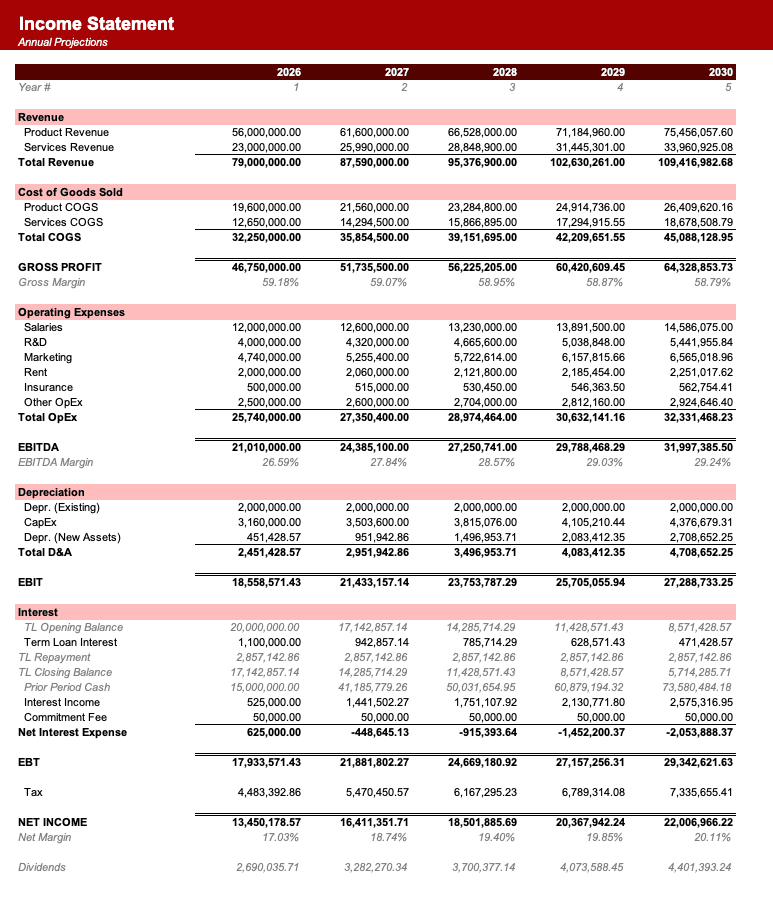
Formatted to IB standards
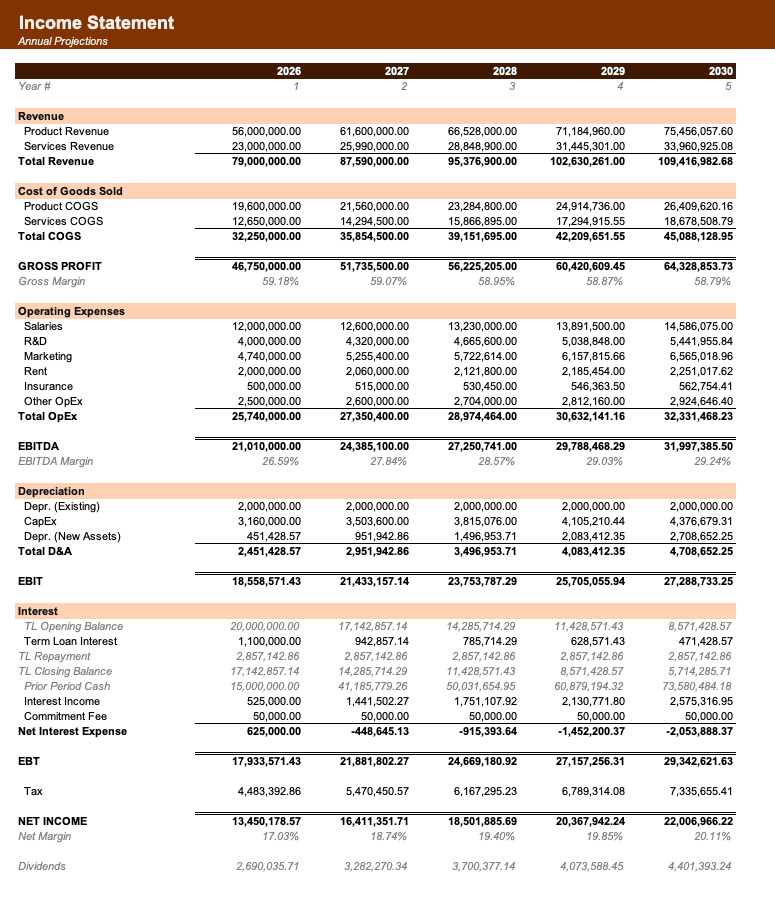
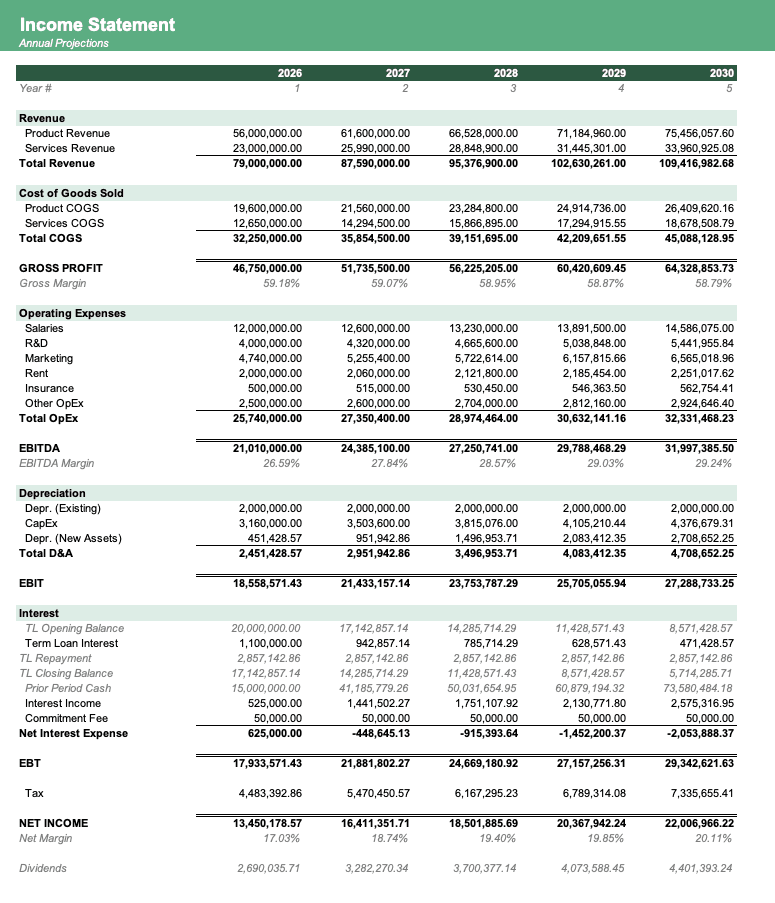
Named theme colors repaint the whole workbook in one click, on top of an investment-banking structure with clear input, output, and cross-sheet reference styling - brand-ready, institutional-grade, and fully auditable.

Created by ex-finance professionals
Hey, I’m Alex and I created Finamodel.
Over my years in the finance industry I kept building the same models over and over again. Same structure, same assumptions, different logo. So I started building frameworks to turn them into clean, reusable templates.
Every model here is one I’d actually use for a client, and I personally vet each one before it goes up.
I’m not an expert in every industry, but I’ve built enough models to know what belongs in one. And when something is completely foreign to me, I reach out to my network for experts to work on our models with us.
Having a template library on hand cuts a first build from hours to minutes.
Need help finding your model? You’ll find me in the Finamodel app!
Frequently asked
What is a retail centre financial model?+
It is a model used to forecast rental income, expense recoveries, capital costs, and investment returns for shopping centres, malls, and retail properties.
What should a retail centre model include?+
It should include a tenant-level rent roll, percentage rent calculations, CAM recoveries, TI/LC schedules, debt service, and levered return outputs.
Who uses retail centre models?+
Real estate investors, acquisition teams, asset managers, and lenders use them to underwrite, budget, and monitor retail property performance.
What is percentage rent?+
Percentage rent is additional rent paid by a tenant when their sales exceed a defined breakpoint, providing upside participation for the landlord in high-performing locations.
Does it support different recovery structures?+
Yes. The model handles NNN, gross, and modified gross lease structures with flexible expense recovery logic for each tenant.
Have more financial modelling questions? Contact us
Related templates
Real Estate Development Pro Forma Model
Land cost, construction budget, lease assumptions, and project IRR for commercial and residential development.
Office Building Investment Model
Income-producing office building model with lease-up, rent growth, occupancy, and terminal value analysis.
Mixed-Use Real Estate Development
Financial model for mixed-use projects combining residential, commercial, and retail with phased development.
Hotel Operating Model
Operating model for hotel properties including occupancy rates, average daily rate (ADR), RevPAR optimization, and facility-level profitability.