Securitization Asset Eligibility Tracker
Capital Markets Financial Model (Excel Download)
Test every asset on a securitization tape against the deal's eligibility rules. The register applies verified cures and signed waivers, then shows the balance you can certify to the trustee.



professionals from Deloitte






About this model
An eligibility register for securitization operations. It tests each asset on the pool tape against the transaction criteria and decides which assets can be transferred. The fictional case is a receivables deal with a ten-asset tape totalling USD 1,043,000, reviewed in late October.
Each asset is tested on days past due, loan-to-value, remaining term, seasoning, currency and executed documents. Some criteria can be waived and some cannot. Dated, verified cures can fix a field. Each failed waivable criterion needs its own signed approval, and waived assets use an exception cap in strict whole-asset priority.
On the shipped case 553,000 is eligible: 218,000 normal, 255,000 cured and 80,000 waived. 490,000 is excluded for nonwaivable fails, the cap and missing approvals. A signed certificate is ready for one trustee upload of 553,000. Changed economics need a new certificate, and the raw tape is never changed.
What every model includes
Live formulas, no hardcoded values
Outputs are driven by live formulas, so the workbook updates from its assumptions instead of relying on hardcoded results.
All assumptions in one tab
Inputs are clearly marked in the Assumptions tab and separated from calculations, making it clear what to change and what to leave intact.
Statements always balancing
For integrated-statement models, the balance sheet, cash flow, and supporting schedules tie through properly.
Distinct schedules for clarity
Debt, working capital, taxes, and cash flow can get messy quickly. We group calculations in clear schedules, not across disconnected tabs.
No hidden macros or external links
There are no unexplained external workbook links or macros to undermine auditability or portability.
Changes flow through the model
Update a key driver and see the impact carry through the forecast, financing, and return outputs. We never use hardcoded numbers in formulas.
What's inside the Securitization Asset Eligibility Tracker
- Tape reconciliation of record count and USD balance to an independent control
- Criterion tests for DPD, LTV, term, seasoning, currency and documents
- Waivable and nonwaivable criteria set in a dated, signed policy
- Dated cure versions with separate effective and verification dates
- Criterion waivers with approver, bounds and expiry
- Whole-asset exception cap in strict priority order
- Disjoint categories: normal, cured, waived, nonwaivable, cap hold and approval hold
- Asset-level breach queue with effective value and policy bound



Formatted to IB standards
Named theme colors repaint the whole workbook in one click, on top of an investment-banking structure with clear input, output, and cross-sheet reference styling - brand-ready, institutional-grade, and fully auditable.

Created by ex-finance professionals
Hey, I’m Alex and I created Finamodel.
Over my years in the finance industry I kept building the same models over and over again. Same structure, same assumptions, different logo. So I started building frameworks to turn them into clean, reusable templates.
Every model here is one I’d actually use for a client, and I personally vet each one before it goes up.
I’m not an expert in every industry, but I’ve built enough models to know what belongs in one. And when something is completely foreign to me, I reach out to my network for experts to work on our models with us.
Having a template library on hand cuts a first build from hours to minutes.
Frequently asked
What are securitization eligibility criteria?+
Eligibility criteria are the rules an asset must meet before it can be sold into a securitization pool. Typical rules cover arrears, loan-to-value, term, seasoning, currency and documents. Assets that fail are excluded unless a cure or approved waiver applies.
How do cures work?+
A cure records a corrected field value with an effective date and a separate verification date. The latest verified cure effective by the cutoff is used in the tests. Unverified or future cures stay visible but do not count.
How does the exception cap work?+
Waived assets use the cap in strict priority order as whole assets. An asset is never split to fit. If the next asset does not fit in the remaining cap, it is held.
Is this a legal eligibility standard?+
No. The criteria and terms are fictional and for one operating case. Replace the policy limits and waivability with the terms of your own transaction documents.
Can I use a larger tape?+
The registers have 20-row capacity. To go beyond that, extend the working and retained ranges, source controls and formulas together.
Have more financial modelling questions? Contact us
Related templates
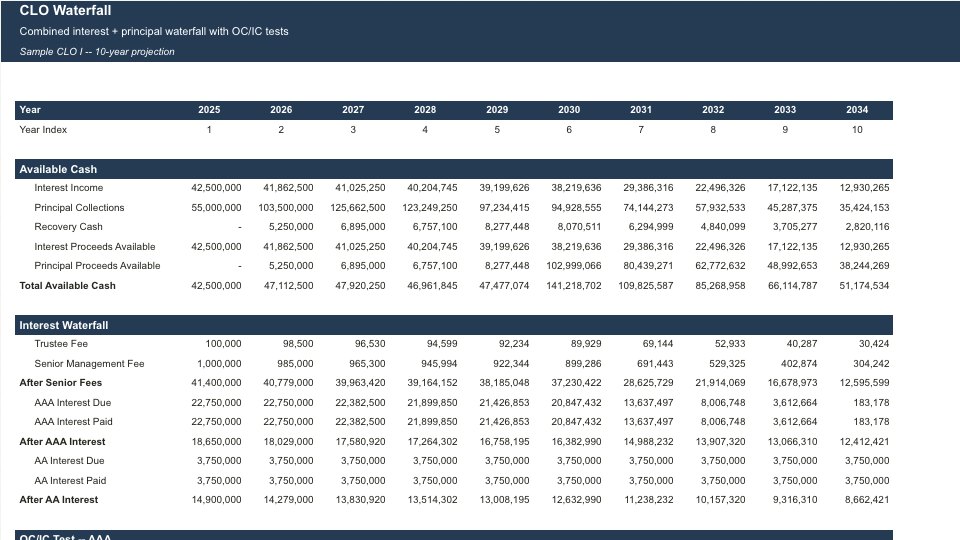
ABS CLO Model
Asset-backed securities and collateralized loan obligation analysis.
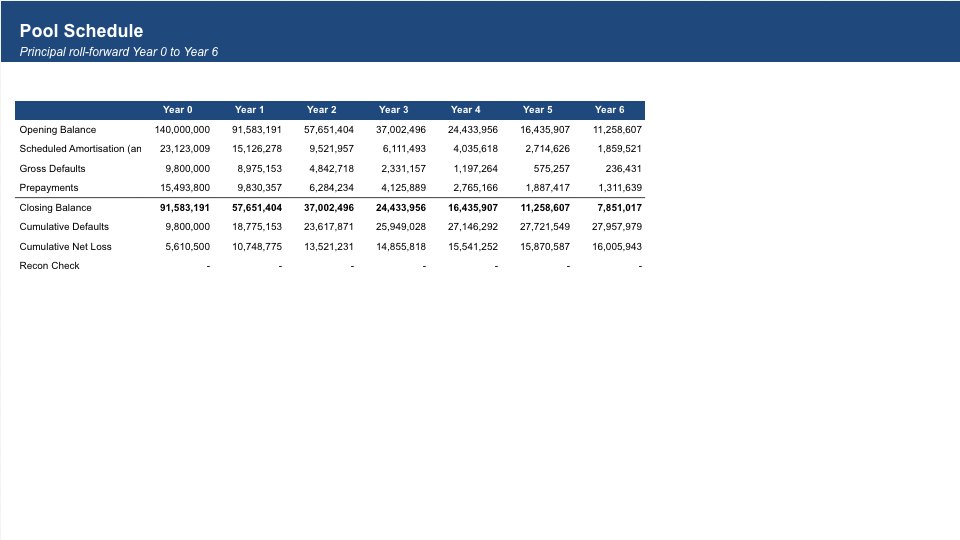
Collateral Pool Model
Track collateral composition, haircuts, and coverage ratios for secured lending programs.
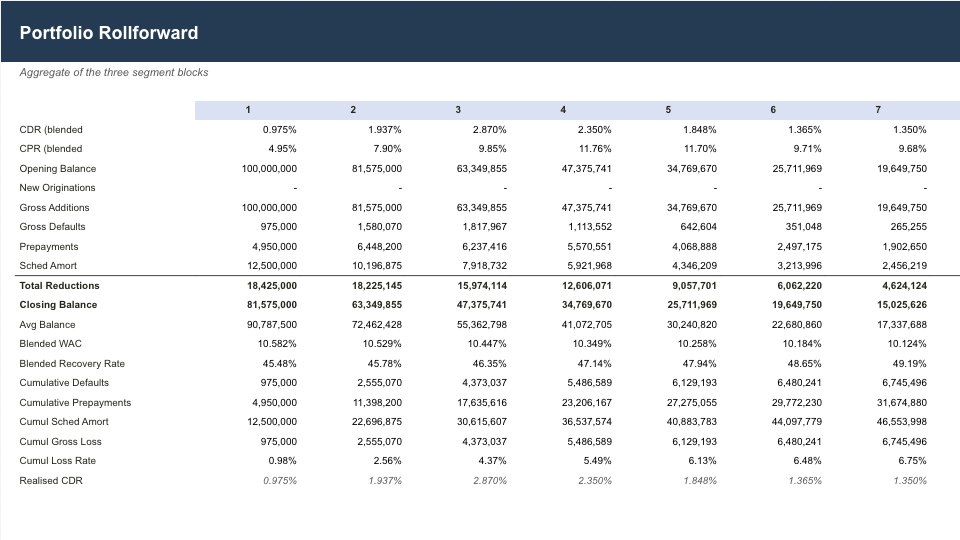
Loan Portfolio CDR Model
Credit default risk model for loan portfolios with cumulative default rates and loss severity analysis.
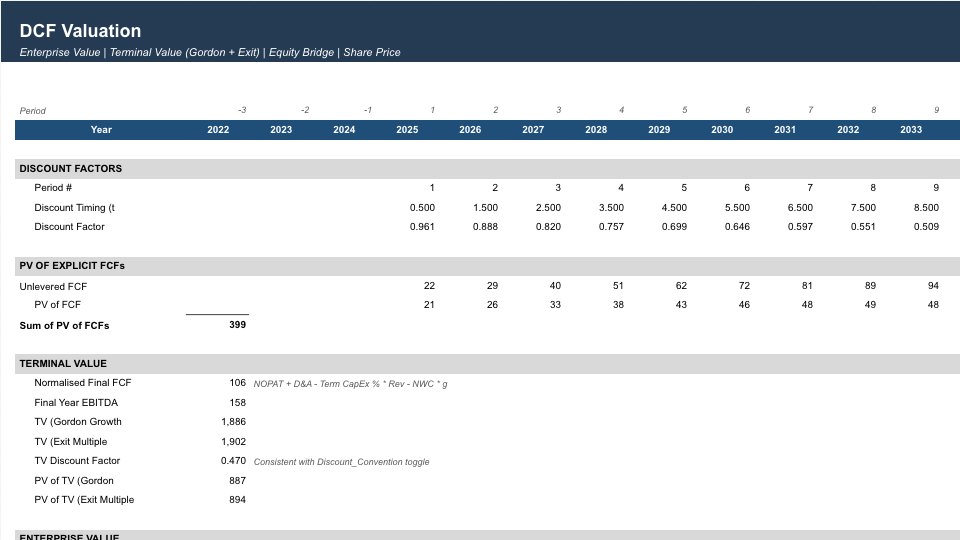
DCF Model
Discounted cash flow valuation model with explicit forecast, terminal value, and WACC.







