Transfer Pricing Model
Corporate Finance Financial Model (Free Excel Download)
Allocate intercompany revenue, costs, mark-ups, and tax jurisdictions to test transfer-pricing policies, entity profitability, and consolidated operating outcomes.



professionals from Deloitte
Used by professionals from






About this model
Model intra-company transfer prices using comparable company analysis and arm's length benchmarking across multiple transfer pricing methods (Cost-Plus, Resale Price, Comparable Uncontrolled Price, Profit Split, TNMM). The model captures intercompany transactions (royalties, management fees, cost sharing, goods transfers) and compares profit margins before and after transfer price adjustments to ensure compliance with OECD guidelines and local tax authorities.
The workbook includes a comparable company database (identifying peers in each jurisdiction), margin analysis by transaction type, and sensitivity tables showing profit allocation impact across different transfer price assumptions. Tax exposure is quantified: the gap between the selected transfer price and a tax authority's expected arm's length range is translated into potential audit adjustment, penalties, and double-tax risk.
Documentation requirements vary by jurisdiction: US Form 926, EU transfer pricing documentation, and local rules in each country are referenced. This model is essential for multinationals managing ~40% of global trade flows that occur at transfer prices. Aggressive transfer pricing optimization must be balanced against audit risk, BEPS compliance (15% minimum tax), and reputational exposure.
What every model includes
Live formulas, no hardcoded values
Outputs are driven by live formulas, so the workbook updates from its assumptions instead of relying on hardcoded results.
All assumptions in one tab
Inputs are clearly marked in the Assumptions tab and separated from calculations, making it clear what to change and what to leave intact.
Statements always balancing
For integrated-statement models, the balance sheet, cash flow, and supporting schedules tie through properly.
Distinct schedules for clarity
Debt, working capital, taxes, and cash flow can get messy quickly. We group calculations in clear schedules, not across disconnected tabs.
No hidden macros or external links
There are no unexplained external workbook links or macros to undermine auditability or portability.
Changes flow through the model
Update a key driver and see the impact carry through the forecast, financing, and return outputs. We never use hardcoded numbers in formulas.
What's inside the Transfer Pricing Model
- Intercompany transaction matrix covering goods, services, IP, and financing
- TNMM and Cost Plus benchmarking modules
- Global tax jurisdiction matrix with treaty rate lookups
- Royalty rate and IP licensing sensitivity analysis
- Country-by-country reporting data aggregation
- Intercompany transaction detail (royalties, management fees, cost sharing, goods)
- Comparable company selection and margin benchmarking by jurisdiction
- Transfer price methods (CUP, cost-plus, resale price, profit split, TNMM)
Inside the Transfer Pricing Model: How Intercompany Flows and Margins Are Evaluated
This transfer pricing model evaluates intercompany transactions across a three-entity multinational group, using OECD-aligned methods to test whether profit allocation between entities is defensible. It combines entity-level profit and loss statements, benchmarking against external ranges, and compliance checks for interest, intangibles, and global minimum tax rules.
Entity Structure and Forecasting Horizon
The model covers a three-entity group: a US parent and manufacturing and distribution subsidiaries in Ireland and Singapore. Each entity has its own profit and loss sheet, plus a consolidated view that eliminates intercompany items.
- The time frame spans a base year of actuals followed by five forecast years, with columns for each period. Named ranges allow period selection via a simple index formula, supporting consistent calculations across all years.
- This setup lets you trace how intercompany pricing decisions affect each entity’s taxable income over the forecast window, while respecting the distinct functional profiles documented in the FAR analysis.
Intercompany Pricing and Benchmarking Logic
The intercompany pricing sheet implements five OECD transfer pricing methods, with benchmarking using an interquartile range engine.
- For distribution activities, the model tests a gross-margin policy target against an external range, while the transactional net margin method panel uses a net cost plus target as the tested profit level indicator when the distribution entity is selected.
- A manufacturing scenario is also available, and its realised net cost plus margin is compared to the same benchmark.
- This structure allows you to see whether the group’s actual pricing falls inside, above, or below the arm’s length range, and the checks sheet validates the outcome without halting calculations.
Calculating Global Tax Positions
The model computes US GILTI inclusion based on the foreign subsidiaries’ tested income, tangible assets, and covered taxes. It applies a statutory net deemed tangible income return, subtracts that from tested income, and then applies the GILTI rate, which reflects the section 250 deduction.
- A deemed-paid foreign tax credit at 80 percent of foreign covered taxes offsets the gross GILTI tax. Net GILTI tax flows into the US parent’s current tax and appears on the effective tax rate walk.
- Under the default high-tax foreign profile, the credit fully shields the inclusion, resulting in near-zero net GILTI tax—a directional simplification documented in the model.
Practical Applications and Outputs
This model is useful for evaluating how intercompany pricing policies affect profit allocation and tax outcomes across jurisdictions. It supports scenario testing by allowing the tested party to switch between manufacturing and distribution, and it includes a country-by-country report with capital and reserves inputs.
- An APA and audit sheet collects key positions. The effective tax rate walk integrates GILTI, and a net present value line discounts cumulative tax savings versus an all-US benchmark.
- Eight annual checks validate reconciliations, from intercompany eliminations to cash-tax closure. These outputs help build a defensible transfer pricing position without needing to rebuild the underlying calculations from scratch.
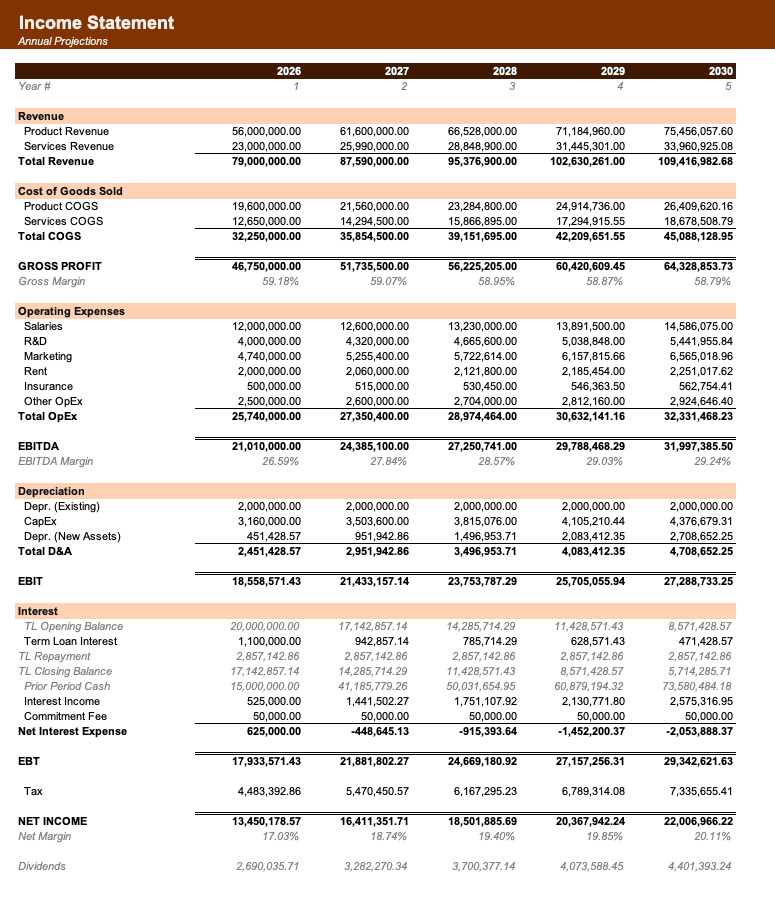
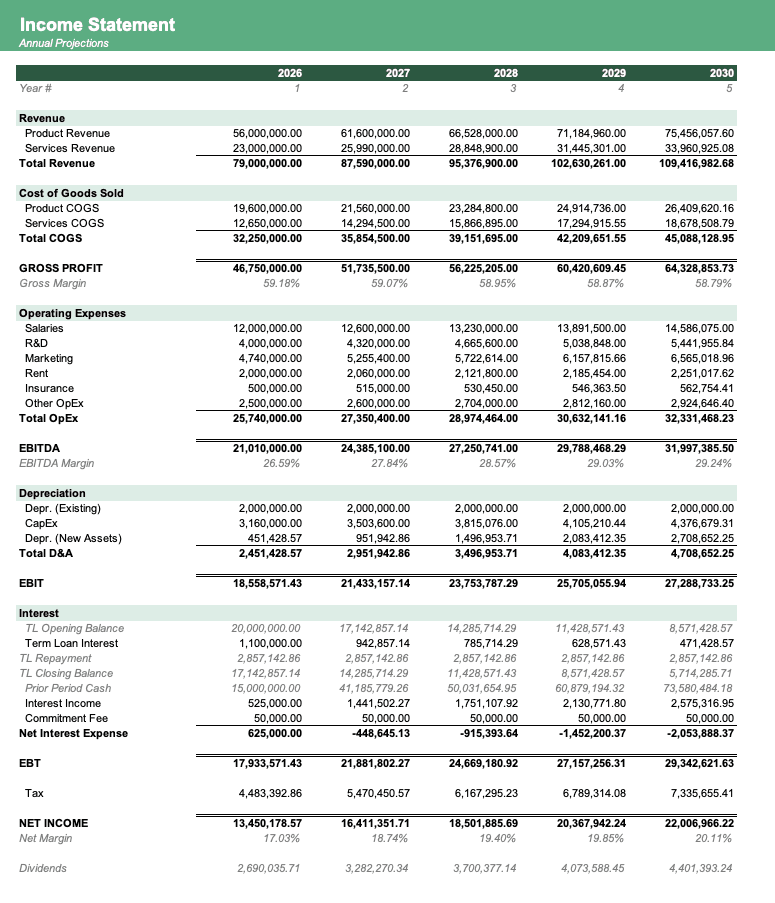
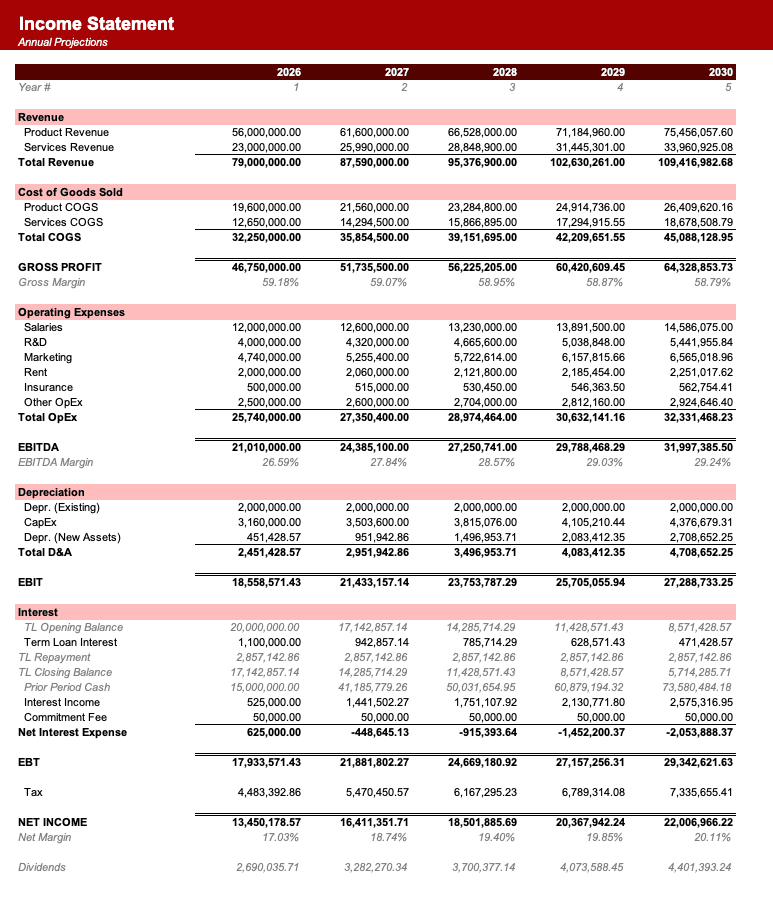
Formatted to IB standards
Named theme colors repaint the whole workbook in one click, on top of an investment-banking structure with clear input, output, and cross-sheet reference styling - brand-ready, institutional-grade, and fully auditable.

Created by ex-finance professionals
Hey, I’m Alex and I created Finamodel.
Over my years in the finance industry I kept building the same models over and over again. Same structure, same assumptions, different logo. So I started building frameworks to turn them into clean, reusable templates.
Every model here is one I’d actually use for a client, and I personally vet each one before it goes up.
I’m not an expert in every industry, but I’ve built enough models to know what belongs in one. And when something is completely foreign to me, I reach out to my network for experts to work on our models with us.
Having a template library on hand cuts a first build from hours to minutes.
Need help finding your model? You’ll find me in the Finamodel app!
Frequently asked
What is a transfer pricing model?+
It is a model that analyses intercompany transactions, benchmarks pricing against arm's length standards, and evaluates the impact on group effective tax rates.
Who uses transfer pricing models?+
Tax directors, group controllers, transfer pricing specialists, and CFOs use them for compliance, planning, and audit defence.
What should a transfer pricing model include?+
It should include an intercompany transaction matrix, benchmarking analysis, global tax rate inputs, withholding tax treatment, and country-by-country reporting outputs.
Which transfer pricing methods does it support?+
The model supports OECD-recognised methods including TNMM, Cost Plus, Resale Price Method, and Comparable Uncontrolled Price for interest and royalties.
Can it handle withholding taxes on intercompany flows?+
Yes. The global tax matrix includes configurable withholding tax rates for royalties, interest, and service fees, projecting net cash flows after treaty benefits.
Have more financial modelling questions? Contact us
Related templates
Cost Allocation Model
Allocate shared costs to business units or products using driver-based mechanics.
M&A Modeling & Valuation
Comprehensive M&A valuation with DCF, comparable companies, and precedent transactions analysis.
Goodwill Impairment Testing Model
Annual impairment test model for purchased goodwill and intangibles under ASC 350, comparing fair value to book value.
3 Statement Model
Integrated income statement, balance sheet, and cash flow forecasts.