Venture Studio Model
Private Equity Financial Model (Free Excel Download)
Assess venture studio economics through startup creation pace, incubation costs, shared overhead, follow-on ownership, portfolio outcomes, and fund-level return visibility.



professionals from Deloitte
Used by professionals from






About this model
Model a venture studio's economics: the studio founds and funds 10–20 companies per cohort, retains 10–30% equity in each, and earns equity-based returns as portfolio companies exit. The model tracks founding fees (typically $100k–500k per company), operating costs (team salaries, office, legal), and portfolio company exit proceeds (acquisition multiples, IPO valuations, total loss rates).
The workbook includes a portfolio company schedule with founding year, funding rounds, estimated runway, and exit timeline (year 4–7 typical for exits). The studio retains founder-level compensation from two sources: (1) salary (as founder/advisor), reflected in the company's cap table dilution, and (2) carried interest in exits (studio's equity stake × exit proceeds). Path to profitability is calculated by modeling when exit proceeds exceed cumulative costs.
Key metrics: portfolio size (companies incubated), exit success rate (% of portfolio reaching acquisition/IPO), average exit multiple, and IRR on studio capital. Successful studios show 30–50% exits (acquisition or IPO), 3–10x average exit multiples, and 25%+ studio IRRs. This model is used by studio founders to justify fundraising and by LPs to evaluate studio investment returns relative to venture capital.
What every model includes
Live formulas, no hardcoded values
Outputs are driven by live formulas, so the workbook updates from its assumptions instead of relying on hardcoded results.
All assumptions in one tab
Inputs are clearly marked in the Assumptions tab and separated from calculations, making it clear what to change and what to leave intact.
Statements always balancing
For integrated-statement models, the balance sheet, cash flow, and supporting schedules tie through properly.
Distinct schedules for clarity
Debt, working capital, taxes, and cash flow can get messy quickly. We group calculations in clear schedules, not across disconnected tabs.
No hidden macros or external links
There are no unexplained external workbook links or macros to undermine auditability or portability.
Changes flow through the model
Update a key driver and see the impact carry through the forecast, financing, and return outputs. We never use hardcoded numbers in formulas.
What's inside the Venture Studio Model
- Cohort-by-cohort startup creation assumptions with incubation timelines
- Studio-level team, platform, and shared service cost allocation across ventures
- Initial build capital, follow-on funding needs, and ownership retained by the studio
- Portfolio outcome scenarios across shutdowns, modest wins, and breakout exits
- Studio-level cash burn, deployment pacing, and aggregate return visibility
- Number of companies incubated and equity stakes per company
- Founding fees or service revenue per company
- Runway assumptions for each company portfolio
Understanding the Venture Studio Model: How the Template Projects Studio and Fund Economics
This venture studio model template projects the financial interplay between building startups in-house and running an external fund. It captures studio operations, portfolio company development, fund capital flows, and LP/GP distributions.
The design document explains the model’s structure, key drivers, and calculation flow in plain terms for anyone evaluating the template.
Operating Drivers That Shape Studio and Fund Outcomes
The model is driven by a Base, Bull, or Bear scenario selector that resolves return profile inputs. These include write-off, base, strong, and outlier outcome rates, three exit multiples, and the percentage of ventures raising Series A or B.
- The investment period and average exit years determine the total horizon. Studio operations are influenced by capital deployment, management fee splits, revenue from fees and services, and studio costs.
- Per-venture launch year, outcome class, and fundraising flags further tailor the portfolio. Together, these drivers let you test how different return environments affect both the studio’s P&L and the fund’s ultimate performance.
Calculation Flow for Portfolio and Fund Returns
The model calculates per-venture outcomes by assigning each venture an outcome class from cumulative probability bands, which you can override. Cost basis accumulates initial capital at launch and follow-on capital at launch plus a follow-on year.
- Ownership dilutes multiplicatively after Series A and B fundraises. Fair-value NAV marks up the studio’s stake at each funding round, then collapses to zero after exit.
- Exit proceeds equal total cost basis times the outcome multiple times the ratio of diluted ownership to initial equity. Fund cash flows then feed into a four-tier European waterfall: return of capital, preferred return, GP catch-up, and residual split.
This flow produces fund metrics like DPI, RVPI, TVPI, gross MOIC, and LP net IRR.
Outputs and Validation for Decision Support
The Summary sheet provides a dashboard of fund overview, portfolio status, studio P&L, cash flows, return metrics, GP economics, headline outcomes, and a per-venture outcome table. The Checks sheet runs 15 PASS/FAIL integrity checks, including waterfall ties, sources versus uses, NAV behavior, and metric positivity.
- These outputs help you assess whether the studio model compounds or carries excessive central overhead. Because the public download is a values-only preview, it shows illustrative results but does not include live formulas or automatic recalculation.
- The underlying design supports scenario analysis and validation, but the preview itself is static.
Practical Use and Documented Scope
This template is designed for modeling a venture studio that builds startups in-house, takes founding equity, charges service fees, and raises an external LP fund. The model separates studio and fund cash flows by design, so studio net income is not reinvested into the fund.
- Exits are treated as point-in-time at launch plus average exit years, and the management fee step-down is binary between invest and harvest phases. These simplifications are documented and may affect distribution smoothing.
- The model’s checks and scenario engine make it suitable for evaluating studio economics under Base, Bull, and Bear assumptions, but it does not cover staggered exit curves or fee recycling. Use it to explore the documented relationships between venture creation pace, incubation costs, shared headcount, follow-on ownership, and portfolio exits.
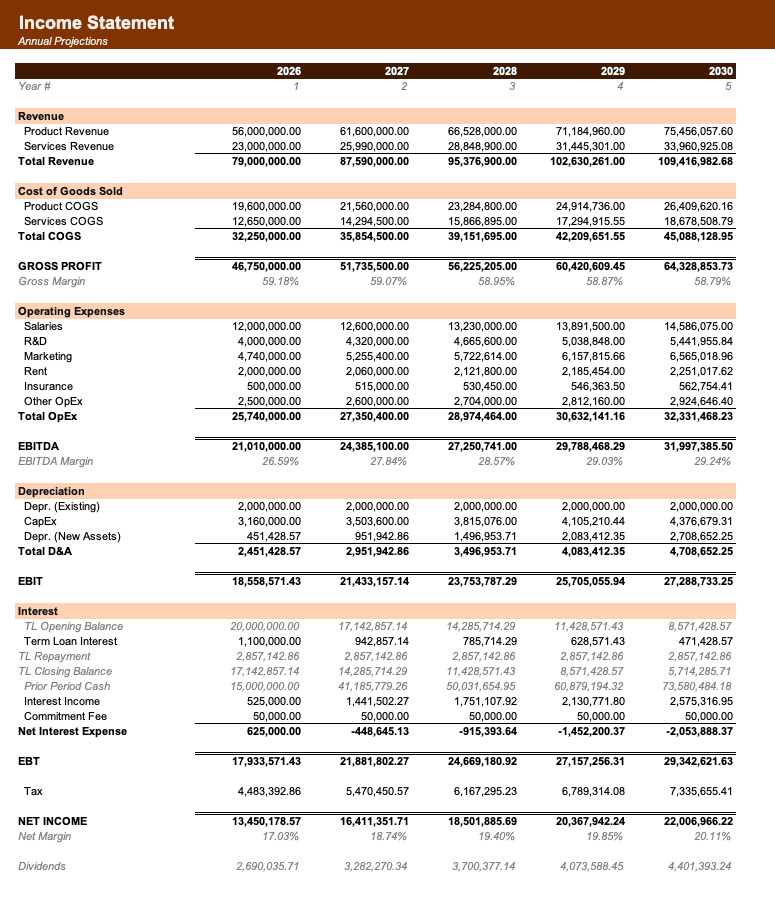
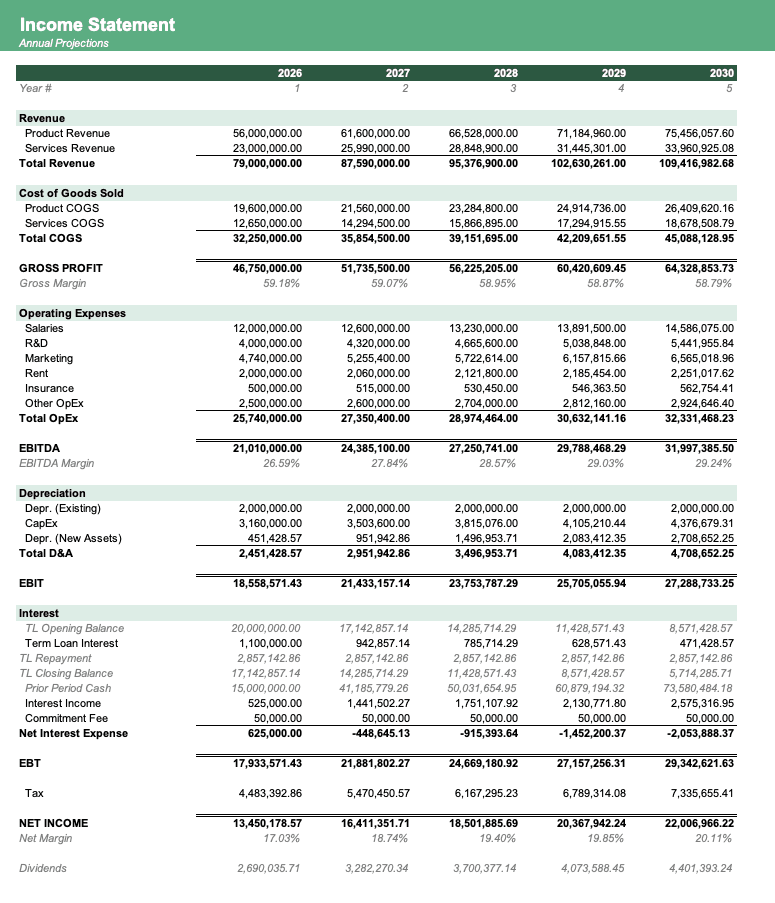
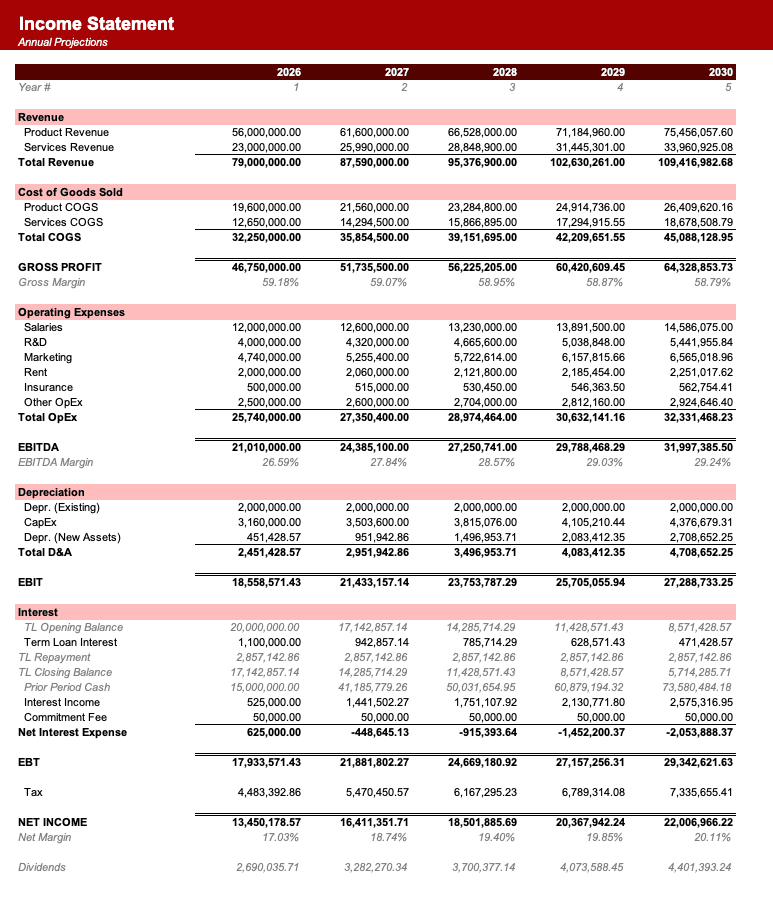
Formatted to IB standards
Named theme colors repaint the whole workbook in one click, on top of an investment-banking structure with clear input, output, and cross-sheet reference styling - brand-ready, institutional-grade, and fully auditable.

Created by ex-finance professionals
Hey, I’m Alex and I created Finamodel.
Over my years in the finance industry I kept building the same models over and over again. Same structure, same assumptions, different logo. So I started building frameworks to turn them into clean, reusable templates.
Every model here is one I’d actually use for a client, and I personally vet each one before it goes up.
I’m not an expert in every industry, but I’ve built enough models to know what belongs in one. And when something is completely foreign to me, I reach out to my network for experts to work on our models with us.
Having a template library on hand cuts a first build from hours to minutes.
Need help finding your model? You’ll find me in the Finamodel app!
Frequently asked
What is a venture studio model?+
It is a model that captures the economics of building multiple startups through a shared studio platform.
How is it different from a VC model?+
It includes operating overhead and company creation mechanics, not just fund-level investments.
What should a venture studio model include?+
It should include startup creation assumptions, studio overhead, capital deployment, and portfolio-level outcome analysis.
Who uses venture studio models?+
Studio operators, investors, founders, and advisers use them to understand the economics of the studio approach.
Why is it different from modelling one startup?+
Because the economics depend on a portfolio of ventures plus a shared operating platform, not just one company.
Have more financial modelling questions? Contact us
Related templates
Venture Capital Fund Model
Model VC fund cash flows, distributed returns, and IRR by vintage year and exit scenario.
Pre-Seed Startup Financial Projection Model
Bootstrapped growth, burn rate, path to profitability, and funding milestone planning for early-stage startups.
Cap Table Management Model
Equity ownership tracking and scenario modeling.
Leveraged Buyout Model
Complete LBO analysis with debt financing structures, sponsor returns, and sensitivity to exit scenarios.


