Project Finance Debt Sculpting Dashboard
Infrastructure Excel Template (Free Download)
Review project cash flow, debt sizing, tailored amortization, DSCR coverage, interest reserves, cash sweeps, and sponsor equity returns across construction and operating phases.



professionals from Deloitte
Used by professionals from






About this dashboard
The Project Finance Debt Sculpting Dashboard brings project cash flow, capex, debt sizing, amortization, coverage ratios, and sponsor equity returns into one view. It is designed for project developers, lenders, infrastructure sponsors, and advisers evaluating debt profiles against project cash generation. The summary keeps financing and project outputs visible together.
The dashboard follows the project from construction into operations, including interest-only periods, tailored amortization, interest reserves, and cash sweep mechanics. Annual debt service coverage monitoring shows how the repayment profile aligns with the cash flow available for debt service and lender requirements. These outputs support review of the modeled debt structure.
Use it for lender term sheet discussions, refinancing analysis, secondary market review, and downside scenario work. By connecting the debt schedule with project cash flow and the equity waterfall, the dashboard helps review debt paydown, covenant coverage, and sponsor returns across the project life.
What every dashboard includes
Live formulas, no hardcoded values
Outputs are driven by live formulas, so the workbook updates from its assumptions instead of relying on hardcoded results.
All assumptions in one tab
Inputs are clearly marked in the Assumptions tab and separated from calculations, making it clear what to change and what to leave intact.
Statements always balancing
For integrated-statement models, the balance sheet, cash flow, and supporting schedules tie through properly.
Distinct schedules for clarity
Debt, working capital, taxes, and cash flow can get messy quickly. We group calculations in clear schedules, not across disconnected tabs.
No hidden macros or external links
There are no unexplained external workbook links or macros to undermine auditability or portability.
Changes flow through the model
Update a key driver and see the impact carry through the forecast, financing, and return outputs. We never use hardcoded numbers in formulas.
What's inside the Project Finance Debt Sculpting Dashboard
- Project operating cash flow
- Construction capex schedule
- Debt sizing from DSCR targets
- Tailored amortization profile
- Interest reserves and cash sweeps
- Sponsor equity return view
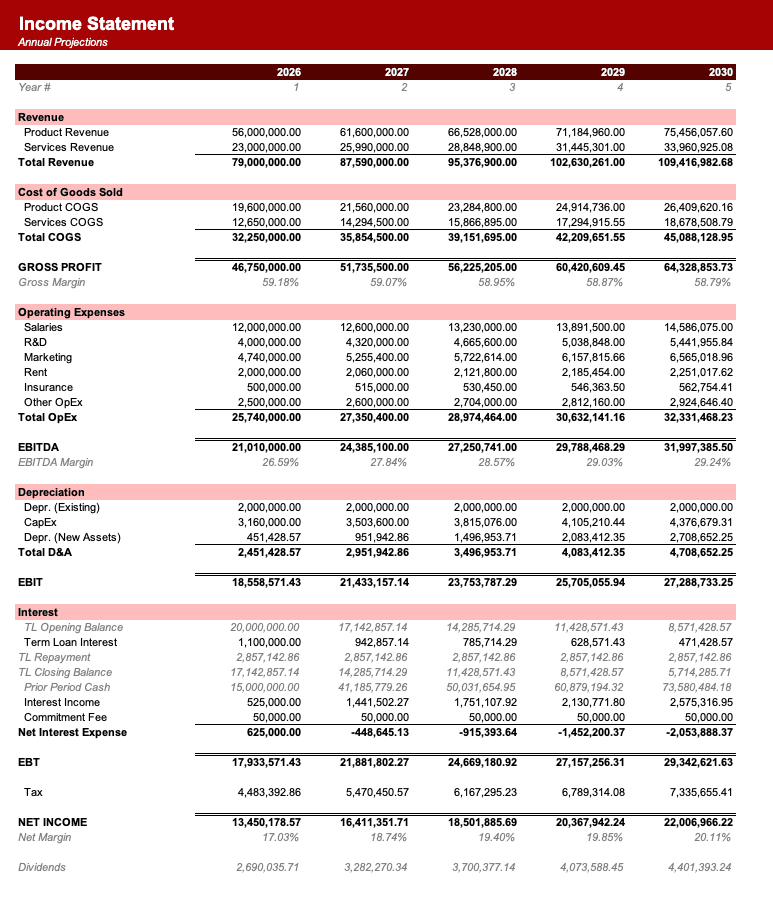
Formatted to IB standards
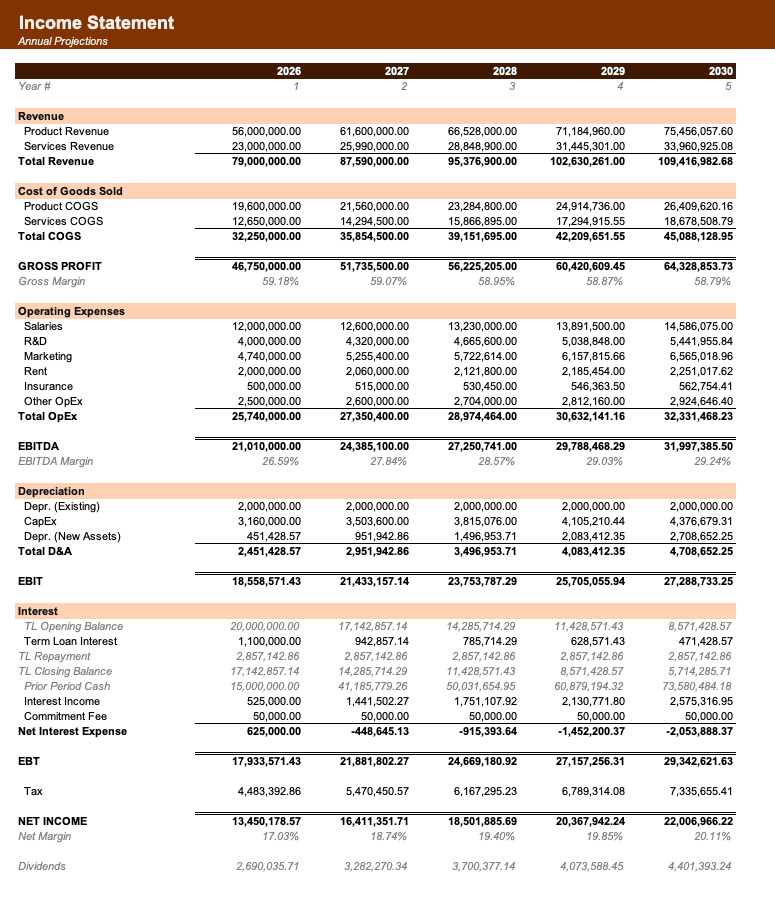
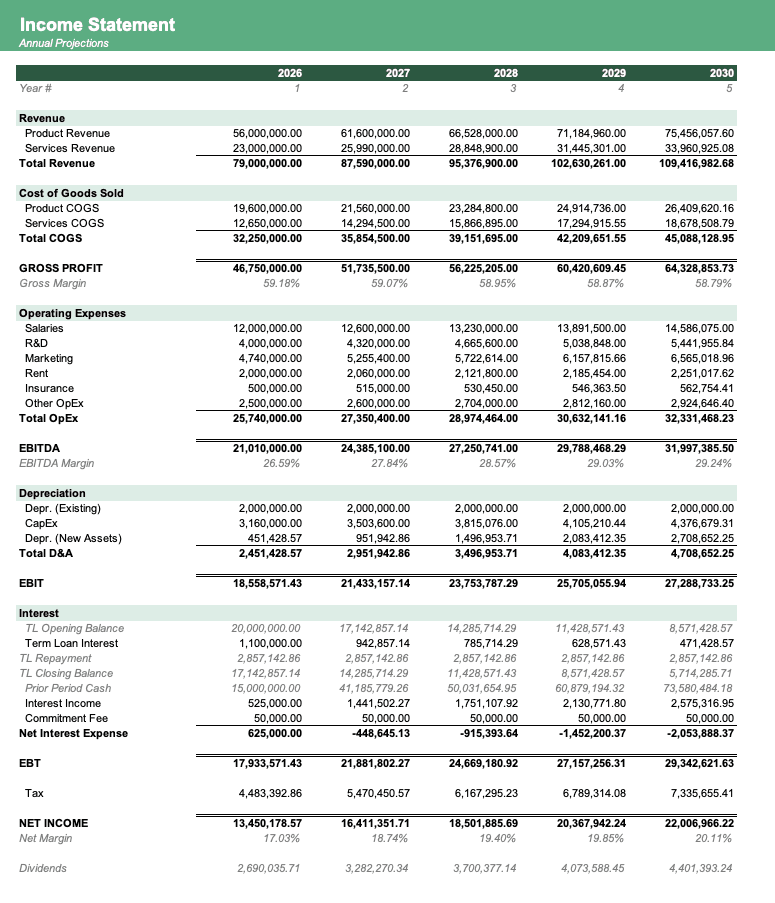
Named theme colors repaint the whole workbook in one click, on top of an investment-banking structure with clear input, output, and cross-sheet reference styling - brand-ready, institutional-grade, and fully auditable.

Created by ex-finance professionals
Hey, I’m Alex and I created Finamodel.
Over my years in the finance industry I kept building the same models over and over again. Same structure, same assumptions, different logo. So I started building frameworks to turn them into clean, reusable templates.
Every model here is one I’d actually use for a client, and I personally vet each one before it goes up.
I’m not an expert in every industry, but I’ve built enough models to know what belongs in one. And when something is completely foreign to me, I reach out to my network for experts to work on our models with us.
Having a template library on hand cuts a first build from hours to minutes.
Need help finding your model? You’ll find me in the Finamodel app!
Frequently asked
What is debt sculpting in project finance?+
Debt sculpting tailors the amortization schedule to the project cash flow profile so debt service coverage ratios can be monitored against covenant minimums throughout the loan life.
What does the dashboard monitor?+
It monitors project cash flow, capex, debt sizing, annual debt service coverage, amortization, interest reserves, cash sweeps, and sponsor equity returns under the modeled debt profile.
Why use a sculpted schedule instead of straight-line amortization?+
A sculpted schedule follows the project cash flow profile, helping balance the upfront debt draw with coverage requirements as cash generation changes through construction and operations.
Can it show interest reserves and cash sweeps?+
Yes. The model includes interest reserve and cash sweep mechanics, allowing the dashboard to show how reserves and excess project cash affect debt paydown over time.
How can I review downside debt coverage?+
Run downside cash flow scenarios against the sculpted debt schedule and review the resulting coverage periods to understand how weaker project cash generation affects covenant headroom.
Have more financial modelling questions? Contact us
Related dashboards
Hiring Dashboard
Headcount, compensation, sales capacity, and hiring efficiency outputs across Engineering, Sales, Marketing, G&A, and Customer Success.
Payroll Forecast Dashboard
Review departmental headcount, gross wages, employer burden, loaded cost per head, and the annual payroll build.
Inventory Forecast Dashboard
A 12-month inventory dashboard linking SKU sales, purchase plans, stock coverage, inventory value, and stock-out risk.
Marketing Agency Dashboard
Client roster, service mix, capacity, profitability, retention economics, and valuation metrics for a marketing agency model.