LULumigo Financial Model
Dev Tools Startup Financials (Free Excel Download)
Agentless, no-code cloud native observability platform (monitoring + debugging) for serverless and containerised applications.



professionals from Deloitte
Used by professionals from






About this model
Lumigo provides agentless, no-code observability for cloud-native applications. It combines monitoring and debugging with automated distributed tracing across Lambda, SQS, S3, Fargate, Stripe, Snowflake, and other managed services, aiming to reduce incident response by 95% and repair time by 90%.
The company uses freemium, pay-as-you-grow SaaS with self-serve procurement and cloud-marketplace distribution. Customers can start with a proof of concept, expand from one to multiple projects, and then scale monitored request volume. Pricing appears tied to requests or invocations, although the deck gives no unit rate.
Lumigo reported about 80% quarterly ARR growth. One customer expanded ARR roughly tenfold in 12 months, moving from one to four projects and 75 million to one billion requests. The model should forecast requests, paid conversion, project expansion, cloud cost, retention, and sales efficiency.
A turnkey financial model
Live formulas, no hardcoded values
Outputs are driven by live formulas, so the workbook updates from its assumptions instead of relying on hardcoded results.
All assumptions in one tab
Inputs are clearly marked in the Assumptions tab and separated from calculations, making it clear what to change and what to leave intact.
Statements always balancing
For integrated-statement models, the balance sheet, cash flow, and supporting schedules tie through properly.
Distinct schedules for clarity
Debt, working capital, taxes, and cash flow can get messy quickly. We group calculations in clear schedules, not across disconnected tabs.
No hidden macros or external links
There are no unexplained external workbook links or macros to undermine auditability or portability.
Changes flow through the model
Update a key driver and see the impact carry through the forecast, financing, and return outputs. We never use hardcoded numbers in formulas.
About Lumigo
lumigo.io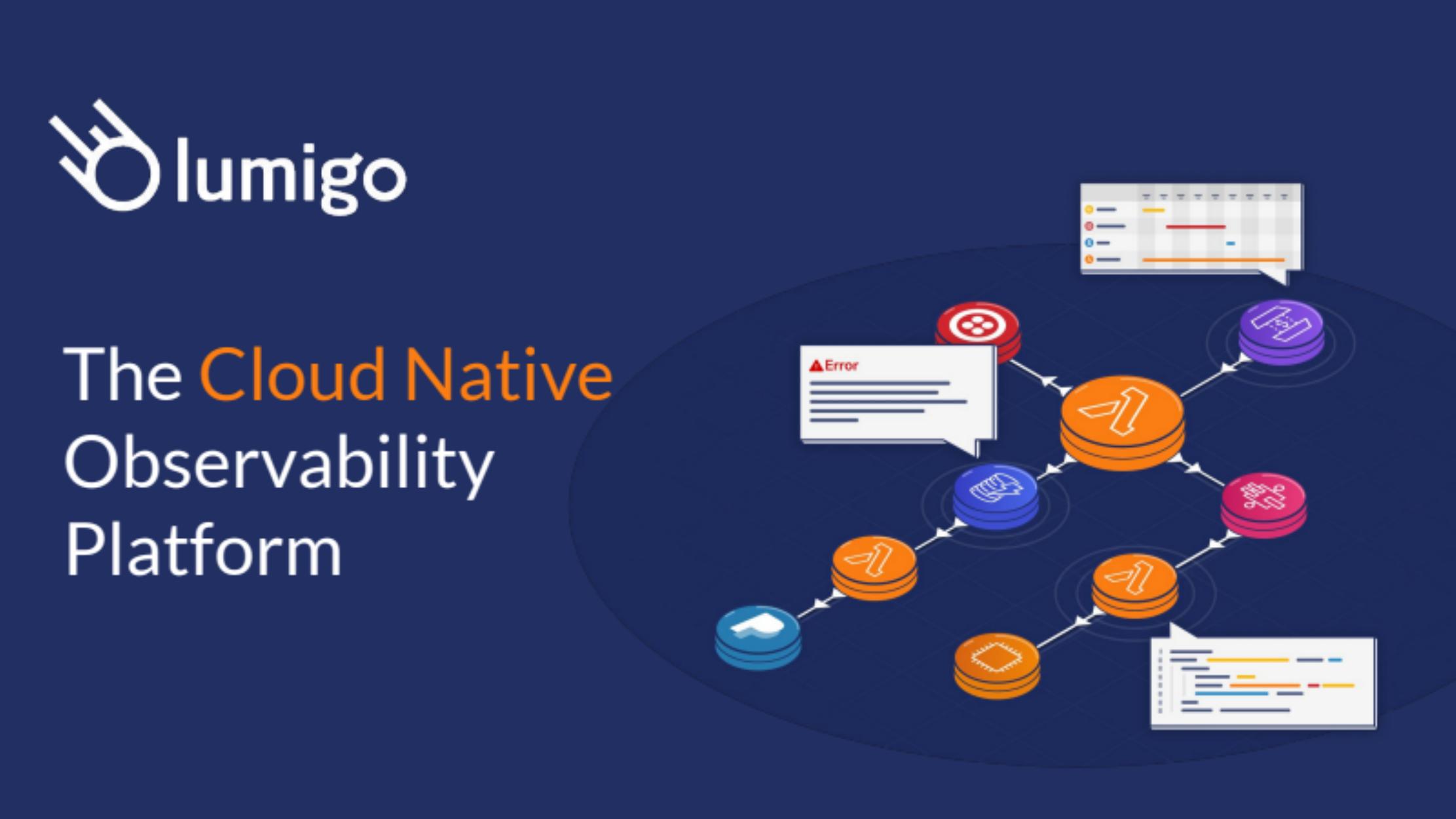
How to build a detailed financial model for Lumigo
A complete walkthrough of the business, drivers, and assumptions behind the downloadable Lumigo model - distilled from its pitch deck and publicly available information.
Product & value proposition
- 1-click, agentless, no-code, zero-deployment observability for cloud native applications.
- Two core capabilities on one platform: Monitoring (visibility + alerts, -95% incident response time) and Debugging (solve issues in minutes, -90% repair time).
- 100% automated distributed tracing across managed services (Lambda, SQS, S3, Fargate, Stripe, Snowflake, etc.).
- Unified Dev + Ops workflow in one tool - "built for modern developers, by developers".
- Key differentiator vs. legacy APM (New Relic, Datadog): agentless, no instrumentation, no deployment overhead; purpose-built for Cloud Native / XaaS architecture.
Market
- TAM projected at $21.9B by 2025 (Valuates Reports; cloud native observability/monitoring).
- Enterprises spend ~10% of cloud budget on monitoring (Valuates Reports).
- 65% of Cloud Native developers cite monitoring and debugging as their biggest challenges.
- 50% of AWS users had adopted Serverless by dawn of 2020 (Datadog).
- 206% increase in serverless invocations in last 12 months (New Relic).
Revenue model
- Freemium / usage-based SaaS: "Pay as you grow", self-serve, no credit card required for free tier.
- Self-procurement via cloud provider marketplace (implies AWS Marketplace listing).
- Land-and-expand motion: start at PoC → single project → multi-project horizontal expansion → vertical volume growth (usage scale).
- Pricing unit: likely tied to number of requests/invocations monitored (customer grew from 75M to 1B requests), but explicit per-unit price not disclosed in deck.
- Channel: 100% self-serve; content/community marketing (developer thought leaders / Serverless Heroes).
Traction & metrics
- ~80% quarterly ARR growth.
- Case study customer: ~10x ARR growth in 12 months (2019 PoC → Mar 2021).
- Sales cycle for that customer: 2 months.
- PoC duration: 4 weeks.
- Horizontal expansion: 1 project → 4 projects.
- Vertical expansion: 75M → 1B requests.
- MRR/MRR chart axes: Redacted.
Unit economics
- NRR / net expansion: Implied strong (10x ARR per customer in 12 months); no explicit NRR % stated.
Competition / moat
- Competitive set (from slide 15 quadrant - partially redacted): positions Lumigo as "Cloud Native + Agentless" vs. legacy players in "Server + Agent" quadrant; New Relic and Datadog referenced as incumbents that are not purpose-built for cloud native.
- Moat claims: agentless architecture (no deployment friction), automated tracing (no manual instrumentation), 1-click onboarding, purpose-built data model for XaaS topology.
- Founders: ex-Check Point security engineers; Linux Kernel / IDF elite tech unit backgrounds; deep systems expertise.
Team & funding ask / use of funds
- CEO & Co-founder: Erez Berkner - BSc CS (cum laude, during high school), IDF elite tech, Linux Kernel Dev, Check Point Director of Cloud Security Products (2015–2018).
- CTO & Co-founder: Aviad Mor - IDF intelligence unit, BSc CS cum laude, Linux Kernel Dev, Check Point NextGen research group founder (1998–2018).
- Founded: 2018, Tel Aviv.
- Ask: Series A Investment.
- Use of proceeds:
- Maintain cloud native superiority (R&D / product).
- Build Sales and Marketing operations.
- Continue expanding product.
Recommended financial model
- Archetype + why: SaaS ARR model with usage-based expansion layer. Lumigo is a PLG freemium SaaS with a clear land-and-expand motion driven by request volume. The primary top-line metric is ARR; expansion is driven by usage (requests/invocations) and project count per account. A standard SaaS ARR waterfall (new ARR, expansion ARR, churn) with a usage-multiplier on expansion best fits the motion shown.
- Forecast horizon & granularity: Quarterly for Year 1 (Q1–Q4); annual for Years 2–3. Current deck appears to be ~Q2 2021 vintage; model from Q2 2021 through FY2024.
- Key drivers & assumptions:
| Driver | Value |
|---|---|
| Starting ARR | Unknown - redacted |
| Quarterly ARR growth rate | ~80% QoQ (as stated) |
| Free-to-paid conversion rate | 5–10% of free signups |
| Average initial ACV (new logo) | $10K–$30K |
| Net Revenue Retention (NRR) | 130–150% |
| Expansion driver: projects per account | 1 → 4 over 12 months |
| Expansion driver: request volume | 75M → 1B (13x) over ~12 months |
| Sales cycle (enterprise/mid-market) | 2 months |
| Gross margin | 70–75% |
| S&M % of revenue (post-Series A) | 40–50% |
| R&D % of revenue | 30–40% |
| G&A % of revenue | 10–15% |
| Headcount - engineering (current) | ~10–20 FTE |
| AWS Marketplace take rate | 3% |
- Scenarios (Base / Bull / Bear - which variables flex):
- Bull: QoQ ARR growth stays at 80%; NRR 150%; ACV reaches $40K; Sales & Marketing investment drives faster new logo acquisition.
- Base: QoQ ARR growth decelerates to 40–50% by Year 2; NRR 130%; ACV $20K; PLG funnel matures.
- Bear: Growth decelerates sharply to 20% QoQ; incumbents (Datadog, New Relic) ship native cloud-native features; NRR 110%; longer sales cycles.
- Flex variables: new logo growth rate, NRR/expansion multiplier, ACV, gross margin (infra cost at scale).
- Required sheets / outputs:
- Assumptions - all drivers in one place, colour-coded inputs.
- ARR Waterfall - new ARR, expansion ARR, churned ARR, net new ARR, ending ARR by quarter.
- Customer Cohort Model - cohorts by quarter; project count and request volume expansion curves per cohort.
- P&L (Income Statement) - Revenue, COGS, Gross Profit, S&M, R&D, G&A, EBITDA, Net Income.
- Headcount Plan - by function (Eng, S&M, G&A); feeds into opex.
- Cash / Runway - burn rate, Series A proceed scenarios, months of runway.
- KPI Dashboard - ARR, MRR, QoQ growth, NRR, CAC payback (once inputs confirmed), gross margin.
- Scenarios tab - Base / Bull / Bear toggle.
Frequently asked
Is the Lumigo financial model free?+
Yes. The Lumigo model is a free Excel (.xlsx) download with live formulas. Sign up with your email and the workbook is yours to keep, review, and edit.
What's included in the model?+
A 5-year monthly forecast with P&L, cash flow and runway, valuation (exit multiple plus a DCF cross-check), MOIC/IRR returns, and unit economics, with live formulas throughout.
How was this model built?+
It was built from Lumigo's pitch deck and publicly available information, then structured to investment-banking standards as a fully editable Excel model.
Can I change the assumptions?+
Yes. You can change assumptions and the live formulas will recalculate in the downloadable Excel model.
Have more financial modelling questions? Contact us

Created by ex-finance professionals
Hey, I’m Alex and I created Finamodel.
Over my years in the finance industry I kept building the same models over and over again. Same structure, same assumptions, different logo. So I started building frameworks to turn them into clean, reusable templates.
Every model here is one I’d actually use for a client, and I personally vet each one before it goes up.
I’m not an expert in every industry, but I’ve built enough models to know what belongs in one. And when something is completely foreign to me, I reach out to my network for experts to work on our models with us.
Having a template library on hand cuts a first build from hours to minutes.
Need help finding your model? You’ll find me in the Finamodel app!
Other Dev Tools Startup Financial Models
Browse another startup in the same category.

8base
Low-code/no-code platform providing backend and frontend development tools for building digital products, internal apps, and SaaS.
Ably
Enterprise realtime messaging infrastructure (pub/sub) delivered as a cloud-native platform, enabling developers to build scalable live experiences without managing complex realtime infrastructure.

Amplitude
Mobile analytics SaaS platform giving app developers real-time behavioral analytics, funnel/retention analysis, and raw data warehouse access at scale.
Anima
Automated design-to-code platform - designers export production-ready code from their design tools with one click.

Apollo
Apollo builds and sells an enterprise "data graph" platform (powered by GraphQL) that sits as a unified API layer between frontend apps and backend microservices.
BrowserStack
Cloud-based cross-browser and mobile app testing platform used by 50,000+ customers across 135 countries.
CodeSandbox
Cloud-native collaborative web IDE that lets entire product teams (not just developers) code, review, and iterate together in the browser.
CommandBar
SaaS SDK that embeds a search-based command bar into web apps, improving UX, onboarding, and retention for B2B software companies.


