 Shrug Capital IV Financial Model
Enterprise/Security Startup Financials (Free Excel Download)
Shrug Capital is a seed-stage venture capital fund (Fund IV) raising LP capital on the strength of its brand, network, and value-add track record.



professionals from Deloitte
Used by professionals from






About this model
Shrug Capital IV is a seed-stage venture fund raising LP capital, rather than an operating startup. The firm focuses on consumer and consumer-technology investing, relying on its network and value-add track record to source and support early portfolio companies.
The economic engine is management fees on committed capital plus carried interest when investments exit successfully. The available research references earlier funds of roughly $3 million and $15 million, but does not disclose Fund IV's target size, so the model should keep that input explicit.
The fund model schedules commitments, capital calls, investments, reserves, fees, portfolio marks, exits, and carry. It produces GP economics and LP returns, including DPI, TVPI, RVPI, and net IRR under ownership, dilution, exit-multiple, and timing scenarios.
A turnkey financial model
Live formulas, no hardcoded values
Outputs are driven by live formulas, so the workbook updates from its assumptions instead of relying on hardcoded results.
All assumptions in one tab
Inputs are clearly marked in the Assumptions tab and separated from calculations, making it clear what to change and what to leave intact.
Statements always balancing
For integrated-statement models, the balance sheet, cash flow, and supporting schedules tie through properly.
Distinct schedules for clarity
Debt, working capital, taxes, and cash flow can get messy quickly. We group calculations in clear schedules, not across disconnected tabs.
No hidden macros or external links
There are no unexplained external workbook links or macros to undermine auditability or portability.
Changes flow through the model
Update a key driver and see the impact carry through the forecast, financing, and return outputs. We never use hardcoded numbers in formulas.
About Shrug Capital IV
shrug.vc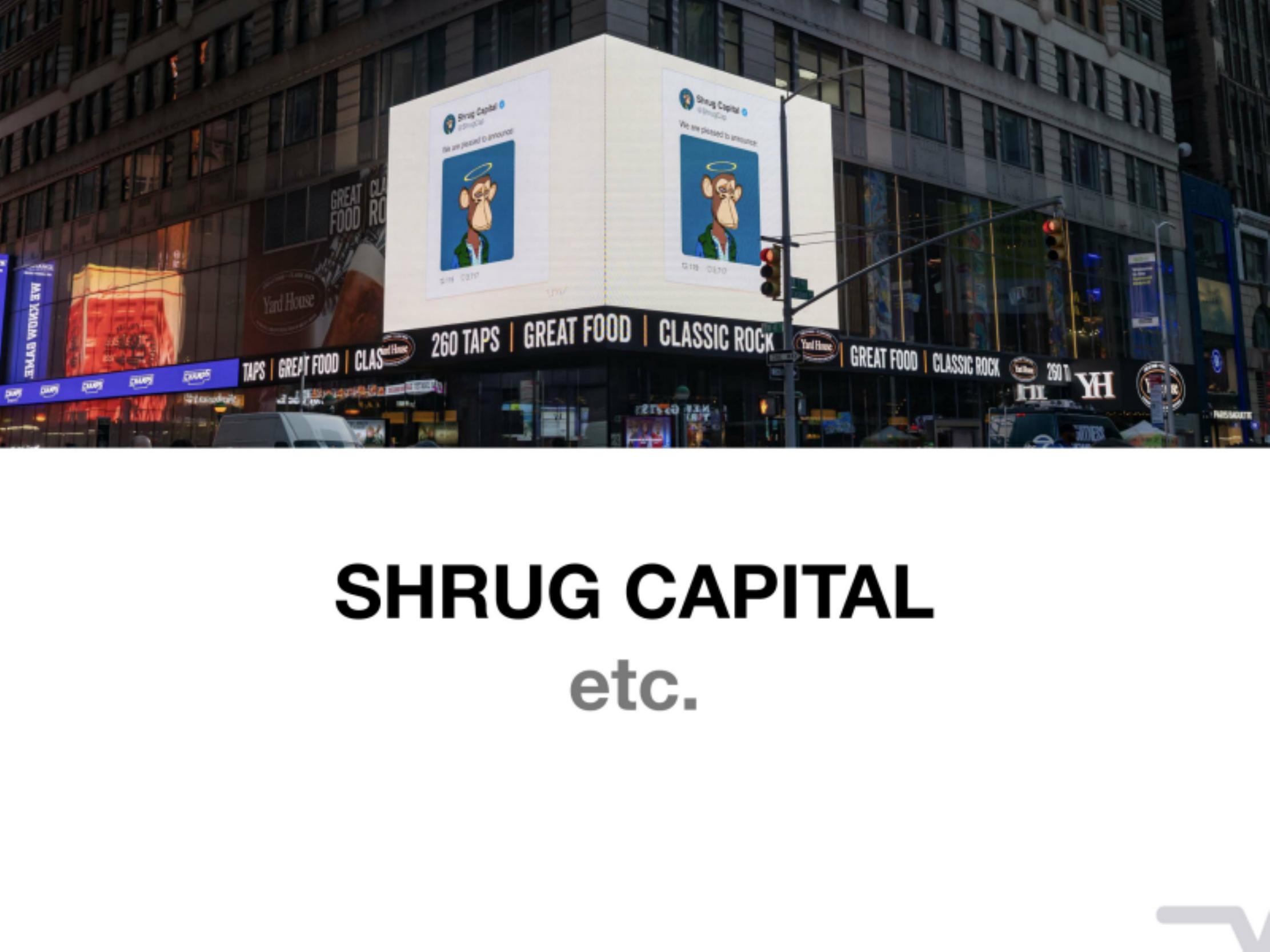
How to build a detailed financial model for Shrug Capital IV
A complete walkthrough of the business, drivers, and assumptions behind the downloadable Shrug Capital IV model - distilled from its pitch deck and publicly available information.
Product & value proposition
- Shrug Capital invests small seed checks alongside top-tier co-investors (a16z, Benchmark, Founders Fund, Khosla, Lightspeed, Craft, etc.).
- Differentiated value-add: brand/marketing stunts (Times Square billboards, swag, desk calendars), community distribution ("Shrug VIP" SMS/Community list), warm introductions to co-investors and strategics.
- "Shrug VIP" - a distribution channel that sends portfolio company products/codes to a curated tech audience; cited as a key marketing mechanism for portfolio companies.
- Key partners: Niv Dror (GP, founder) and Moshe Lifschitz (GP). Background: Niv previously at AngelList; prior to fund had audited Chris Sacca's Lowercase Capital.
Revenue model
Not explicitly stated in deck. Standard VC fund economics:
- Management fee: typically 2% of committed capital per year during investment period, stepping down thereafter.
- Carried interest: typically 20% of net profits above preferred return (hurdle).
- Fund expenses passed through to LP vehicle.
No specific fee terms, hurdle rate, or GP commit percentage are disclosed in the deck.
Traction & metrics
- Fund I size: ~$3M
- Fund II size: ~$15M
- Investments made across Fund I + II: ~50 startups
- Notable portfolio companies mentioned (non-exhaustive): Superhuman, Cameo, Atoms, Haus, Alt, Superplastic, The Custom Movement, Eight Sleep, Poparazzi, June Homes, Lula, NewNew, Levels, Voiceflow, Snackpass, Batch, Cabal, Genies, Kapwing, Pipe, MainStreet, Fourthwall, Debtsy, buildspace, sound.xyz, Wise, Seated, Alula
- Press: The Information feature ("Big Stunts, Small Checks: Shrug Capital's Unusual Rise," March 9, 2020)
- No DPI, TVPI, MOIC, IRR, or portfolio valuation figures are disclosed anywhere in the deck.
- No fund returns or exit data presented.
Competition / moat
- Moat articulated as: (a) network density - warm access to top-tier co-investors and deal flow; (b) brand - "one of the top consumer brands in venture"; (c) marketing/distribution value-add for portfolio companies (billboards, swag, Shrug VIP, Community SMS); (d) founder affinity - extensive testimonials from portfolio founders across slides 6–46.
- Competitive landscape not formally addressed; deck positions Shrug as category-defining ("best marketing team in VC") rather than benchmarking against peers.
Team & funding ask / use of funds
- GPs: Niv Dror and Moshe Lifschitz
- Niv Dror background: former accountant at Lowercase Capital (Chris Sacca); started Fund I ~2018
Recommended financial model
- Archetype + why: Venture Fund Economics Model - management fee P&L + portfolio construction + carried interest waterfall. This is a VC LP pitch, not an operating company. The appropriate model is a fund-level financial model showing fee income, fund expenses, GP economics, and a simplified portfolio construction with exit scenarios to illustrate potential carried interest. No operating 3-statement or ARR model applies.
- Forecast horizon & granularity:
- Fund life: 10 years (standard VC); annual granularity
- Investment period: Years 1–3 or 1–4
- Harvesting period: Years 4–10
- Key drivers & assumptions:
- Fund size: Unknown; $40–60M for Fund IV given Fund II was $15M and typical step-up progression - open question, must confirm with GP
- Management fee rate: 2.0% on committed capital during investment period, 2.0% on invested capital thereafter (common seed fund structure)
- Carried interest: 20% above 8% preferred return (hurdle)
- GP commit: 1–2% of fund
- Number of investments: 50–80 seed checks (consistent with ~50 across Funds I+II)
- Average check size: $250K–$750K seed (consistent with "small checks" positioning)
- Reserve ratio for follow-ons: 30–40% of fund
- Gross MOIC distribution - power law: 1–2 positions return 10x+; majority return 0–2x; modeled as a distribution across buckets
- Exit timing: average 5–7 years from initial investment
- Fund expenses: ~0.2–0.3% of fund size per year (legal, audit, admin)
- Scenarios (Base / Bull / Bear - which variables flex):
- Base: Fund at $50M; gross MOIC 3.0x on invested capital; carry distributed in years 6–10
- Bull: Fund at $60M; 1–2 breakout exits (10x+ companies like Cameo, Alt); gross MOIC 5.0x
- Bear: Fund at $40M; vintage drag, no breakout exits; gross MOIC 1.5x (below preferred return = zero carry)
- Flex variables: fund size, gross MOIC, exit timing, number of write-offs
- Required sheets / outputs:
- Assumptions - fund size, fee terms, carry terms, hurdle, portfolio construction inputs
- Management Fee P&L - annual fee income, fund expenses, net GP management company income over 10 years
- Portfolio Construction - number of investments, average check, reserves, % ownership model
- Exit Waterfall - return of capital, preferred return, carried interest split by year
- GP Economics Summary - total management fees + carry across fund life; net IRR to LP
- Scenario Toggle - Base / Bull / Bear on MOIC and fund size
Frequently asked
Is the Shrug Capital IV financial model free?+
Yes. The Shrug Capital IV model is a free Excel (.xlsx) download with live formulas. Sign up with your email and the workbook is yours to keep, review, and edit.
What's included in the model?+
A 5-year monthly forecast with P&L, cash flow and runway, valuation (exit multiple plus a DCF cross-check), MOIC/IRR returns, and unit economics, with live formulas throughout.
How was this model built?+
It was built from Shrug Capital IV's pitch deck and publicly available information, then structured to investment-banking standards as a fully editable Excel model.
Can I change the assumptions?+
Yes. You can change assumptions and the live formulas will recalculate in the downloadable Excel model.
Have more financial modelling questions? Contact us

Created by ex-finance professionals
Hey, I’m Alex and I created Finamodel.
Over my years in the finance industry I kept building the same models over and over again. Same structure, same assumptions, different logo. So I started building frameworks to turn them into clean, reusable templates.
Every model here is one I’d actually use for a client, and I personally vet each one before it goes up.
I’m not an expert in every industry, but I’ve built enough models to know what belongs in one. And when something is completely foreign to me, I reach out to my network for experts to work on our models with us.
Having a template library on hand cuts a first build from hours to minutes.
Need help finding your model? You’ll find me in the Finamodel app!
Other Enterprise/Security Startup Financial Models
Browse another startup in the same category.
AgBiome
AgBiome is a microbial-platform agtech company that discovers, develops, and commercialises biological crop protection products (and licences the platform across adjacent markets).

Alation
Enterprise data intelligence platform - data catalog, governance, and metadata management for large organisations.

Archer SPAC
Archera
Cloud resource automation platform that continuously optimizes AWS commitment purchases, de-risks overcommitment, and automates FinOps workflows.

Ardoq
Cloud-native Enterprise Architecture (EA) SaaS platform that helps large enterprises navigate digital transformation through automated data collection, graph-based architecture modelling, and change impact analysis.

Ascend
Ascend.io is an enterprise big data automation platform ("Enterprise Intelligence Platform") that abstracts away the complexity of big data engineering so non-experts can build and run data pipelines.

Athennian
Cloud-based legal entity management system (EMS) uniting entity data with workflow and document automation.

Auditboard
Cloud-based integrated risk management platform connecting audit, risk, compliance, and ESG teams across the enterprise.


