Carbon Allowance Surrender and Liability Tracker
Sustainability Financial Model (Excel Download)
Reconcile each installation's verified emissions with allowances held and surrendered. See the remaining shortfall, the provision you should book and a purchase plan that meets the deadline.



professionals from Deloitte






About this model
A carbon compliance workpaper for finance, treasury and climate reporting reviewers. The shipped case is a fictional materials company with three stationary installations under an illustrative emissions trading cycle. It covers one obligation year, a registry snapshot date and a surrender deadline one month later.
Allowance lots roll forward from opening, free allocation, purchases and surrenders at weighted average cost. Holdings and surrenders tie to registry evidence. Reserved units are held back from this year's settlement. The provision covers remaining tonnes at available carrying cost and any shortfall at spot. A purchase plan sets dated tranches by installation, with a delivery lag and a buffer to the deadline.
On the shipped case 180,000 tonnes are verified and 125,000 are surrendered, leaving 55,000. Of 50,000 held, 45,000 are available, so 10,000 tonnes must be bought. The policy provision is about EUR 3.09 million against EUR 3.05 million booked, a proposed increase of about EUR 38,600. Planned purchases never count as surrendered, and invalid records block release.
What every model includes
Live formulas, no hardcoded values
Outputs are driven by live formulas, so the workbook updates from its assumptions instead of relying on hardcoded results.
All assumptions in one tab
Inputs are clearly marked in the Assumptions tab and separated from calculations, making it clear what to change and what to leave intact.
Statements always balancing
For integrated-statement models, the balance sheet, cash flow, and supporting schedules tie through properly.
Distinct schedules for clarity
Debt, working capital, taxes, and cash flow can get messy quickly. We group calculations in clear schedules, not across disconnected tabs.
No hidden macros or external links
There are no unexplained external workbook links or macros to undermine auditability or portability.
Changes flow through the model
Update a key driver and see the impact carry through the forecast, financing, and return outputs. We never use hardcoded numbers in formulas.
What's inside the Carbon Allowance Surrender and Liability Tracker
- Verified emissions obligation by installation with verifier evidence
- Transaction population for opening, allocation, purchase and surrender movements
- Allowance lot rollforward at weighted average cost
- Registry unit and subledger cost differences by lot
- Surrender register tied to ledger units and acceptance evidence
- Reserved units kept out of the current year settlement
- Shortfall by installation and procurement cash at spot
- Policy provision with proposed adjustment to the booked liability



Formatted to IB standards
Named theme colors repaint the whole workbook in one click, on top of an investment-banking structure with clear input, output, and cross-sheet reference styling - brand-ready, institutional-grade, and fully auditable.

Created by ex-finance professionals
Hey, I’m Alex and I created Finamodel.
Over my years in the finance industry I kept building the same models over and over again. Same structure, same assumptions, different logo. So I started building frameworks to turn them into clean, reusable templates.
Every model here is one I’d actually use for a client, and I personally vet each one before it goes up.
I’m not an expert in every industry, but I’ve built enough models to know what belongs in one. And when something is completely foreign to me, I reach out to my network for experts to work on our models with us.
Having a template library on hand cuts a first build from hours to minutes.
Frequently asked
What is a carbon allowance surrender reconciliation?+
Under an emissions trading scheme, each installation must surrender one allowance per tonne of verified emissions by a deadline. This reconciliation checks emissions, allowances held and surrendered, and what is still owed.
How is the provision calculated?+
Remaining tonnes are first matched to available allowances at their carrying cost. Any tonnes not covered are valued at the entered spot price. The total is compared with the booked liability to show a proposed adjustment.
Why are reserved allowances excluded?+
Reserved units are set aside for a later year, so they cannot settle the current obligation. They stay in inventory value but are taken out of available units.
What is not included?+
The workbook does not connect to a live registry or prove actual holdings. The spot price is a fictional input, not a market quote. The provision method is an illustration and needs your own accounting policy review.
How do I use my own installations?+
Replace the installations, lots, transactions and surrenders with your own, keeping stable IDs. Set your dates, spot price and booked balances on Control. Extend the formulas and ranges for more records.
Have more financial modelling questions? Contact us
Related templates
Carbon Credit Model
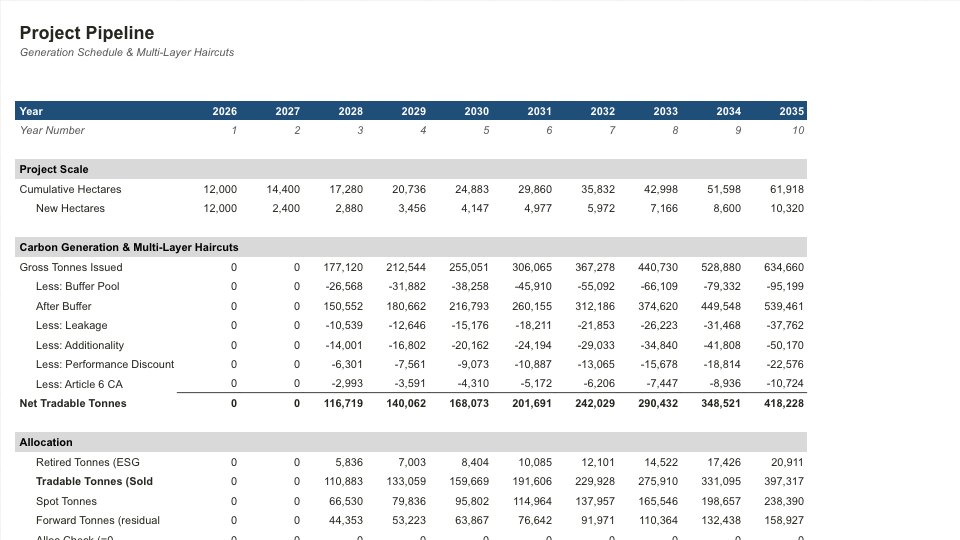
Track carbon credits, offsets, and credit retirement with accounting treatment.
Commodity Hedging Model
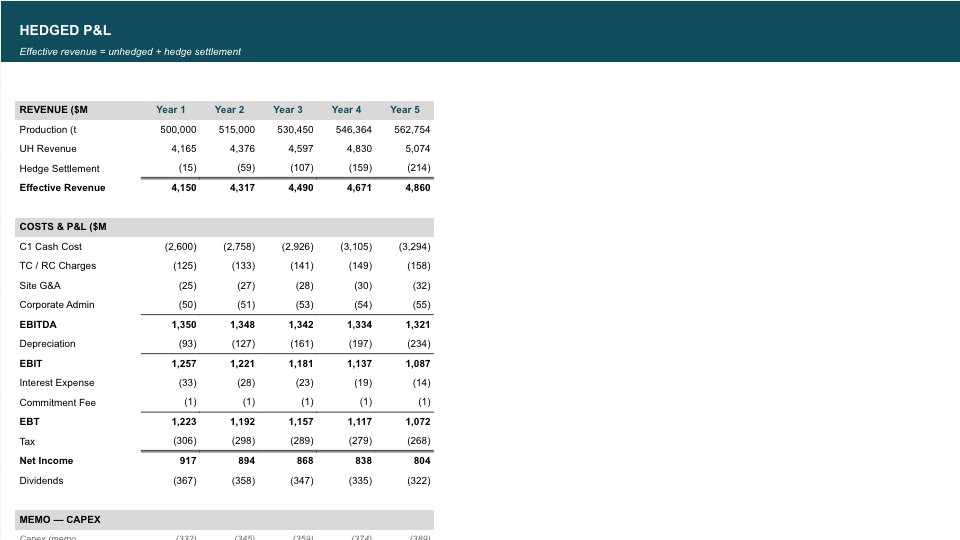
Structure and monitor hedges for commodity price exposure with effectiveness metrics.
Accounting Estimates Register
List each accounting estimate with its method, range, owner and review date, and control adjustments before posting.
Green Financing Use of Proceeds Allocation Register
Allocate green financing proceeds to eligible paid spend, track unallocated balances and tie them to treasury ledgers.







