Development Pro Forma Model
Real Estate Financial Model (Free Excel Download)
Underwrite property development feasibility through land cost, construction spend, lease-up, financing, operating income, exit value, and project-level equity returns.



professionals from Deloitte
Used by professionals from






About this model
A real estate development pro forma models the complete lifecycle of a ground-up multifamily project: land acquisition, construction draw period, lease-up, permanent financing, and disposition. For a 200-unit garden-style apartment community, the model captures the tension between development costs ($51 million all-in: hard costs, soft costs, contingency, developer fee, and interest during construction) and operational cash flows that only begin after stabilization. The projection spans from pre-development through a five-year hold period to exit, with Yield on Cost (NOI divided by total development cost) as the critical underwriting metric.
The model links hard costs per square foot ($180/sf for garden-style construction) to total building area, applies soft costs and contingency, and solves for interest during construction based on the progressive draw schedule. Permanent financing is sized at 60% LTC (loan-to-cost, a key distinction from loan-to-value) of total development cost, reflecting agency debt market conventions. Operating assumptions include a 7% Year 1 vacancy (lease-up in progress), declining to 5% at stabilization, with rent growth of 3% annually and operating expenses at 35% of effective gross income (stabilized). The return waterfall shows unlevered IRR on the full development-to-exit cash flow series plus levered IRR to equity, capturing both the development spread (YoC minus cap rate) and the leverage impact on equity returns.
This template is built for institutional capital evaluating regional development opportunities with 150–200 unit counts and 18-month to 24-month construction periods.
What every model includes
Live formulas, no hardcoded values
Outputs are driven by live formulas, so the workbook updates from its assumptions instead of relying on hardcoded results.
All assumptions in one tab
Inputs are clearly marked in the Assumptions tab and separated from calculations, making it clear what to change and what to leave intact.
Statements always balancing
For integrated-statement models, the balance sheet, cash flow, and supporting schedules tie through properly.
Distinct schedules for clarity
Debt, working capital, taxes, and cash flow can get messy quickly. We group calculations in clear schedules, not across disconnected tabs.
No hidden macros or external links
There are no unexplained external workbook links or macros to undermine auditability or portability.
Changes flow through the model
Update a key driver and see the impact carry through the forecast, financing, and return outputs. We never use hardcoded numbers in formulas.
What's inside the Development Pro Forma Model
- Monthly S-curve construction draw and interest reserve logic
- Hard cost budget with contingency management
- Unit-mix modelling with absorption and vacancy assumptions
- Automated debt sizing based on LTC and LTV
- Multi-tier IRR hurdle waterfall with promote and catch-up provisions
- Land acquisition costs and carrying costs during development
- Hard cost build schedule linked to timeline
- Soft costs: architecture, permits, insurance, and contingency
Development Pro Forma Model: Construction Draws, Refinance, and JV Waterfall
A development pro forma model supports ground-up real estate investment decisions by projecting costs, revenues, and returns across the full project lifecycle. This template implements a complete development pro forma model for a 200-unit multifamily project, covering construction draws, lease-up absorption, refinance at stabilisation, and JV waterfall distributions, all tied to a 12-sheet workbook with checks to ensure internal consistency.
Rates and financial results described here reflect illustrative model settings, not industry benchmarks.
Revenue and Operational Drivers
The model's revenue build begins with gross potential rent, calculated from unit mix and average monthly rent per unit type.
- During lease-up, vacancy and concessions reduce gross potential rent, while ancillary income from fees adds to effective gross income.
- Operating expenses are split into fixed costs, such as property taxes and insurance, and variable costs that scale with occupancy, like management fees and utilities.
- This structure keeps fixed costs from collapsing during lease-up, making the Year-1 DSCR dip more realistic.
Calculation Flow and Debt Structure
The model follows a sequential calculation flow: development costs are capitalised during an 8-quarter construction period, with capitalised interest solved in the Construction_Draw schedule.
- A construction loan sized at 65% of loan-to-cost funds the draws, then refinances to a permanent loan at stabilisation.
- The permanent loan, sized at 60% of total development cost, replaces construction debt, with any shortfall funded by an equity refi call.
- This refinance event is modelled explicitly and tied to sources and uses, ensuring the construction loan is retired.
Outputs and Returns Analysis
Key outputs include stabilised yield on cost, unlevered and levered internal rates of return, equity multiple, and the development spread.
- The model computes these metrics from cash flows that net capital reserves from both unlevered and levered series, ensuring comparability.
- At exit, the model toggles between a sale or cash-out refinance, using forward NOI to derive exit value.
- Waterfall distributions follow a three-tier structure, with return of capital, an 8% compounding preferred return, and a promote split, driving GP IRR above LP IRR.
Practical Use and Validation
This template is designed for evaluating whether to proceed with a development project, with a focus on internal consistency.
- Hard-coded checks validate that sources equal uses, DSCR meets a 1.25x covenant, and the waterfall reconciles to levered equity cash flows.
- A soft flag highlights a thin development spread without blocking results.
- Scenario toggles and an exit mode switch allow users to test variations in rents, costs, and disposition strategies, making the model a practical tool for underwriting and sensitivity analysis.
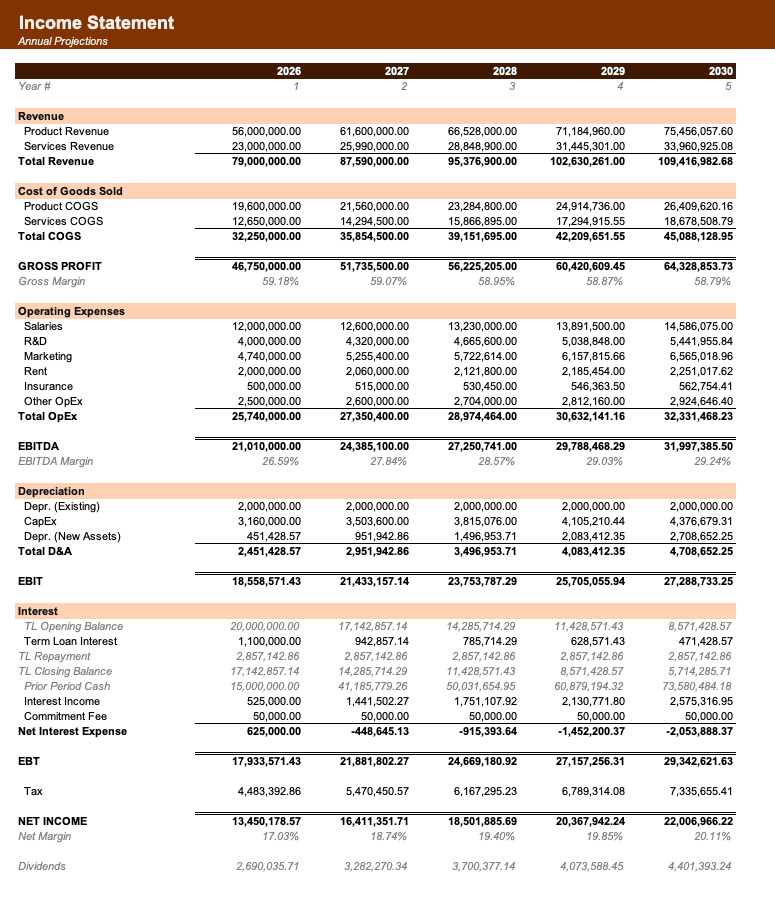
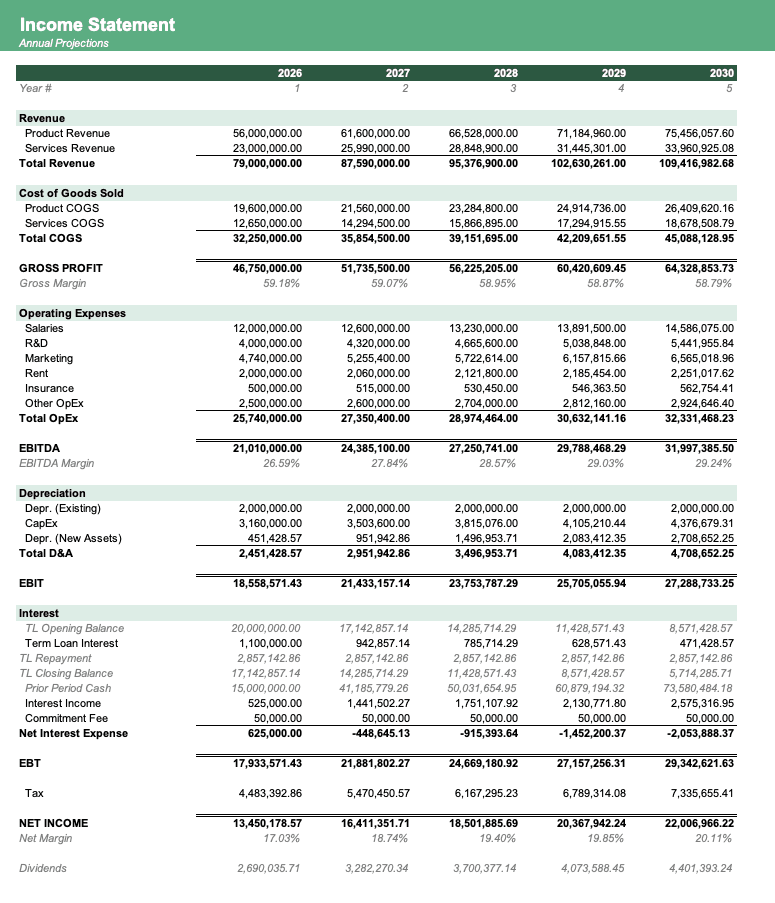
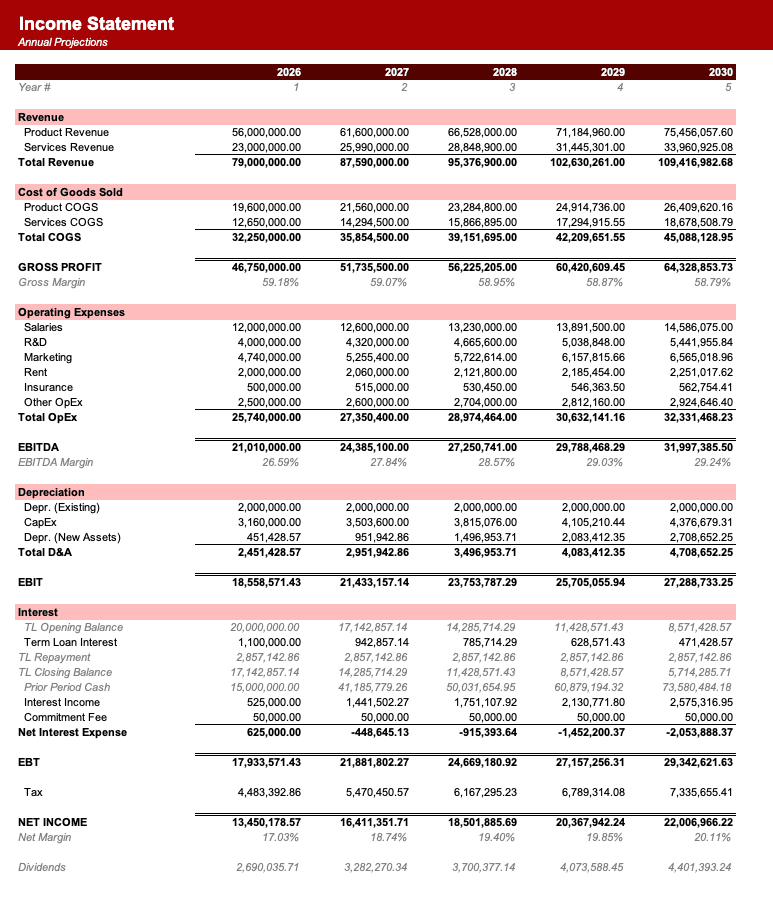
Formatted to IB standards
Named theme colors repaint the whole workbook in one click, on top of an investment-banking structure with clear input, output, and cross-sheet reference styling - brand-ready, institutional-grade, and fully auditable.

Created by ex-finance professionals
Hey, I’m Alex and I created Finamodel.
Over my years in the finance industry I kept building the same models over and over again. Same structure, same assumptions, different logo. So I started building frameworks to turn them into clean, reusable templates.
Every model here is one I’d actually use for a client, and I personally vet each one before it goes up.
I’m not an expert in every industry, but I’ve built enough models to know what belongs in one. And when something is completely foreign to me, I reach out to my network for experts to work on our models with us.
Having a template library on hand cuts a first build from hours to minutes.
Need help finding your model? You’ll find me in the Finamodel app!
Frequently asked
What is a development pro forma?+
It is a financial model used to evaluate ground-up real estate projects, covering acquisition, construction costs, financing, lease-up, and investor returns.
Who uses development pro formas?+
Real estate developers, investment analysts, private equity funds, and commercial lenders use them for feasibility analysis and capital raising.
What should a development pro forma include?+
It should include construction budgets, draw schedules, debt sizing, absorption assumptions, operating pro forma, exit analysis, and equity waterfall mechanics.
How does the interest reserve work?+
The model estimates total interest incurred during construction based on the draw schedule, then sizes the loan or equity contribution to ensure sufficient liquidity throughout the build period.
Can it handle mixed-use developments?+
Yes. The unit-mix and revenue schedules support multiple residential floorplans alongside commercial or retail components, each with its own absorption profile.
Have more financial modelling questions? Contact us
Related templates
Leveraged Buyout Model
Complete LBO analysis with debt financing structures, sponsor returns, and sensitivity to exit scenarios.
Construction Draw Schedule
Model construction progress, lender draws, and retainage with schedule and budget tracking.
Ground Lease Economics Model
Valuation and return analysis for ground lease properties including lease escalation, renewal risk, and ground lease buyout scenarios.
Hotel Operating Model
Operating model for hotel properties including occupancy rates, average daily rate (ADR), RevPAR optimization, and facility-level profitability.


