Digital Asset Cost Basis and Disposal Tracker
Capital Markets Financial Model (Excel Download)
Work out cost basis and realized gain on digital asset sales by FIFO or specific lot. Then tie the result to custody units, ledger journals and cash received from the exchange.



professionals from Deloitte






About this model
A cost basis and disposal workbook for treasury and finance teams that hold digital assets. The shipped case is a fictional company holding a single fictional token for one month, with six acquisition lots and four sales.
FIFO and specific ID run side by side on the same lots and disposals. Each method must allocate every sale in full, using only units available on the trade date. Purchase fees are capitalized once into lot basis, and sale fees are expensed. A posting bridge splits gross proceeds, sale fees, net cash, disposed basis and gain. Controls check unit and basis rollforwards, custody, chronology and policy approval.
On the shipped case net proceeds are USD 13,654. FIFO gives a realized gain of USD 2,219 and specific ID gives USD 2,114. The approved FIFO method ties to custody with no differences. The ledger posting tie finds two of four bookings reconciled, with one USD 1 mismatch and one missing journal. Cash settlement shows USD 151 still to be received.
What every model includes
Live formulas, no hardcoded values
Outputs are driven by live formulas, so the workbook updates from its assumptions instead of relying on hardcoded results.
All assumptions in one tab
Inputs are clearly marked in the Assumptions tab and separated from calculations, making it clear what to change and what to leave intact.
Statements always balancing
For integrated-statement models, the balance sheet, cash flow, and supporting schedules tie through properly.
Distinct schedules for clarity
Debt, working capital, taxes, and cash flow can get messy quickly. We group calculations in clear schedules, not across disconnected tabs.
No hidden macros or external links
There are no unexplained external workbook links or macros to undermine auditability or portability.
Changes flow through the model
Update a key driver and see the impact carry through the forecast, financing, and return outputs. We never use hardcoded numbers in formulas.
What's inside the Digital Asset Cost Basis and Disposal Tracker
- Acquisition lots with price, capitalized purchase fees and unit basis
- Disposal register with units, price, sale fees and net proceeds
- Parallel FIFO and specific ID allocations on the same lots
- Allocation checks so each sale uses only units available on its date
- Method comparison of disposed basis, realized gain and closing basis
- Posting bridge for cash, fees, asset cost and gain with a journal tie
- Custody, unit and basis rollforward controls
- Policy approval and reporting cutoff checks



Formatted to IB standards
Named theme colors repaint the whole workbook in one click, on top of an investment-banking structure with clear input, output, and cross-sheet reference styling - brand-ready, institutional-grade, and fully auditable.

Created by ex-finance professionals
Hey, I’m Alex and I created Finamodel.
Over my years in the finance industry I kept building the same models over and over again. Same structure, same assumptions, different logo. So I started building frameworks to turn them into clean, reusable templates.
Every model here is one I’d actually use for a client, and I personally vet each one before it goes up.
I’m not an expert in every industry, but I’ve built enough models to know what belongs in one. And when something is completely foreign to me, I reach out to my network for experts to work on our models with us.
Having a template library on hand cuts a first build from hours to minutes.
Frequently asked
What is digital asset cost basis?+
Cost basis is what you paid for the units you sell, including purchase fees. Realized gain is the sale proceeds less the cost basis of the units sold. The method you use to pick which units were sold changes the gain.
How do FIFO and specific ID differ?+
FIFO assumes the oldest units are sold first. Specific ID lets you choose the exact lots for each sale. The workbook runs both on the same data so you can compare the gain.
How are fees treated?+
Purchase fees are added once to lot basis. Sale fees reduce net proceeds and are expensed in the posting bridge. This avoids counting any fee twice.
What is not included?+
The case uses one fictional asset and does not give a tax filing or legal conclusion. It does not include revaluation or impairment. It is an illustrative example, not external assurance.
How do I use my own trades?+
Replace the lots, disposals, custody snapshot, journals and cash receipts with your own, keeping stable IDs. Extend all source, calculation and check ranges together when you add records.
Have more financial modelling questions? Contact us
Related templates
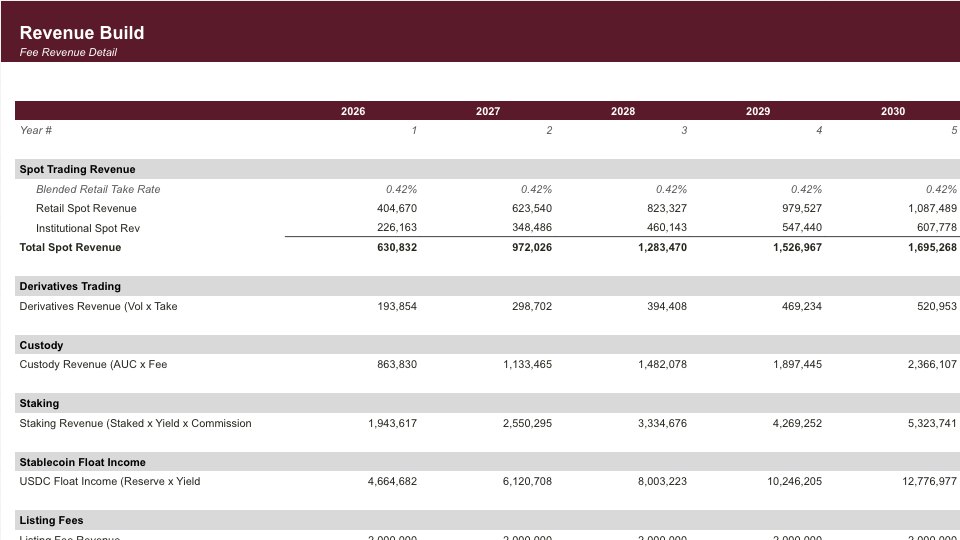
Crypto Exchange Economics Model
Model exchange revenue from trading volume, fees, and token incentives with unit economics.
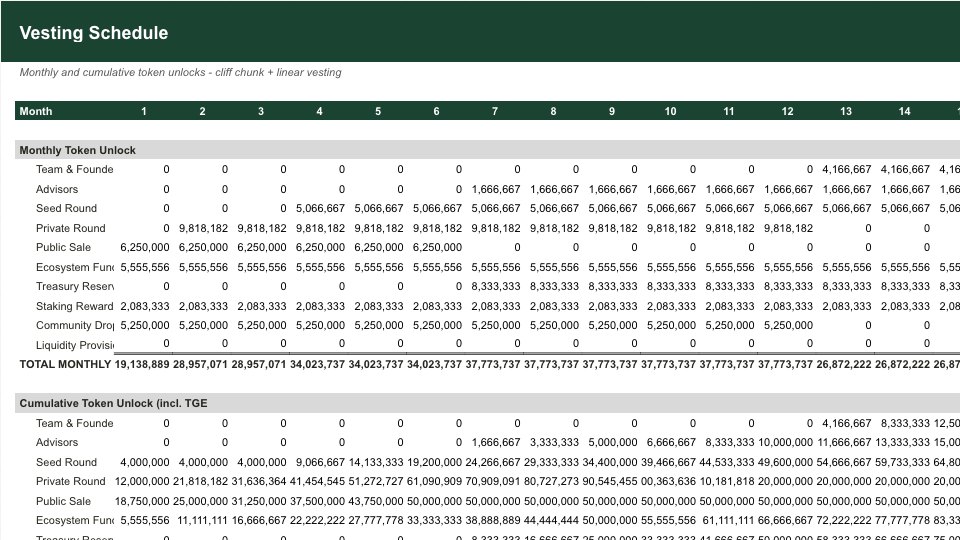
Crypto Token Allocation
Model token distribution, vesting schedules, and dilution impacts for crypto projects.
Staking Rewards and Validator Fee Reconciliation
Reconcile staked principal, earned rewards, validator fees, slashing and on-chain receipts, and age unclaimed rewards.
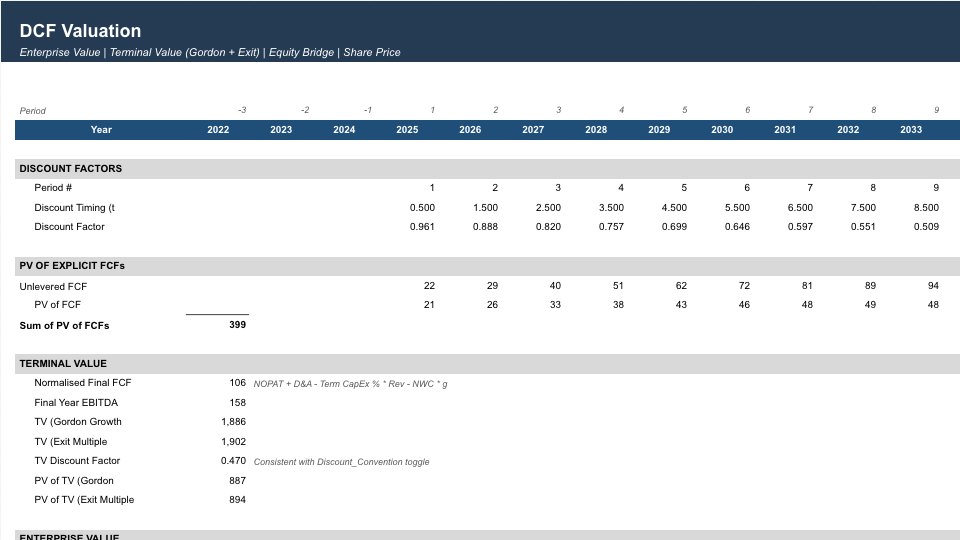
DCF Model
Discounted cash flow valuation model with explicit forecast, terminal value, and WACC.







