Staking Rewards and Validator Fee Reconciliation Tracker
Capital Markets Financial Model (Excel Download)
Tie staked principal to custody and split earned rewards into fees, slashing and net income. Then match on-chain receipts and track rewards that are earned but not yet received.



professionals from Deloitte






About this model
A staking reconciliation for treasury and finance teams. The shipped case is a fictional company staking a single fictional token with two validators for one month. It covers principal stake-ins, returns and slashing, plus rewards earned at each epoch.
Principal events roll opening stake forward and tie the result to custody by validator. Each reward is split into gross units, validator fee, reward slashing and net units, and fees are checked against the contract rate. Income is valued at event-time prices. Receipts are treated as settlement, not as a second income event. Principal slashing is shown as a separate loss.
On the shipped case 27.6 gross reward units less 1.38 of fees and 0.3 of reward slashing give 25.92 net units, or about USD 480 of net reward income. Of these, 21.335 units are received and 4.585 are still claimable. Principal ties to custody with no difference, and a principal slash costs USD 37.60. A collections sheet ages claimable units by validator against a contract lag and names an owner.
What every model includes
Live formulas, no hardcoded values
Outputs are driven by live formulas, so the workbook updates from its assumptions instead of relying on hardcoded results.
All assumptions in one tab
Inputs are clearly marked in the Assumptions tab and separated from calculations, making it clear what to change and what to leave intact.
Statements always balancing
For integrated-statement models, the balance sheet, cash flow, and supporting schedules tie through properly.
Distinct schedules for clarity
Debt, working capital, taxes, and cash flow can get messy quickly. We group calculations in clear schedules, not across disconnected tabs.
No hidden macros or external links
There are no unexplained external workbook links or macros to undermine auditability or portability.
Changes flow through the model
Update a key driver and see the impact carry through the forecast, financing, and return outputs. We never use hardcoded numbers in formulas.
What's inside the Staking Rewards and Validator Fee Reconciliation Tracker
- Principal register for stake-ins, principal returns and principal slashing
- Principal rollforward tied to custody by validator
- Reward register with gross units, fee rate and charged fee check
- Reward bridge for gross, fee, reward slash, net, received and claimable units
- Income, fee expense and slash loss valued at event-time prices
- On-chain receipt register with transaction hash, wallet and block evidence
- Receipts treated as settlement with no second income event
- Reward entitlement rollforward from opening to ending claimable units



Formatted to IB standards
Named theme colors repaint the whole workbook in one click, on top of an investment-banking structure with clear input, output, and cross-sheet reference styling - brand-ready, institutional-grade, and fully auditable.

Created by ex-finance professionals
Hey, I’m Alex and I created Finamodel.
Over my years in the finance industry I kept building the same models over and over again. Same structure, same assumptions, different logo. So I started building frameworks to turn them into clean, reusable templates.
Every model here is one I’d actually use for a client, and I personally vet each one before it goes up.
I’m not an expert in every industry, but I’ve built enough models to know what belongs in one. And when something is completely foreign to me, I reach out to my network for experts to work on our models with us.
Having a template library on hand cuts a first build from hours to minutes.
Frequently asked
What is a staking rewards reconciliation?+
It checks that staked principal agrees with custody and that rewards earned from validators are complete and correct. It splits rewards into fees, slashing and net income, then matches them to tokens received.
How are validator fees checked?+
Each reward has a contract fee rate. The workbook works out the expected fee from gross units and compares it with the fee charged. Any difference is flagged.
Why are receipts not counted as income?+
Income is recognized once when the reward is earned, at the event-time price. A later receipt only settles the claim, so it reduces claimable units without adding income.
What is not included?+
The case uses one fictional token and does not give a tax or accounting conclusion for any jurisdiction. It does not remeasure rewards at receipt-time prices.
How do I use my own staking data?+
Replace the principal events, rewards, receipts and custody balances with your own, keeping stable IDs. Enter a contract lag and owner for each validator. Extend all ranges together when you add records.
Have more financial modelling questions? Contact us
Related templates
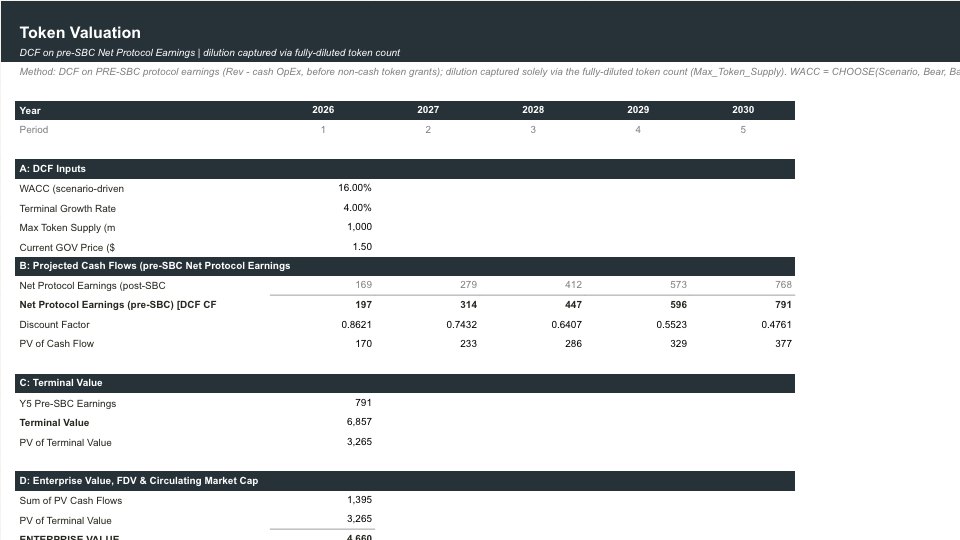
DeFi Protocol Model
Financial model for decentralized finance protocols with token economics, treasury, and revenue streams.
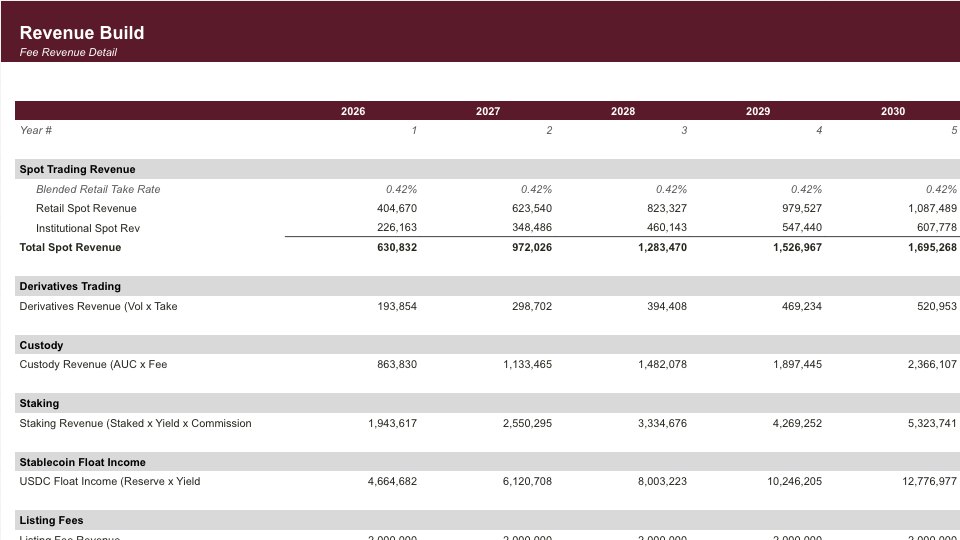
Crypto Exchange Economics Model
Model exchange revenue from trading volume, fees, and token incentives with unit economics.
Digital Asset Cost Basis and Disposal Reconciliation
Allocate digital asset disposals to lots by FIFO or specific ID, post gains and tie to custody, ledger and cash.
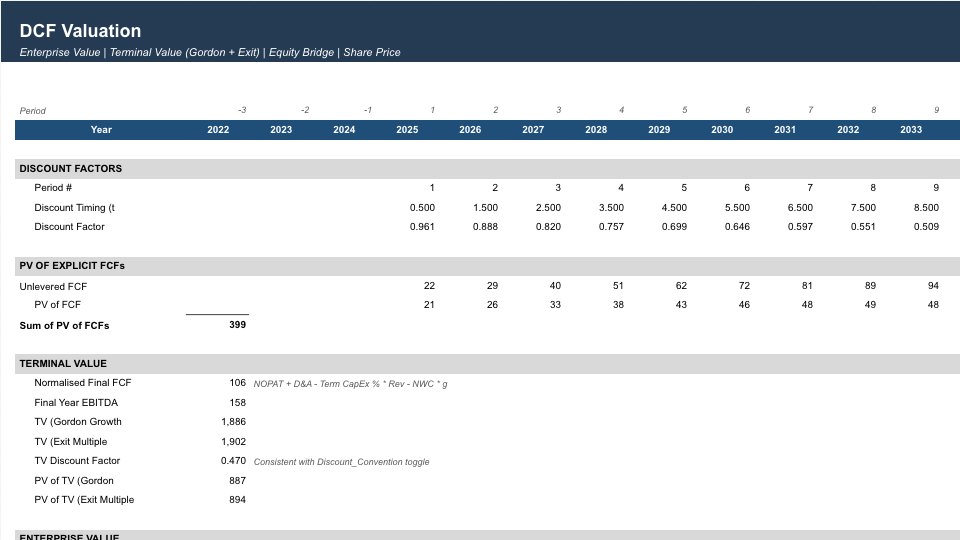
DCF Model
Discounted cash flow valuation model with explicit forecast, terminal value, and WACC.







