Stabilization and Greenshoe Tracker
Capital Markets Financial Model (Excel Download)
Follow the over-allotment short after a share offering until it is fully covered. The ledger tracks market buys, the greenshoe exercise, share delivery and cash, and compares cover routes before you exercise.



professionals from Deloitte






About this model
A stabilization ledger for a new share issue with an over-allotment, or greenshoe, option. It tracks the short position created by selling extra shares and how it is covered. The fictional case is an IPO of 4 million shares with 600,000 over-allotted at USD 10.00, reported in late December.
The short is covered by approved market purchases at or below the issue price ceiling and by exercising the option within its capacity and before expiry. Proposed instructions do not count until approved. Actual share deliveries and bank payments are tracked apart, so the economic short and the physical return of borrowed shares stay separate.
On the shipped case 380,000 shares are bought in the market and 220,000 come from the option, so the economic short is zero. 320,000 shares and USD 3,170,000 of cash are still to settle. The gross result is USD 96,000 before fees. A cover alternatives sheet shows that a market price of 9.90 saves USD 22,000 against exercise.
What every model includes
Live formulas, no hardcoded values
Outputs are driven by live formulas, so the workbook updates from its assumptions instead of relying on hardcoded results.
All assumptions in one tab
Inputs are clearly marked in the Assumptions tab and separated from calculations, making it clear what to change and what to leave intact.
Statements always balancing
For integrated-statement models, the balance sheet, cash flow, and supporting schedules tie through properly.
Distinct schedules for clarity
Debt, working capital, taxes, and cash flow can get messy quickly. We group calculations in clear schedules, not across disconnected tabs.
No hidden macros or external links
There are no unexplained external workbook links or macros to undermine auditability or portability.
Changes flow through the model
Update a key driver and see the impact carry through the forecast, financing, and return outputs. We never use hardcoded numbers in formulas.
What's inside the Stabilization and Greenshoe Tracker
- Approved terms for base issue, over-allotment, option capacity, price and expiry
- Ledger of market buys and option exercise notices with status and approver
- Economic short after approved cover
- Physical return of borrowed shares still due
- Actual share and cash settlement events with evidence
- Cash on hand, unsettled cash payable and post-settlement residual
- Controls for price ceiling, option cap, expiry and excess cover
- Settlement status and obligations by due date bucket



Formatted to IB standards
Named theme colors repaint the whole workbook in one click, on top of an investment-banking structure with clear input, output, and cross-sheet reference styling - brand-ready, institutional-grade, and fully auditable.

Created by ex-finance professionals
Hey, I’m Alex and I created Finamodel.
Over my years in the finance industry I kept building the same models over and over again. Same structure, same assumptions, different logo. So I started building frameworks to turn them into clean, reusable templates.
Every model here is one I’d actually use for a client, and I personally vet each one before it goes up.
I’m not an expert in every industry, but I’ve built enough models to know what belongs in one. And when something is completely foreign to me, I reach out to my network for experts to work on our models with us.
Having a template library on hand cuts a first build from hours to minutes.
Frequently asked
What is a greenshoe option?+
A greenshoe, or over-allotment option, lets the banks in a share offering sell more shares than the base deal. This creates a short position. The banks cover it by buying shares in the market or by exercising the option to buy new shares from the issuer at the offer price.
What is the difference between economic and physical short?+
The economic short falls as soon as approved cover is contracted. The physical return falls only when the shares are actually delivered, so borrowed shares can be returned. The ledger tracks both.
How is the stabilization result worked out?+
The opening sale receipt is compared with the total cost of cover from market buys and option exercise. The difference is the gross result before fees.
Are the rules regulatory requirements?+
No. The terms, ceiling and policies in the file are a fictional example. Use the terms of your own offering and the rules that apply in your market.
Can I add more trades?+
Yes. Add approved instructions to the ledger and actual events to settlement events, and extend the formula ranges if needed.
Have more financial modelling questions? Contact us
Related templates
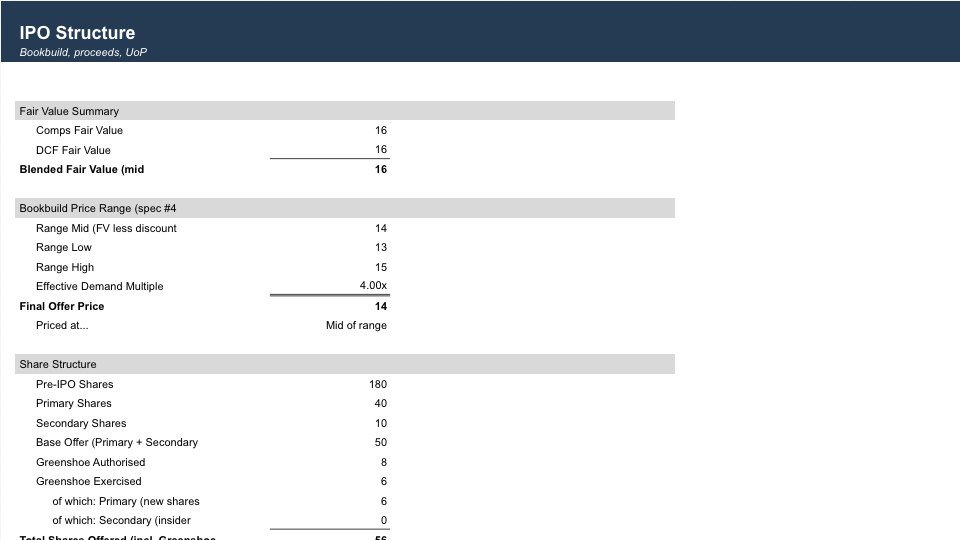
IPO Pricing and Waterfall Model
Pricing and equity distribution model for IPO transactions including valuation scenarios, dilution analysis, and founder/investor waterfalls.
IPO Investor Allocation Recommendation Workbook
Allocate IPO shares to investors with capped pro rata, round lots and approved overrides, then release only signed allocations.
Securities Bookbuilding Order Log
Log investor orders and amendments in a share placement, build final demand at the offer price and reconcile it to the syndicate book.
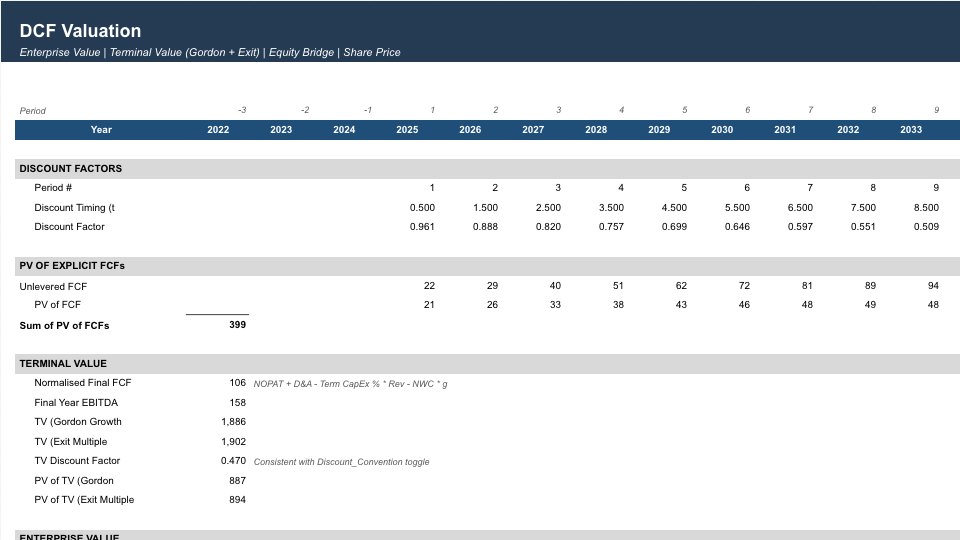
DCF Model
Discounted cash flow valuation model with explicit forecast, terminal value, and WACC.







