Consolidated Edison (ED) Financial Forecast Calculator
Interactive 5-year forecast and DCF for Consolidated Edison. Adjust revenue growth, gross margin, capex intensity, WACC, and terminal growth - see revenue, free cash flow, and enterprise value update in real time. Seeded from Consolidated Edison’s most recent SEC filings.
Assumptions
Need this as an Excel model?
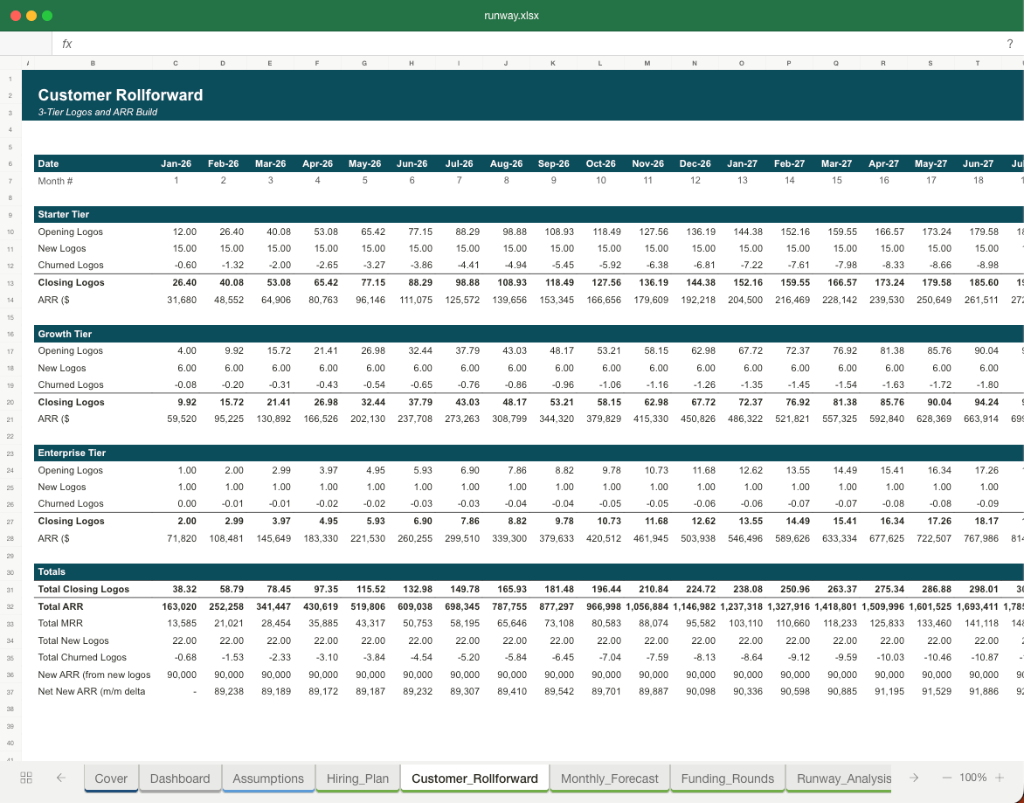
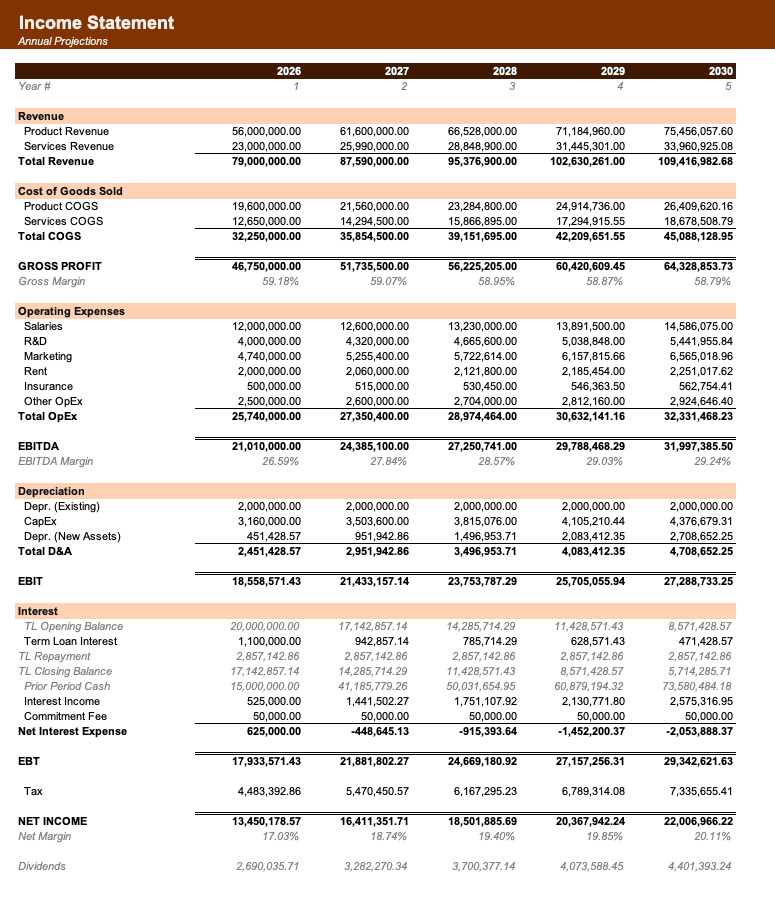
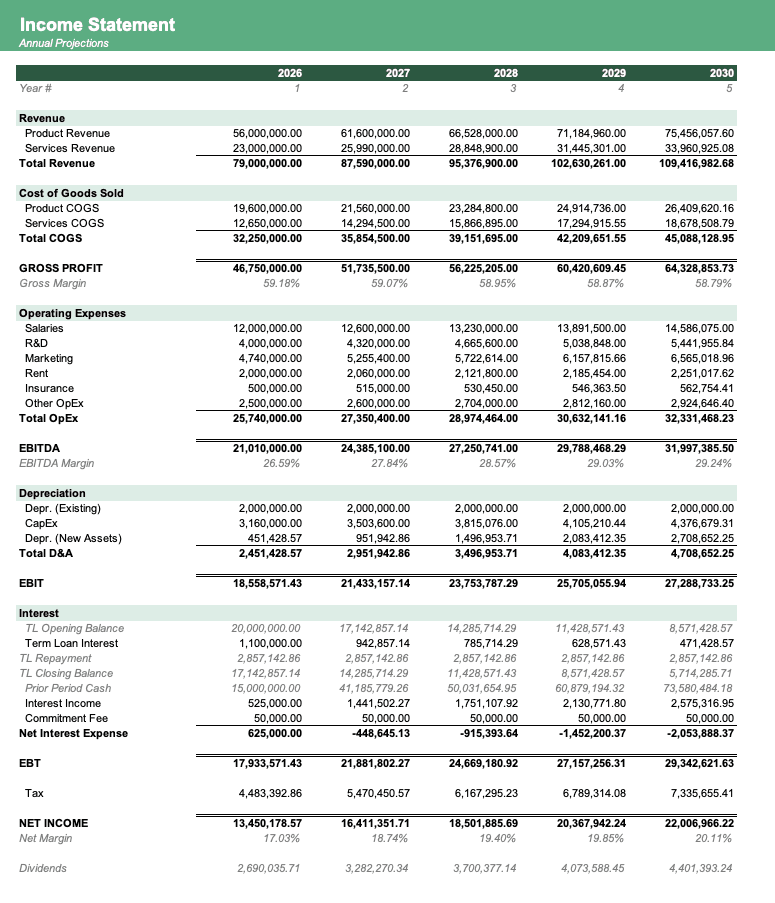
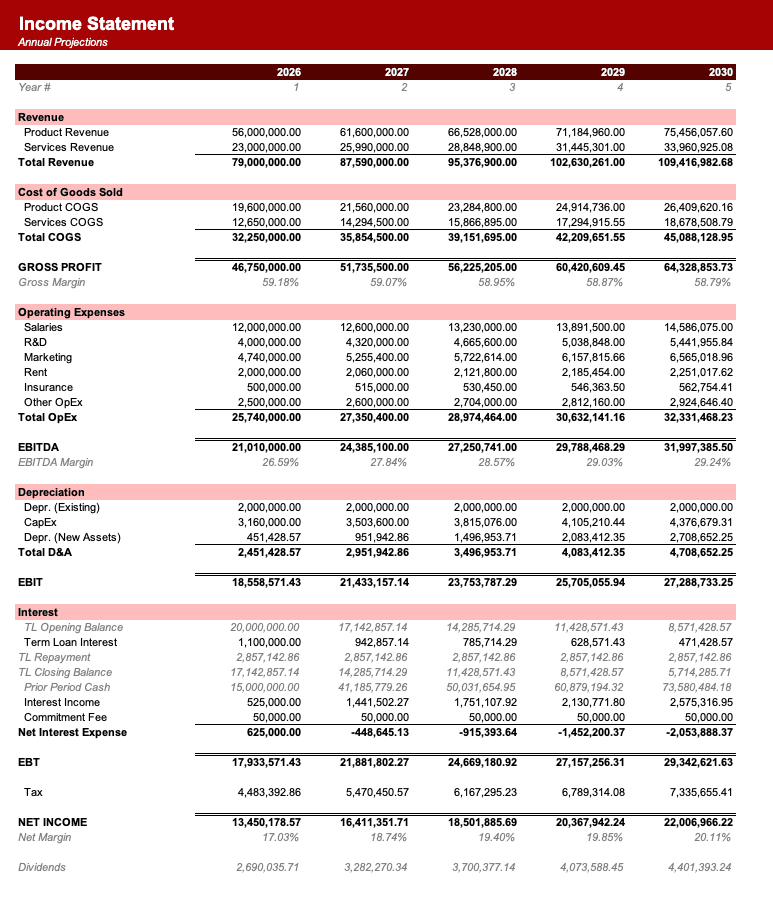
Keep iterating on the Consolidated Edison forecast in Excel. The downloadable sample has every assumption you see here plus a fully integrated income statement, balance sheet, cash flow, and debt schedule - five years of SEC historicals and live formulas in a fully editable workbook.
Other Utilities forecasts
Run the same calculator on a peer.








Frequently asked
How does Consolidated Edison generate revenue?+
Consolidated Edison operates as a fully regulated utility, generating revenue primarily from an allowed return on equity applied to its approved rate base. The company provides electric, gas, and steam services in New York City and surrounding areas, with delivery revenues insulated from usage variations by a revenue decoupling mechanism.
What are the key drivers of Consolidated Edison's profitability?+
Consolidated Edison's profitability is primarily driven by its approved rate base and the allowed return on equity set by regulators. Its revenue decoupling mechanism ensures that delivery revenues are stable, insulating the company from fluctuations in weather or customer energy usage.
Why does Consolidated Edison have such high capital expenditures?+
Consolidated Edison is an extremely capital-intensive business, requiring massive investments in its utility plant, which includes substations, transmission lines, and gas mains. The company is currently executing a substantial $37 billion capital plan from 2025 through 2029, with significant portions dedicated to both maintaining aging infrastructure and funding growth initiatives like clean energy transition and grid resilience.
What are the typical revenue growth and operating margin assumptions used in a financial model for Consolidated Edison?+
A financial model for Consolidated Edison often assumes a revenue growth rate of approximately 4.5%. Key operating expense assumptions include COGS at around 55% of revenue and SGA expenses at roughly 15% of revenue.
What is the main objective of building a financial model for Consolidated Edison?+
The primary purpose of a financial model for Consolidated Edison is to project its rate base growth, assess external financing requirements, and determine its equity valuation. This analysis helps evaluate whether the company's significant capital expenditure program will generate sufficient regulated returns to offset potential dilution from planned equity issuances.
Is there a downloadable financial model available for Consolidated Edison (ED)?+
Yes, a downloadable Excel financial model is available for Consolidated Edison. This model provides financial projections for the forecast horizon of FY2026–FY2030, focusing on aspects like rate base growth, financing needs, and equity valuation.
Have more financial modelling questions? Contact us