DADash App Financial Model
Fintech Startup Financials (Free Excel Download)
Spektra is a unified mobile-money payment network ("AliPay for Africa") enabling P2P, bill pay, and merchant payments without a bank account across Africa.



professionals from Deloitte
Used by professionals from






About this model
Dash, branded in the research as Spektra, is a unified mobile-money network for African consumers and merchants. It enables peer-to-peer transfers, bill payment, merchant checkout, and cross-border use without requiring a conventional bank account.
The platform sits above fragmented mobile-money providers and aims to make their rails interoperable through a consumer wallet and merchant tools. Consumers use core services for free, while businesses pay a disclosed 2.5% transaction fee on merchant payments.
The model should forecast users, active merchants, payment frequency, average transaction value, and merchant TPV. Applying the 2.5% take rate produces revenue; partner integrations, user acquisition, and the future rollout of checkout, QR, API, and disbursement products determine the growth case.
A turnkey financial model
Live formulas, no hardcoded values
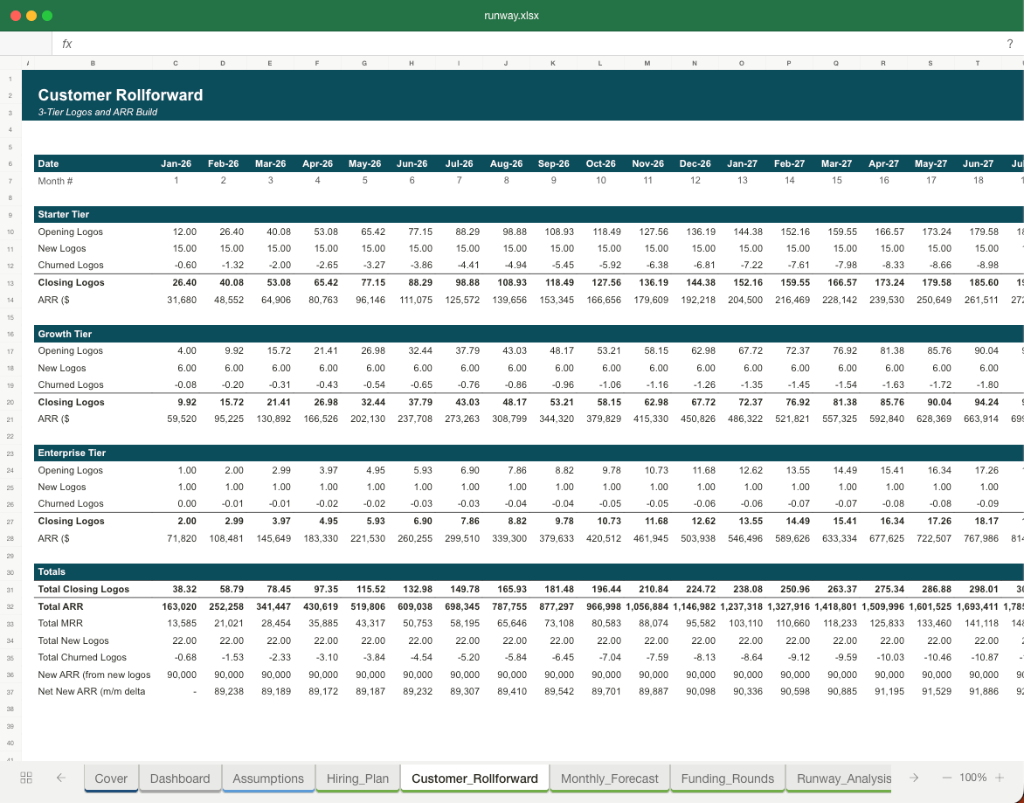
Outputs are driven by live formulas, so the workbook updates from its assumptions instead of relying on hardcoded results.
All assumptions in one tab
Inputs are clearly marked in the Assumptions tab and separated from calculations, making it clear what to change and what to leave intact.
Statements always balancing
For integrated-statement models, the balance sheet, cash flow, and supporting schedules tie through properly.
Distinct schedules for clarity
Debt, working capital, taxes, and cash flow can get messy quickly. We group calculations in clear schedules, not across disconnected tabs.
No hidden macros or external links
There are no unexplained external workbook links or macros to undermine auditability or portability.
Changes flow through the model
Update a key driver and see the impact carry through the forecast, financing, and return outputs. We never use hardcoded numbers in formulas.
About Dash App
dash-app.com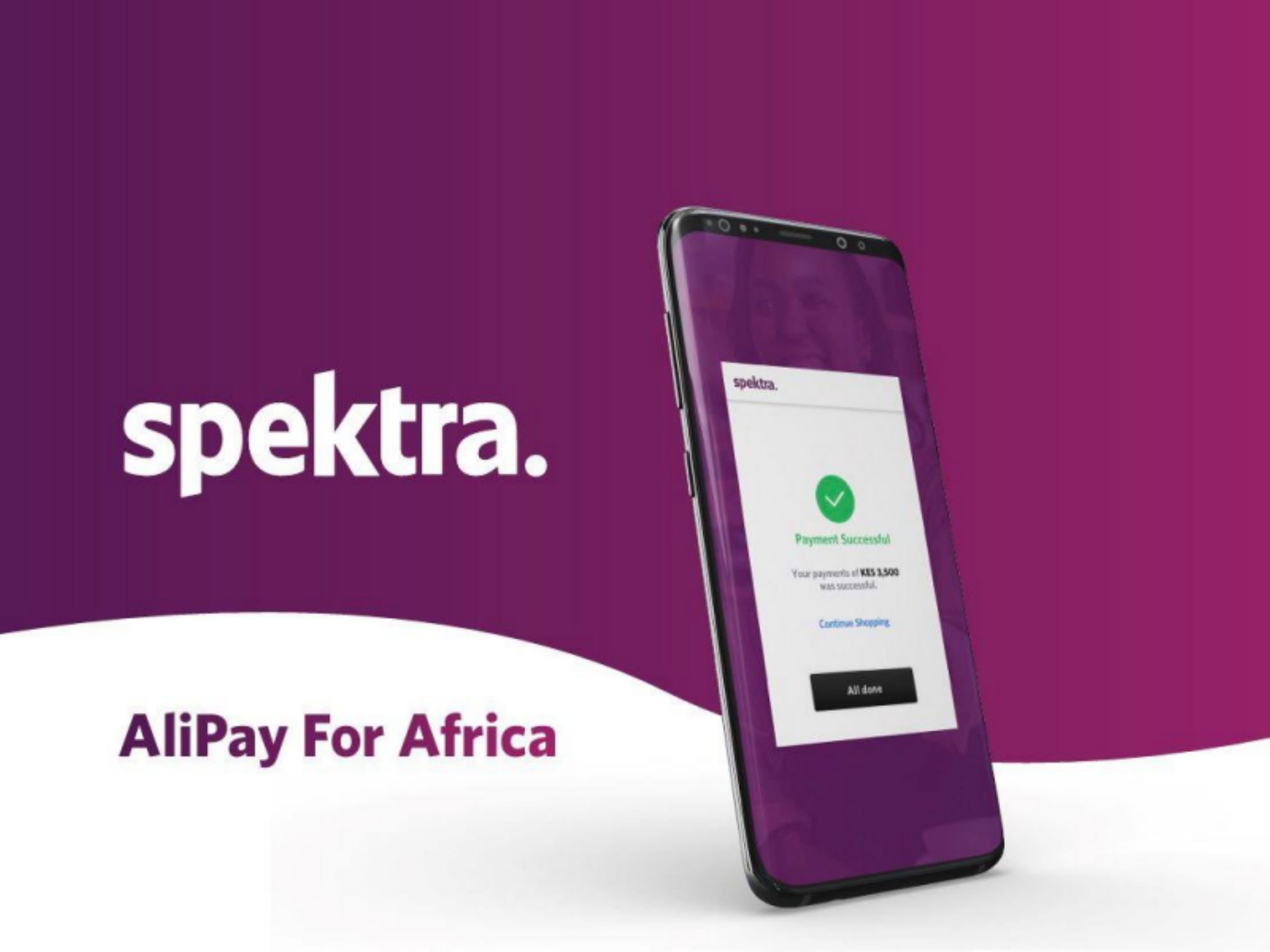
How to build a detailed financial model for Dash App
A complete walkthrough of the business, drivers, and assumptions behind the downloadable Dash App model - distilled from its pitch deck and publicly available information.
Product & value proposition
- Unified alternative payment network sitting on top of existing mobile money infrastructure (M-Pesa, MTN Mobile Money, Airtel Money, etc.) - solves fragmentation across 200+ providers.
- Consumer wallet app: P2P transfers, cross-border sends, recurring bill payments, airtime top-up, refunds, in-store and online merchant checkout.
- Multi-currency, multi-account; modern API layer replacing USSD/SIM-card-based telco rails.
- Roadmap into a "super app": Wealth (savings/investment/insurance Q1 '21), Passport (ticketing Q2 '21), Travel (hotel/experiences Q3 '21), B2B merchant tools (checkout, QR, API Q4 '21).
- CEO background: YC alum (OMG Digital, YC S16), DFS Lab consultant, Standard Bank consultant - domain credibility in African DFS.
Market
- Mobile money market (Africa): $1.9 billion transacted per day.
- Card market (Africa): $2 billion per quarter - materially smaller than mobile money.
- Addressable user base: 1 billion+ mobile money users; 600M smartphone users; present in 95 countries.
- Context: 66% unbanked population; cards <1% penetration.
- No explicit TAM/SAM/SOM breakdown or market-size CAGR given in deck.
Revenue model
- Transactional fee model:
- Businesses: 2.5% per transaction (take rate on merchant TPV).
- Consumers: FREE (P2P and bill pay at no charge).
- Revenue = Merchant TPV × 2.5% take rate.
- No subscription, SaaS, or interchange revenue mentioned.
- Planned merchant tools (B2B checkout, QR, API, disbursements) in Q4 '21 roadmap - could expand B2B volume materially.
Traction & metrics
- User growth (May–Oct 2020, 6 months):
- May '20: +1,353 (cumulative ~1,353)
- Jun '20: +1,238 (cumulative ~2,591)
- Jul '20: +1,608 (cumulative ~4,199)
- Aug '20: +1,705 (cumulative ~5,904)
- Sept '20: +2,323 (cumulative ~8,227)
- Oct '20: +3,085 (cumulative ~11,312)
- Total since launch: 13,062 users.
- Total Processing Volume (TPV) since launch: $11,717,313.94.
- Monthly TPV additions (Mar–Oct 2020, 8 months):
- Mar '20: +$315K
- Apr '20: +$445K
- May '20: +$450K
- Jun '20: +$650K
- Jul '20: +$1.6M
- Aug '20: +$1.8M
- Sept '20: +$2.3M
- Oct '20: +$3.4M
- Implied average transaction value (rough): $11.7M TPV / 13,062 users ≈ ~$896 per user lifetime spend to Oct '20.
- Revenue since launch implied: $11.7M × 2.5% ≈ $293K.
Unit economics
- No CAC, LTV, gross margin, or payback period stated.
- Consumer is free-to-use; CAC likely driven by referral/rewards ("invite friends, earn up to KES 1,000").
- Revenue per user crude proxy: ($293K revenue / 13,062 users) ≈ $22 average revenue per user cumulative since launch.
- No cost structure, headcount, or burn rate disclosed.
Competition / moat
Competitive positioning stated:
- Payment Gateways (Flutterwave, Paystack) - merchant-side only, no consumer wallet.
- Card Networks (Visa, Mastercard) - bank-dependent, low Africa penetration.
- Mobile Money Operators (M-Pesa, MTN, Airtel) - fragmented, not interoperable, USSD/SIM-based, geography and currency limited.
- Spektra moat: unified network working with existing infrastructure, modern feature stack, multi-currency, multi-account, owns wallet + B2B2C flow, developer-friendly.
Team & funding ask / use of funds
- 5-member founding team, combined 28 years experience in African banking/mobile money software.
- CEO: Prince Boakye Boampong - Software Engineer (13 yrs), YC S16 founder (OMG Digital), Pioneer Fund venture partner, DFS Lab & Standard Bank consultant.
- Other team members: not named in deck.
Recommended financial model
- Archetype + why: TPV-driven payments / fintech revenue model. Revenue = Merchant TPV × take rate (2.5%). This is the correct archetype because Spektra's sole disclosed monetisation is a merchant transaction fee on payment volume, identical to payment processor / wallet models (PayPal, Stripe, M-Pesa for business). Optionally, a 3-statement layer can wrap it once cost data is gathered.
- Forecast horizon & granularity: 3 years (2021–2023) monthly for Year 1; quarterly for Years 2–3. Monthly granularity is essential because TPV is growing fast (~+50% MoM in Oct '20) and growth rate assumptions will compress quickly.
- Key drivers & assumptions:
| Driver | Seed value |
|---|---|
| Total users at model start (Nov '20) | ~13,062 |
| Monthly new user additions (Oct '20 run-rate) | ~3,085 / month |
| Monthly user growth rate | ~30% MoM (Oct '20 was +33% vs Sept) |
| Monthly TPV per active user | ~$3.4M / 13,062 ≈ $260 / active user / month (Oct '20 implied) |
| Merchant take rate | 2.5% of merchant-side TPV |
| % of TPV that is merchant-side (fee-bearing) | 50% |
| Monthly active user rate (MAU/total) | 60% |
| Gross margin on take rate | 70% |
| Headcount / OpEx | Not modelled until fundraise round size known |
| User growth deceleration | MoM growth steps down from 30% → 10% over 12 months |
- Scenarios (Base / Bull / Bear - which variables flex):
- Base: User growth decelerates to ~10% MoM by end of Year 1; merchant TPV split 50%; take rate holds at 2.5%.
- Bull: Growth sustained at 20%+ MoM for 18 months driven by super-app launch (Wealth, Passport, Travel features); merchant % of TPV rises to 65% as B2B tools (Q4 '21) onboard businesses; potential take-rate uplift from premium B2B services.
- Bear: Regulatory friction or MNO pushback slows onboarding; growth drops to 5% MoM; merchant TPV share stays at 30% (mostly consumer P2P).
- Required sheets / outputs:
- Assumptions - all drivers with / tags, editable.
- User Cohorts - monthly cohort build: new users, churn/retained, MAU.
- TPV Build - MAU × avg TPV/user/month; split merchant vs consumer.
- Revenue - merchant TPV × 2.5% take rate; gross profit after processing cost.
- P&L (simplified) - gross profit, OpEx (headcount placeholder), EBITDA. Expand to full 3-statement if fundraise and cost data become available.
- Scenario toggle - Base/Bull/Bear with summary KPIs (TPV, Revenue, Users).
- Dashboard - cumulative users, monthly TPV, monthly revenue, take rate trend.
Frequently asked
Is the Dash App financial model free?+
Yes. The Dash App model is a free Excel (.xlsx) download with live formulas. Sign up with your email and the workbook is yours to keep, review, and edit.
What's included in the model?+
A 5-year monthly forecast with P&L, cash flow and runway, valuation (exit multiple plus a DCF cross-check), MOIC/IRR returns, and unit economics, with live formulas throughout.
How was this model built?+
It was built from Dash App's pitch deck and publicly available information, then structured to investment-banking standards as a fully editable Excel model.
Can I change the assumptions?+
Yes. You can change assumptions and the live formulas will recalculate in the downloadable Excel model.
Have more financial modelling questions? Contact us

Created by ex-finance professionals
Hey, I’m Alex and I created Finamodel.
Over my years in the finance industry I kept building the same models over and over again. Same structure, same assumptions, different logo. So I started building frameworks to turn them into clean, reusable templates.
Every model here is one I’d actually use for a client, and I personally vet each one before it goes up.
I’m not an expert in every industry, but I’ve built enough models to know what belongs in one. And when something is completely foreign to me, I reach out to my network for experts to work on our models with us.
Having a template library on hand cuts a first build from hours to minutes.
Need help finding your model? You’ll find me in the Finamodel app!
Other Fintech Startup Financial Models
Browse another startup in the same category.
Acin
SaaS and data subscription network for operational risk management at Tier 1 financial institutions

Ageras Group
B2B SME ecosystem - marketplace connecting SMEs with accountants + cloud accounting/payroll software + embedded financial services (lending, factoring, banking)

Airbase
Unified non-payroll spend management platform (corporate cards, AP/bill pay, expense reimbursement, approval workflows) for mid-market companies.

Altruist
Vertically integrated all-in-one platform for registered investment advisors (RIAs) - combining custodial, portfolio management, practice management, and client acquisition tools.
Amenitiz
All-in-one hotel management SaaS platform ("Shopify for hotels") for independent hoteliers - PMS, booking engine, channel manager, website builder, payments, and AI-driven revenue management.

Anrok
SaaS sales tax compliance platform - nexus monitoring, calculation, registration, filing, and remittance - built specifically for SaaS companies.
Arrival
Arrival is an EV manufacturer of commercial vans and buses using proprietary Microfactories and vertically integrated components, going public via SPAC merger with CIIG Merger Corp.

AtoB
AtoB is building financial infrastructure for commercial fleets, starting with a no-fee Visa fleet card for fuel and expanding into payroll, BNPL, and international.