 Lollipop Financial Model
Marketplace Startup Financials (Free Excel Download)
Mobile app that combines AI-driven meal planning with integrated grocery ordering (currently via Sainsbury's), targeting the weekly "big shop" for average-income UK families.



professionals from Deloitte
Used by professionals from






About this model
Lollipop is a mobile meal-planning app that creates personalized weekly recipes and turns them into grocery baskets. Its live Sainsbury's integration uses product availability to build the shop, while recipe content helps UK families decide what to cook before they order.
The product promises no grocery markups and focuses on saving time in the weekly shop. The deck did not disclose monetization, but the model could combine retailer referral commission on basket value with a premium planning subscription or sponsored brand content.
The financial model should keep those monetization paths explicit rather than assume a grocery margin. Active users, weekly baskets, basket value, retailer commission, and optional paid conversion build revenue; content, product, and acquisition costs sit beneath it. Grocery conversion, repeat planning behavior, partner economics, and subscription attach rate are the key drivers.
A turnkey financial model
Live formulas, no hardcoded values
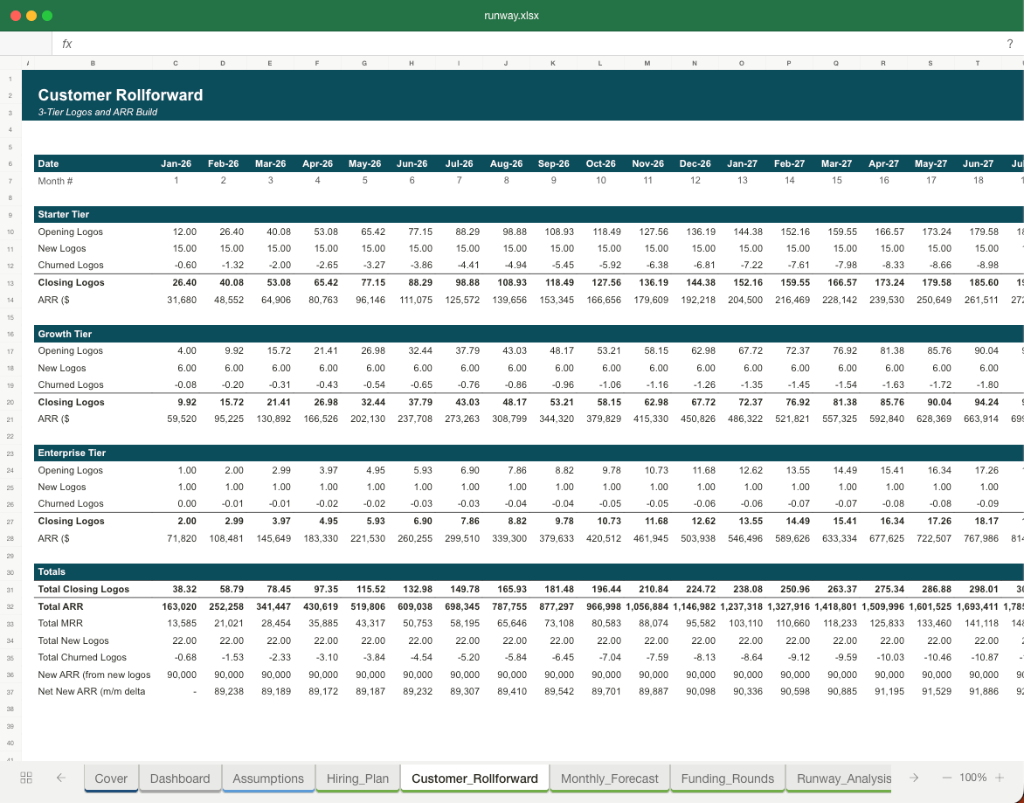
Outputs are driven by live formulas, so the workbook updates from its assumptions instead of relying on hardcoded results.
All assumptions in one tab
Inputs are clearly marked in the Assumptions tab and separated from calculations, making it clear what to change and what to leave intact.
Statements always balancing
For integrated-statement models, the balance sheet, cash flow, and supporting schedules tie through properly.
Distinct schedules for clarity
Debt, working capital, taxes, and cash flow can get messy quickly. We group calculations in clear schedules, not across disconnected tabs.
No hidden macros or external links
There are no unexplained external workbook links or macros to undermine auditability or portability.
Changes flow through the model
Update a key driver and see the impact carry through the forecast, financing, and return outputs. We never use hardcoded numbers in formulas.
About Lollipop
lollipop.ai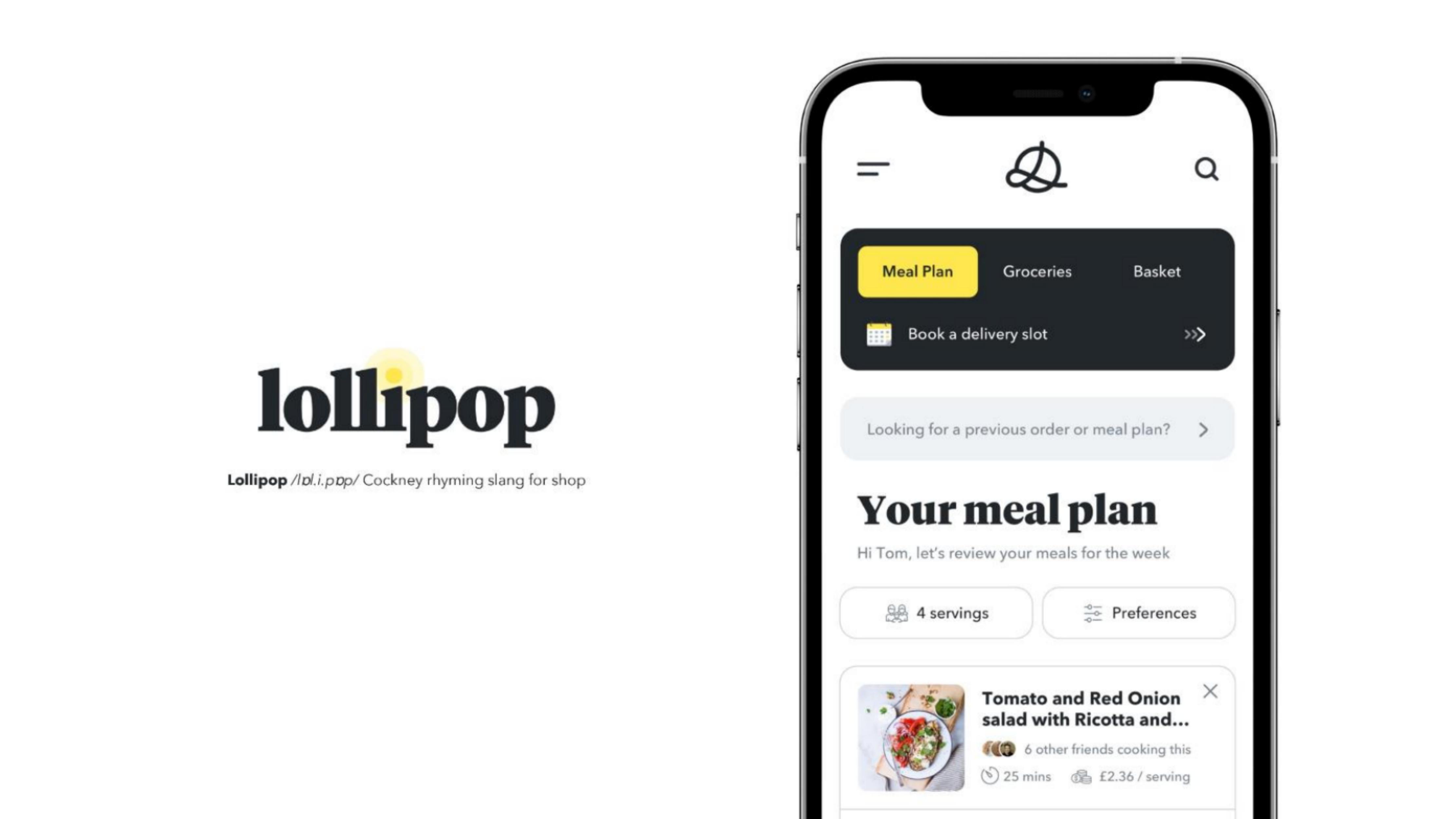
How to build a detailed financial model for Lollipop
A complete walkthrough of the business, drivers, and assumptions behind the downloadable Lollipop model - distilled from its pitch deck and publicly available information.
Product & value proposition
Three-tab mobile app: Meal Plan → Groceries → Basket.
- Personalised weekly meal plan based on dietary preferences (vegetarian, vegan, pork-free, dairy-free, gluten-free, pescatarian).
- Auto-populates grocery basket from meal plan ingredients, surfacing optimal SKUs and quantities from Sainsbury's live stock (30K products).
- Companion recipe content: in-house originals + partnership with BBC Good Food (UK's most popular recipe site).
- Vision: AI-led assistant that will eventually automate the full shop.
- Core promise: faster weekly shop, recipe inspiration, no markups vs. supermarket shelf price.
Market
- UK grocery market: £200B industry.
- UK online grocery adoption: 11% as of 2021; forecast to reach 24% by 2025. (Source: ONS; Sifted)
- Implied online grocery TAM: ~£22B at 11% penetration, ~£48B at 24% - not explicitly stated as such in deck.
- Market framing: "speedy delivery" (Gorillas, Getir, Weezy, Deliveroo etc.) addresses ~10% of occasions; the "stock-up" big weekly shop is 90% of market by volume (Kantar).
- No SAM/SOM figures provided.
Revenue model
Not explicitly stated in deck. The following can be inferred from product description:
- No markup model stated as a feature ("No markups"). - rules out standard grocery margin/white-label model.
- Likely monetisation paths (common for this archetype): (a) retailer referral/affiliate commission per basket, (b) subscription fee for premium meal planning, (c) brand/CPG sponsorship within recipe content. None confirmed in deck.
- Sainsbury's integration is described as live; whether there is a commercial agreement with revenue share is not disclosed.
- BBC Good Food partnership noted as "Brand Partner" - unclear if revenue-generating or content-only.
Traction & metrics
- "Pioneers" beta community exists and is "highly engaged, providing invaluable feedback daily."
- Qualitative user quotes only - no user count, order count, GMV, or retention figures.
- Sainsbury's integration live with 30K products.
- Commissioned consumer research: n=1,000 average-income UK families, Jan 2021.
- 80% spend 1+ hours/week on grocery shopping.
- 64% don't enjoy the experience.
- 50% wish they had more support.
- 70% search for recipe inspiration weekly.
- No revenue, GMV, orders, DAU/MAU, or retention data in deck.
Unit economics
- No CAC, LTV, basket size (beyond example prices: £2.36/serving, £3.86/serving), margin, or payback figures shown.
- Example basket items visible in UI: Sainsbury's lemons 30p–£1.75, chickpeas 55p. These are pass-through supermarket prices - no markup confirmed.
Competition / moat
- Competitive framing: quick-commerce players (Gorillas, Getir, Weezy, Dija, Zapp, Uber Eats, Deliveroo, Fancy) own last-minute/top-up (~10% of occasions); Lollipop targets stock-up (90%).
- Meal-kit adjacents (Gousto, HelloFresh, Dishpatch, Restokit) in "home adventures" bucket.
- Mission-led players (Oddbox, allplants, Milk & More, Good Club) in third trend.
- Stated moat: speed of UX, personalisation, no markups, breadth (combined stock range of partners), convenience (auto-pilot basket).
- Proprietary recipes + BBC Good Food content partnership as content moat.
- No IP, patent, or switching-cost moat discussed.
Team & funding ask / use of funds
Recommended financial model
- Archetype + why: Consumer subscription + marketplace GMV model. Lollipop sits at the intersection of a subscription meal-planner (recurring weekly engagement, dietary preferences lock-in) and a grocery marketplace (basket GMV flowing to Sainsbury's). The most appropriate model tracks: (a) subscriber/active user count driving weekly baskets, (b) GMV per basket and any take-rate/commission, and (c) optional subscription revenue line. If the business proves to be purely affiliate/referral with no subscription, a simpler marketplace GMV P&L works. Build both toggleable via a "monetisation switch" assumption.
- Forecast horizon & granularity: 3 years (2022–2024), monthly for Year 1, quarterly for Years 2–3. Rationale: pre-revenue early stage - monthly granularity needed to model cohort build-up and burn.
- Key drivers & assumptions:
- Addressable weekly shoppers in UK: ~15M households doing online grocery by 2023 (derived from 24% of ~63M households); Lollipop SOM 0.1%–0.5% penetration in base/bull.
- Registered users / Pioneers community size: start from a small beta (e.g. 500–2,000 users at deck date, Jan 2021); no figure in deck.
- Weekly active users (WAU) as % of registered: 30–45% (grocery shopping is weekly by nature, so WAU retention should be high if product works).
- Average basket size (GMV): £60–£80/week per household (UK average weekly grocery spend ~£65 per ONS; no Lollipop-specific figure in deck).
- Take-rate / commission from Sainsbury's: 1–3% of GMV (typical grocery affiliate range); or £0 if purely traffic-referral with no commercial agreement disclosed.
- Subscription revenue: £0 at launch; potential £3–5/month premium tier in Year 2 if introduced - not in deck.
- Recipe content partnership (BBC Good Food): £0 cash revenue; in-kind content exchange.
- Gross margin on commissions: ~85–90% (minimal COGS beyond payment processing).
- Headcount / burn: small founding team (3–6), London-based; monthly burn £40–80K at seed stage.
- CAC: £10–25 via social/content (no paid data in deck); payback <3 months if weekly basket take-rate applies.
- Churn (monthly): 5–10% for active users (meal planning apps have moderate-high churn early; weekly habit helps retention).
- Scenarios (Base / Bull / Bear):
- Bear: No commercial Sainsbury's agreement materialises; purely organic growth; subscription not launched until Year 3; CAC higher than expected (£30+). Revenue near-zero through Year 2.
- Base: 1–2% take-rate on GMV from Sainsbury's by Q3 Year 1; subscription at £3/month launched Year 2; 5K MAU by end Year 1, 30K by end Year 2.
- Bull: Sainsbury's or second retailer integration with 3% take-rate; BBC Good Food drives viral acquisition (CAC <£10); 20K MAU Year 1, 100K Year 2; subscription at £5/month adopted by 25% of users.
- Flex variables: take-rate %, # of retailer integrations, subscription price & attach rate, CAC, WAU retention.
- Required sheets / outputs:
- Assumptions dashboard (all drivers in one place, colour-coded vs)
- User cohort build (monthly signups → WAU → churned users)
- GMV model (WAU × avg basket × weeks)
- Revenue model (GMV × take-rate + subscription revenue)
- P&L (revenue, COGS, gross profit, S&M, product/tech, G&A, EBITDA)
- Headcount plan
- Cash / runway (burn rate, funding required to next milestone)
- Scenario toggle (Bear / Base / Bull)
- KPI summary: MAU, WAU, weekly basket GMV, take-rate revenue, avg revenue per user, gross margin, runway
Frequently asked
Is the Lollipop financial model free?+
Yes. The Lollipop model is a free Excel (.xlsx) download with live formulas. Sign up with your email and the workbook is yours to keep, review, and edit.
What's included in the model?+
A 5-year monthly forecast with P&L, cash flow and runway, valuation (exit multiple plus a DCF cross-check), MOIC/IRR returns, and unit economics, with live formulas throughout.
How was this model built?+
It was built from Lollipop's pitch deck and publicly available information, then structured to investment-banking standards as a fully editable Excel model.
Can I change the assumptions?+
Yes. You can change assumptions and the live formulas will recalculate in the downloadable Excel model.
Have more financial modelling questions? Contact us

Created by ex-finance professionals
Hey, I’m Alex and I created Finamodel.
Over my years in the finance industry I kept building the same models over and over again. Same structure, same assumptions, different logo. So I started building frameworks to turn them into clean, reusable templates.
Every model here is one I’d actually use for a client, and I personally vet each one before it goes up.
I’m not an expert in every industry, but I’ve built enough models to know what belongs in one. And when something is completely foreign to me, I reach out to my network for experts to work on our models with us.
Having a template library on hand cuts a first build from hours to minutes.
Need help finding your model? You’ll find me in the Finamodel app!
Other Marketplace Startup Financial Models
Browse another startup in the same category.

Acquco
Amazon brand aggregator - acquires third-party Amazon seller businesses at attractive multiples, then scales them via proprietary growth playbooks and technology.
Arive
Premium q-commerce app delivering lifestyle and branded products in under 30 minutes across German cities.

Audience Town
Vertical data and advertising platform targeting home movers across the entire home journey - pre-move through post-move.

AudioMob
Non-intrusive in-game audio ad platform bridging music/brand advertisers to mobile game publishers.

Authoritive
Two-way messaging platform that turns creator expertise into scalable, push-delivered learning experiences via SMS/WhatsApp.

Avo
Building amenity and office perk platform delivering same-day grocery/pantry/goods to residential and commercial tenants via a white-label marketplace.
beehiiv
Newsletter platform for creators to build, grow, and monetize email audiences - SaaS subscription + native ad network revenue.
Borzo
Global same-day logistics marketplace connecting B2B merchants with crowdsourced couriers for last-mile delivery