 Memo Financial Model
Media/Gaming Startup Financials (Free Excel Download)
SaaS analytics platform that centralizes earned-media readership data for PR, marketing, research, and finance teams.



professionals from Deloitte
Used by professionals from






About this model
Memo is SaaS for measuring earned-media readership. It aggregates audience data from publisher partners including WIRED, TIME, and The Verge, enabling brands to see readers per article, compare coverage with competitors, identify effective outlets and columnists, and feed results into marketing-mix analysis.
Its key claim is that it can reveal actual readership rather than proxy metrics. Google uses it to prioritise tech reporters, Johnson & Johnson to compare vaccine coverage, and Allbirds to measure earned media alongside paid channels. Revenue is framed as direct enterprise subscription sales, with data licensing only an aspirational extension.
A product demonstration tracks 233 articles across 71 publishers and shows 2,021,566 total readership, but these are campaign examples rather than company KPIs. The model should use enterprise logos, contract values, expansion, retention, publisher-data costs, and sales capacity as core assumptions rather than consumer audience metrics.
A turnkey financial model
Live formulas, no hardcoded values
Outputs are driven by live formulas, so the workbook updates from its assumptions instead of relying on hardcoded results.
All assumptions in one tab
Inputs are clearly marked in the Assumptions tab and separated from calculations, making it clear what to change and what to leave intact.
Statements always balancing
For integrated-statement models, the balance sheet, cash flow, and supporting schedules tie through properly.
Distinct schedules for clarity
Debt, working capital, taxes, and cash flow can get messy quickly. We group calculations in clear schedules, not across disconnected tabs.
No hidden macros or external links
There are no unexplained external workbook links or macros to undermine auditability or portability.
Changes flow through the model
Update a key driver and see the impact carry through the forecast, financing, and return outputs. We never use hardcoded numbers in formulas.
About Memo
memo.co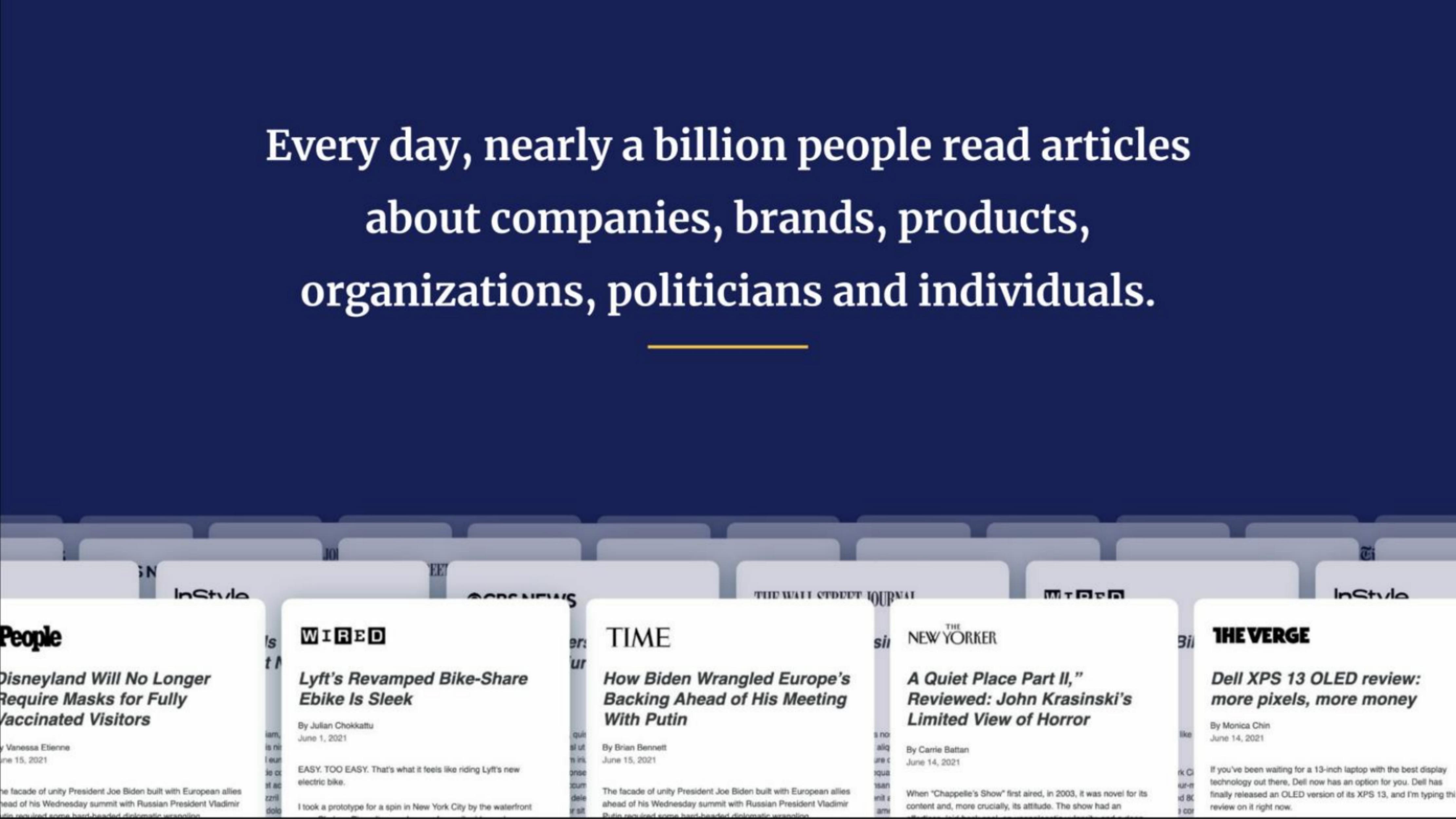
How to build a detailed financial model for Memo
A complete walkthrough of the business, drivers, and assumptions behind the downloadable Memo model - distilled from its pitch deck and publicly available information.
Product & value proposition
Memo aggregates first-party readership data directly from publisher partners (e.g. WIRED, TIME, The Verge) and additional data sources, creating a centralized analytics platform for earned media. Customers see actual reader counts per article, benchmark against competitors, identify high-performing publishers and columnists, and integrate the data into marketing mix models. Key claim: "first and only platform that can tell a company the actual number of readers on their articles."
Customer use cases:
- Google: identify columnists driving the most engagement for tech coverage, prioritize media relations outreach.
- J&J: benchmark Covid vaccine readership against Moderna/Pfizer, spot high-performing publications.
- Allbirds: feed Memo data into marketing mix model, measure earned media on par with paid.
Product dashboard shows: Summary, Publishers, Topics, Articles views; Total Readership by Brand (bar), Readership Over Time (line), Most-Read Articles, Most-Read Publishers (you vs. competitors), Most-Read Topics (you vs. competitors).
Market
- TAM: $100 billion PR/Communications industry.
- Analogy cited: Twitter generates $400M in pure data licensing revenue; companies built billion-dollar valuations on the Twitter firehose. Memo frames its publisher data network as a comparable asset.
Revenue model
- Model type: SaaS subscription (implied by "verticalized SaaS solution" framing and enterprise customer references).
- Channels: Direct sales to enterprise brands (Google, J&J, Allbirds named as customers). Agency channel implied but not stated.
- Secondary revenue potential (not stated but implied by slide 3): data licensing to third parties (analogous to Twitter firehose model). This is aspirational framing, not current revenue.
Traction & metrics
- Publisher network: 71 publishers shown in product demo screenshot; "hundreds of thousands of publisher sites" cited as the stated scale ambition.
- Named enterprise customers: Google, J&J, Allbirds.
- Product demo metrics (sample campaign shown in dashboard, not company-level KPIs):
- 233 articles tracked
- 71 publishers
- 2,021,566 total readership
- Readership highlight: 1,392,521 (+15%)
- Avg readership: 3,299 (+11%)
- Articles: 422 (−5%)
- Top article (Forbes, Apple iPhone 13): 1,185,987 readers
- Second listed article: 794,660 readers (iPhone Launch)
- The Verge: 241 articles, readership 25,184, 8% of total readership, 2 articles highlighted
Competition / moat
- Target market: $100B PR/Comms industry.
- Named competitors: Cision, Signal AI, Dataminr, Meltwater, Kantar, Netbase Quid, Brandwatch, Zignal Labs, Intrado.
- Competitive framing: "Dozens of legacy PR measurement solutions generating billions in revenue while underserving the industry with inaccurate, commoditized data."
- Moat: Direct publisher data partnerships (first-party access, not scraped/estimated). Flywheel: more publishers → better benchmarking → more valuable to enterprise customers → more publishers want to join. Data network effect analogous to Twitter firehose.
Team & funding ask / use of funds
- Team: Not shown in deck.
- Existing backers: SUSA Ventures, Founder Collective, MHS Capital, Abstract Ventures, Math Capital, LightShed Ventures (led by TMT analyst Rich Greenfield), Jonah Goodhart (Founder & former CEO of Moat).
Recommended financial model
- Archetype + why: B2B SaaS ARR model. Memo sells recurring subscriptions to enterprise PR/marketing teams. The core economic engine is seats or logos × ACV, growing via new customer adds and expansion (more publishers, more use cases within an account). Secondary upside from a data licensing layer (à la Twitter firehose) warrants a separate revenue line but should not be the primary driver until evidence exists.
- Forecast horizon & granularity: 5 years (Year 1–5); monthly in Year 1 to track early ramp, quarterly or semi-annual thereafter. Given early stage, monthly burn and runway schedule is critical alongside P&L.
- Key drivers & assumptions:
- Customer count (logos): Starting point unknown; Google, J&J, Allbirds confirmed.
- Publisher network size: 71 confirmed in demo; target "hundreds of thousands".
- Data licensing revenue (secondary):.
- Scenarios (Base / Bull / Bear - which variables flex):
- Bear: Slow enterprise sales cycle + higher-than-expected publisher data costs compress gross margin below 65%; customer count grows to ~20 by Y3.
- Base: Steady ACV + NRR >110%; land 3–4 enterprise logos/quarter in Y2+; gross margin stabilizes ~75%.
- Bull: ACV expansion + data licensing layer unlocks; NRR >125%; 100+ logos by Y3; potential for a Twitter-firehose-style data revenue stream adds a second P&L leg.
- Required sheets / outputs:
- Assumptions dashboard (all drivers in one place)
- Revenue build: logos × ACV, new/expansion/churned ARR waterfall
- P&L: Revenue → Gross Profit → EBITDA (with headcount-driven Opex detail)
- Cash flow & runway (months of runway given current burn; key survival metric for a seed-stage company)
- Publisher network build (operational KPI, drives product value and sales narrative)
- Scenario toggles (Bear / Base / Bull)
Frequently asked
Is the Memo financial model free?+
Yes. The Memo model is a free Excel (.xlsx) download with live formulas. Sign up with your email and the workbook is yours to keep, review, and edit.
What's included in the model?+
A 5-year monthly forecast with P&L, cash flow and runway, valuation (exit multiple plus a DCF cross-check), MOIC/IRR returns, and unit economics, with live formulas throughout.
How was this model built?+
It was built from Memo's pitch deck and publicly available information, then structured to investment-banking standards as a fully editable Excel model.
Can I change the assumptions?+
Yes. You can change assumptions and the live formulas will recalculate in the downloadable Excel model.
Have more financial modelling questions? Contact us

Created by ex-finance professionals
Hey, I’m Alex and I created Finamodel.
Over my years in the finance industry I kept building the same models over and over again. Same structure, same assumptions, different logo. So I started building frameworks to turn them into clean, reusable templates.
Every model here is one I’d actually use for a client, and I personally vet each one before it goes up.
I’m not an expert in every industry, but I’ve built enough models to know what belongs in one. And when something is completely foreign to me, I reach out to my network for experts to work on our models with us.
Having a template library on hand cuts a first build from hours to minutes.
Need help finding your model? You’ll find me in the Finamodel app!
Other Media/Gaming Startup Financial Models
Browse another startup in the same category.

Almost Friday
Almost Friday is a multi-platform comedy/lifestyle media brand built around the "Friday Beers" universe, monetising through apparel, brand partnerships, events, podcasts, and music.

Amagi
Cloud-native SaaS platform for TV/OTT channel creation, distribution, and ad monetization (FAST-focused)

Audoo
IoT + SaaS platform that captures real-time public music performance data and reports it to Performing Rights Organisations (PROs) to enable accurate royalty distribution.
Backbone
Backbone makes a mobile gaming controller (hardware) + unified software platform (Backbone app) that aggregates all game streaming services in one place.
Beacon Pines
Beacon Pines is a cute-and-creepy narrative adventure game set inside a magical storybook, developed by indie studio Hiding Spot Games.
Bear and Breakfast
A management/adventure video game where you play as a bear running a B&B cabin in the woods.
Bioshock
BioShock is a first-person action horror game pitched to a publisher for development funding - a game-development studio deal, not an operating startup.

Button City 2018
Indie narrative adventure game about cute animal kids saving their local arcade, targeting console and PC.


