BIBioshock Financial Model
Media/Gaming Startup Financials (Free Excel Download)
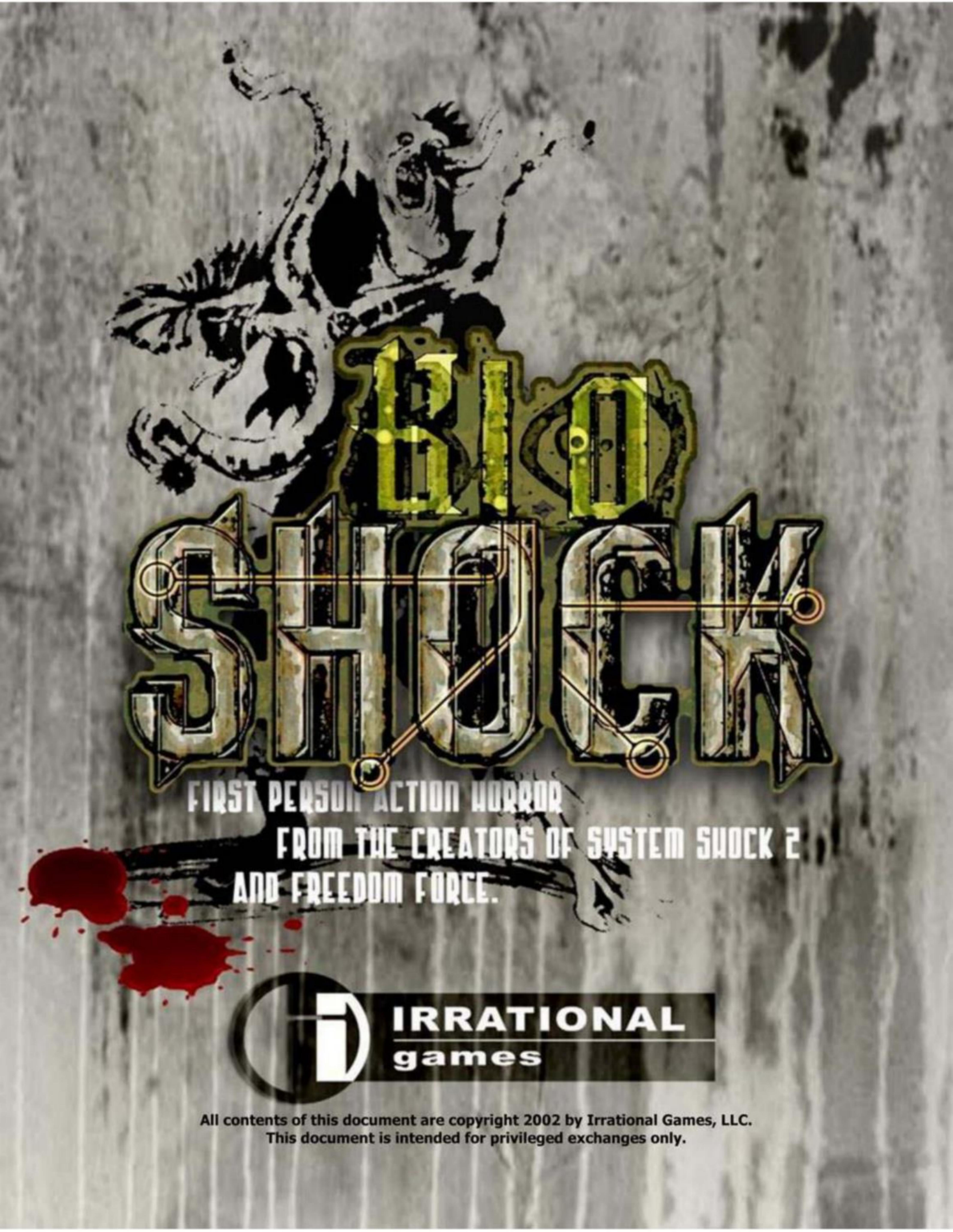
BioShock is a first-person action horror game pitched to a publisher for development funding - a game-development studio deal, not an operating startup.



professionals from Deloitte
Used by professionals from






About this model
BioShock began as a publisher funding pitch from Irrational Games for a first-person action-horror RPG and spiritual successor to System Shock 2. The premise places a deprogrammer in an undersea or underground cult complex, with crafting, hackable environments, genetic modification, and story-based multiplayer.
The proposed business is a co-publishing development deal, not a mature operating company. A publisher would fund development through milestones; the developer would receive royalties only after the advance and marketing costs had been recouped. The deck also identifies potential film or television value for the intellectual property.
The studio’s credentials include System Shock 2, Freedom Force, and The Lost, which was sold to BBC Films, but the research supplies no sales or budget figures. The model should focus on development spend, milestone cash receipts, publisher recoupment, royalties, platform sales, and scenario-based launch outcomes.
A turnkey financial model
Live formulas, no hardcoded values
Outputs are driven by live formulas, so the workbook updates from its assumptions instead of relying on hardcoded results.
All assumptions in one tab
Inputs are clearly marked in the Assumptions tab and separated from calculations, making it clear what to change and what to leave intact.
Statements always balancing
For integrated-statement models, the balance sheet, cash flow, and supporting schedules tie through properly.
Distinct schedules for clarity
Debt, working capital, taxes, and cash flow can get messy quickly. We group calculations in clear schedules, not across disconnected tabs.
No hidden macros or external links
There are no unexplained external workbook links or macros to undermine auditability or portability.
Changes flow through the model
Update a key driver and see the impact carry through the forecast, financing, and return outputs. We never use hardcoded numbers in formulas.
About Bioshock
How to build a detailed financial model for Bioshock
A complete walkthrough of the business, drivers, and assumptions behind the downloadable Bioshock model - distilled from its pitch deck and publicly available information.
Product & value proposition
- First-person action horror RPG, spiritual successor to System Shock 2 (1999 Game of the Year).
- Setting: undersea/underground cult complex on a remote island; player character is a "deprogrammer" infiltrating a religious cult.
- Key differentiators cited:
- Deep weapon crafting system (unlimited player-built weapons from modular components).
- Environmental manipulation via hackable terminals (physics, gravity, temperature, oxygen, flooding).
- Genetic modification system: player splices aquatic/amphibious genotypes into their body.
- Narrative by Ken Levine (writer of System Shock 2, Thief, Freedom Force).
- Unreal Warfare engine + Karma physics engine.
- Story-based multiplayer deathmatch.
- IP upside: franchise with film/TV potential cited explicitly; Irrational's prior game (The Lost) sold to BBC Films.
Market
- "The first person shooter market on PC and especially console is stronger than ever." - qualitative only, no TAM/SAM/SOM figures provided.
- Comparables cited for positioning: Halo, Half-Life, System Shock 2, Thief, Freedom Force.
- No market size numbers in deck.
Revenue model
- Publisher pays development milestones (advance).
- Developer earns royalties after publisher recoups advance + marketing costs.
- Platforms: PC + console (implied by repeated "console and PC" references).
Traction & metrics
- System Shock 2: "1999's game of the year".
- Freedom Force: referenced as Irrational's "hit".
- The Lost: sold as feature film to BBC Films.
No revenue figures for any of these titles appear in the deck.
Competition / moat
- Competitive positioning: BioShock positioned against Halo and Half-Life as the next defining FPS franchise.
- Moat / differentiation claims:
- Team pedigree: Thief, System Shock 2, Freedom Force alumni.
- Three interlocking systems (weapons, environment, genetics) cited as unprecedented in genre.
- Ken Levine as writer - named IP behind two critically acclaimed titles.
- Unreal Warfare engine (cutting-edge for 2002).
- Film/TV franchise potential as secondary moat.
- No competitive landscape slide or market share data.
Team & funding ask / use of funds
- Studio: Irrational Games, LLC.
- Key personnel mentioned by role/title: Not enumerated in the 9 slides captured (ToC references a "Key Personnel" section at slide 18 and "Press / Praise for Irrational" at slides 19–20, but those slides are not in this dataset).
Recommended financial model
- Archetype + why: Game development project P&L / publisher deal model. This is not an operating startup - it is a developer (Irrational Games) seeking a publishing partner. The appropriate model is a game-development budget + milestone-payment cash flow with royalty waterfall, not an ARR or 3-statement operating model. Structure: (a) Development budget by milestone/quarter, (b) Publisher advance schedule, (c) Post-launch revenue share / royalty recoupment waterfall, (d) Platform split (PC vs. console).
- Forecast horizon & granularity: Development phase ~24–36 months; post-launch royalty tail 3–5 years. Granularity: quarterly during dev, annual post-launch.
- Key drivers & assumptions:
- Platform revenue split (retailer take):.
- Sequel / franchise optionality: mentioned as strategic goal; model should include option value scenario.
- Scenarios (Base / Bull / Bear - which variables flex):
- Bear: 200K units, no sequel, developer earns no royalties past advance.
- Base: 500K units, sequel greenlit after 18 months post-launch.
- Bull: 1M+ units, franchise established (film deal, sequel, ports), royalties flow to developer.
- Key flex variables: unit sales, development cost overrun, platform mix (PC vs. console royalty rates differ), time to recoupment.
- Required sheets / outputs:
- Dev Budget & Milestone Schedule - spending by quarter, cumulative burn vs. advance draw.
- Revenue Waterfall - gross retail → net receipts → publisher recoupment → developer royalty.
- Platform Split - PC vs. console unit and revenue breakdown.
- Royalty Recoupment Schedule - when (if) developer breaks even on advance.
- Scenario Summary - Bear / Base / Bull NPV of developer economics.
- Franchise Optionality (optional) - sequel/film/port upside.
Frequently asked
Is the Bioshock financial model free?+
Yes. The Bioshock model is a free Excel (.xlsx) download with live formulas. Sign up with your email and the workbook is yours to keep, review, and edit.
What's included in the model?+
A 5-year monthly forecast with P&L, cash flow and runway, valuation (exit multiple plus a DCF cross-check), MOIC/IRR returns, and unit economics, with live formulas throughout.
How was this model built?+
It was built from Bioshock's pitch deck and publicly available information, then structured to investment-banking standards as a fully editable Excel model.
Can I change the assumptions?+
Yes. You can change assumptions and the live formulas will recalculate in the downloadable Excel model.
Have more financial modelling questions? Contact us

Created by ex-finance professionals
Hey, I’m Alex and I created Finamodel.
Over my years in the finance industry I kept building the same models over and over again. Same structure, same assumptions, different logo. So I started building frameworks to turn them into clean, reusable templates.
Every model here is one I’d actually use for a client, and I personally vet each one before it goes up.
I’m not an expert in every industry, but I’ve built enough models to know what belongs in one. And when something is completely foreign to me, I reach out to my network for experts to work on our models with us.
Having a template library on hand cuts a first build from hours to minutes.
Need help finding your model? You’ll find me in the Finamodel app!
Other Media/Gaming Startup Financial Models
Browse another startup in the same category.

Almost Friday
Almost Friday is a multi-platform comedy/lifestyle media brand built around the "Friday Beers" universe, monetising through apparel, brand partnerships, events, podcasts, and music.

Amagi
Cloud-native SaaS platform for TV/OTT channel creation, distribution, and ad monetization (FAST-focused)

Audoo
IoT + SaaS platform that captures real-time public music performance data and reports it to Performing Rights Organisations (PROs) to enable accurate royalty distribution.
Backbone
Backbone makes a mobile gaming controller (hardware) + unified software platform (Backbone app) that aggregates all game streaming services in one place.
Beacon Pines
Beacon Pines is a cute-and-creepy narrative adventure game set inside a magical storybook, developed by indie studio Hiding Spot Games.
Bear and Breakfast
A management/adventure video game where you play as a bear running a B&B cabin in the woods.

Button City 2018
Indie narrative adventure game about cute animal kids saving their local arcade, targeting console and PC.

Button City 2020
Narrative adventure game about saving a local arcade, featuring three embedded mini-games, built by indie studio Subliminal Gaming LLC.