 Mmob Financial Model
Fintech Startup Financials (Free Excel Download)
B2B embedded finance infrastructure platform enabling digital brands and financial institutions to connect with third-party fintech products via a single line of code.



professionals from Deloitte
Used by professionals from






About this model
mmob is embedded-finance infrastructure that lets digital brands and financial institutions connect third-party fintech products through a simple integration. Its widgets and APIs help distributors offer relevant financial products without building each capability in-house.
The platform sits between product providers and distribution partners, making it a two-sided infrastructure business. Revenue can come from access fees, referral payments, or revenue shares when a financial product is selected and completed through the network.
The model should forecast active distributors, embedded product modules, consumer impressions, conversion to applications, completed products, and fee yield per conversion. Any platform subscription should be a separate recurring line, while provider and distributor revenue shares determine marketplace margin.
A turnkey financial model
Live formulas, no hardcoded values
Outputs are driven by live formulas, so the workbook updates from its assumptions instead of relying on hardcoded results.
All assumptions in one tab
Inputs are clearly marked in the Assumptions tab and separated from calculations, making it clear what to change and what to leave intact.
Statements always balancing
For integrated-statement models, the balance sheet, cash flow, and supporting schedules tie through properly.
Distinct schedules for clarity
Debt, working capital, taxes, and cash flow can get messy quickly. We group calculations in clear schedules, not across disconnected tabs.
No hidden macros or external links
There are no unexplained external workbook links or macros to undermine auditability or portability.
Changes flow through the model
Update a key driver and see the impact carry through the forecast, financing, and return outputs. We never use hardcoded numbers in formulas.
About Mmob
mmob.io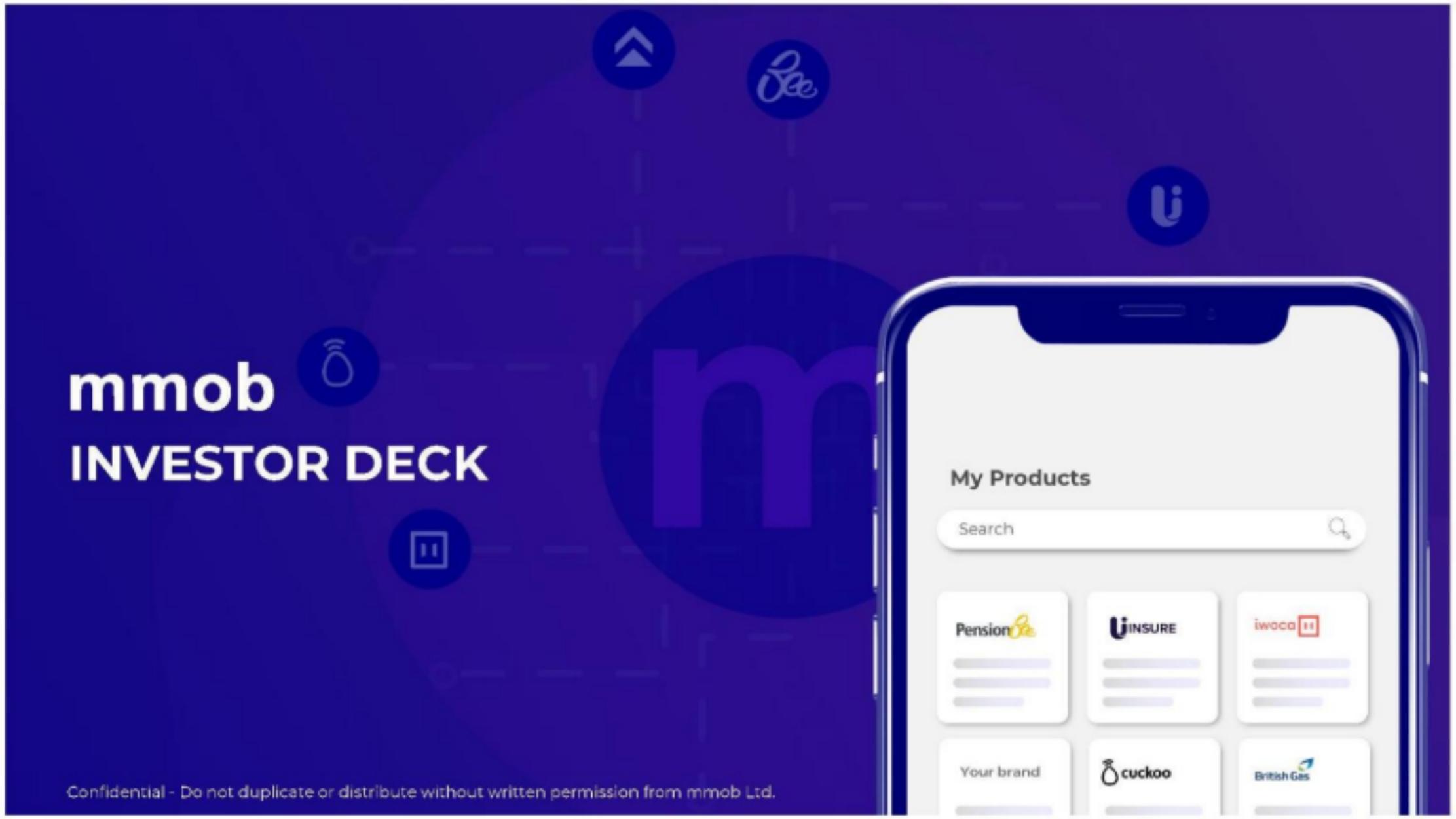
How to build a detailed financial model for Mmob
A complete walkthrough of the business, drivers, and assumptions behind the downloadable Mmob model - distilled from its pitch deck and publicly available information.
Product & value proposition
- Proprietary "Intelligent Partnerships Infrastructure" - single line of JavaScript snippet embeds a modular widget layer into any digital product (bank, neobank, app).
- Partners (distributors) embed the snippet; end-users see a "My Products" marketplace of curated third-party financial products (e.g. PensionBee, Uinsure, iwoca, cuckoo, British Gas on cover).
- Three pillars: Simple Deployment (single code line), One Ecosystem (no-code + TPP E2E API), Modular Third-Party Widgets (toggle on/off, verticals: Wealth, Utilities, Insurance, Credit, Lifestyle, Payments).
- 3 years of R&D cited.
Revenue model
- Revenue share / referral fee per completed product transaction or lead passed through the widget (standard embedded finance infrastructure monetisation). Rationale: platform connects distributors to fintech product providers; fee-per-conversion or rev-share is the norm for this archetype.
- Possible SaaS access/platform fee to distributor partners for the infrastructure licence. Rationale: "single line of code" deployment implies a managed service with ongoing commercial relationship.
- No pricing, take rate, or fee schedule shown in deck.
Competition / moat
- Positioned in B2B × Embedded Finance quadrant; claims "Rivalry: LOW" in that segment.
- Named competitors in adjacent quadrants: Challenger Banks (Monzo, Revolut, Starling, Dozens), Traditional Banks (Santander, Lloyds, NatWest, HSBC, Barclays, Nationwide, TSB), Core Banking infra (Thought Machine, 11:FS, 10x, Mambu), API/Data Providers (Plaid, TrueLayer, Saltedge, DirectID, Tink, Nordigen), PFMs (Plum, Chip, Lumio, Money Dashboard), Embedded Finance B2C (bud, Primer, Klarna, FlyNow PayLater, Productfy).
- Moat narrative: rapid product development + partner onboarding → first-mover advantage in 1-to-many embedded finance distribution.
- No quantified moat metrics (partner count, API calls, integrations).
Team & funding ask / use of funds
- Irfan Khan - Founder & CEO; start-up COO background, Executive MBA (Distinction), Bayes Business School.
- Blai Pratdesaba - Head of Technology; 15+ years banking, BSc Mathematics & Computer Science, Kings College London.
- Mia Allus - Chartered Accountant; founded UK P2P platform Yielders (FCA-regulated, exited); double FinTech award winner.
- James Fell - COO; software engineer, 18 years development experience.
- Amit Mehta - Chief of Staff; senior HSBC Malaysia roles, ASEAN programme management.
Recommended financial model
- Archetype + why: B2B marketplace / revenue-share infrastructure model. mmob sits between distributor partners (who pay a platform/SaaS fee or per-transaction fee) and fintech product providers (who pay a take rate on referrals or conversions). The closest archetype is a two-sided marketplace with a SaaS licence layer - similar to how Plaid or Tink model: (i) a recurring API/platform access fee per distributor partner, plus (ii) a variable revenue-share or CPA per product transaction routed through the widget. No pure-SaaS ARR model is appropriate given the transaction-routing nature; a blended SaaS + GMV/take-rate model is correct.
- Forecast horizon & granularity: 5-year annual model (Year 1–5), with Year 1 broken into monthly to show ramp and cash burn. Monthly in Year 1 is essential given no disclosed traction and likely early-stage burn.
- Key drivers & assumptions:
*Distributor (host) partners:*
- Starting partner count → annual new partner adds
- Platform licence fee per partner per month
*Transaction / referral layer:*
- Monthly active end-users per distributor partner
- Widget click-through rate → product applications → completions
- Average revenue per completed referral / take rate
*Product provider (supply side):*
- Number of fintech products / verticals live in ecosystem →
- Revenue share or listing fee per product provider
*Cost structure:*
- Headcount: 5 named leadership + "growing team"
- Salary burden
- R&D / infrastructure costs (AWS/cloud)
- Sales & marketing
- G&A (legal, compliance, FCA regulatory costs)
- Scenarios (Base / Bull / Bear - which variables flex):
- Base: 10 distributor partners by end-Year 1, moderate CTR and completion rates, blended ARPU of ~£20 per referral.
- Bull: Faster partner onboarding (2–3 large bank/neobank wins early), higher transaction volumes per partner, additional product verticals monetised.
- Bear: Long sales cycles with regulated FIs (6–12 months), low CTR on embedded widgets, take rates compressed by partner negotiation; cash burn extends runway significantly.
- Flex variables: new partner adds per year, monthly active end-users per partner, completion rate, take rate / CPA.
- Required sheets / outputs:
- Assumptions dashboard (all drivers in one place, switchable by scenario)
- Partner ramp schedule (distributor and product provider counts over time)
- Revenue build: platform licence fees + variable transaction/referral revenue
- P&L (gross revenue → gross profit → EBITDA; show take rate and gross margin clearly)
- Headcount & opex schedule
- Cash flow & runway (monthly Year 1, annual Year 2–5)
- KPI summary: partner count, end-users reached, transactions routed, revenue per partner, gross margin %
Frequently asked
Is the Mmob financial model free?+
Yes. The Mmob model is a free Excel (.xlsx) download with live formulas. Sign up with your email and the workbook is yours to keep, review, and edit.
What's included in the model?+
A 5-year monthly forecast with P&L, cash flow and runway, valuation (exit multiple plus a DCF cross-check), MOIC/IRR returns, and unit economics, with live formulas throughout.
How was this model built?+
It was built from Mmob's pitch deck and publicly available information, then structured to investment-banking standards as a fully editable Excel model.
Can I change the assumptions?+
Yes. You can change assumptions and the live formulas will recalculate in the downloadable Excel model.
Have more financial modelling questions? Contact us

Created by ex-finance professionals
Hey, I’m Alex and I created Finamodel.
Over my years in the finance industry I kept building the same models over and over again. Same structure, same assumptions, different logo. So I started building frameworks to turn them into clean, reusable templates.
Every model here is one I’d actually use for a client, and I personally vet each one before it goes up.
I’m not an expert in every industry, but I’ve built enough models to know what belongs in one. And when something is completely foreign to me, I reach out to my network for experts to work on our models with us.
Having a template library on hand cuts a first build from hours to minutes.
Need help finding your model? You’ll find me in the Finamodel app!
Other Fintech Startup Financial Models
Browse another startup in the same category.
Acin
SaaS and data subscription network for operational risk management at Tier 1 financial institutions

Ageras Group
B2B SME ecosystem - marketplace connecting SMEs with accountants + cloud accounting/payroll software + embedded financial services (lending, factoring, banking)

Airbase
Unified non-payroll spend management platform (corporate cards, AP/bill pay, expense reimbursement, approval workflows) for mid-market companies.

Altruist
Vertically integrated all-in-one platform for registered investment advisors (RIAs) - combining custodial, portfolio management, practice management, and client acquisition tools.
Amenitiz
All-in-one hotel management SaaS platform ("Shopify for hotels") for independent hoteliers - PMS, booking engine, channel manager, website builder, payments, and AI-driven revenue management.

Anrok
SaaS sales tax compliance platform - nexus monitoring, calculation, registration, filing, and remittance - built specifically for SaaS companies.
Arrival
Arrival is an EV manufacturer of commercial vans and buses using proprietary Microfactories and vertically integrated components, going public via SPAC merger with CIIG Merger Corp.

AtoB
AtoB is building financial infrastructure for commercial fleets, starting with a no-fee Visa fleet card for fuel and expanding into payroll, BNPL, and international.


