 Qonsent Financial Model
Crypto/Web3 Startup Financials (Free Excel Download)
Consumer-facing consent management platform enabling transparent, contractual data-sharing between consumers and brands via a SaaS tool and mobile wallet.



professionals from Deloitte
Used by professionals from






About this model
Qonsent is a consent-management platform for transparent, contractual data sharing between consumers and brands. It pairs a B2B SaaS product with a mobile wallet, giving people a way to control data relationships while letting companies manage consent in a more explicit and auditable form.
The company is US-first, with its product framing shaped by CCPA, CPRA, and GDPR requirements. There is no disclosed operating history or pricing, so the research supports a cautious adoption model: brands must adopt the software while consumers need a reason to activate and keep using the wallet.
Forecast brand clients, contracted SaaS value, consumer wallets, consent transactions, and data-sharing activity. Treat any transaction or data-sharing revenue as an optional line until pricing is confirmed. Model sales, onboarding, privacy and security infrastructure, support, and retention. Brand conversion, wallet activation, engagement, contract value, and renewal should drive scenarios.
A turnkey financial model
Live formulas, no hardcoded values
Outputs are driven by live formulas, so the workbook updates from its assumptions instead of relying on hardcoded results.
All assumptions in one tab
Inputs are clearly marked in the Assumptions tab and separated from calculations, making it clear what to change and what to leave intact.
Statements always balancing
For integrated-statement models, the balance sheet, cash flow, and supporting schedules tie through properly.
Distinct schedules for clarity
Debt, working capital, taxes, and cash flow can get messy quickly. We group calculations in clear schedules, not across disconnected tabs.
No hidden macros or external links
There are no unexplained external workbook links or macros to undermine auditability or portability.
Changes flow through the model
Update a key driver and see the impact carry through the forecast, financing, and return outputs. We never use hardcoded numbers in formulas.
About Qonsent
qonsent.com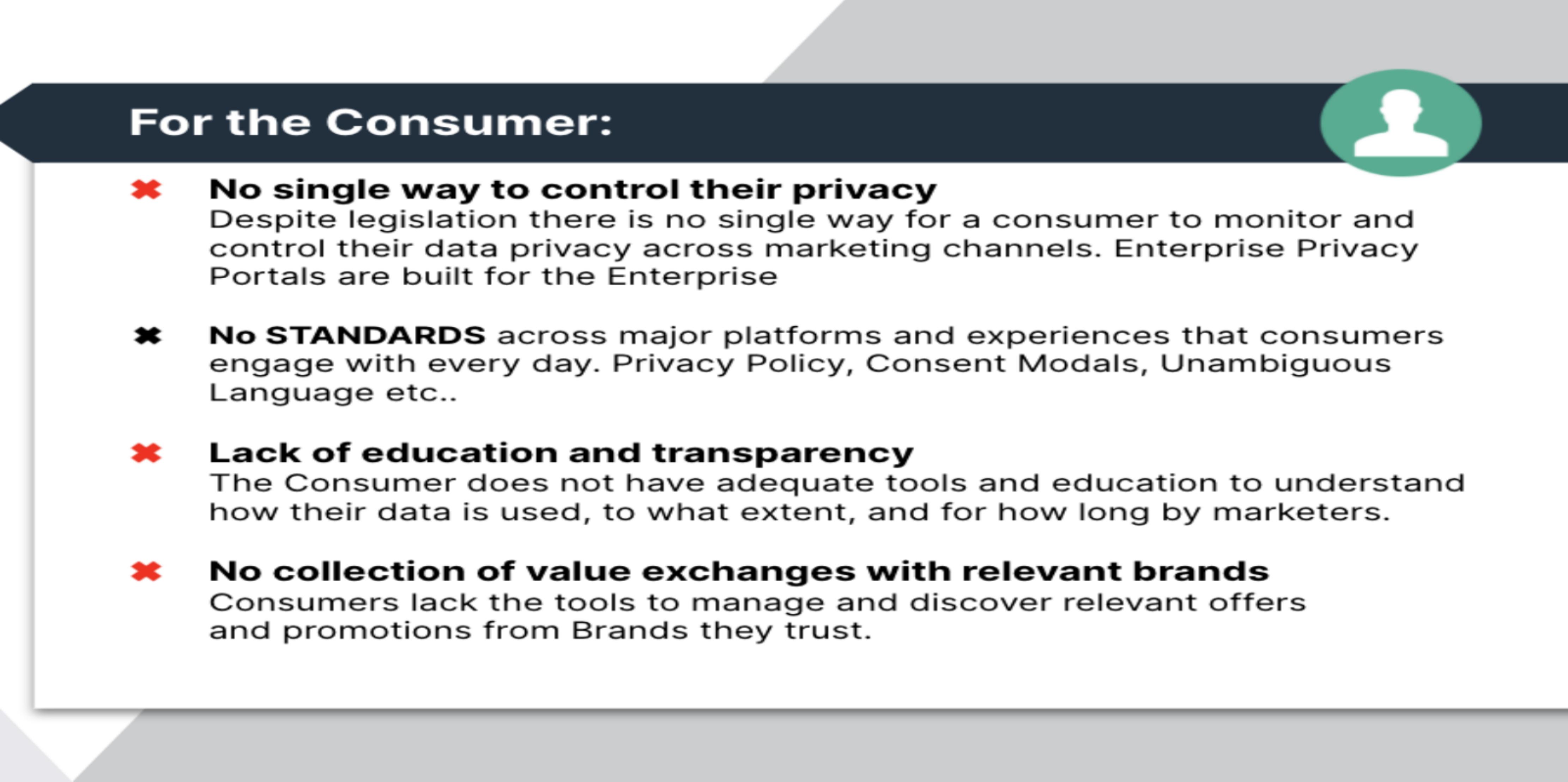
How to build a detailed financial model for Qonsent
A complete walkthrough of the business, drivers, and assumptions behind the downloadable Qonsent model - distilled from its pitch deck and publicly available information.
Product & value proposition
Three interlocking components:
- Qonsent SaaS Platform (patent-pending) - brand-facing tool for creating consent experiences (QR codes, on-site modals, CTV/OOH/email touchpoints). Integrates with TransUnion (real-time ID validation) and Ketch (CMP); other CDP/CMP integrations planned.
- SmartQontract - encrypted, auditable ledger-based consent record (in partnership with Ketch). Covers CCPA, GDPR, CPRA. Consent is time-bound and revocable. Data stored in a consumer "Qonsent Wallet".
- Qonsent Consumer App / Wallet - mobile app giving consumers opt-in/out control, dynamic on/off toggle, real-time PII encryption transfer to brand CMPs, identity validation via a major credit/identity provider (TransUnion).
Value prop on brand side: first-party data collection with verified consumer identity and auditable consent record. Value prop on consumer side: single dashboard to manage all data-sharing with brands, plus access to brand offers/promotions.
Revenue model
Not explicitly stated in deck. Inferred from product structure:
- B2B SaaS subscription: brands pay a platform fee (per-seat, per-campaign, or tiered by volume of SmartQontract executions / consumer touchpoints activated). Rationale: product is described as a "SaaS Platform"; brands are the paying customer.
- Usage / transaction fees: per consent event or per verified consumer ID processed (TransUnion partnership suggests a per-verification cost structure that may be partially passed through).
- Consumer app: free to end consumer (consent wallet is the network-effect layer; monetisation is on brand side).
- No pricing, contract values, or ARPU figures are shown.
Competition / moat
Not directly addressed in deck. Implied differentiators:
- "Industry's first SmartQontract enablement platform" (co-developed with Ketch).
- Patent-pending platform.
- Ledger-based auditable consent record (Web3-enabled).
- TransUnion identity validation integrated at onboarding - real-name verified consent vs. anonymous cookie-consent alternatives.
- Consumer wallet creates lock-in / network effect on consumer side.
- Existing competitors implied by reference to enterprise privacy portals (OneTrust, Ketch) but Qonsent frames itself as the consumer-centric layer on top of, not instead of, those CMPs.
Recommended financial model
- Archetype + why: B2B SaaS ARR model with a usage/transaction volume overlay. The platform charges brands (primary revenue unit); consent events / verified IDs are the volume driver. Consumer wallet is a zero-revenue growth layer. This is structurally a two-sided marketplace at the engagement level but monetised as a SaaS + usage hybrid on the brand side - closest archetype is SaaS ARR with a volume add-on.
- Forecast horizon & granularity: 5 years; monthly for Year 1–2 (customer ramp + burn visibility), quarterly for Years 3–5.
- Key drivers & assumptions:
- Brand customer count (logos): start from 0; ramp based on outbound/partnership-led sales (TransUnion, Ketch channel). Target 5–15 brands in Year 1, 50–150 by Year 3.
- ACV per brand: $30K–$150K/yr depending on tier (SMB vs. enterprise), based on comparable CMP/CDP SaaS pricing. No deck data.
- Consent events / verified IDs per brand per month: 10K–500K depending on brand size; impacts usage fee revenue.
- Usage fee per verified ID / SmartQontract: $0.05–$0.20 per event; TransUnion pass-through cost embedded. No deck data.
- Consumer wallet users (not directly monetised): driven by brand activations; 5–10× brand consumer touchpoints.
- Gross margin: 65–75%; identity verification (TransUnion) and Ketch partnership costs are primary COGS.
- CAC (brand): $15K–$40K (enterprise-style sales cycle given compliance/legal nature of product).
- Churn: 5–10% annual gross logo churn (compliance tools tend to be sticky once integrated).
- Headcount: sales-led growth; 2–4 AEs in Year 1 ramping to 10–15 by Year 3.
- Scenarios (Base / Bull / Bear - which variables flex):
- Bear: slow brand adoption (5 logos Y1, 30 Y3), low usage volumes, pricing pressure from free CMP tiers. ACV at low end.
- Base: 10 logos Y1, 80 Y3; mid-range ACV and usage fees; 70% gross margin.
- Bull: TransUnion/Ketch channel accelerates brand onboarding; enterprise deals >$100K ACV; regulatory tailwind (CPRA enforcement) drives urgency. 150+ logos Y3.
- Required sheets / outputs:
- Assumptions dashboard (all drivers in one place, colour-coded by source).
- Revenue build: brand count × ACV + usage events × fee per event.
- COGS: identity verification fees (per-event), hosting/infra, Ketch/partner rev-share.
- P&L (IS): gross margin, S&M, R&D, G&A, EBITDA, net income.
- Headcount plan: by function (engineering, sales, CS, G&A).
- Cash flow & runway (especially if raise size becomes known).
- Scenario toggle (Bear / Base / Bull).
- KPI summary: ARR, net new ARR, logo count, NRR (net revenue retention), CAC payback.
Frequently asked
Is the Qonsent financial model free?+
Yes. The Qonsent model is a free Excel (.xlsx) download with live formulas. Sign up with your email and the workbook is yours to keep, review, and edit.
What's included in the model?+
A 5-year monthly forecast with P&L, cash flow and runway, valuation (exit multiple plus a DCF cross-check), MOIC/IRR returns, and unit economics, with live formulas throughout.
How was this model built?+
It was built from Qonsent's pitch deck and publicly available information, then structured to investment-banking standards as a fully editable Excel model.
Can I change the assumptions?+
Yes. You can change assumptions and the live formulas will recalculate in the downloadable Excel model.
Have more financial modelling questions? Contact us

Created by ex-finance professionals
Hey, I’m Alex and I created Finamodel.
Over my years in the finance industry I kept building the same models over and over again. Same structure, same assumptions, different logo. So I started building frameworks to turn them into clean, reusable templates.
Every model here is one I’d actually use for a client, and I personally vet each one before it goes up.
I’m not an expert in every industry, but I’ve built enough models to know what belongs in one. And when something is completely foreign to me, I reach out to my network for experts to work on our models with us.
Having a template library on hand cuts a first build from hours to minutes.
Need help finding your model? You’ll find me in the Finamodel app!
Other Crypto/Web3 Startup Financial Models
Browse another startup in the same category.

0x Labs
0x Labs builds open exchange infrastructure (protocol, API, consumer app) for on-chain token trading across multiple blockchains.

1inch Network
DeFi aggregation protocol that routes crypto swaps across 100+ liquidity sources to deliver best rates and lowest gas fees.

Aether
Synthetic biology platform that builds searchable protein indexes to engineer novel molecular assemblers for high-value industrial products.
Alto
Self-directed IRA platform enabling retail investors to invest in alternative assets (private equity, debt, real estate, crypto) via tax-advantaged retirement savings.
Auki Labs
Decentralized peer-to-peer spatial positioning SDK for social AR - building the infrastructure layer to replace GPS and enable a persistent AR metaverse.
Awesome People Ventures Fund 2
Awesome People Ventures is a community-driven, decentralized early-stage Web3 VC fund raising Fund II.

Axelar
Cross-chain blockchain overlay network enabling universal transfer of assets, transactions, and state across all blockchain ecosystems.
BRD
BRD is a non-custodial crypto wallet app (consumer) and blockchain infrastructure API platform (enterprise) targeting mass-market crypto adoption.


