RIRing Financial Model
Hardware/Deep-tech Startup Financials (Free Excel Download)
Wi-Fi video doorbell (sold as "Doorbot") that lets homeowners see and speak to visitors via smartphone.



professionals from Deloitte
Used by professionals from






About this model
Ring created Wi-Fi video doorbells that let homeowners see and speak to visitors through a smartphone. Its consumer-security proposition combines connected hardware with cloud-enabled video and potential service subscriptions, creating an installed base that can generate revenue after the original device purchase.
Hardware distribution and brand awareness drive unit sales, while subscription attachment determines recurring value. The economics must also absorb device manufacturing, retail margin, shipping, cloud-video storage, customer support, and acquisition costs; warranty and privacy expectations can materially affect contribution margin.
Model doorbells sold, ASP, installed base, subscription attach, service revenue, churn, and replacement activity. Include COGS, retail margin, logistics, cloud storage, support, warranty, marketing, and CAC. Unit growth, gross margin, subscription penetration, retention, storage cost, channel mix, and acquisition efficiency should drive scenarios.
A turnkey financial model
Live formulas, no hardcoded values
Outputs are driven by live formulas, so the workbook updates from its assumptions instead of relying on hardcoded results.
All assumptions in one tab
Inputs are clearly marked in the Assumptions tab and separated from calculations, making it clear what to change and what to leave intact.
Statements always balancing
For integrated-statement models, the balance sheet, cash flow, and supporting schedules tie through properly.
Distinct schedules for clarity
Debt, working capital, taxes, and cash flow can get messy quickly. We group calculations in clear schedules, not across disconnected tabs.
No hidden macros or external links
There are no unexplained external workbook links or macros to undermine auditability or portability.
Changes flow through the model
Update a key driver and see the impact carry through the forecast, financing, and return outputs. We never use hardcoded numbers in formulas.
About Ring
ring.com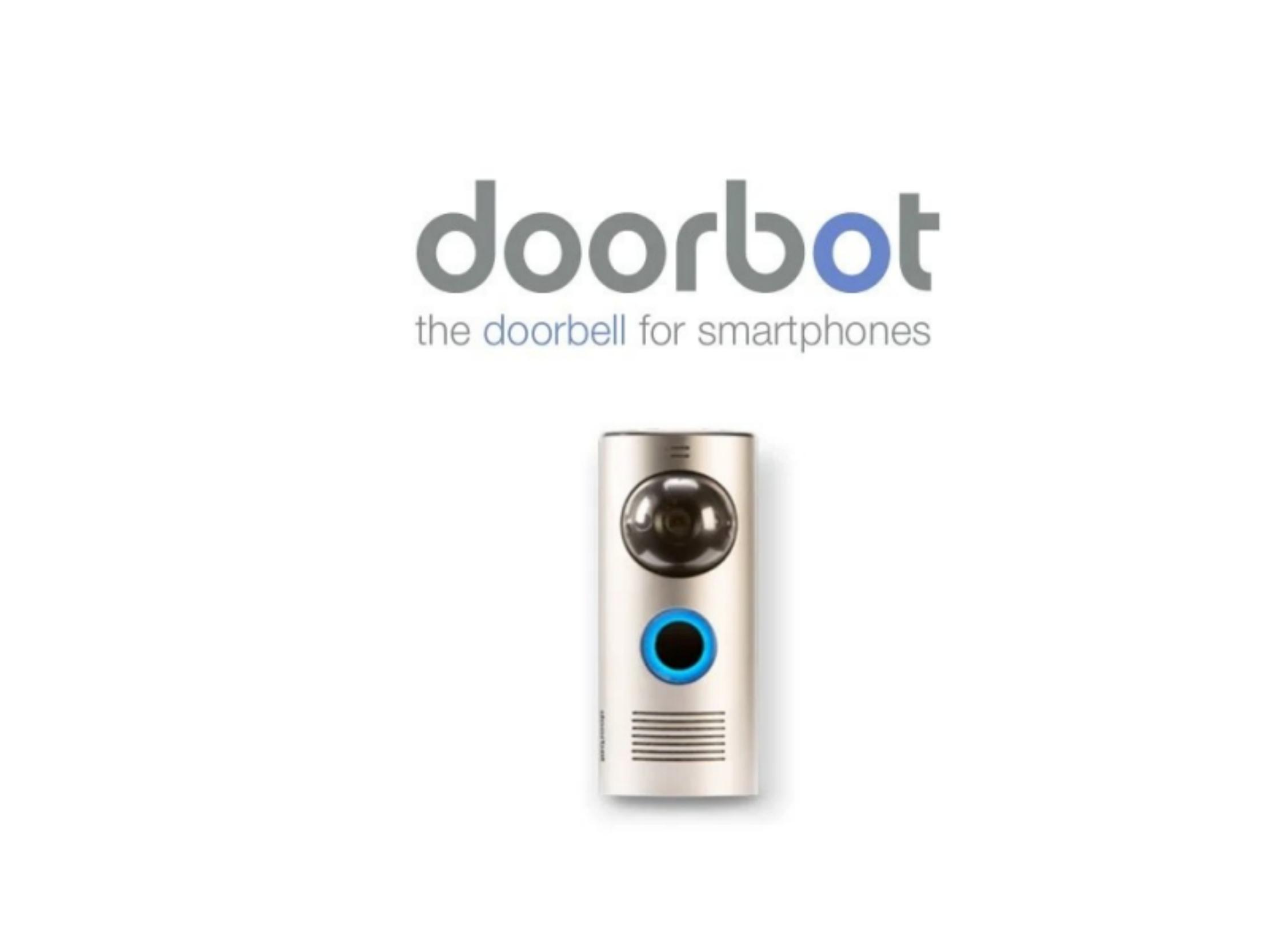
How to build a detailed financial model for Ring
A complete walkthrough of the business, drivers, and assumptions behind the downloadable Ring model - distilled from its pitch deck and publicly available information.
Product & value proposition
- Hardware device: smart video doorbell connecting to smartphone via Wi-Fi.
- Tagline: "the doorbell for smartphones".
- Brand positioned at Apple-level quality/complete customer experience.
- Competed against large consumer electronics OEMs (Apple, Samsung) as the stated competitive frame.
- Slide 7 shows product listed on Amazon at ~$199–$249 price point (Amazon listing visible but exact Doorbot price not legible; iPhone 5s used as a scale/context comparator).
Revenue model
- Hardware unit sales - single SKU (Doorbot video doorbell).
- Primary channel: Amazon e-commerce.
- Implied ASP: $199–$249.
- No subscription / recurring revenue mentioned in deck.
- No accessories, bundles, or cloud subscription tier referenced.
Traction & metrics
- 20,000 units created, sold, and shipped.
- $5 million annualised sales run rate.
- Both figures achieved within 18 months of founding.
- Team grew 6x; now 40 team members (28 engineers).
- Slide 8 (earlier state): team was 6 members vs. Apple's 75,000+ employees - used as contrast/narrative device.
Competition / moat
- Stated competition: Apple, Samsung, and large consumer electronics OEMs.
- Moat thesis: (a) mission-driven brand, (b) hardware is a mature/stable industry with no "fail whales" - iterating fast via field-deployed units.
- Critical expertise spread across 10 domains equally weighted (~9–11% each): Electrical, Firmware, Industrial Design, Mechanical, Cloud Systems, Mobile UX/UI, Video Processing, Customer Service, E-Commerce, QA.
- Moat is execution + brand, not a network effect or proprietary platform.
Team & funding ask / use of funds
- Team: 40 members total, 28 engineers at time of deck.
- Prior state shown was 6 team members - 6x growth.
- Investors: First Round Capital, Upfront Ventures, CRV, additional undisclosed funds.
Recommended financial model
- Archetype + why: Hardware DTC P&L model with unit-economics build-up. Revenue is entirely hardware units × ASP; no SaaS/recurring layer present. Model needs to track COGS, gross margin, and channel economics (Amazon fees) as key profitability levers. Eventually a subscription layer could be added if cloud storage is introduced, but that is not in this deck.
- Forecast horizon & granularity: 3 years monthly (Y1–Y2 monthly, Y3 quarterly is standard for early-stage hardware). Hardware cycles are 0.5–1 year per slide 13; model should accommodate SKU refresh cadence.
- Key drivers & assumptions:
- Units sold per month: 20,000 units in ~18 months implies ~1,111/month average; ramp to be modelled from current run-rate.
- ASP (Average Selling Price): ~$199.
- Revenue = Units × ASP.
- COGS / hardware gross margin: ~35–45% gross margin.
- Amazon channel fee: ~15% of ASP.
- Customer acquisition (marketing as % of revenue): ~20–30% at early stage.
- Headcount: 40 now, 28 engineers; opex driven by headcount growth trajectory.
- Product cycle: new SKU refresh every 6–12 months.
- No subscription revenue modelled [per deck].
- Scenarios (Base / Bull / Bear - which variables flex):
- Base: unit growth at current run-rate trajectory, ASP flat, gross margin 40%.
- Bull: faster retail/channel expansion (beyond Amazon), ASP premium SKU, gross margin expansion to 45%.
- Bear: supply chain / component cost pressure, slower sell-through, gross margin compresses to 30%.
- Required sheets / outputs:
- Assumptions - all drivers in one place with scenario toggle.
- Revenue - units × ASP by month, revenue build.
- COGS & Gross Margin - BOM, manufacturing, fulfillment, channel fees.
- Opex - headcount (40 current), R&D, sales & marketing, G&A.
- P&L (Income Statement) - gross profit → EBITDA → net income.
- Cash Flow - burn rate and runway (critical for VC-backed hardware co).
- Dashboard - revenue run-rate, gross margin %, burn, units shipped.
Frequently asked
Is the Ring financial model free?+
Yes. The Ring model is a free Excel (.xlsx) download with live formulas. Sign up with your email and the workbook is yours to keep, review, and edit.
What's included in the model?+
A 5-year monthly forecast with P&L, cash flow and runway, valuation (exit multiple plus a DCF cross-check), MOIC/IRR returns, and unit economics, with live formulas throughout.
How was this model built?+
It was built from Ring's pitch deck and publicly available information, then structured to investment-banking standards as a fully editable Excel model.
Can I change the assumptions?+
Yes. You can change assumptions and the live formulas will recalculate in the downloadable Excel model.
Have more financial modelling questions? Contact us

Created by ex-finance professionals
Hey, I’m Alex and I created Finamodel.
Over my years in the finance industry I kept building the same models over and over again. Same structure, same assumptions, different logo. So I started building frameworks to turn them into clean, reusable templates.
Every model here is one I’d actually use for a client, and I personally vet each one before it goes up.
I’m not an expert in every industry, but I’ve built enough models to know what belongs in one. And when something is completely foreign to me, I reach out to my network for experts to work on our models with us.
Having a template library on hand cuts a first build from hours to minutes.
Need help finding your model? You’ll find me in the Finamodel app!
Other Hardware/Deep-tech Startup Financial Models
Browse another startup in the same category.

ANYbotics
ANYbotics builds and sells autonomous legged inspection robots (ANYmal) for industrial facilities, targeting oil & gas, chemicals, power, offshore, mining, and manufacturing sectors.
Awake Security
Awake Security - AI-driven Network Detection & Response (NDR) platform for the hybrid cloud, positioning as the "intent detection" layer of the SOC visibility triad.

Beem
AR communications platform that overlays full-body "hologram" video of a person into the recipient's physical space via smartphone or web.

Blue White Robotics
Autonomous robotics platform converting existing farm equipment to self-driving tractors for permanent-crop growers, sold as Robots-as-a-Service.

Cambridge GaN Devices
Fabless semiconductor startup commercialising self-protected GaN power transistors (HiGaN) that replace silicon and standard GaN with higher efficiency and no external protection circuitry.

Canix
Cannabis-focused ERP (inventory tracking, compliance automation, sales management, yield forecasting) sold as SaaS to cannabis cultivators, manufacturers, and distributors.
Chobani
Chobani is the US market leader in Greek yogurt; TPG invested $671M in April 2014 for a 35% stake via a structured second lien + equity deal
Cipher Skin
Wearable sensor mesh platform that collects dense multi-modal data from human bodies and industrial objects to predict structural and functional failure before it occurs.


