TRTreeCard Financial Model
Fintech Startup Financials (Free Excel Download)
Free debit card (wooden, eco-branded) that plants trees from interchange revenue - every $60 spent plants one tree.



professionals from Deloitte
Used by professionals from






About this model
Treecard is a free eco-branded debit card that funds tree planting from interchange revenue. Its consumer proposition links everyday spending to a visible environmental outcome: every $60 spent is intended to plant one tree.
There is no subscription fee, so the business depends on attracting and retaining active cardholders who make meaningful debit-card purchases. The documented unit economics include roughly $78 of revenue and $53 of profit per user per year, before broader operating assumptions.
The model should forecast user cohorts, account activation, monthly spend, net interchange yield, and tree-planting cost per dollar spent. Marketing, bank-partner, rewards, support, and retention assumptions should be visible, since the environmental benefit is both a core cost and the acquisition proposition.
A turnkey financial model
Live formulas, no hardcoded values
Outputs are driven by live formulas, so the workbook updates from its assumptions instead of relying on hardcoded results.
All assumptions in one tab
Inputs are clearly marked in the Assumptions tab and separated from calculations, making it clear what to change and what to leave intact.
Statements always balancing
For integrated-statement models, the balance sheet, cash flow, and supporting schedules tie through properly.
Distinct schedules for clarity
Debt, working capital, taxes, and cash flow can get messy quickly. We group calculations in clear schedules, not across disconnected tabs.
No hidden macros or external links
There are no unexplained external workbook links or macros to undermine auditability or portability.
Changes flow through the model
Update a key driver and see the impact carry through the forecast, financing, and return outputs. We never use hardcoded numbers in formulas.
About TreeCard
treecard.org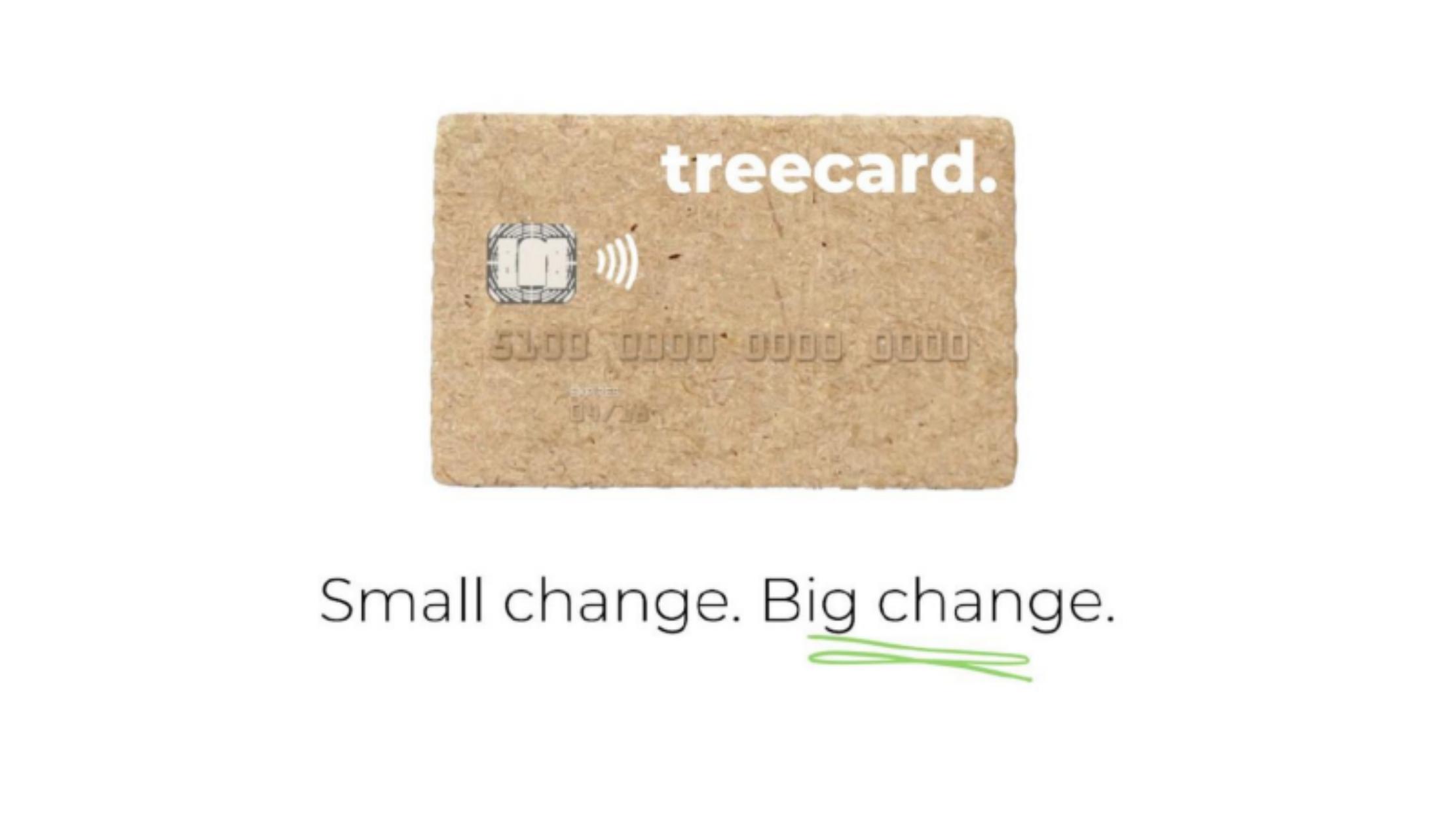
How to build a detailed financial model for TreeCard
A complete walkthrough of the business, drivers, and assumptions behind the downloadable TreeCard model - distilled from its pitch deck and publicly available information.
Product & value proposition
- Free debit card made of wood/sustainable material, issued via unnamed major U.S. bank partner.
- Every $60 spent plants one tree, funded from interchange revenue.
- Companion mobile app: payment categorisation & insights, live payment notifications, tree-planting progress tracker (1,000-tree goal shown in UI), project-level visibility (e.g. Usambra Conservation Tanzania, Copaiba Brazil, Eden Projects).
- Card freeze, biometric auth, 128-bit AES encryption, 3D Secure, free ATM withdrawals.
- Positioning: emulates Revolut / Chime / Monzo on design and features, but adds eco-mission differentiation.
Market
- 25% of under-35s in the U.S. are using a challenger bank product.
- Mature development ecosystem cited (Marqeta, Onfido, SynapseFI).
- Environmental concern framed as a megatrend; references Ecosia (search engine), 4ocean, Extinction Rebellion, #TeamTrees as evidence of consumer demand.
- No explicit TAM/SAM/SOM figures or dollar market-size numbers in deck.
- Strategic partnership pitch to Ecosia (German eco-search engine with large user base) for co-branding and growth.
Revenue model
- Revenue source: debit card interchange fees - a percentage of each transaction routed to Treecard via the bank partnership.
- Pricing to consumer: free (no monthly fee stated).
- Tree-planting trigger: every $60 of card spend = 1 tree planted.
- Unit economics stated at aggregate level: $78 revenue/user/year; $53 profit/user/year; implies ~$25/user/year cost (tree planting + ops).
- Implied interchange rate: $78 revenue on ~$7,800 annual spend = ~1.0% effective interchange yield.
- Tree cost implied: ~$0.47/tree ($25 cost ÷ 53 trees/year at $53 profit on $78 revenue leaves $25 cost; 113 trees/year × cost/tree = $25 → ~$0.22/tree).
Traction & metrics
- No live user numbers, revenue, or growth metrics in deck. Deck appears to be pre-launch / seed-stage pitch.
- App UI mockup shows "761 trees planted, 1,000 tree goal, 76% completed" - this is illustrative UI, not live traction.
- Founder reference: James Cox previously founded FluidStack ($150k MRR) and Oatpay ($2.5m GMV in 4 months). - these are founder credentials, not Treecard traction.
Unit economics
- Revenue per user per year: $78
- Profit per user per year: $53
- Implied contribution margin: ~68% ($53/$78)
- Average annual card spend per user: ~$7,800 (~$650/month)
- Trees planted per user per year: ~113
- Tree-planting trigger: $60/tree
- LTV: Not explicitly stated; implied annual profit of $53 × assumed retention years = LTV.
Competition / moat
- Named competitors: Revolut, Chime, Monzo.
- Moat claimed: eco-mission + wooden card aesthetic + tree-planting UX creates differentiation from pure challenger banks.
- Referenced adjacent players: Ecosia (potential partner/investor, not competitor).
- Barrier noted: mature banking-as-a-service stack (Marqeta, SynapseFI) lowers build cost but also lowers barriers for copycats.
Team & funding ask / use of funds
- James Cox, CEO: Founder of FluidStack ($150k MRR), Cashew (YC W17), Oatpay ($2.5m GMV in 4 months), Thiel Fellow 2018, ethical t-shirt business ($150k revenue), Classics @ Oxford.
- James Dugan, CMO: Head of Growth at Cashew, loan lead generation at Access (PE), Consultant at The Global CIO Office, Philosophy @ Durham.
- Peter Francis, COO: Raised $250k for refugee camps (Iraq/Lebanon), Programme Strategist at Bring Hope, PPE @ Durham.
- Strategic ask to Ecosia: investment + co-branding + marketing support.
Recommended financial model
- Archetype + why: DTC / consumer fintech interchange P&L model. Revenue is purely a function of (active users × monthly spend × interchange yield). This is not a SaaS ARR model (no subscription), not a marketplace (no GMV take-rate on third parties), and not a lending/insurance model. The right structure is a cohort-based user acquisition and spend model flowing into an interchange P&L, with a tree-planting cost line as a direct cost of revenue.
- Forecast horizon & granularity: 3 years, monthly. Monthly granularity needed to model user acquisition ramp, monthly card spend seasonality, and cash runway through to profitability.
- Key drivers & assumptions:
| Driver | Value | Source |
|---|---|---|
| Monthly card spend per active user | ~$650 | - |
| Interchange yield (% of spend) | ~1.0% | - |
| Revenue per user per year | $78 | - |
| Total cost per user per year | ~$25 | - |
| Tree cost per tree | ~$0.22–$0.47 | - |
| Trees per user per year | 113 | - |
| Tree-planting trigger | $60 spend per tree | - |
| Contribution margin per user | ~68% | - |
| CAC | $15–$40 | - |
| Monthly churn rate | 2%–4% | - |
| New users per month (Y1 ramp) | start 500, grow 20% MoM | - |
| Fixed opex (team, tech, compliance) | ~$30k–$60k/month at seed | - |
- Scenarios (Base / Bull / Bear - which variables flex):
- Flex variables: monthly new user additions, churn rate, interchange yield (regulatorily capped if bank is non-exempt), CAC.
- Bull: higher interchange yield (exempt bank partner), lower CAC via Ecosia partnership, lower churn from mission loyalty.
- Bear: interchange yield compressed (Durbin Amendment risk), high CAC, elevated churn.
- Required sheets / outputs:
- Assumptions - all drivers in one place.
- User cohort model - monthly new users, churn, active user count by cohort.
- Revenue P&L - interchange revenue, tree-planting cost, gross profit, opex, EBITDA.
- Trees planted tracker - cumulative trees, annual run-rate (mission KPI alongside financials).
- Cash & runway - starting cash (unknown; needs funding amount), monthly burn, months of runway.
- Dashboard - active users, revenue/user, contribution margin, cumulative trees, runway.
Frequently asked
Is the TreeCard financial model free?+
Yes. The TreeCard model is a free Excel (.xlsx) download with live formulas. Sign up with your email and the workbook is yours to keep, review, and edit.
What's included in the model?+
A 5-year monthly forecast with P&L, cash flow and runway, valuation (exit multiple plus a DCF cross-check), MOIC/IRR returns, and unit economics, with live formulas throughout.
How was this model built?+
It was built from TreeCard's pitch deck and publicly available information, then structured to investment-banking standards as a fully editable Excel model.
Can I change the assumptions?+
Yes. You can change assumptions and the live formulas will recalculate in the downloadable Excel model.
Have more financial modelling questions? Contact us

Created by ex-finance professionals
Hey, I’m Alex and I created Finamodel.
Over my years in the finance industry I kept building the same models over and over again. Same structure, same assumptions, different logo. So I started building frameworks to turn them into clean, reusable templates.
Every model here is one I’d actually use for a client, and I personally vet each one before it goes up.
I’m not an expert in every industry, but I’ve built enough models to know what belongs in one. And when something is completely foreign to me, I reach out to my network for experts to work on our models with us.
Having a template library on hand cuts a first build from hours to minutes.
Need help finding your model? You’ll find me in the Finamodel app!
Other Fintech Startup Financial Models
Browse another startup in the same category.
Acin
SaaS and data subscription network for operational risk management at Tier 1 financial institutions

Ageras Group
B2B SME ecosystem - marketplace connecting SMEs with accountants + cloud accounting/payroll software + embedded financial services (lending, factoring, banking)

Airbase
Unified non-payroll spend management platform (corporate cards, AP/bill pay, expense reimbursement, approval workflows) for mid-market companies.

Altruist
Vertically integrated all-in-one platform for registered investment advisors (RIAs) - combining custodial, portfolio management, practice management, and client acquisition tools.
Amenitiz
All-in-one hotel management SaaS platform ("Shopify for hotels") for independent hoteliers - PMS, booking engine, channel manager, website builder, payments, and AI-driven revenue management.

Anrok
SaaS sales tax compliance platform - nexus monitoring, calculation, registration, filing, and remittance - built specifically for SaaS companies.
Arrival
Arrival is an EV manufacturer of commercial vans and buses using proprietary Microfactories and vertically integrated components, going public via SPAC merger with CIIG Merger Corp.

AtoB
AtoB is building financial infrastructure for commercial fleets, starting with a no-fee Visa fleet card for fuel and expanding into payroll, BNPL, and international.


