Quality of Earnings (QoE) Adjustments Explained

Key Takeaways
- QoE reconstructs EBITDA for deal purposes, not for GAAP compliance - it's a distinct engagement from an audit, targeted at the handful of line items that move purchase price.
- Adjustments fall into five categories: owner/related-party compensation, one-time items, personal expenses, non-operating gains, and reserve normalization - the first three usually add back, the last two often deduct.
- Every adjustment needs documentation. Unsupported add-backs are the single biggest source of re-trades and busted deals in late-stage diligence.
- The multiple levers every adjustment. A $890K net EBITDA adjustment at a 6x multiple is a $5.34M swing in enterprise value - small line items compound fast.
- Net working capital normalization matters as much as the EBITDA bridge. Use a trailing-average NWC peg, not a single closing-date balance, to prevent cash stripping before close.
- Sell-side QoE is increasingly standard, not just a buy-side diligence tool - a well-documented bridge going into a process reduces re-trade risk and speeds up the timeline.
For the model these adjustments ultimately feed into, see our guide to building an LBO model, which walks through how Adjusted EBITDA drives entry price, debt capacity, and sponsor returns. For the M&A financing and accretion math on the corporate-buyer side, see our merger model guide.
A Quality of Earnings (QoE) report strips a company's reported EBITDA of the one-time, non-operating, and owner-specific items that don't reflect how the business will actually perform under new ownership - turning a messy set of books into a defensible, deal-ready number. This guide walks through how QoE adjustments work, the five categories buyers and sellers argue over, a full worked example building Adjusted EBITDA from Reported EBITDA, and the mistakes that blow up a deal at the eleventh hour.
In any M&A transaction priced on a multiple of EBITDA, the EBITDA number is the whole ballgame. A private company's internal financials are usually prepared for tax minimization or owner convenience, not for a buyer trying to underwrite three years of cash flow. Quality of Earnings adjustments exist to close that gap - reconstructing what EBITDA would have looked like if the business were run as a standalone, arm's-length, professionally managed company.
Get the adjustments wrong - in either direction - and the purchase price is wrong. A single unsupported $500K add-back at a 6x multiple moves enterprise value by $3M. This is why QoE has become standard practice on nearly every deal above a few million dollars in EBITDA, run by specialist accounting firms (not the company's auditor) on behalf of the buyer, the seller, or both.
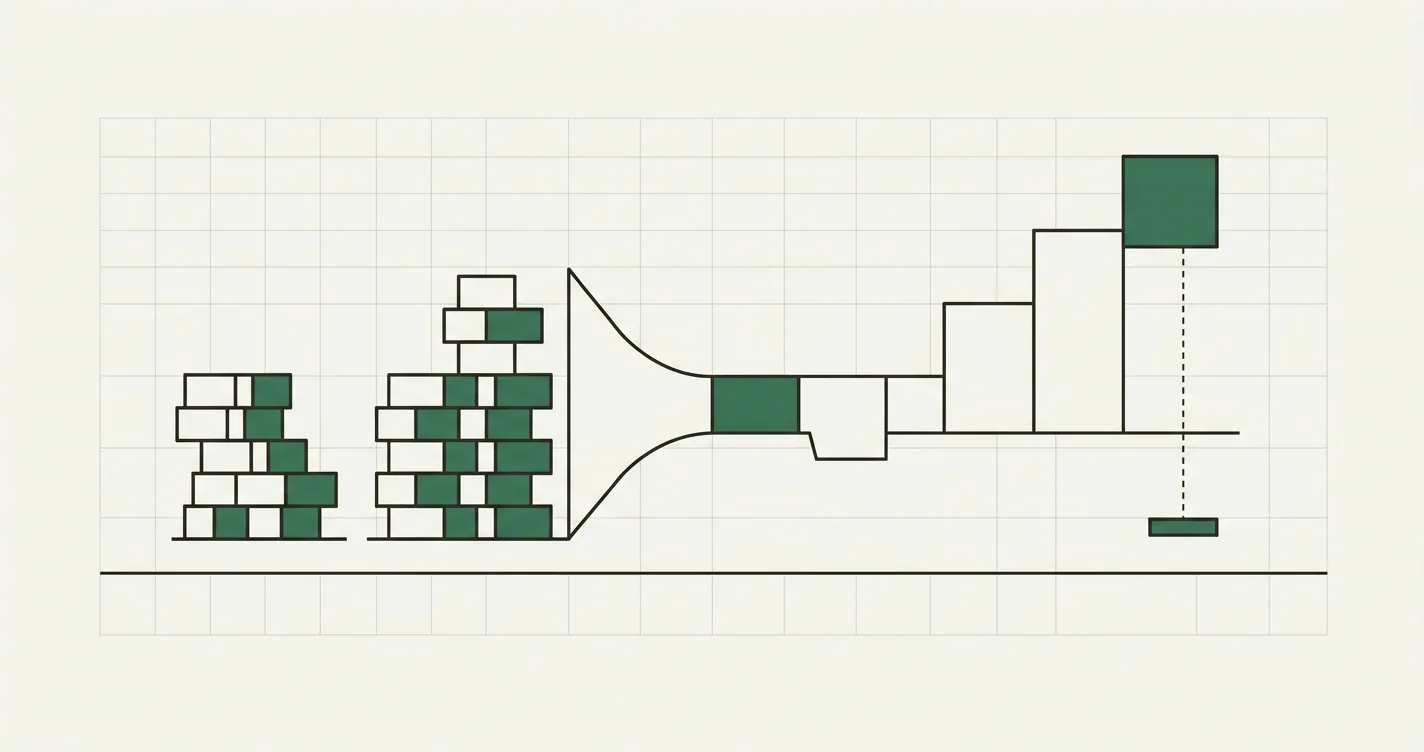
How QoE adjustments flow from a company's reported EBITDA to the price a buyer actually pays
What Is a Quality of Earnings Report?
A QoE report is an independent analysis - typically 4 to 12 weeks of work by a transaction advisory or accounting firm - that answers two questions: is this EBITDA number real, and is it sustainable? It reconstructs monthly and trailing-twelve-month (TTM) financials from the general ledger, tests revenue recognition and cash collection, and builds a bridge from Reported EBITDA to Adjusted EBITDA with a documented, line-by-line justification for every adjustment.
Unlike a full audit, QoE is not exhaustive testing against every GAAP disclosure requirement - it is targeted diligence on the handful of line items that actually move the purchase price: revenue quality, EBITDA normalization, and net working capital.
QoE vs. Audit: Not the Same Thing
Buyers sometimes assume an audited seller doesn't need a QoE. That's a mistake - audits and QoE reports answer different questions.
| Financial Statement Audit | Quality of Earnings Report | |
|---|---|---|
| Purpose | Opinion on GAAP compliance | Assessment of earnings quality and normalized EBITDA for a deal |
| Scope | Full balance sheet and income statement | Focused on EBITDA drivers, revenue, and working capital |
| Output | Pass/fail opinion letter | Adjusted EBITDA bridge, red flags, NWC peg recommendation |
| Who commissions it | The company, annually | The buyer (or seller), specifically for the transaction |
| Materiality threshold | Set high (aggregate misstatement) | Every add-back is scrutinized, regardless of size |
A company can have a clean audit opinion and still have an EBITDA number that's overstated for deal purposes - audits don't care whether the owner ran a personal vehicle through the P&L, because it's immaterial to the financial statements as a whole. A QoE report cares a great deal, because it changes the price.
The Five Categories of QoE Adjustments
Every adjustment a QoE analyst proposes falls into one of five buckets. The first three almost always add back to EBITDA (the item depressed reported earnings but won't recur or won't exist under new ownership); the last two often cut EBITDA (the item inflated reported earnings but won't be replicable).
| Category | Example | Typical Direction |
|---|---|---|
| Owner / related-party compensation | Above-market owner salary, family members on payroll not performing a role | Add back |
| Non-recurring, one-time items | Litigation settlement, ERP migration cost, relocation expense | Add back |
| Personal / discretionary expenses | Personal vehicle, travel, country club dues run through the business | Add back |
| Non-operating income and gains | Gain on sale of equipment, PPP loan forgiveness, insurance proceeds | Deduct |
| Accounting policy / reserve normalization | Under-reserved bad debt, below-market related-party rent, deferred maintenance | Deduct |
The first two categories are usually uncontroversial once documented. The third and fifth are where buyer and seller negotiate hardest, because "personal expense" and "under-reserved" are judgment calls, not bright lines.
Worked Example: Building Adjusted EBITDA
Consider a manufacturing business with $8.2M of Reported EBITDA in the trailing twelve months. The QoE analyst reviews the general ledger, interviews management, and proposes the following adjustments:
Add-backs:
| Item | Amount | Rationale |
|---|---|---|
| Owner's above-market compensation | $450,000 | Owner paid $650K; a market-rate GM would cost $200K |
| Litigation settlement (one-time) | $300,000 | Settled a single supplier dispute; not recurring |
| M&A prep consulting fees | $180,000 | Sell-side advisory fees, non-operating |
| Personal vehicle and travel expenses | $95,000 | Owner's personal car lease and travel run through opex |
| ERP system migration costs | $220,000 | One-time implementation, non-recurring |
| Total add-backs | $1,245,000 |
Deductions:
| Item | Amount | Rationale |
|---|---|---|
| Related-party rent normalization | $150,000 | Company pays owner-affiliated landlord below market; adjusting up to market rate reduces EBITDA |
| Gain on sale of equipment | $120,000 | One-time non-operating gain, not part of core earnings |
| Bad debt reserve normalization | $85,000 | Reserve understated relative to historical write-off rate; increasing it reduces EBITDA |
| Total deductions | $355,000 |
Adjusted EBITDA bridge:
| Line | Amount |
|---|---|
| Reported EBITDA | $8,200,000 |
| + Total add-backs | $1,245,000 |
| − Total deductions | ($355,000) |
| Adjusted (Normalized) EBITDA | $9,090,000 |
The net adjustment is +$890,000, or about 11% of Reported EBITDA - a typical magnitude for a lower-middle-market business that hasn't been run with institutional-grade financial discipline.
Adjusted EBITDA is the number that flows directly into the deal model above: it drives the entry purchase price, the debt capacity a lender will underwrite (typically a multiple of Adjusted EBITDA), and the sponsor's day-one leverage ratio. An unsupported add-back doesn't just move the price - it can push the deal past a lender's leverage covenant.
Excel: Structuring the QoE Adjustment Schedule
Build the QoE bridge as its own schedule, with every adjustment on its own row, tagged with a support/documentation flag so nothing gets buried:
// Adjusted EBITDA build
= ReportedEBITDA + SUM(AddBacks_Range) - SUM(Deductions_Range)

// Flag: only count an add-back if it has supporting documentation
= IF(Documentation_Column="Yes", AddBack_Amount, 0)

// Adjustment as % of Reported EBITDA (sanity check - flag if any single
// line exceeds ~5% of Reported EBITDA for extra scrutiny)
= AddBack_Amount / ReportedEBITDA
Keep Reported EBITDA, each adjustment, and Adjusted EBITDA on separate rows by month across the TTM period - not just as a single annual number. This lets you see whether an "add-back" is actually a recurring monthly cost that just got relabeled once, which is the single most common way sellers try to inflate Adjusted EBITDA.
Why QoE Adjustments Move the Purchase Price
Because acquisitions are typically priced as a multiple of Adjusted EBITDA, every dollar of net adjustment is levered by the deal multiple. At a 6.0x EV/EBITDA multiple:
Enterprise Value (Reported EBITDA) = $8,200,000 x 6.0 = $49,200,000
Enterprise Value (Adjusted EBITDA) = $9,090,000 x 6.0 = $54,540,000

Value impact of the QoE adjustments = $890,000 x 6.0 = $5,340,000
An $890,000 net adjustment becomes a $5.34M swing in enterprise value. This is why buyers push back hard on unsupported add-backs, and why sellers who can substantiate every line with invoices, contracts, or termination letters capture real, defensible value at the negotiating table.
Net Working Capital Normalization
QoE reports typically also establish a net working capital (NWC) peg - the amount of working capital the buyer expects to receive at closing, based on a normalized trailing average rather than the balance on any single date (which is easy to manipulate by delaying payables or accelerating collections right before close).
NWC Peg = Average(Monthly Net Working Capital, trailing 12 months)
Purchase Price Adjustment = NWC at Closing - NWC Peg
If the trailing 12-month average NWC is $1.8M and the seller manages to strip it down to $1.4M by closing (delaying vendor payments, drawing down inventory), the buyer is owed a $400,000 downward adjustment to the purchase price. This mechanism, negotiated alongside the EBITDA adjustments, is what stops a seller from harvesting cash out of the business in the weeks before signing.
Buy-Side vs. Sell-Side QoE
- Buy-side QoE is commissioned by the buyer (or their PE sponsor) after signing a letter of intent, as part of confirmatory diligence. It is adversarial by design - the analyst's job is to find reasons Adjusted EBITDA should be lower than what the seller claims.
- Sell-side QoE is commissioned by the seller before going to market, to get ahead of buyer scrutiny, present a well-documented EBITDA bridge, and avoid late-stage price chips. A clean sell-side QoE report can shorten a buyer's diligence timeline and reduce re-trade risk.
Sophisticated sellers increasingly run sell-side QoE as standard practice - the cost (typically $30K–$150K depending on deal size) is small relative to the negotiating leverage of walking into a process with a defensible number already in hand.
Red Flags a QoE Report Should Catch
- Revenue recognized before cash or performance obligations are met - channel stuffing near quarter-end, or bill-and-hold arrangements.
- Customer concentration - one customer representing >15–20% of revenue, especially with no long-term contract.
- Add-backs that recur every year - a "one-time" consulting fee that appears in three consecutive TTM periods is not one-time.
- Related-party transactions at non-market terms - rent, management fees, or supply agreements with entities the owner also controls.
- Declining gross margin trend hidden by a growing revenue top line.
- Chart of accounts changes mid-period that reclassify costs in a way that flatters EBITDA.
Common Mistakes
- Accepting add-backs without third-party support. Every add-back needs an invoice, termination letter, contract, or other documentation - a verbal explanation from the owner is not evidence.
- Treating "quality of earnings" as a synonym for "higher EBITDA." QoE cuts both ways; a rigorous report often nets EBITDA down, not up, once non-operating gains and understated reserves are corrected.
- Ignoring the NWC peg. Buyers who focus only on the EBITDA bridge and skip the working capital mechanism routinely overpay when sellers optimize cash right before closing.
- Using a single point-in-time balance instead of a trailing average. Both EBITDA and NWC should be assessed over a full trailing-twelve-month period to smooth out seasonality and one-off timing.
- Confusing an audit with a QoE report. A clean audit opinion says nothing about whether EBITDA is normalized for a sale - the two engagements test entirely different things.
- Not re-testing add-backs each TTM period. An item that was genuinely one-time last year but reappears this year needs to come out of the add-back list.

Alex Tapio
Founder of Finamodel • Professional Financial Modeller • Ex-Deloitte