InsurTech Pro Forma
Insurance Excel Template (Free Download)
Turn policy growth, premium, claims, acquisition spend, float, and operating expenses into a projected insurtech output.



professionals from Deloitte






About this pro forma
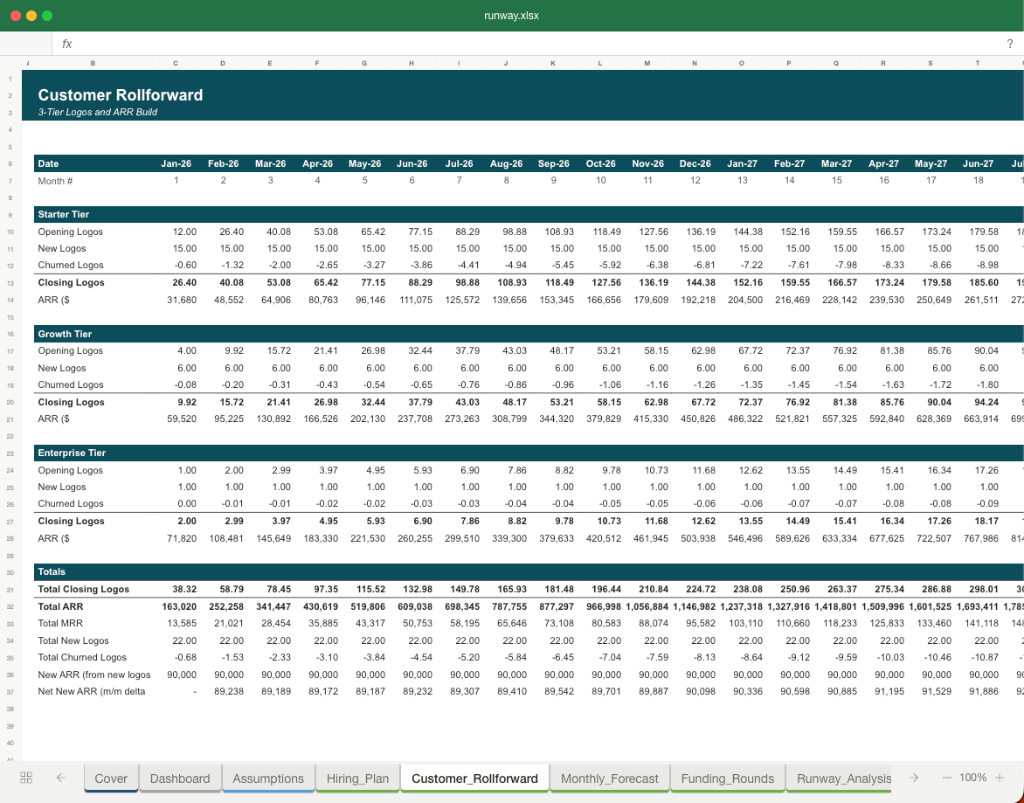
This pro forma presents projected operating economics for an insurance technology platform. The underlying Excel model is the engine: premium volume by line and channel, loss and LAE ratios, commissions, administrative expenses, customer acquisition, retention, float, and investment income produce the projected underwriting and company results.
Use the output to test price adequacy, cohort payback, combined-ratio improvement, capital needs, and the relationship between underwriting and float returns.
What every model includes
Live formulas, no hardcoded values
Outputs are driven by live formulas, so the workbook updates from its assumptions instead of relying on hardcoded results.
All assumptions in one tab
Inputs are clearly marked in the Assumptions tab and separated from calculations, making it clear what to change and what to leave intact.
Statements always balancing
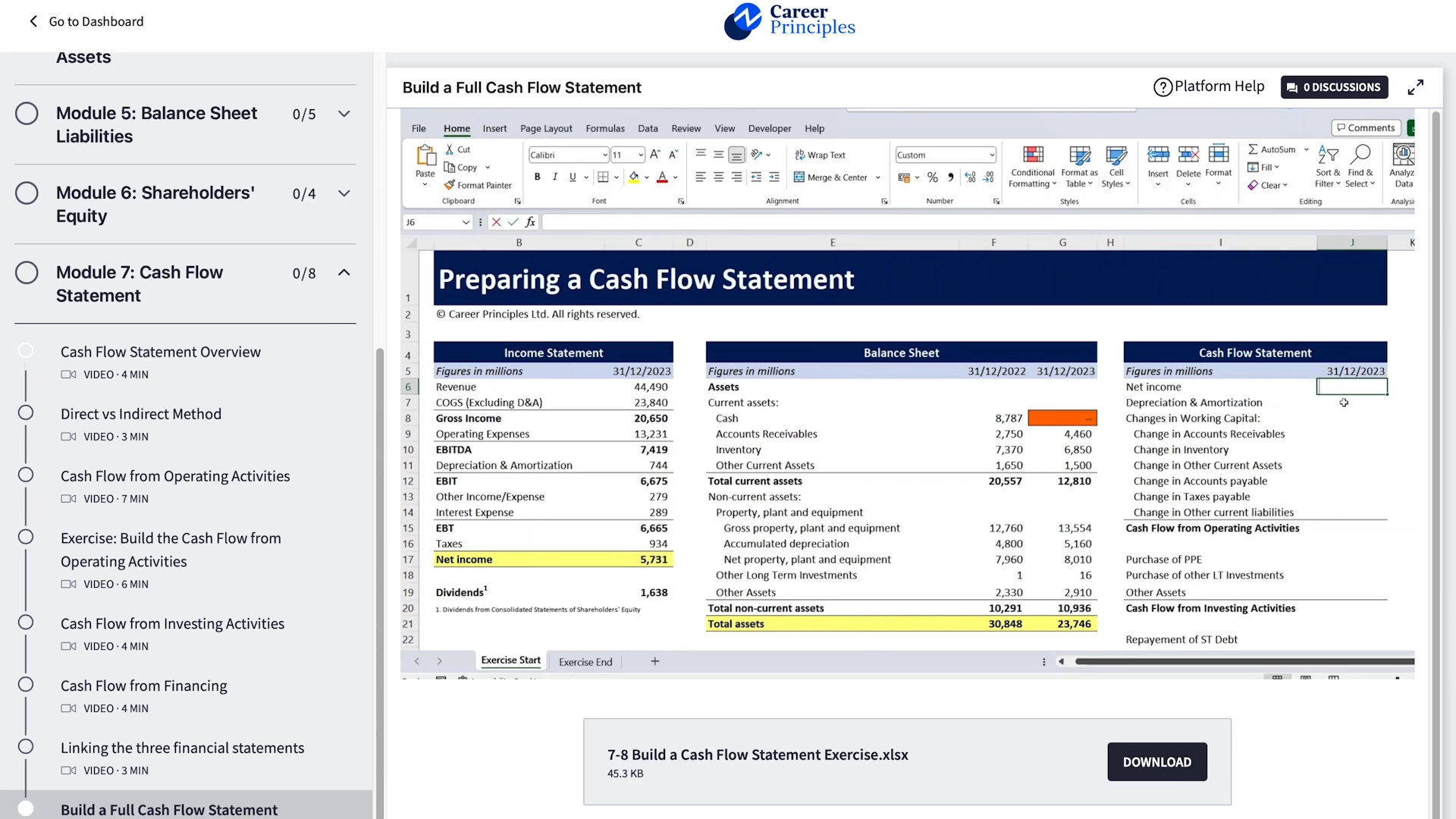
For integrated-statement models, the balance sheet, cash flow, and supporting schedules tie through properly.
Distinct schedules for clarity
Debt, working capital, taxes, and cash flow can get messy quickly. We group calculations in clear schedules, not across disconnected tabs.
No hidden macros or external links
There are no unexplained external workbook links or macros to undermine auditability or portability.
Changes flow through the model
Update a key driver and see the impact carry through the forecast, financing, and return outputs. We never use hardcoded numbers in formulas.
What's inside the InsurTech Pro Forma
- Projected premium volume by line of business and channel
- Projected loss ratio, LAE, commissions, and expense ratios
- Projected policy growth, retention, CAC, LTV, and payback
- Projected unearned premium, reserves, float, and investment income
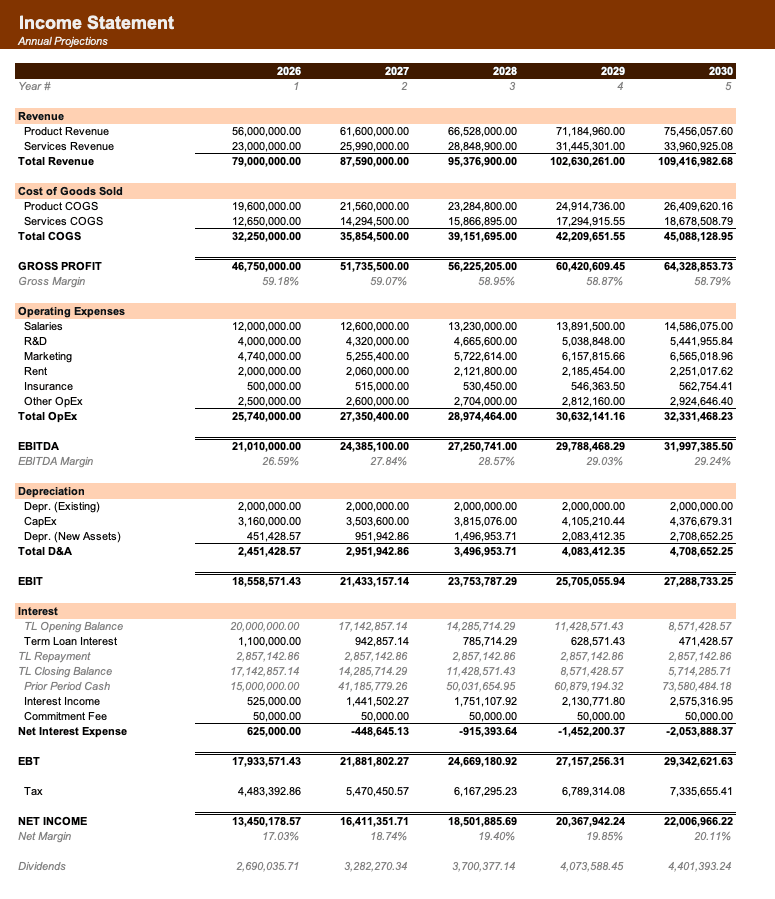
- Projected underwriting result, combined ratio, EBITDA, and net income
- Projected cash flow, capital needs, sensitivity, and valuation outputs
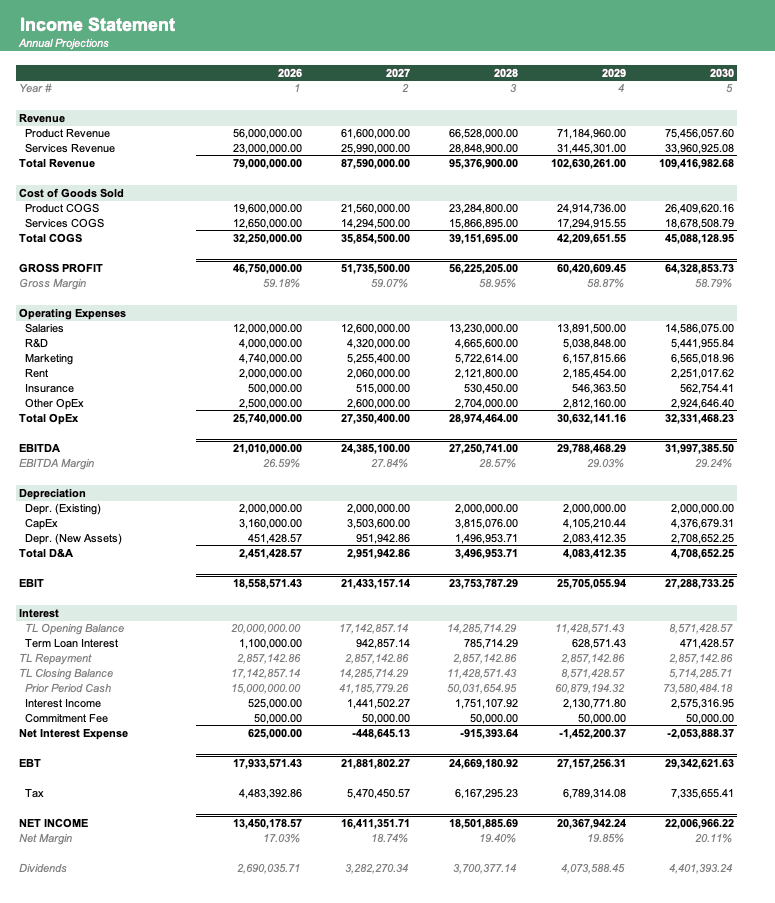
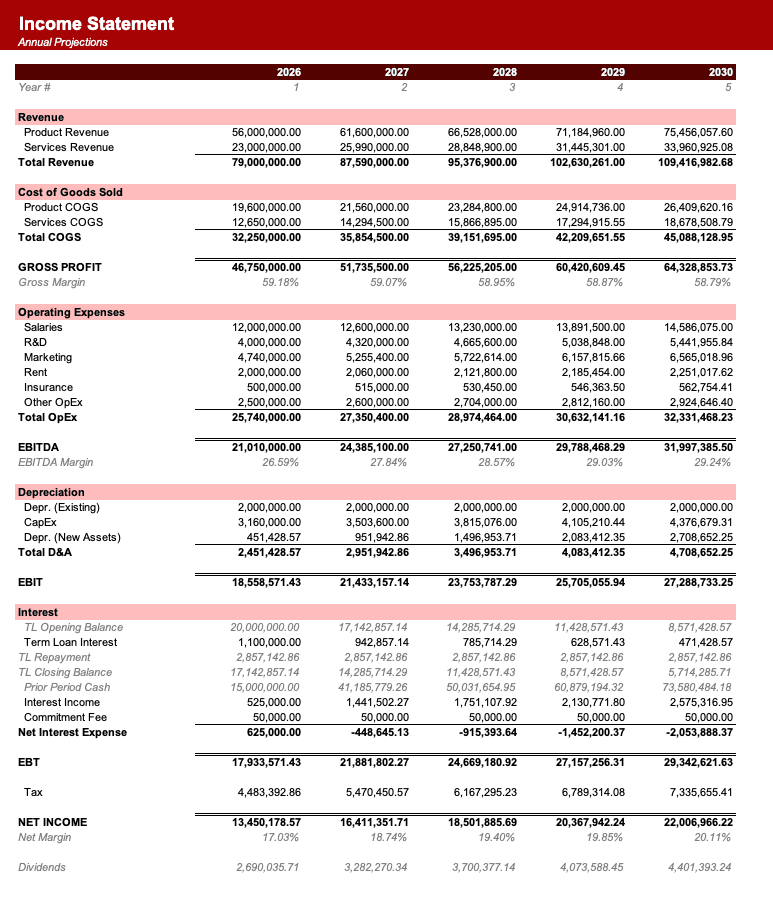
Formatted to IB standards
Named theme colors repaint the whole workbook in one click, on top of an investment-banking structure with clear input, output, and cross-sheet reference styling - brand-ready, institutional-grade, and fully auditable.

Created by ex-finance professionals
Hey, I’m Alex and I created Finamodel.
Over my years in the finance industry I kept building the same models over and over again. Same structure, same assumptions, different logo. So I started building frameworks to turn them into clean, reusable templates.
Every model here is one I’d actually use for a client, and I personally vet each one before it goes up.
I’m not an expert in every industry, but I’ve built enough models to know what belongs in one. And when something is completely foreign to me, I reach out to my network for experts to work on our models with us.
Having a template library on hand cuts a first build from hours to minutes.
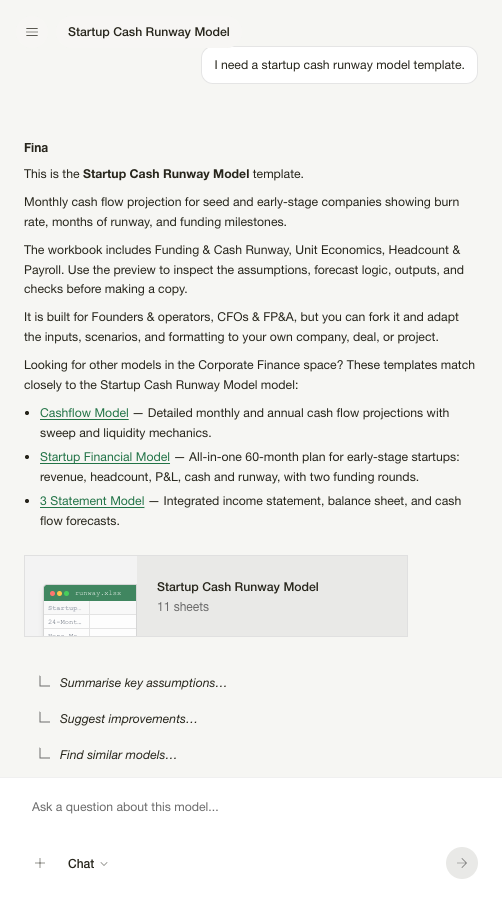
Need help finding your model? You’ll find me in the Finamodel app!
Frequently asked
What does an insurtech pro forma project?+
It projects premium, claims, expenses, customer economics, float income, combined ratio, profitability, and valuation.
What is the combined ratio?+
It is projected losses, LAE, commissions, and expenses divided by premiums; below 100% indicates underwriting profit.
How is CAC payback projected?+
Customer acquisition cost is compared with projected annual underwriting profit per customer and retention-driven lifetime value.
Can I model multiple insurance lines?+
Yes. Flex premium growth, loss ratios, expense assumptions, retention, and distribution mix by line and channel.
Have more financial modelling questions? Contact us
Related pro formas
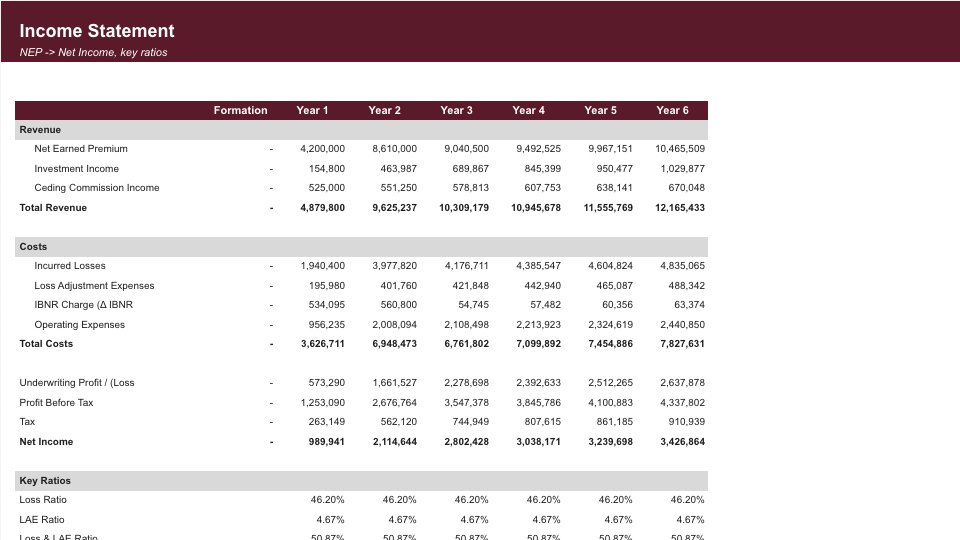
Captive Insurance Pro Forma
Captive insurer financial projections and reinsurance analysis.
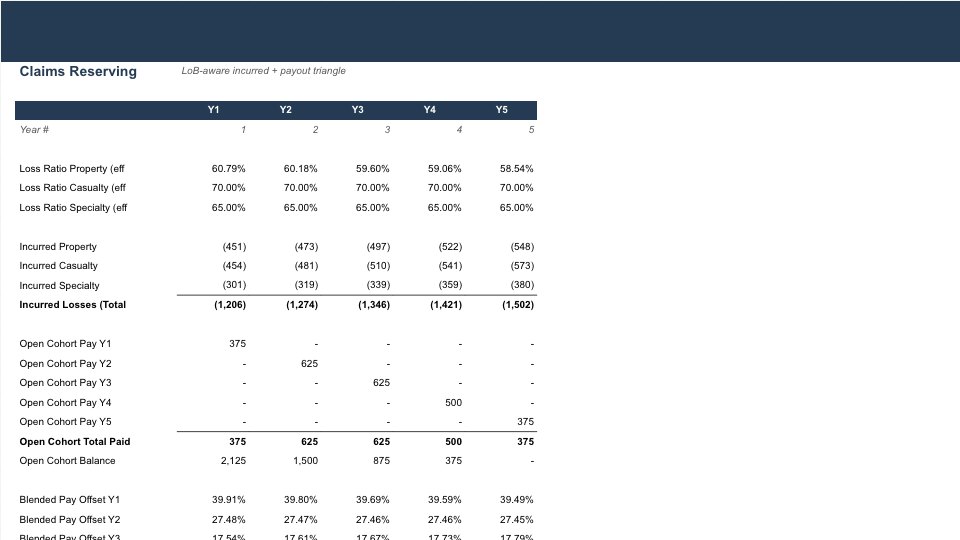
Reinsurance Pro Forma
Reinsurance premium income, claims reserves, underwriting margin, and ROE for reinsurance portfolios.
Life Insurance Pro Forma
Valuation model for life insurance products and in-force book value using mortality assumptions and surrender rates.