WEWellspent Financial Model
Health-tech Startup Financials (Free Excel Download)
AI-coach mobile app that helps phone over-users build healthier screen habits via scientifically-validated training, bite-sized exercises, and real-time nudges.



professionals from Deloitte
Used by professionals from






About this model
Wellspent is an AI-coach mobile app helping phone over-users build healthier screen habits through training and real-time nudges. Its consumer proposition combines bite-sized exercises with behaviour-change coaching aimed at users seeking more intentional technology use.
The product follows a freemium consumer model in which engagement and perceived behaviour change must lead to paid conversion and retention. Commercial performance depends on free users, subscription ARPU, churn, app-store distribution, content quality, and efficient acquisition in a broad wellness category.
The model forecasts free users, paid conversion, subscription ARPU, engagement, churn, app-store fees, and acquisition cost. It includes product and AI costs, content development, marketing, gross margin, operating cash flow, cash burn, and runway.
A turnkey financial model
Live formulas, no hardcoded values
Outputs are driven by live formulas, so the workbook updates from its assumptions instead of relying on hardcoded results.
All assumptions in one tab
Inputs are clearly marked in the Assumptions tab and separated from calculations, making it clear what to change and what to leave intact.
Statements always balancing
For integrated-statement models, the balance sheet, cash flow, and supporting schedules tie through properly.
Distinct schedules for clarity
Debt, working capital, taxes, and cash flow can get messy quickly. We group calculations in clear schedules, not across disconnected tabs.
No hidden macros or external links
There are no unexplained external workbook links or macros to undermine auditability or portability.
Changes flow through the model
Update a key driver and see the impact carry through the forecast, financing, and return outputs. We never use hardcoded numbers in formulas.
About Wellspent
wellspent.so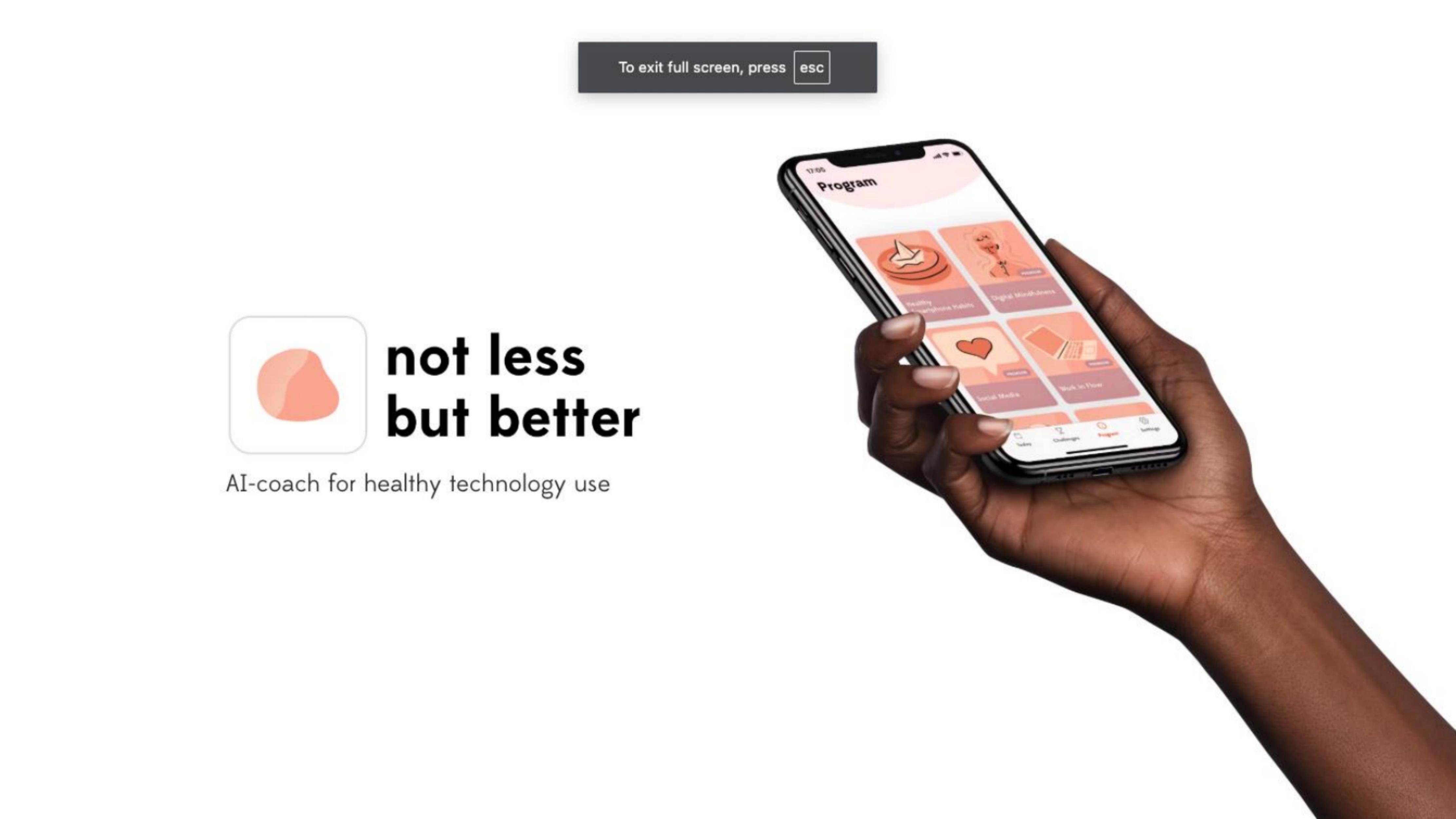
How to build a detailed financial model for Wellspent
A complete walkthrough of the business, drivers, and assumptions behind the downloadable Wellspent model - distilled from its pitch deck and publicly available information.
Product & value proposition
- App brand name: "not less but better" (nlbb).
- Three-step product loop:
- Identify unhealthy habits (habit diagnostic).
- Replace with good habits (bite-sized exercises, specialized courses).
- Real-time AI nudge when phone over-use is detected.
- Scientific differentiation: first RCT-approved app in the category; trial run with Freie Universität Berlin, 232 participants.
- Alpha stage noted on slide 4.
Market
- 310 million people worldwide fail to stick to healthy phone habits.
- Consumer spending on mindfulness apps grew 24.3x to $195m/year since 2015.
- $1.5bn funding for US mental health companies in 2020, +72% YoY.
- Company's own market sizing: 310m affected users × $81 ARPPU = $24bn market potential (screen time management sub-segment).
- Comparable app scale context: Fabulous 22m downloads, Forest/Focus 40m downloads.
- No formal TAM/SAM/SOM breakdown presented; $24bn is bottom-up addressable market per company math.
Revenue model
- Model: B2C premium subscription mobile app.
- ARPPU: $81 stated in market sizing calculation - interpreted as annual subscription price point (basis for $24bn market potential math).
- Channels: Direct (App Store / Google Play); no B2B or enterprise channel mentioned.
- No pricing tiers, trial/freemium split, or billing cadence (monthly vs. annual) disclosed in deck.
Traction & metrics
- RCT outcomes (232 participants, Freie Universität Berlin):
- -42% reduction in problematic smartphone use.
- -20% reduction in screen time.
- +8% increase in overall wellbeing.
- -40% decrease in habit strength / impulsive smartphone use.
- Product stage: Alpha.
- Pre-seed funding raised: amount redacted ("€x").
- 1 academic paper published (JMIR Publications).
- App Store testimonial: user reduced screen time from 7.5 hrs/day to 2.5 hrs/day (April 2021 premium subscriber) - qualitative only.
Unit economics
- ARPPU of $81 used in market sizing.
Competition / moat
Competitive landscape mapped across three habit categories:
- Habit building: Fabulous (22m downloads), Forest/Focus (40m downloads).
- Habit regulation / weight loss: Noom ($4bn market cap).
- Mental wellbeing: Calm ($2bn market cap).
- Habit elimination: Pear Therapeutics ($284m funding), Quit Genius ($78m), Tempest ($10m).
- Learning: Coursera ($5bn), MasterClass ($800m), Blinkist ($200m).
- Physical / sleep: Peloton ($37bn), Sleep Cycle ($192m).
Claimed moats:
- First RCT-approved app for screen habit change.
- AI real-time nudge technology (proprietary detection).
- Academic credibility (published paper, Freie Universität Berlin partnership).
- No direct competitor named in screen time management slot - company positions itself as the category creator.
Team & funding ask / use of funds
Founders:
- Selcuk (CEO): Marketing & BizDev, 2x founder (SMACC, DerZucker Bäcker, happystrappy).
- Christina (CPO): Psychology & Design Thinking (HPI, DB, Bosch, StealthMode).
- Marius (CTO): Mobile & Software Engineering (Calm, Realm, Keepsafe).
Team: 6 additional members (alumni: Blinkist, Bunch, The New York Times). Advisors: 3 (Freie Universität Berlin, Caracare, Tier). Pre-seed raised: €x (redacted).
Recommended financial model
- Archetype + why: Consumer subscription app (mobile B2C). Revenue driven by downloads → conversion to paid → ARPPU × subscribers. Closest archetype is a DTC subscription / consumer SaaS model. Not a marketplace or GMV model.
- Forecast horizon & granularity: 3 years monthly (Year 1–2 monthly detail, Year 3 annual); seed-stage pre-revenue companies benefit from monthly to track cash burn and runway alongside revenue ramp.
- Key drivers & assumptions:
- Total addressable users: 310m
- ARPPU: $81/year; billing split (monthly vs. annual) 60% annual / 40% monthly, pending pricing confirmation
- Freemium conversion rate: 3–5% (benchmark for consumer wellness apps; Calm/Headspace range)
- Monthly app downloads / installs: ramp from ~5k/month at seed launch to ~50k/month by end of Year 2, contingent on marketing spend
- Paid subscriber count: installs × conversion rate
- Monthly churn: 5–8%/month (consumer habit app; high early churn typical before habit lock-in demonstrated)
- Gross margin: ~75–85% (app store fees ~30%; minimal COGS beyond hosting / ML inference)
- CAC: $5–15 blended (UA spend; comparable consumer app benchmarks; no deck data)
- LTV: ARPPU / churn - highly sensitive; key model output
- Headcount: seed funding enables team of ~10–12; model as fixed OpEx with phased hiring
- Marketing spend as % of revenue: 40–60% in early years, declining as organic / word-of-mouth scales
- App store revenue split: 30% platform fee
- Scenarios (Base / Bull / Bear - which variables flex):
- Base: 3.5% conversion, 6% monthly churn, $81 ARPPU, moderate UA spend
- Bull: 5% conversion, 4% monthly churn, ARPPU rises to $99 (annual pricing uplift), viral coefficient >1
- Bear: 2% conversion, 9% monthly churn, CAC spikes, B2C traction slow → pivot to B2B2C (employer wellness)
- Required sheets / outputs:
- Assumptions (all drivers with toggle for Base/Bull/Bear)
- User funnel (installs → free → paid → churned → net subscribers)
- Revenue (MRR/ARR build, ARPPU × net subscribers)
- P&L (Revenue → Gross Profit → OpEx → EBITDA → Net Income)
- Cash flow & runway (burn rate, months of runway vs. raise)
- Unit economics summary (CAC, LTV, LTV/CAC, payback months)
- Sensitivity table (churn vs. conversion rate on ARR; CAC vs. LTV on payback)
Frequently asked
Is the Wellspent financial model free?+
Yes. The Wellspent model is a free Excel (.xlsx) download with live formulas. Sign up with your email and the workbook is yours to keep, review, and edit.
What's included in the model?+
A 5-year monthly forecast with P&L, cash flow and runway, valuation (exit multiple plus a DCF cross-check), MOIC/IRR returns, and unit economics, with live formulas throughout.
How was this model built?+
It was built from Wellspent's pitch deck and publicly available information, then structured to investment-banking standards as a fully editable Excel model.
Can I change the assumptions?+
Yes. You can change assumptions and the live formulas will recalculate in the downloadable Excel model.
Have more financial modelling questions? Contact us

Created by ex-finance professionals
Hey, I’m Alex and I created Finamodel.
Over my years in the finance industry I kept building the same models over and over again. Same structure, same assumptions, different logo. So I started building frameworks to turn them into clean, reusable templates.
Every model here is one I’d actually use for a client, and I personally vet each one before it goes up.
I’m not an expert in every industry, but I’ve built enough models to know what belongs in one. And when something is completely foreign to me, I reach out to my network for experts to work on our models with us.
Having a template library on hand cuts a first build from hours to minutes.
Need help finding your model? You’ll find me in the Finamodel app!
Other Health-tech Startup Financial Models
Browse another startup in the same category.
98point6
B2B SaaS platform licensing an AI-powered virtual care technology stack to health systems, pivoted from running a direct-to-employer virtual clinic.
A-Champs
IoT-powered gamified training device (ROXs PRO) for sports/health professionals, evolving into a B2C smart coach app for families.

AccuRx
Patient-centred communication platform connecting everyone involved in a patient's care, starting with near-universal penetration in UK GP practices.

Aeris
Swiss-made premium air purifiers sold through DTC, retail, and dealer channels, with a recurring filter consumable attached to a connected mobile app.

Akido Labs
Akido Labs is a data-driven prevention platform that integrates siloed healthcare, municipal, and non-profit data to enable proactive outreach and case management for vulnerable populations (homeless, chronically ill, etc.).

Alloy
Telehealth + DTC subscription platform delivering menopause hormonal treatment (MHT) and holistic care to U.S. women 40+.

Astek Diagnostics
Point-of-care diagnostic device (Jiddu system) that confirms bacterial infections and antibiotic sensitivity in ~1 hour across four body fluid types (urine, CSF, effluent, blood).

Atom Limbs
Atom Limbs is building the first AI-powered, neural-controlled prosthetic arm sold direct-to-consumer on a subscription model.


