 Atom Limbs Financial Model
Health-tech Startup Financials (Free Excel Download)
Atom Limbs is building the first AI-powered, neural-controlled prosthetic arm sold direct-to-consumer on a subscription model.



professionals from Deloitte
Used by professionals from






About this model
Atom Limbs is developing an AI-powered, neural-controlled prosthetic arm sold directly to consumers. The product seeks to improve capability and access while reducing the barrier of a very high upfront prosthetic cost.
It combines a one-time device sale with a subscription covering upgrades, repairs, and replacements. This structure gives the company both hardware economics and a recurring relationship with users over the life of the device.
The model should forecast regulatory timing, device units, ASP, subscription attach, retention, and service cost. Hardware COGS, warranty reserves, clinical fitting, distribution, and R&D runway should be distinct from recurring subscription margin.
A turnkey financial model
Live formulas, no hardcoded values
Outputs are driven by live formulas, so the workbook updates from its assumptions instead of relying on hardcoded results.
All assumptions in one tab
Inputs are clearly marked in the Assumptions tab and separated from calculations, making it clear what to change and what to leave intact.
Statements always balancing
For integrated-statement models, the balance sheet, cash flow, and supporting schedules tie through properly.
Distinct schedules for clarity
Debt, working capital, taxes, and cash flow can get messy quickly. We group calculations in clear schedules, not across disconnected tabs.
No hidden macros or external links
There are no unexplained external workbook links or macros to undermine auditability or portability.
Changes flow through the model
Update a key driver and see the impact carry through the forecast, financing, and return outputs. We never use hardcoded numbers in formulas.
About Atom Limbs
atomlimbs.com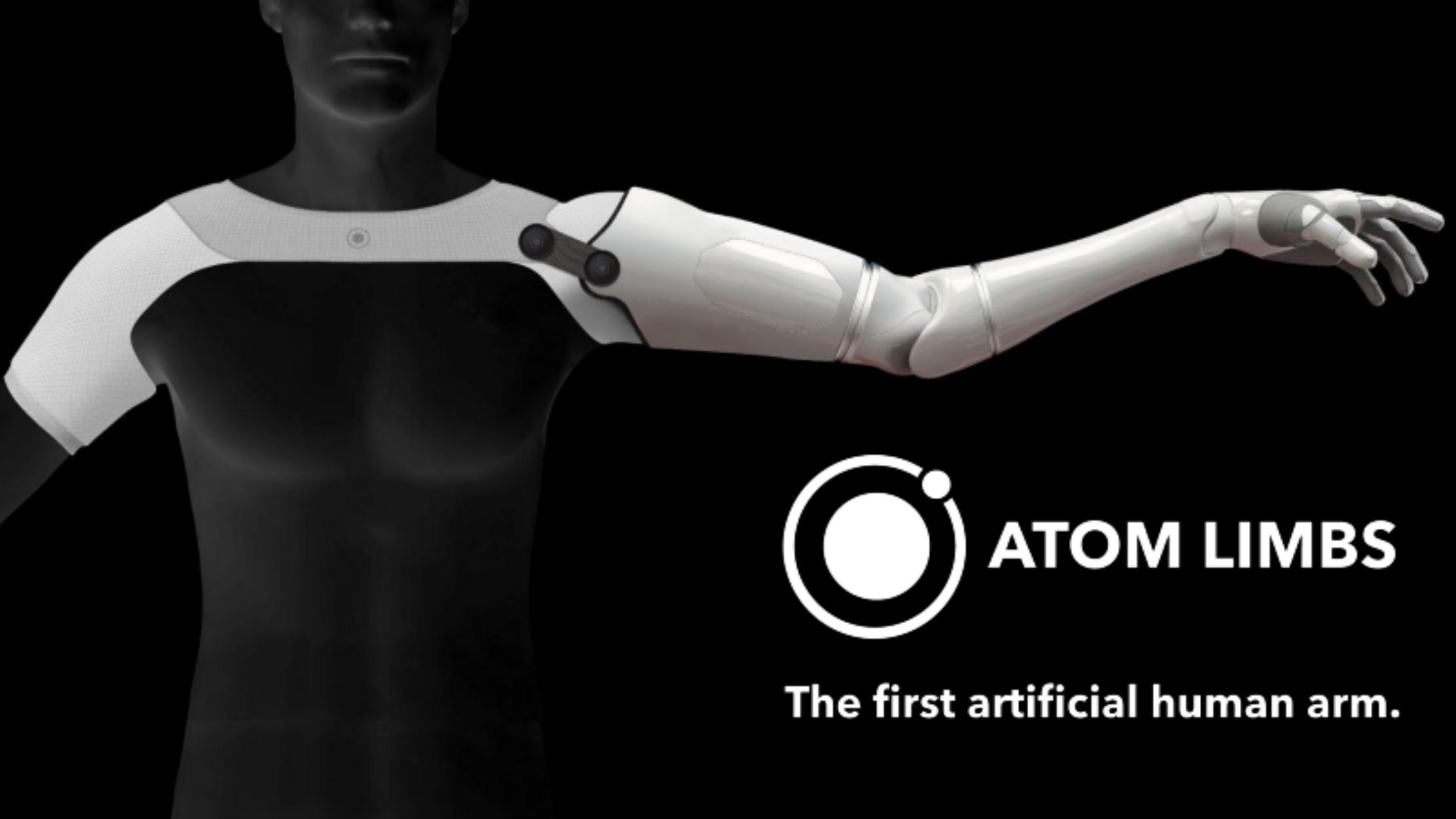
How to build a detailed financial model for Atom Limbs
A complete walkthrough of the business, drivers, and assumptions behind the downloadable Atom Limbs model - distilled from its pitch deck and publicly available information.
Product & value proposition
- Product: "The first artificial human arm" - full upper-limb prosthesis with neural mind control (EMG/neural interface), haptics-driven basic sense of touch, breakthrough mini-motor technology, and a novel human-attachment system
- Key specs: 21 active degrees of freedom (Proto 1 intrinsic design); 26 articulating joints; 50% lighter than competition; all-day battery
- Built on 15 years of DARPA R&D in partnership with Johns Hopkins Applied Physics Laboratory
- Software layer: intuitive neural mind control + AI (Chief of AI on team)
- Bundled service: 24/7 Concierge and Health Coach
- Value prop differentiator: existing prosthetic arms are so limited users prefer not to wear them (quoted user: "I become more disabled when I wear one"); Atom targets functional human-grade use
Market
- TAM (as stated): $800B - physical disability health market
- Calculation shown: 47,000,000 Americans with a physical disability × $17,431 average annual disability health expenditures/person = ~$819B; deck rounds to $800B
- Note: OCR on slide 14 shows "47,000,00" - image confirms the intended figure is 47,000,000
- Context: 1 in 4 Americans lives with some disability; self-care disability rates spike at ages 65–74 (4.1%) and 75+ (12.8%); ambulatory disability 65–74 (14.7%) and 75+ (30.9%)
- Tailwind: aging US population driving rising disability rates
Revenue model
- Dual revenue streams:
- Hardware / device sale (one-time, analogous to competitors at ~$100K Year 1 list price implied by the competitor bar in slide 16)
- Recurring subscription: covers ongoing upgrades, repairs, and replacements; reduces upfront customer cost by 75% in Year 1 vs. one-time purchase
- Channel: Direct-to-consumer (DTC) - no distributor/payer channel described; explicitly positioned as "designed for the direct-to-consumer era"
- Future product line: Atom Leg (introduced ~2025 per revenue chart)
- Revenue milestone: recurring subscription revenue projected to overtake new hardware sales revenue ~2027
Traction & metrics
- Waitlist demand growing 80% weekly
- 80% of waitlistees are "extremely interested"
- No revenue figures in deck (pre-revenue stage)
- No customer count, unit volume, or conversion rates stated
- Beta user demonstrated piano fingering - first time that capability has been shown
- Media coverage: CNN, 60 Minutes, NYT, Fast Company, Forbes, PBS NewsHour, Quartz, Motherboard, Axios
- "The most advanced robotic arm in the world." - Quartz
- "Amazingly human. A breakthrough." - 60 Minutes
Unit economics
- No CAC, LTV, gross margin, or payback period figures in deck
- Implicit LTV advantage over competitor model: subscription model generates increasing cumulative revenue per customer year over year; chart shows Atom Limbs cumulative revenue per customer surpassing competitor one-time $100K sale by approximately Year 6–7
Competition / moat
- Competitive framing: existing prosthetic arm market described as a "dinosaur industry"; implied competitors sell one-time hardware at high upfront price (~$100K) with no recurring service
- Moat claims:
- 15 years of DARPA/Johns Hopkins Applied Physics Lab R&D as foundation
- Team named on 1,000+ patents; 5,000+ citations
- Technical lead: 21 active DOF vs. implied fewer for current prosthetics
- Brand/design pedigree: team built iPhone, iMac, Tesla
- Named competitors: Not identified by name in deck
Team & funding ask / use of funds
- Team (leadership):
- Tyler Hayes, CEO - 15+ years, prior COO Bebo (acq. Amazon), CEO Prime, Disqus (acq. Zeta)
- Doug Satzger, CDO - 30+ years industrial design at Apple, IDEO, Intel, Palm
- Eric Monsef, CTO - 30+ years engineering at Apple, HP, Glydways, Trimble; 40+ patents
- Erik Shahoian, Chief Architect - 20+ years at Apple, Tesla, Seismic; 120+ patents
- Kar Han Tan, Ph.D., Chief of AI - 20+ years R&D/Computer Vision at Singtel, HP, Epson; 60 patents, 5,000 citations
- Greg Springer, Chief Scientist - 25+ years VP Engineering at Apple, Google, Immersion
Recommended financial model
- Archetype + why: Hardware + subscription (DTC medical device) - mirrors the Peloton/Apple Watch model applied to prosthetics. Two distinct revenue streams (unit device sales + recurring subscription fees) with diverging growth trajectories. Given the pre-revenue, pre-FDA-clearance stage and 2022–2030 horizon shown, a 3-statement integrated model built around a hardware unit volume ramp and attached subscription cohort model is the right structure.
- Forecast horizon & granularity: 2022–2030 (8 years) annual, consistent with deck's revenue chart x-axis. First 1–2 years (pre-launch) should be quarterly for burn/runway; switch to annual from FDA clearance (~2023).
- Key drivers & assumptions:
- Unit volume - new arm sales per year
- 2022–2023: 0 (pre-FDA clearance)
- FDA clearance Q1 2023 → first commercial sales 2023
- Ramp rate: start with ~100–500 units in Year 1 post-launch, growing 50–100% annually; no volume data in deck
- Device ASP (hardware sale):
- Competitor benchmark: ~$100K one-time
- Atom Year 1 subscription equivalent: ~$25K (75% reduction in upfront cost vs. competitor)
- Separate device ASP if sold outright vs. subscription entry price - deck only discloses the subscription path
- Subscription ARPU / month:
- ~$2,000–3,000/month per patient implied by $25K year-1 cost; needs to be a key model assumption
- Subscription attach rate: 90%+ given DTC positioning and 75% upfront cost reduction incentive
- Subscription churn rate: very low (<5% annual) - medical device with no viable switching option
- Recurring revenue overtakes new sales: ~2027 per deck projection
- Atom Leg launch: ~2025 - opens a second product SKU; model as a separate unit/ASP line, same subscription structure
- Revenue scale by 2030: approaching $2B total (recurring ~$1.5B + new sales ~$500M) per deck chart
- Gross margin on hardware: 40–60% at scale (medical robotics; high BOM, high ASP); not in deck
- Gross margin on subscription: 60–75% at scale (software + service component; repair/replacement costs are the main variable)
- OpEx / R&D: heavy pre-launch; model R&D as % of revenue declining from 80%+ pre-revenue to 20–30% at scale
- CAC: DTC medical - high initial ($5K–$15K/patient); press/media coverage suggests strong earned media channel
- Regulatory timeline risk: FDA 510(k) or De Novo path; 12–18 month clearance cycle modeled as sensitivity toggle
- International: begins ~2024–2025 post-US launch; model as 10–20% of US volumes initially
- Scenarios (Base / Bull / Bear - which variables flex):
- Base: FDA clearance Q1 2023, US launch mid-2023, moderate ramp (500 → 2,000 → 5,000 units/year), subscription attach 90%, churn 4%
- Bull: Faster regulatory clearance, higher volume ramp (2x base), Atom Leg launch on time in 2025, international 20% uplift from 2024
- Bear: FDA delays 12–18 months (launch 2024), slower demand conversion from waitlist, manufacturing scale challenges, subscription churn 10%
- Required sheets / outputs:
- Assumptions dashboard (all toggleable drivers)
- Unit volume build (arms + legs, US + international)
- Revenue bridge (hardware vs. recurring, by cohort year)
- Cohort subscription model (cohort size, churn, cumulative ARPU)
- P&L (gross profit by segment, R&D, S&M, G&A, EBIT)
- Cash flow / burn (pre-revenue burn rate + cash runway)
- Balance sheet (light - sufficient to close the 3-statement loop)
- Scenario toggle (Base / Bull / Bear)
- Output summary: revenue by year, recurring % of total, gross margin %, cumulative cash burn
Frequently asked
Is the Atom Limbs financial model free?+
Yes. The Atom Limbs model is a free Excel (.xlsx) download with live formulas. Sign up with your email and the workbook is yours to keep, review, and edit.
What's included in the model?+
A 5-year monthly forecast with P&L, cash flow and runway, valuation (exit multiple plus a DCF cross-check), MOIC/IRR returns, and unit economics, with live formulas throughout.
How was this model built?+
It was built from Atom Limbs's pitch deck and publicly available information, then structured to investment-banking standards as a fully editable Excel model.
Can I change the assumptions?+
Yes. You can change assumptions and the live formulas will recalculate in the downloadable Excel model.
Have more financial modelling questions? Contact us

Created by ex-finance professionals
Hey, I’m Alex and I created Finamodel.
Over my years in the finance industry I kept building the same models over and over again. Same structure, same assumptions, different logo. So I started building frameworks to turn them into clean, reusable templates.
Every model here is one I’d actually use for a client, and I personally vet each one before it goes up.
I’m not an expert in every industry, but I’ve built enough models to know what belongs in one. And when something is completely foreign to me, I reach out to my network for experts to work on our models with us.
Having a template library on hand cuts a first build from hours to minutes.
Need help finding your model? You’ll find me in the Finamodel app!
Other Health-tech Startup Financial Models
Browse another startup in the same category.
98point6
B2B SaaS platform licensing an AI-powered virtual care technology stack to health systems, pivoted from running a direct-to-employer virtual clinic.
A-Champs
IoT-powered gamified training device (ROXs PRO) for sports/health professionals, evolving into a B2C smart coach app for families.

AccuRx
Patient-centred communication platform connecting everyone involved in a patient's care, starting with near-universal penetration in UK GP practices.

Aeris
Swiss-made premium air purifiers sold through DTC, retail, and dealer channels, with a recurring filter consumable attached to a connected mobile app.

Akido Labs
Akido Labs is a data-driven prevention platform that integrates siloed healthcare, municipal, and non-profit data to enable proactive outreach and case management for vulnerable populations (homeless, chronically ill, etc.).

Alloy
Telehealth + DTC subscription platform delivering menopause hormonal treatment (MHT) and holistic care to U.S. women 40+.

Astek Diagnostics
Point-of-care diagnostic device (Jiddu system) that confirms bacterial infections and antibiotic sensitivity in ~1 hour across four body fluid types (urine, CSF, effluent, blood).

Axle Health
AI-powered workforce management (scheduling, routing, patient engagement) for home health and hospice providers.


