Demurrage and Despatch Laytime Calculator
Operating Businesses Financial Model (Excel Download)
Work out allowed and counted loading time from the charter terms and the statement of facts. The workbook then calculates demurrage or despatch and keeps any dispute apart from the contract claim.



professionals from Deloitte






About this model
A laytime and demurrage settlement workbook for commodity trade and shipping operations. The shipped case is a fictional charterer loading a bulk cargo at one port. It compares the time the charter allows for loading with the time the vessel actually took, and turns the difference into a demurrage charge or a despatch credit.
Allowed time is cargo tonnes divided by the loading rate, times 24 hours. Laytime starts six hours after the notice of readiness is accepted. Each interval in the statement of facts gets a reason, and the counting rules set how much of it counts before and after demurrage starts. Rain is excluded before the allowance is used but counts on demurrage. Owner breakdown is excluded throughout.
On the shipped case 48 hours are allowed, 66 hours elapse and 54 hours count, so 6 hours go on demurrage. At USD 24,000 per day that gives a contractual claim of USD 6,000. The counterparty disputes 2 hours, and a nonbinding proposal of USD 4,000 is shown apart from the claim. A time identity check must return zero, and settlement needs agreed evidence and contiguous intervals.
What every model includes
Live formulas, no hardcoded values
Outputs are driven by live formulas, so the workbook updates from its assumptions instead of relying on hardcoded results.
All assumptions in one tab
Inputs are clearly marked in the Assumptions tab and separated from calculations, making it clear what to change and what to leave intact.
Statements always balancing
For integrated-statement models, the balance sheet, cash flow, and supporting schedules tie through properly.
Distinct schedules for clarity
Debt, working capital, taxes, and cash flow can get messy quickly. We group calculations in clear schedules, not across disconnected tabs.
No hidden macros or external links
There are no unexplained external workbook links or macros to undermine auditability or portability.
Changes flow through the model
Update a key driver and see the impact carry through the forecast, financing, and return outputs. We never use hardcoded numbers in formulas.
What's inside the Demurrage and Despatch Laytime Calculator
- Voyage terms for cargo, loading rate, notice time and demurrage and despatch rates
- Allowed loading time from tonnes and loading rate
- Laytime start after the accepted notice of readiness and notice period
- Statement of facts with timed intervals, reasons, evidence and agreed status
- Counting rules for each reason before and on demurrage
- Interval build that splits pre-demurrage and on-demurrage hours
- Demurrage charge and despatch credit, pro rata to 24-hour rates
- Time identity check that ties elapsed, counted and excluded hours



Formatted to IB standards
Named theme colors repaint the whole workbook in one click, on top of an investment-banking structure with clear input, output, and cross-sheet reference styling - brand-ready, institutional-grade, and fully auditable.

Created by ex-finance professionals
Hey, I’m Alex and I created Finamodel.
Over my years in the finance industry I kept building the same models over and over again. Same structure, same assumptions, different logo. So I started building frameworks to turn them into clean, reusable templates.
Every model here is one I’d actually use for a client, and I personally vet each one before it goes up.
I’m not an expert in every industry, but I’ve built enough models to know what belongs in one. And when something is completely foreign to me, I reach out to my network for experts to work on our models with us.
Having a template library on hand cuts a first build from hours to minutes.
Frequently asked
What are demurrage and despatch?+
Demurrage is the amount a charterer pays when loading takes longer than the time the charter allows. Despatch is a credit paid back when loading finishes early. Both are set by rates per day in the charter.
How is counted laytime worked out?+
Laytime starts after the notice of readiness is accepted and the notice period ends. Each interval in the statement of facts is given a reason, and the counting rules say what share of it counts. The workbook adds the counted hours and compares them with the allowed time.
Why does rain count on demurrage?+
In this fictional charter, rain is excluded while allowed time remains, but once the vessel is on demurrage it counts. Owner breakdown stays excluded throughout. You can change these factors on the Counting rules sheet.
What is not included?+
The workbook does not give charter law or holiday rules for any jurisdiction. It covers one voyage and one loading port. A disputed hours proposal is an estimate only and does not change the contract claim.
How do I use it for my own voyage?+
Replace the voyage terms, statement of facts and counting rules with your own charter facts. Keep the formulas and extend the interval ranges together if you add events. Review every exception before you approve settlement.
Have more financial modelling questions? Contact us
Related templates
Shipping Company Operating Model
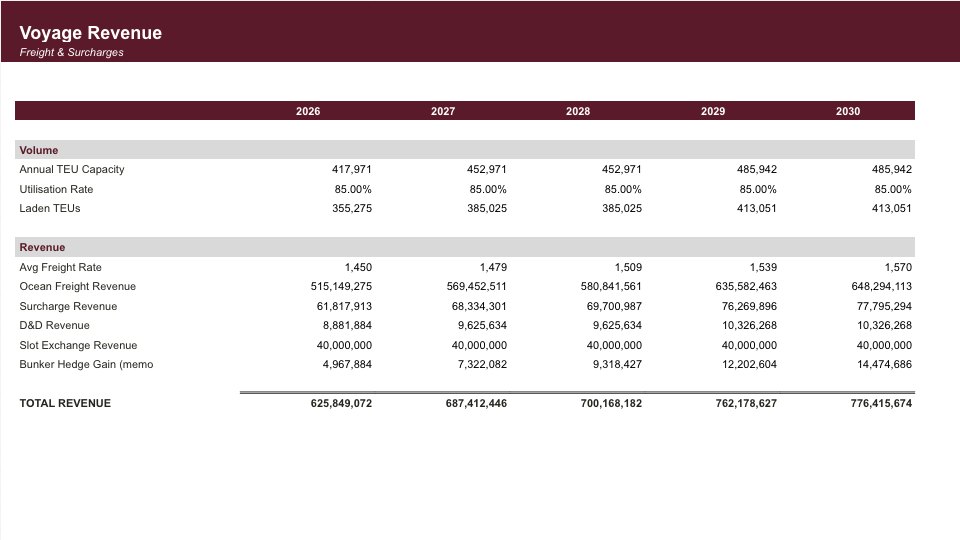
Operating model for shipping companies with vessel utilization, freight rates, bunker costs, and operational efficiency metrics.
Trade Finance Underwriting
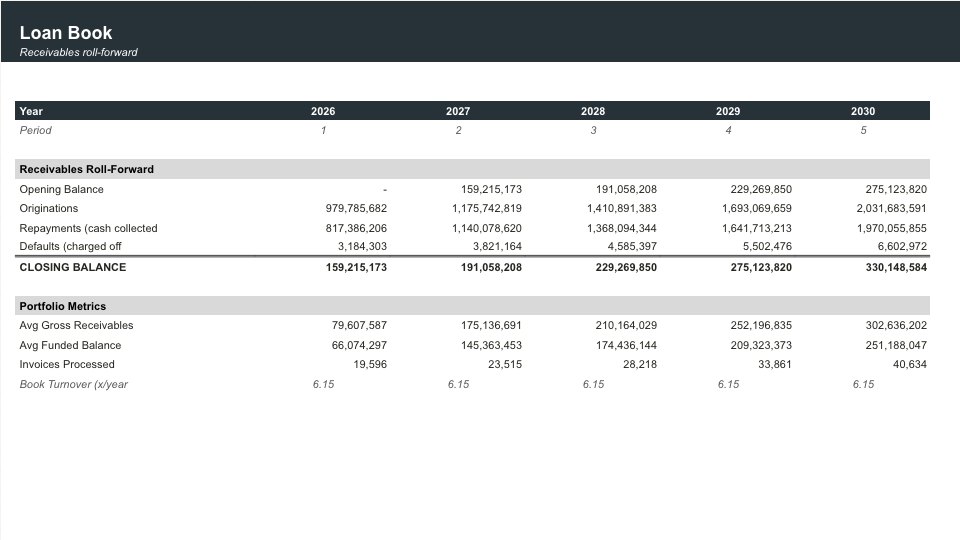
Model trade finance facilities with collateral coverage, payment terms, and default loss scenarios.
Commodity Provisional Pricing Settlement Workbook
Calculate the final invoice for copper concentrate lots from pricing windows, assays, payability, charges and penalties.
Food Manufacturing Model
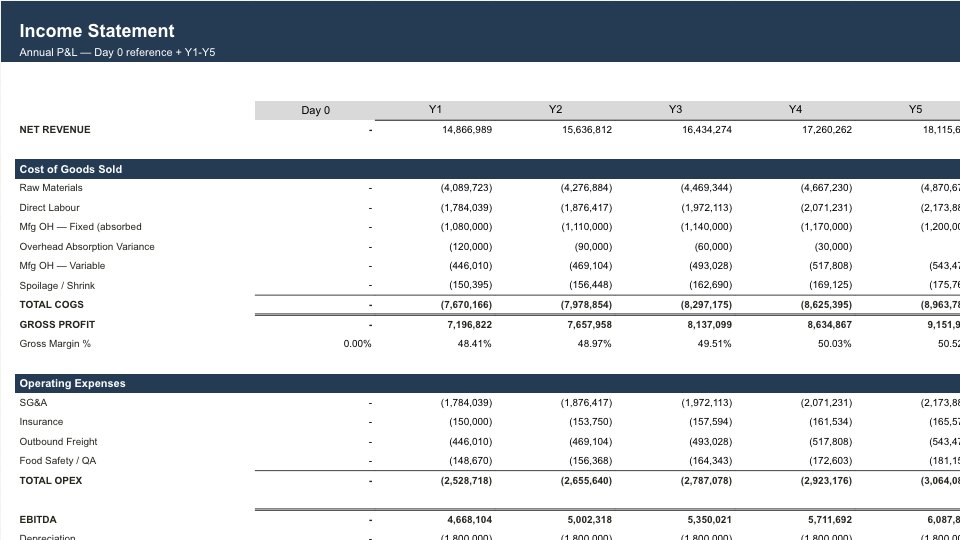
Operating model for food production and processing businesses with ingredient sourcing, production scheduling, and margin analysis.







