Hormel Foods (HRL) Financial Forecast Calculator
Interactive 5-year forecast and DCF for Hormel Foods. Adjust revenue growth, gross margin, capex intensity, WACC, and terminal growth - see revenue, free cash flow, and enterprise value update in real time. Seeded from Hormel Foods’s most recent SEC filings.
Assumptions
Need this as an Excel model?
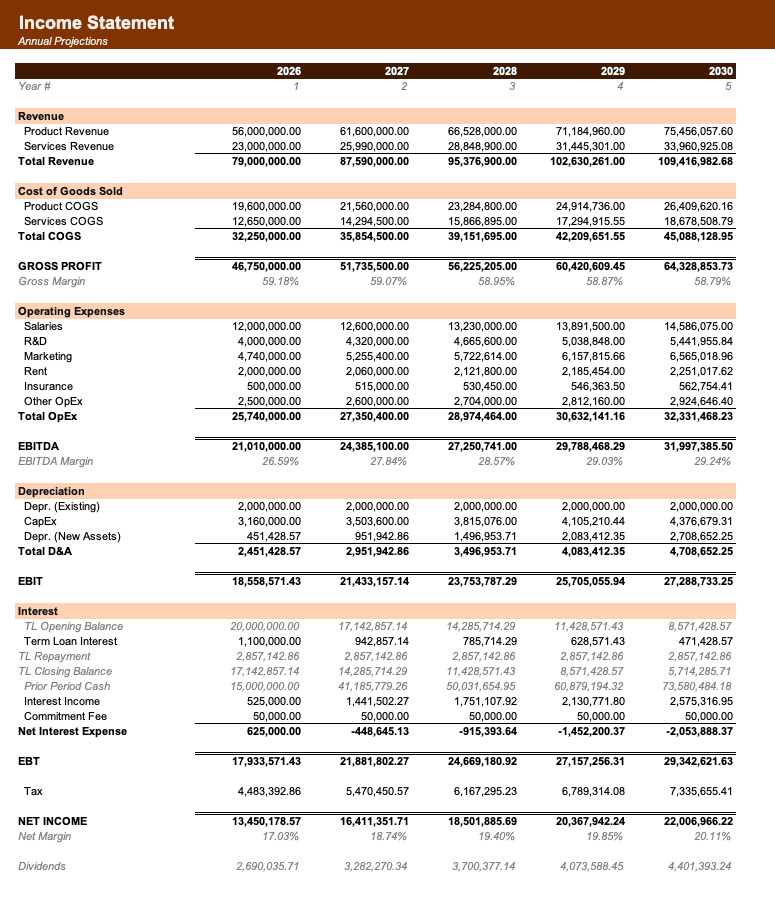
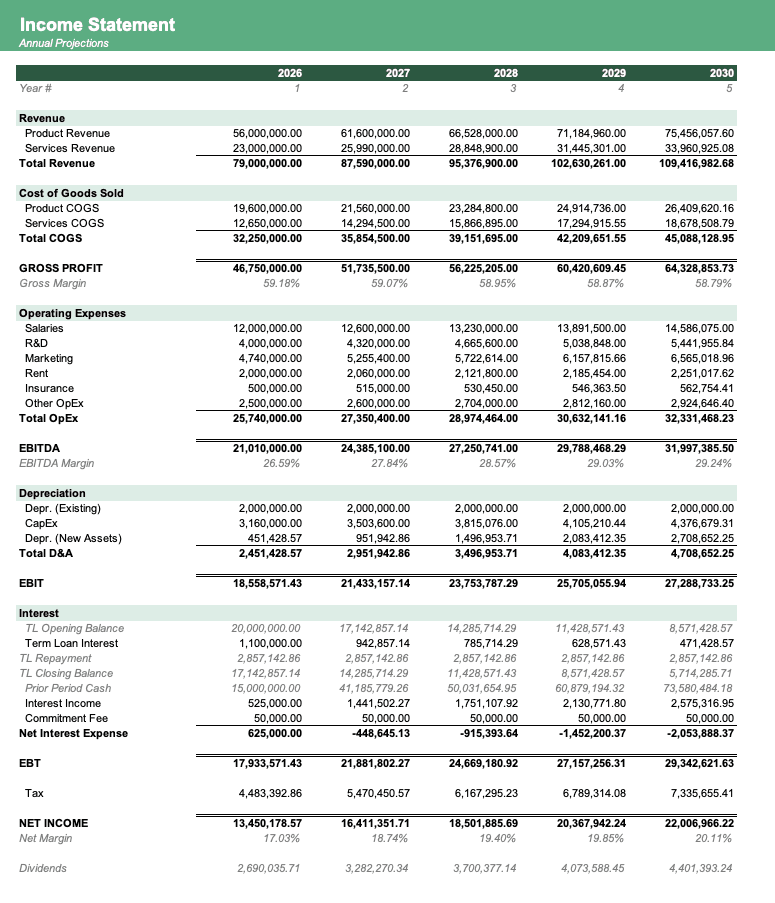
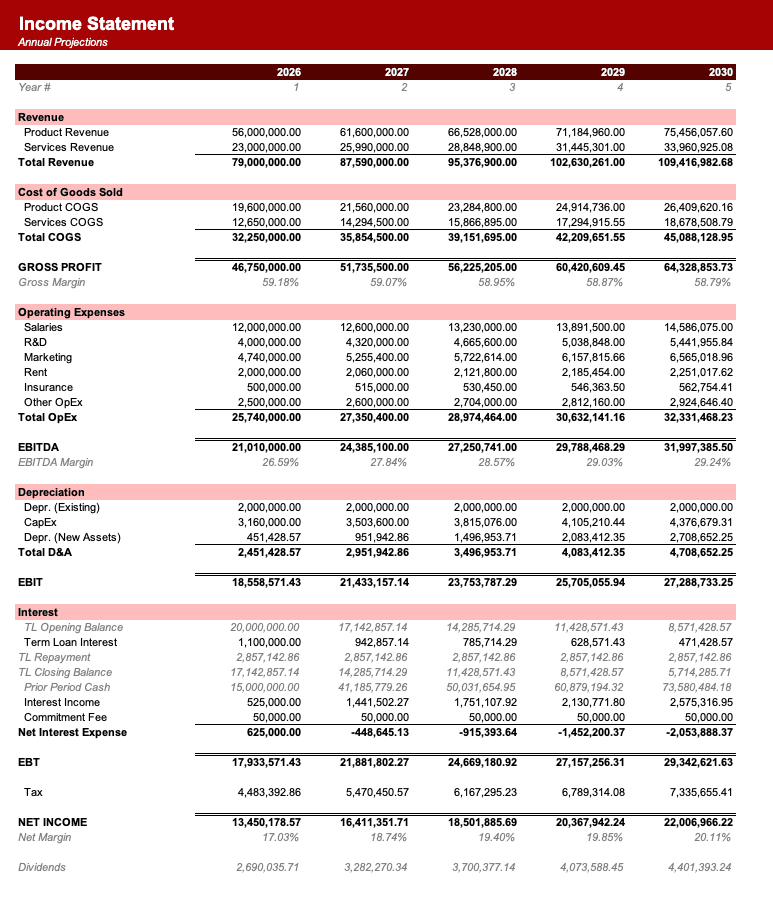
Keep iterating on the Hormel Foods forecast in Excel. The downloadable sample has every assumption you see here plus a fully integrated income statement, balance sheet, cash flow, and debt schedule - five years of SEC historicals and live formulas in a fully editable workbook.
Other Staples forecasts
Run the same calculator on a peer.

Frequently asked
What does Hormel Foods do?+
Hormel Foods is a global branded food company specializing in manufacturing and marketing high-quality, protein-centric products. Its offerings include fresh meats, frozen items, and shelf-stable foods, sold across Retail, Foodservice, and International segments. The company holds market leadership in over 40 retail categories with iconic brands like SPAM®, Planters®, and Skippy®.
How does Hormel Foods generate its revenue?+
Hormel Foods generates revenue primarily through its three business segments: Retail, which accounts for approximately 62% of net sales, Foodservice at about 30%, and International at around 8%. Sales are driven by a diverse portfolio of protein-centric products and well-known brands distributed globally, with a strong presence in the United States.
What are the key capital expenditure assumptions for Hormel Foods in a financial model?+
In a financial model, capital expenditure for Hormel Foods is typically assumed to be between 2.0% and 2.6% of revenue. This capex is generally split evenly between maintenance activities and growth initiatives. Growth capex is currently focused on expanding capacity for specific products like Fire Braised™ and Applegate®, as well as investments in automation and technology.
What are important considerations for valuing Hormel Foods using a DCF model?+
Key considerations for valuing Hormel Foods include assessing the impact of agricultural commodity cost inflation on margins, given its asset-heavy, manufacturing-based business model. Analysts also evaluate the sustainability of its long-standing dividend growth track record and consider the significant portion of goodwill and intangibles on its balance sheet, reflecting its history of strategic acquisitions.
Is there a downloadable financial model available for Hormel Foods?+
Yes, a comprehensive 3-statement forecast and valuation model for Hormel Foods (HRL) is available for download. This Excel model helps equity research analysts and portfolio managers determine the company's intrinsic value and analyze various financial aspects.
What is Hormel Foods' working capital profile?+
Hormel Foods maintains a positive working capital profile, indicating it requires capital to fund its operations, particularly inventory which includes live animals and products requiring aging processes. Key metrics include Days Sales Outstanding (DSO) of 20-25 days, Days Inventory Outstanding (DIO) of 60-70 days, and Days Payable Outstanding (DPO) of 30-40 days.
Have more financial modelling questions? Contact us