Celsius Network Financial Model
Crypto/Web3 Startup Financials (Free Excel Download)
Crypto lending and borrowing platform that pays depositors interest on their crypto holdings and charges borrowers a higher rate - the "unbank yourself" spread business.



professionals from Deloitte
Used by professionals from






About this model
Celsius Network was a crypto lending and borrowing platform built around a spread business: users deposited digital assets to earn yield, while borrowers paid a higher rate for credit. Its economics are closer to a specialty lender or digital bank than a transaction-only exchange.
The 2019 deck frames the proposition globally and provides no explicit series label, but its model requires careful treatment of crypto price exposure and liquidity. Deposits create the funding base; only the deployed portion earns borrower interest, while eligible depositor balances may carry interest expense.
Build a balance-sheet-led NIM waterfall: deposits and asset prices determine AUM, utilisation determines deployed capital, and borrower yield less depositor yield produces net interest income. Add loan losses, collateral and liquidity buffers, operating costs, and capital needs before EBITDA. Scenarios flex deposit growth, utilisation, rates, coin prices, defaults, and regulatory constraints.
A turnkey financial model
Live formulas, no hardcoded values
Outputs are driven by live formulas, so the workbook updates from its assumptions instead of relying on hardcoded results.
All assumptions in one tab
Inputs are clearly marked in the Assumptions tab and separated from calculations, making it clear what to change and what to leave intact.
Statements always balancing
For integrated-statement models, the balance sheet, cash flow, and supporting schedules tie through properly.
Distinct schedules for clarity
Debt, working capital, taxes, and cash flow can get messy quickly. We group calculations in clear schedules, not across disconnected tabs.
No hidden macros or external links
There are no unexplained external workbook links or macros to undermine auditability or portability.
Changes flow through the model
Update a key driver and see the impact carry through the forecast, financing, and return outputs. We never use hardcoded numbers in formulas.
About Celsius Network
celsius.network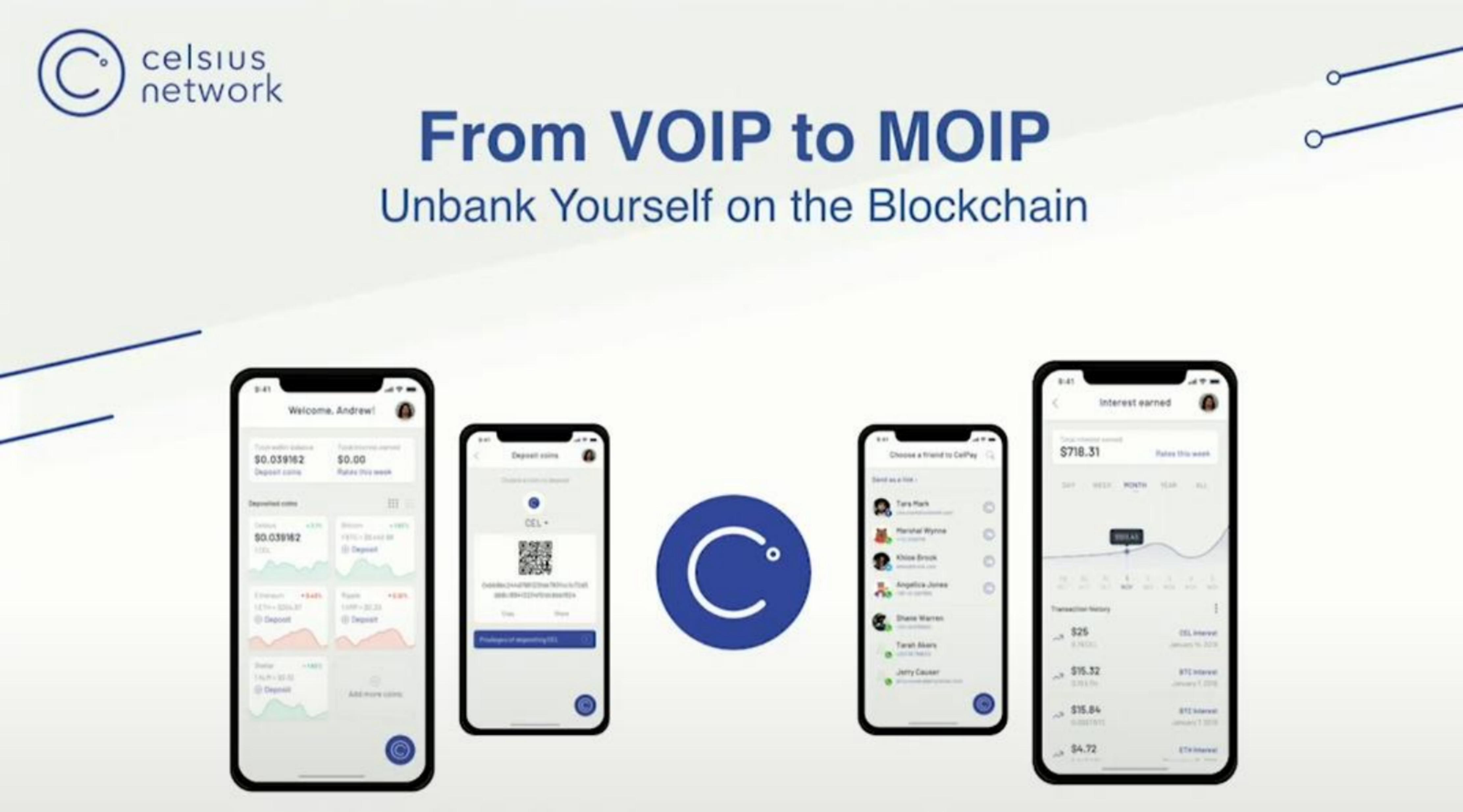
How to build a detailed financial model for Celsius Network
A complete walkthrough of the business, drivers, and assumptions behind the downloadable Celsius Network model - distilled from its pitch deck and publicly available information.
Product & value proposition
- Mobile wallet app (iOS/Android) where users deposit crypto assets and earn weekly interest paid in-kind (coins) or in CEL token
- Depositors earn 3–8% APY depending on asset
- Borrowers use crypto as collateral and take USD/fiat loans at 9% APR
- Platform token (CEL) confers deposit privileges and higher yield tiers
- CelPay: peer-to-peer coin transfers within the app
- Tagline: "From VOIP to MOIP" - positioning Celsius as the financial layer of blockchain analogous to how VoIP disrupted telephony
- Forbes named Celsius #3 "New Blockchain Company To Watch"
Market
- Crypto total market cap at time of deck: ~$500B
- Reference comparators to frame addressable financial markets:
- Gold Market Cap: $8.2T
- Physical Money: $31T
- Stock Markets: $80T
- All Liquid Money: $95T
- Bitcoin active addresses growing from ~10 per day in 2010 to ~1M+ by 2018 (log-scale)
- Total crypto wallets worldwide growing to ~28–30M as of most recent quarter shown, with peak market cap ~$600B
- World population wealth stratification cited: High Net Worth 52.5M (0.7%); Mass Affluent 592.5M (7.9%); Consuming Middle 1.6B (21.3%); Lower Class 5.2B (70.1%) - used to argue blockchain can serve the unbanked majority
- No explicit TAM/SAM/SOM framework or $ figure claimed for Celsius's own serviceable market
Revenue model
- Net Interest Margin: borrow coins from depositors at ~7% APY paid out, lend/deploy at ~9% APR charged to borrowers → ~200bps gross spread
- Deployment channels (slide 37):
- Lend to institutional traders / exchanges (GDax, Gemini, Kraken) to settle margin trades
- Lend to banks & financial institutions (Fidelity, Interactive Brokers) via escrow deposits
- Custodians (itBit) hold underlying coins
- Revenue = interest charged to borrowers minus interest paid to depositors, captured as the spread on AUM deployed
- CEL token: utility token that may confer fee discounts / higher yields - implicit demand driver for the CEL token, but token economics revenue not explicitly quantified in deck
- No fee revenue, trading revenue, or subscription revenue mentioned
Traction & metrics
All from slide 32 ("Celsius Network in 2019") and slide 31:
| Metric | Value | Source |
|---|---|---|
| Coin loan origination (cumulative) | +$1.2B | - |
| AUM | $200M | - |
| Users depositing more than once | 79% | - |
| Average deposits per user | 6.89x | - |
| Net positive deposit days | 93% (226 of 242 operating days) | - |
| Retention rate on top coins | Average 85% | - |
| App downloads | 65,000 in 9 months | - |
| Organic download rate | 90% | - |
Unit economics
- Deposit rate paid to lenders: ~7% (headline; actual varies by coin 3.00%–8.00%)
- Loan rate charged to borrowers: 9%
- Implied gross NIM: ~200bps on deployed capital
- 90% organic acquisition rate implies very low CAC
- Coin-level spread varies: stablecoin yields (USDC/TUSD/PAX) at 7.10%, BTC at 6.40%, ETH at 3.15% - stablecoins likely attract higher deposit rates because demand from borrowers is higher
Competition / moat
- Implicit competitive frame: banks pay depositors ~1% and charge 24% on credit cards; Celsius pays 7% and charges 9% - the value proposition IS the margin compression vs. TradFi
- No direct crypto competitor comparison table in deck
- Moat arguments made: community/network effects (CEL token, CelPay social graph), 90% organic growth, brand ("Unbank Yourself"), first-mover positioning as "killer app" for mass crypto adoption
- Blockchain inventor Scott Stornetta cited as advisor/partner - credibility signal
Team & funding ask / use of funds
- Team slide: Group photo only, no bios; CEO is Alex Mashinsky (founder of VOIP - referenced in narrative throughout deck)
- Blockchain Inventor Scott Stornetta highlighted as a key external figure
Recommended financial model
- Archetype + why: Crypto lending NIM / balance sheet model - analogous to a specialty finance company or digital bank. Core economics are driven by AUM (deposits), utilisation rate (% deployed as loans), gross spread (borrow rate minus deposit rate), and coin price exposure. A 3-statement model is secondary; the primary output is a NIM waterfall: AUM → Deployed Capital → Gross Interest Income → Interest Expense (depositor yield) → Net Interest Income → OpEx → EBITDA.
- Forecast horizon & granularity: 3 years monthly (2019–2022); monthly needed to capture AUM ramp, coin price volatility, and cohort retention dynamics. Add a quarterly summary view.
- Key drivers & assumptions:
| Driver | Seed value |
|---|---|
| Opening AUM | $200M |
| AUM growth rate (MoM) | 10–15% |
| Loan utilisation rate (AUM deployed as loans) | 60–75% |
| Gross loan yield (borrower rate) | 9.0% |
| Weighted avg deposit rate | 5.5–7.0% |
| Net Interest Margin | ~200–350bps |
| Coin price index (BTC proxy) | Mark-to-market |
| User retention (deposit repeat rate) | 79–85% |
| Avg deposits per user | 6.89x |
| CAC | $5–20 per user |
- Scenarios (Base / Bull / Bear - which variables flex):
- Base: AUM grows 10% MoM; utilisation 65%; NIM 200bps; BTC flat from 2019 levels
- Bull: AUM grows 20% MoM; utilisation 75%; NIM 250bps; BTC +50% tailwind inflating USD AUM
- Bear: AUM flat/declining (crypto bear market, like 2018 draw-down of 83–91% cited); utilisation 40%; NIM compresses to 150bps as depositor demand outstrips borrower demand; user redemptions spike
- Required sheets / outputs:
- Assumptions - all inputs in one place, clearly flagged vs
- AUM Build - monthly: opening AUM, net new deposits, withdrawals, coin price adjustment, closing AUM
- NIM Waterfall - gross interest income, interest expense, net interest income by month
- P&L - NII less OpEx (staff, custody fees, exchange fees, compliance, marketing) → EBITDA
- Cash / Liquidity - fiat cash position (USD), coin inventory, collateral escrow; basic liquidity buffer check
- Coin Mix Table - breakdown of AUM and deposit rates by coin (BTC, ETH, stablecoins, altcoins) to track blended yield
- Sensitivity - NIM vs AUM size; NIM vs crypto price (±20%, ±50%); NIM vs utilisation rate
- Dashboard - KPI summary: AUM, NII, NIM%, users, loan book, interest expense ratio
Frequently asked
Is the Celsius Network financial model free?+
Yes. The Celsius Network model is a free Excel (.xlsx) download with live formulas. Sign up with your email and the workbook is yours to keep, review, and edit.
What's included in the model?+
A 5-year monthly forecast with P&L, cash flow and runway, valuation (exit multiple plus a DCF cross-check), MOIC/IRR returns, and unit economics, with live formulas throughout.
How was this model built?+
It was built from Celsius Network's pitch deck and publicly available information, then structured to investment-banking standards as a fully editable Excel model.
Can I change the assumptions?+
Yes. You can change assumptions and the live formulas will recalculate in the downloadable Excel model.
Have more financial modelling questions? Contact us

Created by ex-finance professionals
Hey, I’m Alex and I created Finamodel.
Over my years in the finance industry I kept building the same models over and over again. Same structure, same assumptions, different logo. So I started building frameworks to turn them into clean, reusable templates.
Every model here is one I’d actually use for a client, and I personally vet each one before it goes up.
I’m not an expert in every industry, but I’ve built enough models to know what belongs in one. And when something is completely foreign to me, I reach out to my network for experts to work on our models with us.
Having a template library on hand cuts a first build from hours to minutes.
Need help finding your model? You’ll find me in the Finamodel app!
Other Crypto/Web3 Startup Financial Models
Browse another startup in the same category.

0x Labs
0x Labs builds open exchange infrastructure (protocol, API, consumer app) for on-chain token trading across multiple blockchains.

1inch Network
DeFi aggregation protocol that routes crypto swaps across 100+ liquidity sources to deliver best rates and lowest gas fees.

Aether
Synthetic biology platform that builds searchable protein indexes to engineer novel molecular assemblers for high-value industrial products.
Alto
Self-directed IRA platform enabling retail investors to invest in alternative assets (private equity, debt, real estate, crypto) via tax-advantaged retirement savings.
Auki Labs
Decentralized peer-to-peer spatial positioning SDK for social AR - building the infrastructure layer to replace GPS and enable a persistent AR metaverse.
Awesome People Ventures Fund 2
Awesome People Ventures is a community-driven, decentralized early-stage Web3 VC fund raising Fund II.

Axelar
Cross-chain blockchain overlay network enabling universal transfer of assets, transactions, and state across all blockchain ecosystems.
BRD
BRD is a non-custodial crypto wallet app (consumer) and blockchain infrastructure API platform (enterprise) targeting mass-market crypto adoption.