 Fnatic Financial Model
Media/Gaming Startup Financials (Free Excel Download)
Fnatic is a leading global esports organization that competes in top-tier games, sells performance gaming equipment, and partners with major consumer brands.



professionals from Deloitte






About this model
Fnatic is a global esports organisation that uses competitive performance to build a consumer and media brand. Its teams compete across League of Legends, CS:GO, Dota 2, FIFA, Fortnite, Rainbow 6, and PUBG Mobile, alongside Fnatic Gear hardware, apparel, and the Fnatic OP software platform.
Revenue is split among esports income, brand partnerships, consumer products, and digital services. Esports includes media rights, in-game items, and prize money; brands buy sponsorships and activations; products span performance equipment and apparel; digital covers game training, affiliates, and potential member subscriptions.
The organisation reports 15 years at the top, 370-plus medals, 209 championships, $15.7 million of prize money, 16 million social followers, and 73 million hours watched in 2019. The model should build each revenue stream separately, with inventory economics for products and player, coaching, content, and technology costs.
A turnkey financial model
Live formulas, no hardcoded values
Outputs are driven by live formulas, so the workbook updates from its assumptions instead of relying on hardcoded results.
All assumptions in one tab
Inputs are clearly marked in the Assumptions tab and separated from calculations, making it clear what to change and what to leave intact.
Statements always balancing
For integrated-statement models, the balance sheet, cash flow, and supporting schedules tie through properly.
Distinct schedules for clarity
Debt, working capital, taxes, and cash flow can get messy quickly. We group calculations in clear schedules, not across disconnected tabs.
No hidden macros or external links
There are no unexplained external workbook links or macros to undermine auditability or portability.
Changes flow through the model
Update a key driver and see the impact carry through the forecast, financing, and return outputs. We never use hardcoded numbers in formulas.
About Fnatic
fnatic.com
How to build a detailed financial model for Fnatic
A complete walkthrough of the business, drivers, and assumptions behind the downloadable Fnatic model - distilled from its pitch deck and publicly available information.
Product & value proposition
- Competitive esports teams across LoL, CS:GO, Dota 2, FIFA 21, Fortnite, Rainbow 6, PUBG Mobile.
- Fnatic Gear: performance hardware (mice, keyboards, headsets etc.) and pro/lifestyle apparel developed with pro players.
- Fnatic OP: software platform for equipment optimisation and game training.
- Streamer Affiliate Network: monetisation/community programme.
- Fnatic Members: community membership/subscription product (mentioned under Digital Ramp Up use of funds).
- Core value prop: world-class on-field performance ("Real Madrid of esports" - BBC) used to build brand equity that monetises across sponsorship, hardware, and digital.
Market
- 37% of global internet users are gamers in 2020.
- Gaming user DAUs 2020: YouTube 200M, Twitch 195M, Netflix 193M, HBO 133M, Spotify 100M, ESPN 91M, Hulu 21M.
- Global gaming revenue $146B vs. Television $94.2B, Films $43B, Music $20B.
- YouTube Gaming: 61B hours watched; Netflix: 58B hours watched.
- No explicit TAM/SAM/SOM breakdown or esports-specific market size given.
Revenue model
Four stated revenue streams:
| Stream | Sub-lines |
|---|---|
| Esports | Media rights, in-game items, prize money |
| Brands | Traditional sports sponsorships (logo placement), branded content, activations |
| Products | Pro wear, lifestyle apparel, performance esports equipment (Fnatic Gear) |
| Digital | Game training, Fnatic OP (equipment enhancement software), streamer affiliate network |
- Products sold D2C (implied; no channel breakdown or pricing given).
- Brand partnerships are B2B deals; partners listed include AMD, OnePlus, Monster Energy, BMW, Hisense, Pari Match, Just Eat, Twitch, PC Specialist; campaign clients include Gucci, Nike, UNICEF, Jack Links, Bud Light.
- No revenue figures, contract values, deal counts, or pricing disclosed.
Traction & metrics
- 15 years at the top.
- 370+ medal wins.
- 30 titles since inception.
- 209 championships.
- $15.7M total prize money won.
- 16M total social followers.
- 73M hours watched in 2019 (Fnatic across League of Legends Majors).
- #1 most popular team by average concurrent viewers in LoL EU LEC 2019: 262k avg viewers vs. G2 Esports 256k.
- No revenue, ARR, GMV, or customer count figures disclosed.
Competition / moat
- Competitor context implied by viewership ranking: G2 Esports, Team Liquid, TSM, Cloud9, Origen, Splyce, Team Vitality, SK Gaming, Misfits.
- Moat articulated as: 15-year track record of competitive dominance; brand prestige cited by BBC and Forbes; breadth of titles and geographies; unique Digital + Products revenue layer claimed as "unique in esports".
- No structured competitive analysis or market-share data presented.
Team & funding ask / use of funds
- No founding team bios, management roster, or headcount shown.
- No raise amount or valuation stated.
- Use of funds (4 priorities):
- Excellence in Performance - talent development team, academies, facilities (Berlin next).
- Digital Ramp Up - Fnatic Members community deepening; Fnatic OP tools.
- In-House Studio - content agency capability; marketing production.
- Expansion - new game titles and franchise opportunities globally; Rainbow 6 team relocation to Japan.
Recommended financial model
- Archetype + why: Multi-segment esports operating P&L - four-stream revenue model (Esports / Brands / Products / Digital) rolling into a consolidated P&L. Not a pure SaaS or marketplace; closest to a sports/media holding company with a consumer hardware arm. Products segment warrants a DTC inventory sub-model (COGS, gross margin). Brands segment is project/deal-based revenue. Digital segment has subscription/SaaS characteristics (Fnatic OP, Members) but no metrics provided to size it independently.
- Forecast horizon & granularity: 3–5 years annual with Year 1 monthly (to track near-term fundraise deployment). Segments modelled separately; consolidated P&L as output.
- Key drivers & assumptions:
*Esports segment*
- Media rights revenue per year
- In-game items revenue
- Prize money]
- Number of active titles/teams]
*Brands segment*
- Number of active brand partnerships]
- Average deal value per sponsor
- Campaign/activation revenue (project-based)
*Products segment*
- SKU count and average selling price
- Units sold per year
- Gross margin on hardware
- Apparel gross margin
- COGS: manufacturing + fulfilment
*Digital segment*
- Fnatic Members subscribers
- Monthly subscription price
- Fnatic OP users / monetisation model
- Streamer affiliate network GMV and commission rate
*Opex*
- Player salaries + coaching staff
- Content / studio costs
- G&A, tech, facilities
- Scenarios (Base / Bull / Bear - which variables flex):
- Base: steady brand deals growth, Products hitting £5–10M revenue in Year 2, Digital subscriptions nascent.
- Bull: major franchise slot acquired (e.g., LEC franchise), Products scales to £20M+, Fnatic OP achieves meaningful paid user base.
- Bear: prize money/media rights disappoint, brand deals churn, hardware margin compressed by supply chain.
- Flex variables: brand deal count & ASP, Products units/margin, Fnatic OP subscriber count, player salary inflation.
- Required sheets / outputs:
- Assumptions & Drivers (central input page)
- Esports Revenue Schedule (titles × media rights + prize money)
- Brands Revenue Schedule (deal count × ASP × campaign project revenue)
- Products P&L (DTC: revenue, COGS, gross profit by category - hardware / apparel)
- Digital Revenue Schedule (Members subs + Fnatic OP + affiliate network)
- Consolidated Income Statement (3–5 year)
- Headcount & Opex Schedule
- Cash Flow & Runway (important given fundraise context)
- Scenario toggle (Base / Bull / Bear)
- KPI Dashboard (social followers growth, hours watched, partner count, product revenue)
Frequently asked
Is the Fnatic financial model free?+
Yes. The Fnatic model is a free Excel (.xlsx) download with live formulas. Sign up with your email and the workbook is yours to keep, review, and edit.
What's included in the model?+
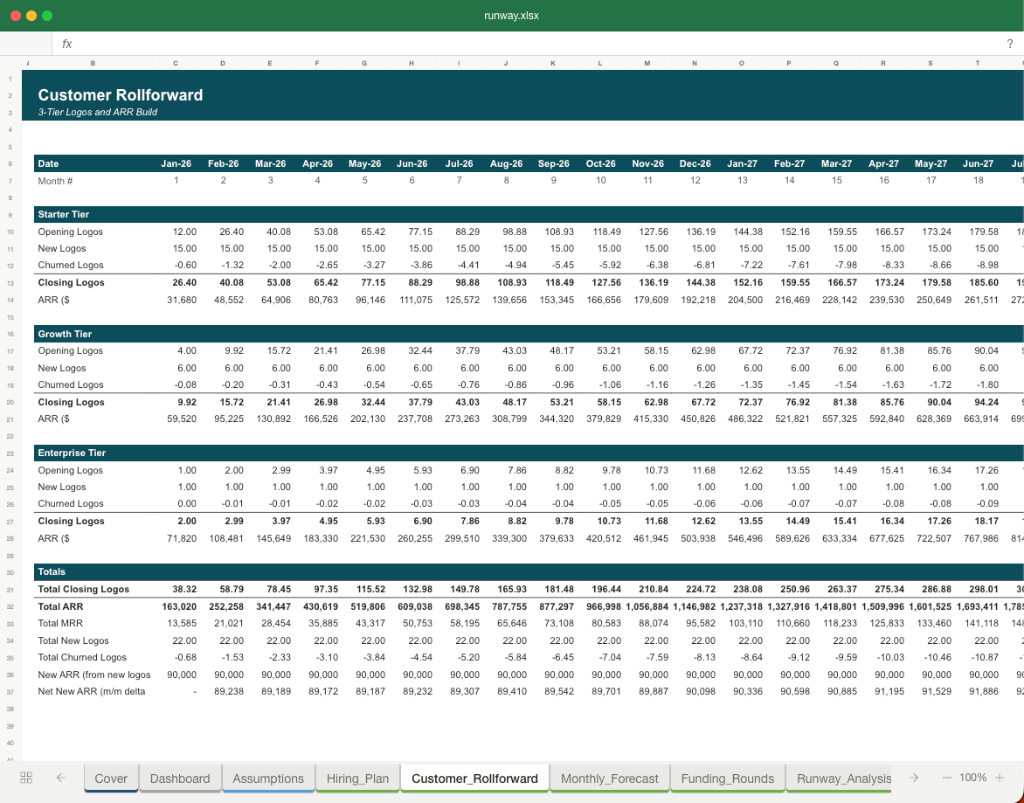
A 5-year monthly forecast with P&L, cash flow and runway, valuation (exit multiple plus a DCF cross-check), MOIC/IRR returns, and unit economics, with live formulas throughout.
How was this model built?+
It was built from Fnatic's pitch deck and publicly available information, then structured to investment-banking standards as a fully editable Excel model.
Can I change the assumptions?+
Yes. You can change assumptions and the live formulas will recalculate in the downloadable Excel model.
Have more financial modelling questions? Contact us

Created by ex-finance professionals
Hey, I’m Alex and I created Finamodel.
Over my years in the finance industry I kept building the same models over and over again. Same structure, same assumptions, different logo. So I started building frameworks to turn them into clean, reusable templates.
Every model here is one I’d actually use for a client, and I personally vet each one before it goes up.
I’m not an expert in every industry, but I’ve built enough models to know what belongs in one. And when something is completely foreign to me, I reach out to my network for experts to work on our models with us.
Having a template library on hand cuts a first build from hours to minutes.
Other Media/Gaming Startup Financial Models
Browse another startup in the same category.
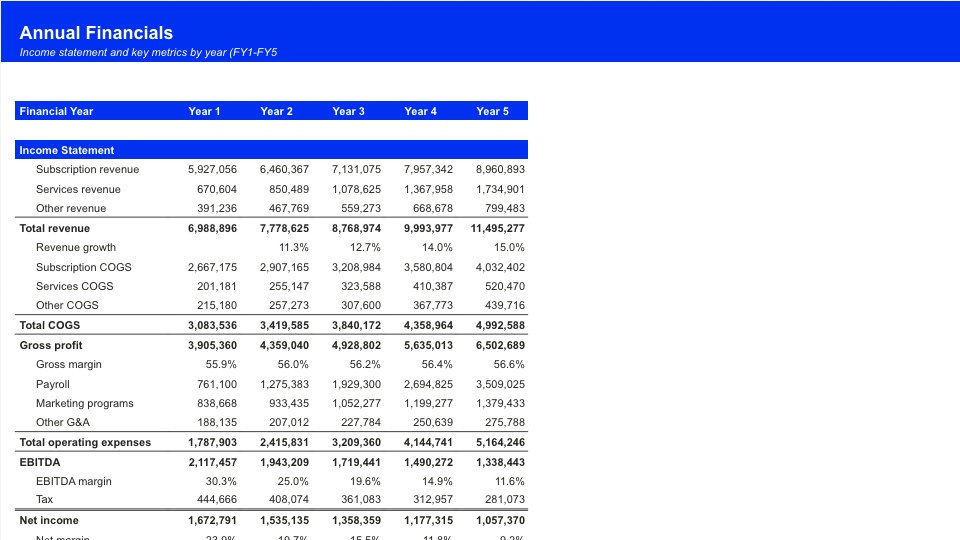

Almost Friday
Almost Friday is a multi-platform comedy/lifestyle media brand built around the "Friday Beers" universe, monetising through apparel, brand partnerships, events, podcasts, and music.
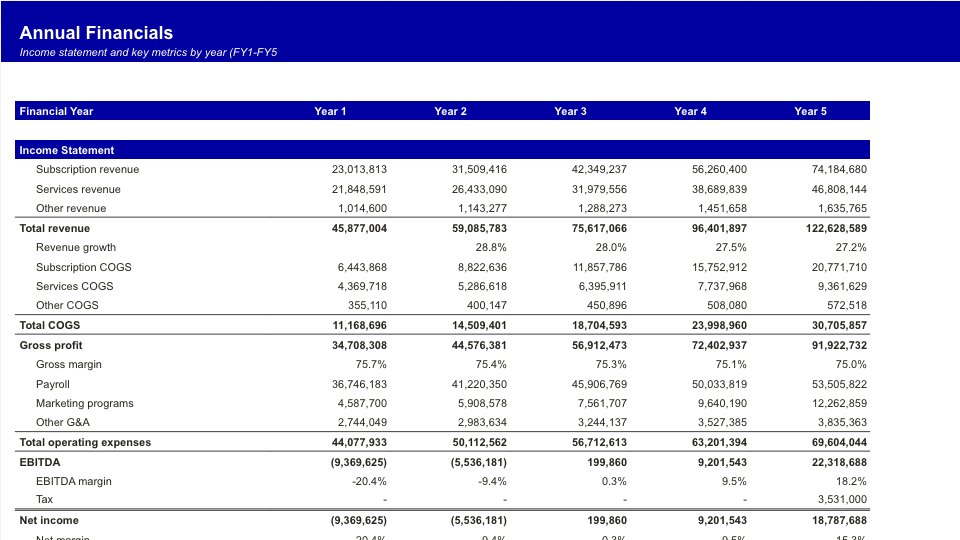

Amagi
Cloud-native SaaS platform for TV/OTT channel creation, distribution, and ad monetization (FAST-focused)
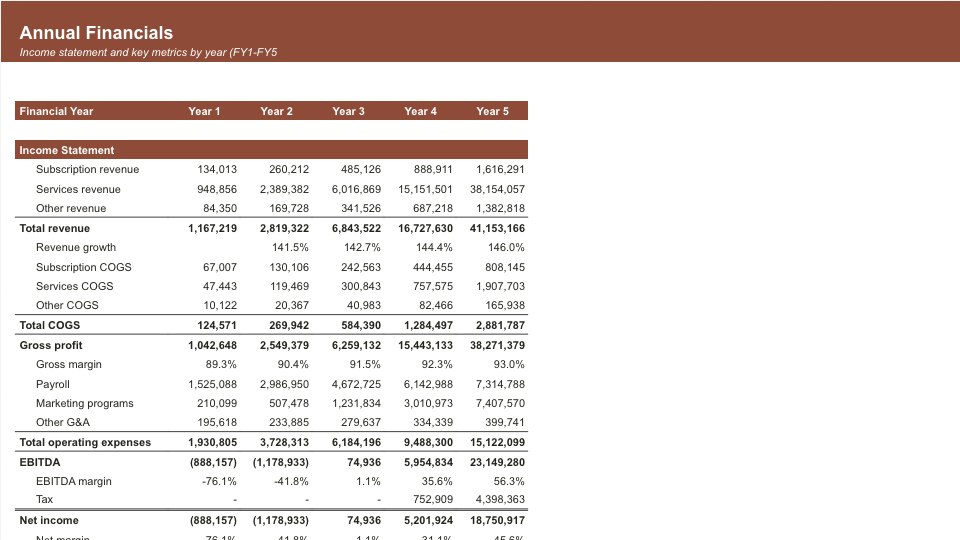

Audoo
IoT + SaaS platform that captures real-time public music performance data and reports it to Performing Rights Organisations (PROs) to enable accurate royalty distribution.
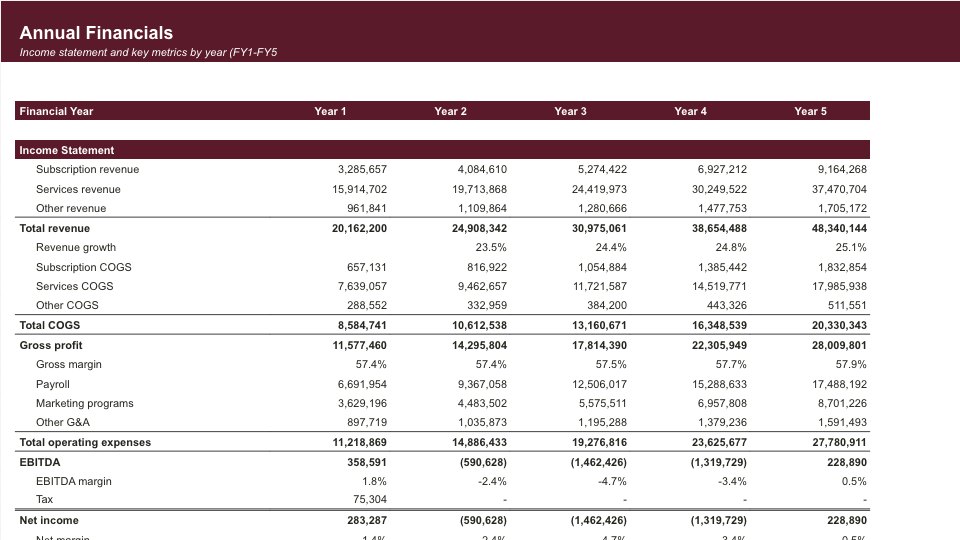
Backbone
Backbone makes a mobile gaming controller (hardware) + unified software platform (Backbone app) that aggregates all game streaming services in one place.
Beacon Pines
Beacon Pines is a cute-and-creepy narrative adventure game set inside a magical storybook, developed by indie studio Hiding Spot Games.
Bear and Breakfast
A management/adventure video game where you play as a bear running a B&B cabin in the woods.
Bioshock
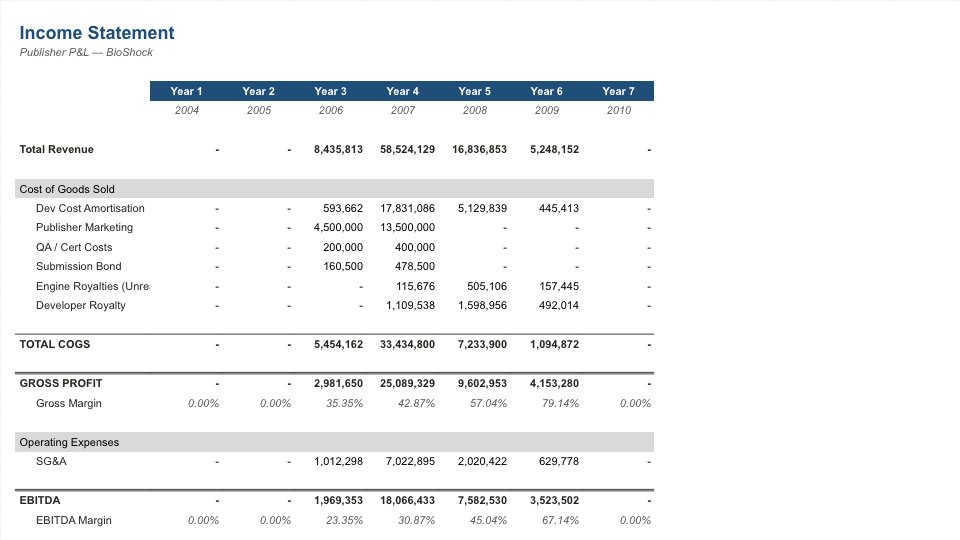
BioShock is a first-person action horror game pitched to a publisher for development funding - a game-development studio deal, not an operating startup.

Button City 2018
Indie narrative adventure game about cute animal kids saving their local arcade, targeting console and PC.