 Grin Financial Model
Media/Gaming Startup Financials (Free Excel Download)
End-to-end SaaS workflow platform for e-commerce brands to manage influencer marketing programs



professionals from Deloitte
Used by professionals from






About this model
GRIN is an end-to-end SaaS platform for e-commerce brands running influencer programmes. It combines creator prospecting, talent CRM, contracts, compliance, product fulfilment, payroll, and tax workflows, while measuring content, spend, conversions, revenue, and ROI by influencer.
The company explicitly positions itself as SaaS rather than an influencer marketplace or affiliate network. Brands pay recurring subscriptions, although the research does not disclose price tiers, seats, or creator fees. Its direct sales motion targets e-commerce marketing teams managing advocates, influencers, partners, and customers.
The platform tracks 35,980,186 influencers and identifies more than one million Shopify stores as its addressable merchant base; MVMT and Darn Good Yarn are named customers. Because the ARR chart is redacted, the model should use a standard new-logo, ACV, expansion, churn, and gross-margin waterfall rather than a GMV take-rate build.
A turnkey financial model
Live formulas, no hardcoded values
Outputs are driven by live formulas, so the workbook updates from its assumptions instead of relying on hardcoded results.
All assumptions in one tab
Inputs are clearly marked in the Assumptions tab and separated from calculations, making it clear what to change and what to leave intact.
Statements always balancing
For integrated-statement models, the balance sheet, cash flow, and supporting schedules tie through properly.
Distinct schedules for clarity
Debt, working capital, taxes, and cash flow can get messy quickly. We group calculations in clear schedules, not across disconnected tabs.
No hidden macros or external links
There are no unexplained external workbook links or macros to undermine auditability or portability.
Changes flow through the model
Update a key driver and see the impact carry through the forecast, financing, and return outputs. We never use hardcoded numbers in formulas.
About Grin
grin.co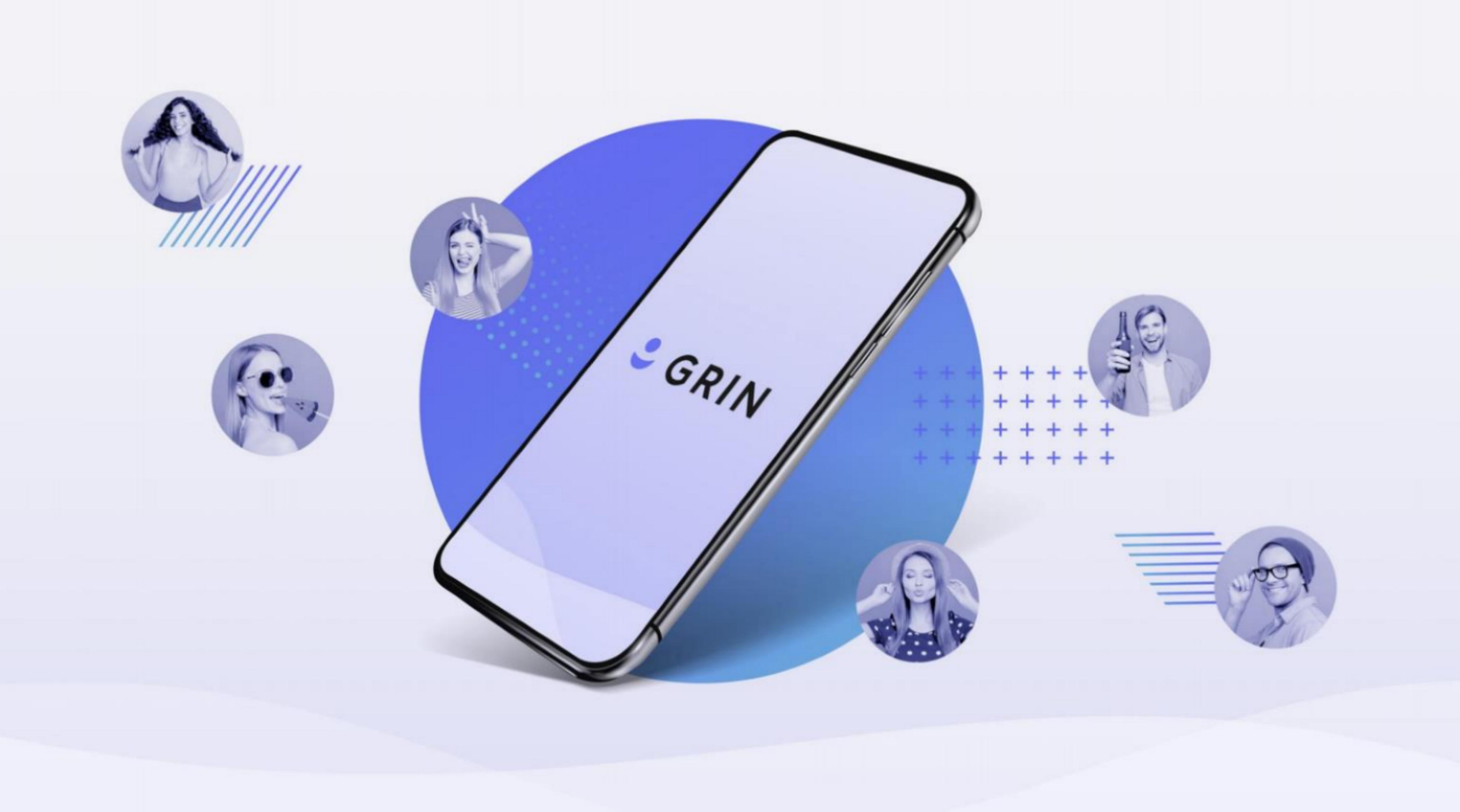
How to build a detailed financial model for Grin
A complete walkthrough of the business, drivers, and assumptions behind the downloadable Grin model - distilled from its pitch deck and publicly available information.
Product & value proposition
- End-to-end influencer marketing workflow platform for e-commerce brands
- Modules: Prospecting & Recruitment, CRM for Talent Management, Contract Management, Security & Compliance, Product Fulfillment, Payroll & Taxes
- Tracks per-influencer metrics: content count, spend, revenue, conversions, revenue ROI
- Manages four creator tiers: Advocates, Influencers, Partners, Customers
- Positioning: "We are not an influencer marketplace or an affiliate network. We are SaaS."
- Pain addressed: chaotic outreach, siloed Google Sheets, one-off payments, manual product shipments
Market
- Market indicator: 1M+ Shopify merchants as of 2019 Q4 (shown on chart, exponential growth curve from ~50k in 2012 Q4)
- Additional e-commerce platforms cited as coverage targets: Salesforce Commerce Cloud, Magento, WooCommerce
- Influencer pool on platform: 35,980,186 creators tracked across Instagram, YouTube, TikTok
- Market thesis: e-commerce brand proliferation is accelerating; consumers prefer small/independent brands
Revenue model
- B2B SaaS subscription - ARR-based
- No pricing tiers, seat counts, or per-influencer fees disclosed in deck
- Sales motion: direct sales to e-commerce brand marketing teams
- Likely per-seat or per-brand-subscription pricing, common for enterprise MarTech SaaS at this stage
Traction & metrics
- Influencer pool tracked on platform: 35,980,186
- 1M+ Shopify stores cited as the addressable merchant base
- Named customers: MVMT, Darn Good Yarn
- ARR chart shows 5-year projection bar chart (2020–2024) with a steeply ascending trajectory, but all Y-axis values are redacted ($XXXM)
- No current ARR, MRR, customer count, churn, or NRR figures disclosed
Competition / moat
- Self-described as first-mover in e-commerce with "significant lead on platform coverage and workflow automation"
- First-mover in emerging social platforms: TikTok integration, Twitch integration, Instagram Story support
- Moat framing: breadth of e-commerce platform integrations (Shopify, Magento, WooCommerce, Salesforce) + creator CRM depth
- Competitors not named; deck deliberately distances GRIN from influencer marketplaces and affiliate networks
Team & funding ask / use of funds
- Use of proceeds (3 priorities):
- Sales & marketing
- Product & Engineering
- Category Narrative
Recommended financial model
- Archetype + why: SaaS ARR model. GRIN is explicitly self-described as SaaS with an ARR-framed projection slide. Revenue driver is subscription fees from e-commerce brands, not GMV or take-rate. The right archetype is a standard ARR waterfall (new ARR, expansion ARR, churned ARR → ending ARR) feeding a P&L.
- Forecast horizon & granularity: 5-year annual (2020–2024, matching the deck's projection slide), with monthly granularity in Year 1 for cash planning given the fundraise context.
- Key drivers & assumptions:
- New logo additions per year
- Average Contract Value (ACV) per customer
- Net Revenue Retention (NRR)
- Gross churn rate
- Gross margin
- Sales & Marketing as % of revenue
- R&D as % of revenue
- G&A as % of revenue
- Ending ARR 2020–2024 from visual proportions only]
- Scenarios (Base / Bull / Bear - which variables flex):
- Bear: lower new logo additions, ACV at low end (~$18k), NRR 105%, gross churn 18%
- Base: mid-range new logos, ACV ~$24k, NRR 115%, gross churn 12%
- Bull: faster new logo ramp, ACV ~$30k (larger brand penetration), NRR 125%, gross churn 8%
- Required sheets / outputs:
- Assumptions - all drivers with scenario toggles
- ARR Waterfall - beginning ARR, new ARR, expansion, churn, ending ARR by period
- P&L - revenue, COGS, gross profit, S&M, R&D, G&A, EBITDA, net income
- Headcount - sales, engineering, G&A by year (linking to opex)
- Cash Flow / Runway - operating cash flow, capex, fundraise timing
- Dashboard - ending ARR by year (matching deck chart), key SaaS KPIs (NRR, LTV/CAC, magic number)
Frequently asked
Is the Grin financial model free?+
Yes. The Grin model is a free Excel (.xlsx) download with live formulas. Sign up with your email and the workbook is yours to keep, review, and edit.
What's included in the model?+
A 5-year monthly forecast with P&L, cash flow and runway, valuation (exit multiple plus a DCF cross-check), MOIC/IRR returns, and unit economics, with live formulas throughout.
How was this model built?+
It was built from Grin's pitch deck and publicly available information, then structured to investment-banking standards as a fully editable Excel model.
Can I change the assumptions?+
Yes. You can change assumptions and the live formulas will recalculate in the downloadable Excel model.
Have more financial modelling questions? Contact us

Created by ex-finance professionals
Hey, I’m Alex and I created Finamodel.
Over my years in the finance industry I kept building the same models over and over again. Same structure, same assumptions, different logo. So I started building frameworks to turn them into clean, reusable templates.
Every model here is one I’d actually use for a client, and I personally vet each one before it goes up.
I’m not an expert in every industry, but I’ve built enough models to know what belongs in one. And when something is completely foreign to me, I reach out to my network for experts to work on our models with us.
Having a template library on hand cuts a first build from hours to minutes.
Need help finding your model? You’ll find me in the Finamodel app!
Other Media/Gaming Startup Financial Models
Browse another startup in the same category.
Almost Friday
Almost Friday is a multi-platform comedy/lifestyle media brand built around the "Friday Beers" universe, monetising through apparel, brand partnerships, events, podcasts, and music.

Amagi
Cloud-native SaaS platform for TV/OTT channel creation, distribution, and ad monetization (FAST-focused)

Audoo
IoT + SaaS platform that captures real-time public music performance data and reports it to Performing Rights Organisations (PROs) to enable accurate royalty distribution.
Backbone
Backbone makes a mobile gaming controller (hardware) + unified software platform (Backbone app) that aggregates all game streaming services in one place.
Beacon Pines
Beacon Pines is a cute-and-creepy narrative adventure game set inside a magical storybook, developed by indie studio Hiding Spot Games.
Bear and Breakfast
A management/adventure video game where you play as a bear running a B&B cabin in the woods.
Bioshock
BioShock is a first-person action horror game pitched to a publisher for development funding - a game-development studio deal, not an operating startup.

Button City 2018
Indie narrative adventure game about cute animal kids saving their local arcade, targeting console and PC.


