 Netmaker Financial Model
Hardware/Deep-tech Startup Financials (Free Excel Download)
WireGuard-based overlay networking platform that lets teams securely connect devices across clouds, data centers, and edge environments without managing hardware.



professionals from Deloitte






About this model
Netmaker provides WireGuard-based overlay networking across clouds, data centres, and edge environments. It lets teams securely connect devices without managing physical networking hardware, positioning the product as software infrastructure for distributed environments that need secure, manageable connectivity.
The business is recurring software with usage signals. Organisations can begin with a limited network and expand through connected nodes, environments, and enterprise controls, while the technical value depends on reliable deployment, integrations, security, and support rather than simply adding seats.
Model organisations, connected nodes, subscription tiers, usage, expansion, renewals, and churn. Include cloud delivery, support, security engineering, integrations, product development, and sales costs. Node growth, enterprise conversion, pricing, infrastructure efficiency, expansion, and net retention should determine scenarios.
A turnkey financial model
Live formulas, no hardcoded values
Outputs are driven by live formulas, so the workbook updates from its assumptions instead of relying on hardcoded results.
All assumptions in one tab
Inputs are clearly marked in the Assumptions tab and separated from calculations, making it clear what to change and what to leave intact.
Statements always balancing
For integrated-statement models, the balance sheet, cash flow, and supporting schedules tie through properly.
Distinct schedules for clarity
Debt, working capital, taxes, and cash flow can get messy quickly. We group calculations in clear schedules, not across disconnected tabs.
No hidden macros or external links
There are no unexplained external workbook links or macros to undermine auditability or portability.
Changes flow through the model
Update a key driver and see the impact carry through the forecast, financing, and return outputs. We never use hardcoded numbers in formulas.
About Netmaker
netmaker.io
How to build a detailed financial model for Netmaker
A complete walkthrough of the business, drivers, and assumptions behind the downloadable Netmaker model - distilled from its pitch deck and publicly available information.
Product & value proposition
- Netmaker creates virtual mesh VPNs using kernel WireGuard, connecting IoT, office, AWS, data center, and edge nodes through a single platform
- Admin UI manages networks; machines join with keys and are kept in sync via a Netmaker server (gRPC + CoreDNS + SQL config store); external clients hook in through an ingress gateway
- Key differentiators: true mesh topology, kernel WireGuard (>90% speed of direct unencrypted connections), infrastructure-focused (vs. device-focused peers)
- Comparison matrix claims Netmaker is the only player ticking all four boxes: mesh VPNs, kernel WireGuard, infrastructure config, and >90% direct-speed
Market
- TAM: Cloud Computing $1,000B
- SAM: Cloud Networking $60B
- SOM: Secure Cloud Overlay $3.6B
- No CAGR or growth rate cited for any tier.
- No SOM capture % or penetration model shown.
Revenue model
- Open Core Model:
- Phase 1 (current at time of deck): Source-available, self-hosted - free; focus on adoption and 1.0 launch
- Phase 2 (next): Closed-source Pro version targeting SMBs and Enterprises; pricing redacted in deck
- Phase 3: SaaS offering (beta Q1 2023, release Q2 2023 per roadmap)
- Customer segments: SMBs and Enterprises
- Pricing: SMB spend of/year; Enterprise spend of/year - actual figures not readable
- Channels: product-led / community-led growth (GitHub stars, community forum, open-source adoption) feeding into paid conversion
Traction & metrics
- 10,000+ devices in active use
- 1,400+ production platforms
- 50% MoM growth for 6 consecutive months
- 1,000 community members
- 5,500 GitHub stars
- #3 fastest growing startup on GitHub in Q1 2022 (source: Runa Capital ROSS Index Q1-2022)
- Revenue: $0 at time of deck (pre-monetisation; open-source / free only)
- MRR target by end of 2023: - exact number not visible; achieved via 150 SMBs + 5 Enterprises
Unit economics
- Implied unit structure: per-customer annual subscription (SMB tier and Enterprise tier)
Competition / moat
- Named competitors: Tailscale, Defined Networking (Nebula), Aviatrix
- Moat claims: only solution combining mesh VPN + kernel WireGuard + infrastructure-grade config + >90% raw throughput
- Open-source community flywheel (5.5k GitHub stars, #3 GitHub growth ranking) cited as distribution advantage
- WireGuard protocol lock-in creates some switching friction once deployed
Team & funding ask / use of funds
- Co-founders: Alex and Dillon (both technical); previously worked together at IBM; managed multi-cloud and Kubernetes teams; helped secure millions in enterprise deals
- Legal entity: GRyvTL, Inc.
Recommended financial model
- Archetype + why: Open-core SaaS ARR model. Revenue is zero now but clearly structured as a two-tier recurring subscription (SMB / Enterprise) transitioning to SaaS. The right model is a bottom-up ARR build with cohort-level customer additions and ACV assumptions, flowing through to MRR/ARR waterfall, gross margin, and a cash burn / runway schedule. No hardware, no marketplace GMV, no inventory - pure software subscription.
- Forecast horizon & granularity: Monthly for 2022–2024 (36 months), rolling to quarterly for 2025. Deck is dated 2022 with a 2023 MRR target already stated, so monthly granularity matters for the near-term ramp.
- Key drivers & assumptions:
- Production platforms at deck date: 1,400
- Device count: 10,000+
- MoM platform growth rate: 50% for prior 6 months; decelerates to 15% MoM by end of 2022 and 5% MoM by end of 2023 as base matures
- Free-to-paid conversion rate: 2–5% of production platforms convert to paid SMB in first 12 months post-monetisation; standard OSS industry range
- SMB ACV: ~$1,200–$3,600/year (i.e. $100–$300/month); actual redacted, use as a sensitivity lever
- Enterprise ACV: ~$24,000–$60,000/year; actual redacted, use as a sensitivity lever
- 2023-end customer mix: 150 SMBs + 5 Enterprises; back-solve ACV from redacted MRR target once known
- Gross margin: 75–85%; typical infrastructure SaaS (cloud hosting + support costs only)
- Headcount / opex: 2 founders + small team; model as a simple headcount-driven burn with standard SaaS comp ratios
- CAC: very low near-term (PLG / community-led); $500–$2,000 per SMB, $5,000–$15,000 per Enterprise - sensitivity lever
- Churn: 5–10% annual logo churn for SMB; 2–5% for Enterprise - standard B2B SaaS benchmarks
- SaaS transition timing: Q2 2023
- Scenarios (Base / Bull / Bear - which variables flex):
- Base: 50% MoM platform growth decelerates to 5% by mid-2023; 3% free-to-paid conversion; SMB ACV $2,400/yr; Enterprise ACV $36,000/yr; 8% annual churn
- Bull: Growth holds at 20% MoM through Q3 2022; 5% conversion; ACV at upper range; enterprise logos scale to 15 by end 2023
- Bear: Growth slows sharply post-1.0 launch; 1% conversion; SaaS launch delayed to Q4 2023; ACV at lower range; 15% churn
- Required sheets / outputs:
- Assumptions dashboard (all levers in one place, colour-coded)
- Platform growth model (monthly: free installs → production platforms → paid conversions, by SMB/Enterprise)
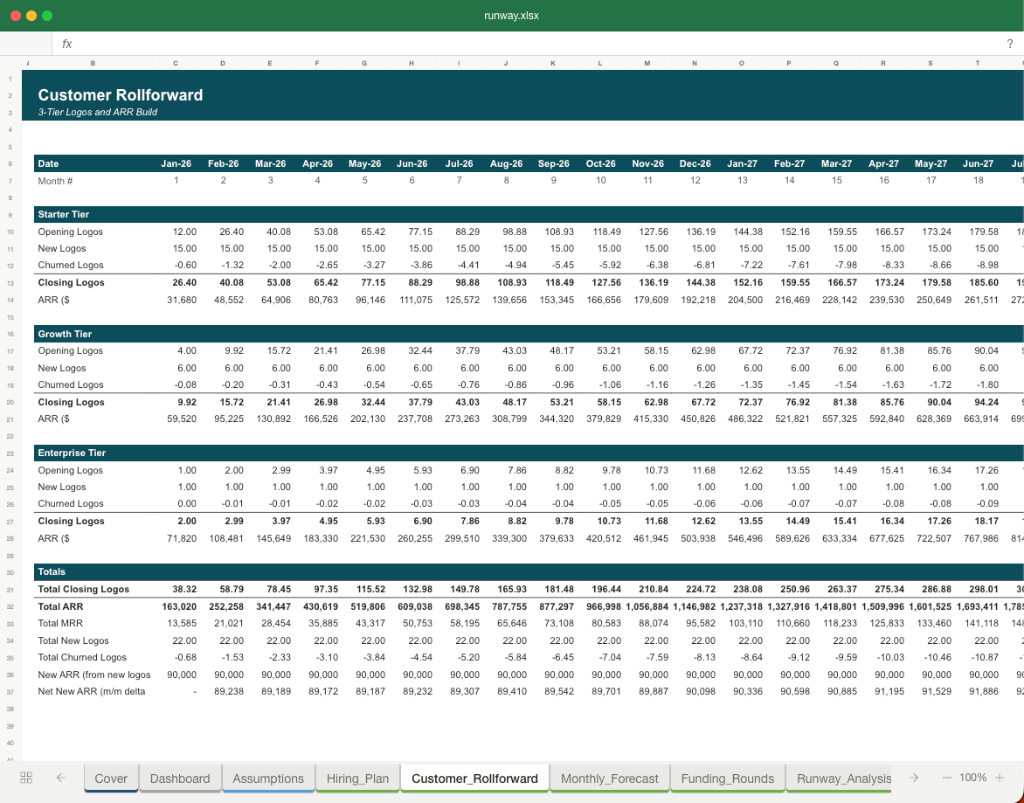
- ARR waterfall (new ARR, expansion, churn, net new ARR, ending ARR)
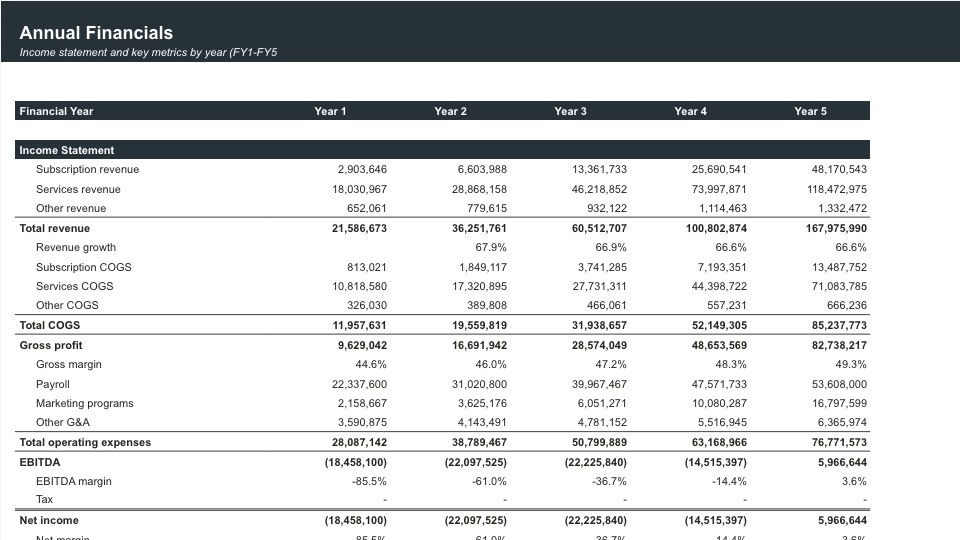
- P&L (revenue, COGS, gross profit, S&M, R&D, G&A, EBITDA)
- Cash burn & runway (monthly cash out, cumulative burn, months of runway given raise)
- Scenario toggle (Base / Bull / Bear)
- KPI summary (MRR, ARR, customers, ARPU, LTV/CAC, gross margin, runway)
Frequently asked
Is the Netmaker financial model free?+
Yes. The Netmaker model is a free Excel (.xlsx) download with live formulas. Sign up with your email and the workbook is yours to keep, review, and edit.
What's included in the model?+
A 5-year monthly forecast with P&L, cash flow and runway, valuation (exit multiple plus a DCF cross-check), MOIC/IRR returns, and unit economics, with live formulas throughout.
How was this model built?+
It was built from Netmaker's pitch deck and publicly available information, then structured to investment-banking standards as a fully editable Excel model.
Can I change the assumptions?+
Yes. You can change assumptions and the live formulas will recalculate in the downloadable Excel model.
Have more financial modelling questions? Contact us

Created by ex-finance professionals
Hey, I’m Alex and I created Finamodel.
Over my years in the finance industry I kept building the same models over and over again. Same structure, same assumptions, different logo. So I started building frameworks to turn them into clean, reusable templates.
Every model here is one I’d actually use for a client, and I personally vet each one before it goes up.
I’m not an expert in every industry, but I’ve built enough models to know what belongs in one. And when something is completely foreign to me, I reach out to my network for experts to work on our models with us.
Having a template library on hand cuts a first build from hours to minutes.
Other Hardware/Deep-tech Startup Financial Models
Browse another startup in the same category.

ANYbotics
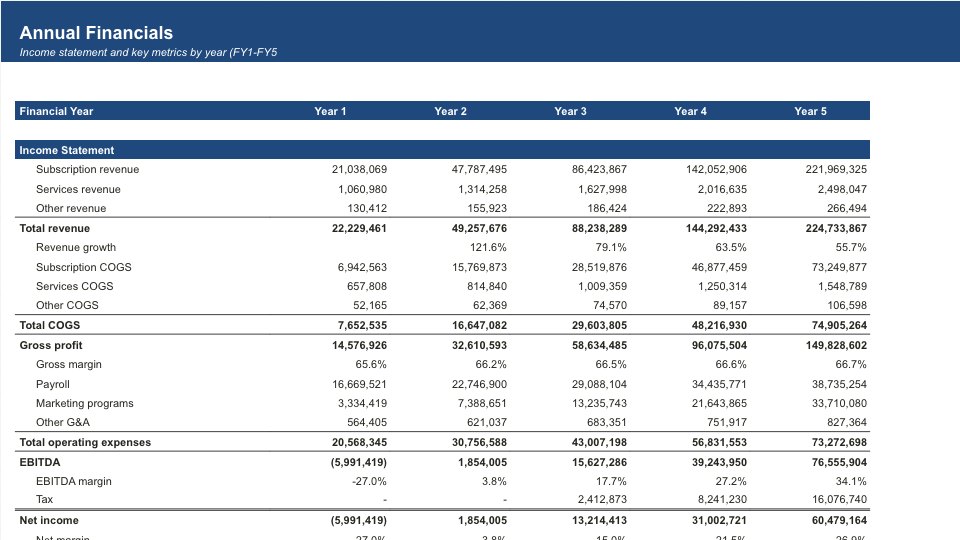
ANYbotics builds and sells autonomous legged inspection robots (ANYmal) for industrial facilities, targeting oil & gas, chemicals, power, offshore, mining, and manufacturing sectors.
Awake Security
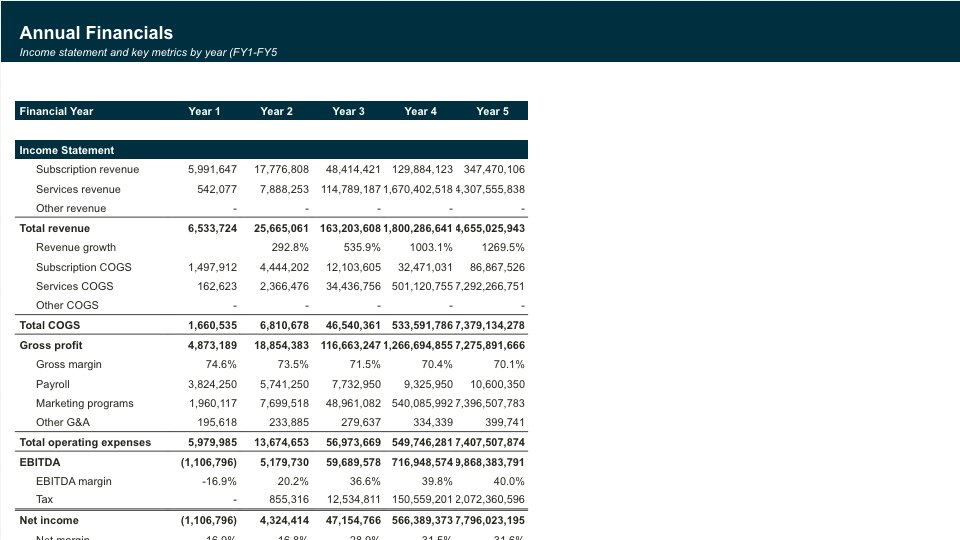
Awake Security - AI-driven Network Detection & Response (NDR) platform for the hybrid cloud, positioning as the "intent detection" layer of the SOC visibility triad.

Beem
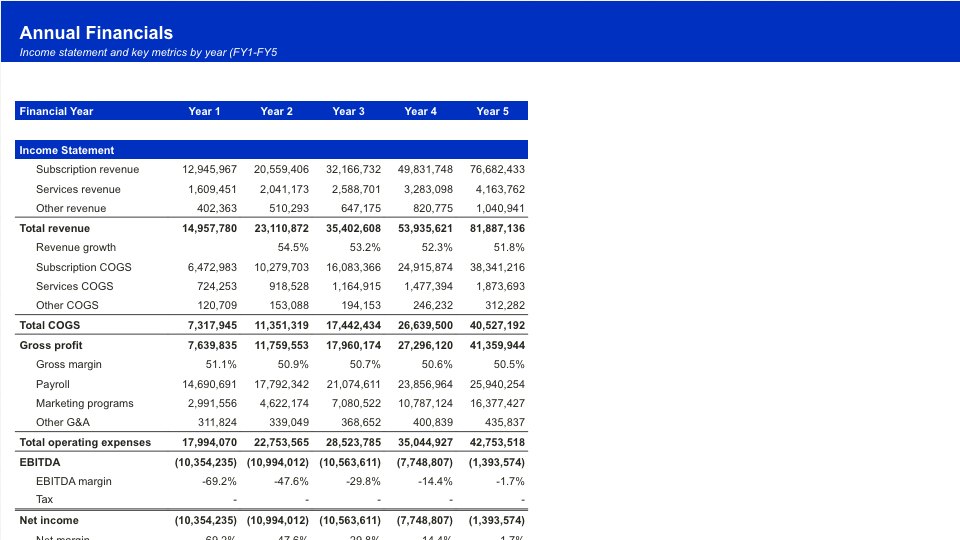
AR communications platform that overlays full-body "hologram" video of a person into the recipient's physical space via smartphone or web.

Blue White Robotics
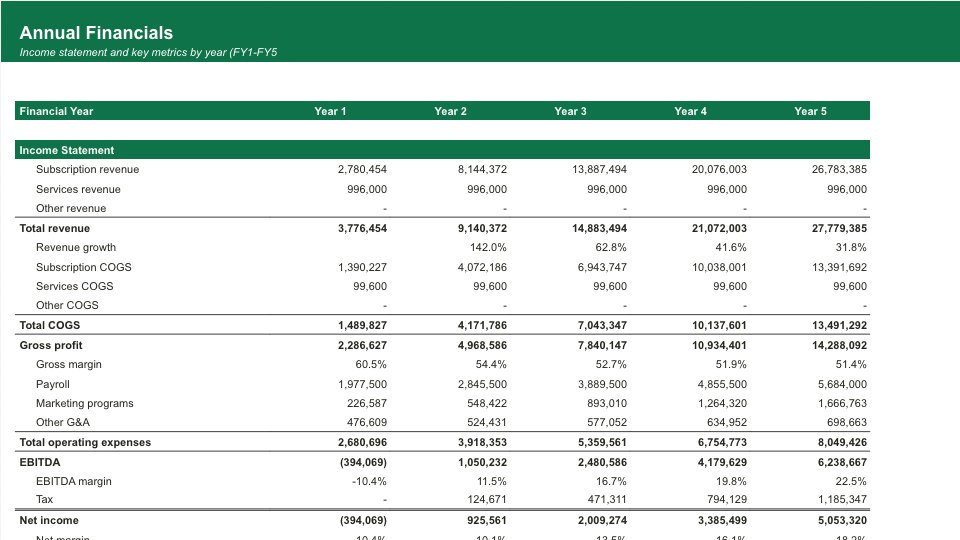
Autonomous robotics platform converting existing farm equipment to self-driving tractors for permanent-crop growers, sold as Robots-as-a-Service.

Cambridge GaN Devices
Fabless semiconductor startup commercialising self-protected GaN power transistors (HiGaN) that replace silicon and standard GaN with higher efficiency and no external protection circuitry.

Canix
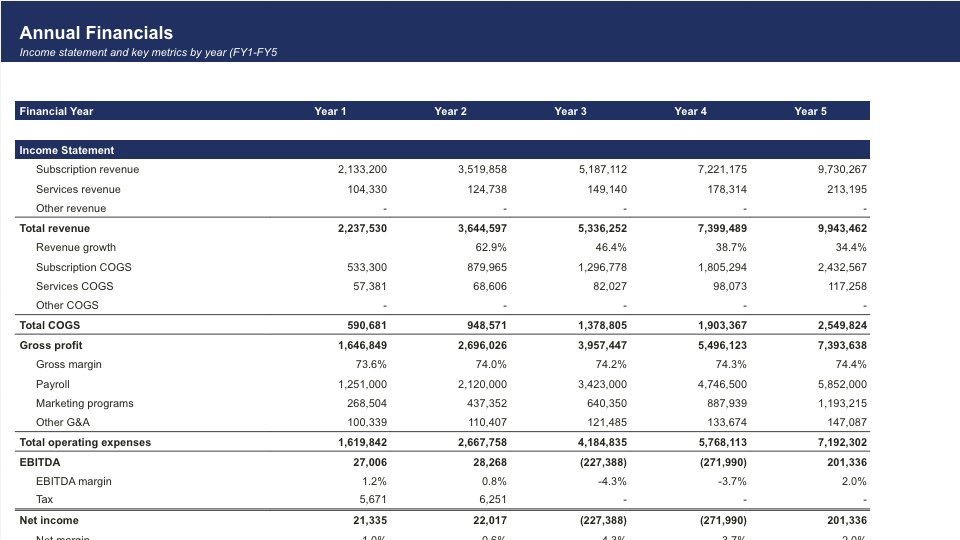
Cannabis-focused ERP (inventory tracking, compliance automation, sales management, yield forecasting) sold as SaaS to cannabis cultivators, manufacturers, and distributors.
Chobani
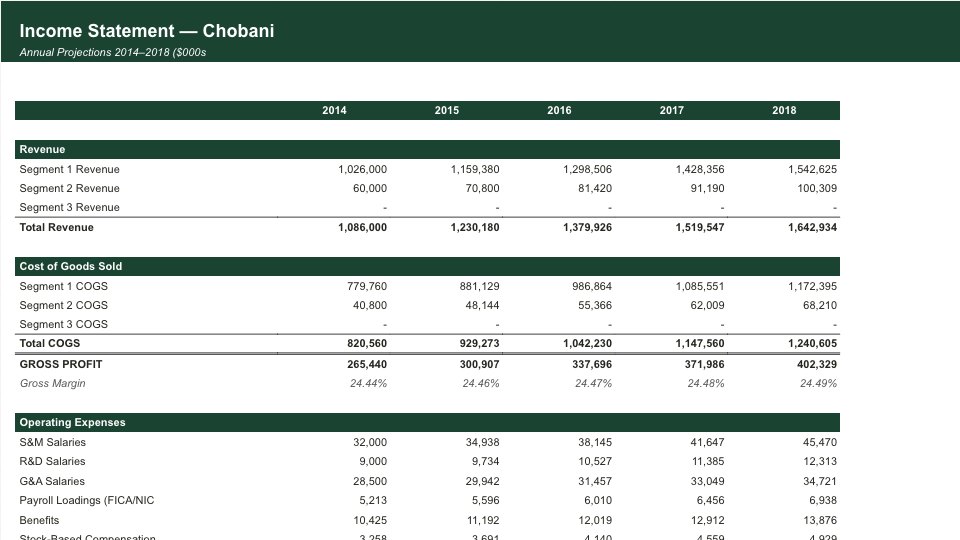
Chobani is the US market leader in Greek yogurt; TPG invested $671M in April 2014 for a 35% stake via a structured second lien + equity deal
Cipher Skin
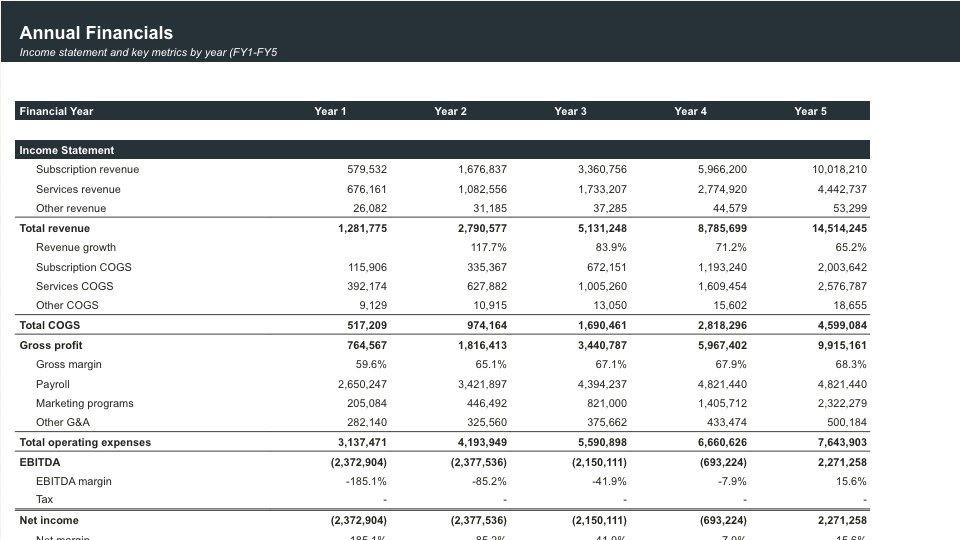
Wearable sensor mesh platform that collects dense multi-modal data from human bodies and industrial objects to predict structural and functional failure before it occurs.