SCSuper Coffee Financial Model
Biotech/Pharma Startup Financials (Free Excel Download)
KITU Life makes better-for-you RTD coffee, espresso shots, and coffee creamer - zero sugar, protein-enhanced, MCT oil-fortified - targeting health-conscious consumers dissatisfied with sugary mainstream options.



professionals from Deloitte
Used by professionals from






About this model
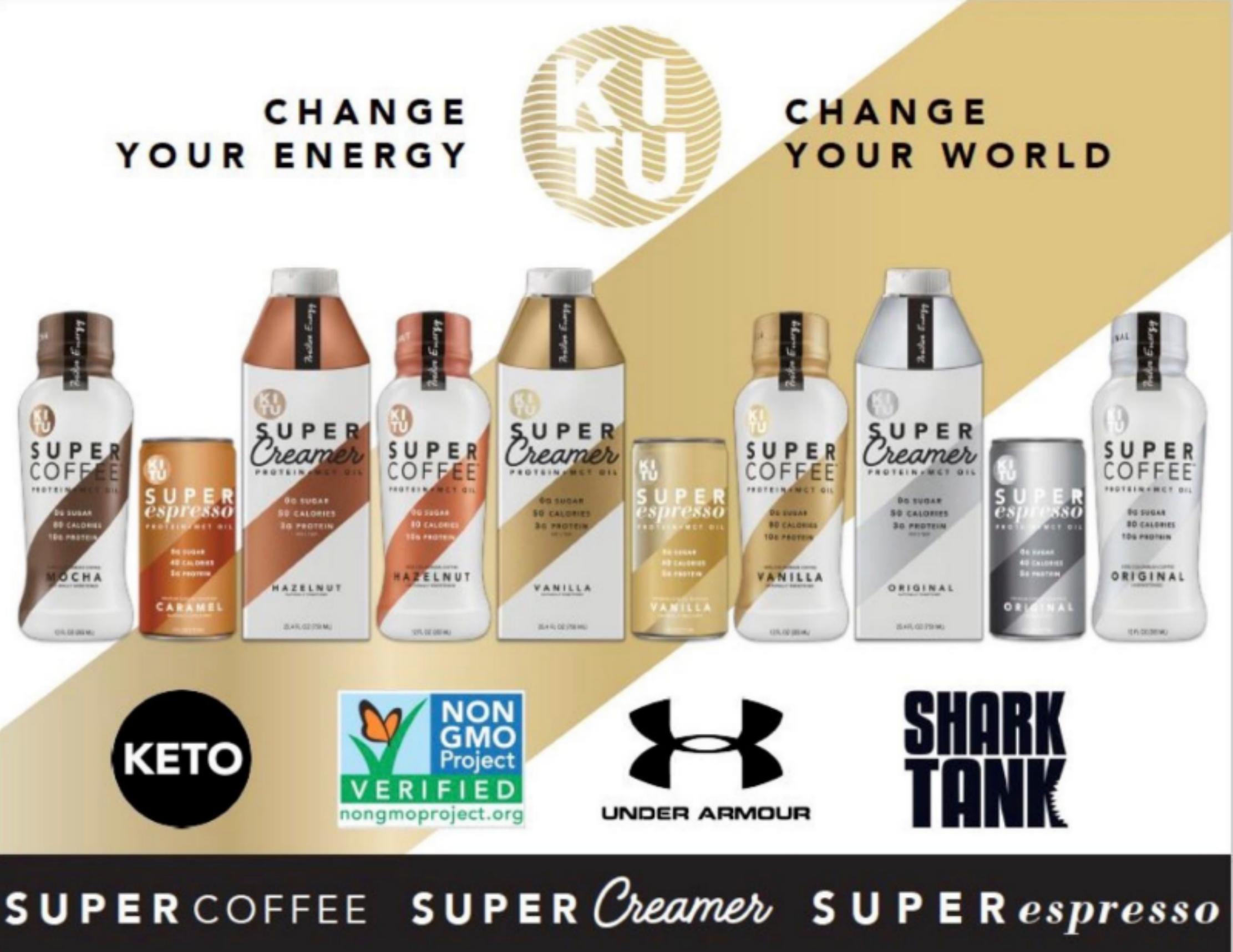
KITU Life’s Super Coffee range includes zero-sugar protein coffee, creamers, espresso shots, and cold brew. The products combine Colombian coffee, protein, MCT oil, and low calories to offer an alternative to sugar-heavy ready-to-drink coffee; the brand is certified Keto and Non-GMO Project Verified.
Revenue comes from wholesale CPG sales through grocery, mass, pharmacy, club, natural, specialty, and direct-to-consumer channels. Single-serve Super Coffee had retail prices around $2.79–$3.29 and multi-serve bottles $5.99. Retail partners include Target, Costco, Whole Foods, Wegmans, Walgreens, Albertsons, and many regional chains.
Super Coffee led category velocity in four measured channels in 2018, including $97.4K single-serve RTD coffee sales per store per day across Total U.S. Food. It had more than 20 authorised national chains. The model should forecast units, price, retail and DTC mix, COGS, trade spend, distribution, CAC, and gross margin.
A turnkey financial model
Live formulas, no hardcoded values
Outputs are driven by live formulas, so the workbook updates from its assumptions instead of relying on hardcoded results.
All assumptions in one tab
Inputs are clearly marked in the Assumptions tab and separated from calculations, making it clear what to change and what to leave intact.
Statements always balancing
For integrated-statement models, the balance sheet, cash flow, and supporting schedules tie through properly.
Distinct schedules for clarity
Debt, working capital, taxes, and cash flow can get messy quickly. We group calculations in clear schedules, not across disconnected tabs.
No hidden macros or external links
There are no unexplained external workbook links or macros to undermine auditability or portability.
Changes flow through the model
Update a key driver and see the impact carry through the forecast, financing, and return outputs. We never use hardcoded numbers in formulas.
About Super Coffee
How to build a detailed financial model for Super Coffee
A complete walkthrough of the business, drivers, and assumptions behind the downloadable Super Coffee model - distilled from its pitch deck and publicly available information.
Product & value proposition
Three product lines:
- Super Coffee (12 fl oz single serve, 32 fl oz multi-serve) - 0g sugar, 80 cal, 10g protein, MCT oil, 100% Colombian coffee; flavors: Original, Vanilla, Hazelnut, Mocha
- Super Creamer (25.4 fl oz) - 0g sugar, 50 cal, 3g protein, MCT oil from coconut oil; flavors: Original, Vanilla, Hazelnut
- Super Espresso (6 fl oz shot can) - 0g sugar, 40 cal, 5g protein, MCT oil, 180mg caffeine; flavors: Original, Vanilla, Caramel
- Super Cold Brew (32 fl oz) - 0g sugar, 0 cal, organic Colombian coffee + L-theanine; launching 2019
Value prop: eliminates the sugar/calorie trade-off in RTD coffee (vs. 40–45g sugar and 250+ cal in Starbucks/Dunkin') while adding protein and healthy fat. Certified Keto, Non-GMO Project Verified, no artificial sweeteners, gluten-free, lactose-free.
Brand associations: Under Armour official partner, Shark Tank appearance.
Retail SRP examples:
- Single serve Super Coffee: ~$3.29 at Target; ~$2.79 "cart-stopping price"
- Multi-serve 32 fl oz: $5.99 SRP / $1.49 per serving
Market
- RTD coffee cited as "fastest growing category" in TD (Take & Drink) coffee - no dollar size quoted
- 83% of Americans seeking healthier options (lower sugar/lower calories)
- No explicit TAM/SAM/SOM figures in deck
- Category benchmarks (Single Serve RTD Coffee, Total US Food, L52 weeks ending 08/12/18, SPINS): KITU #1 at $97.4K $SPPD (sales per point of distribution), vs. Dunkin' $81.8K, La Colombe $51.2K, McCafe $17.5K, Bulletproof $17.3K
- At top US supermarket chain (2018 monthly average): KITU $145.6K $PPDW, La Colombe $74.4K, Starbucks $55.7K, Bulletproof $46.6K, Dunkin' $38.8K
- Natural channel L12 $PPDW: KITU $437, Stumptown $178, Bulletproof $140, La Colombe $130, Forto $35
- Specialty channel L12 $PPDW: KITU $130, Peet's $63, Bulletproof $56, Dunkin' $39, McCafe $15
Revenue model
- Wholesale CPG model: manufacture and sell branded RTD beverages through retail and DTC channels
- Key retail partners (authorized): H-E-B, Wegmans, Whole Foods, Costco, Target, Meijer, ShopRite, Stop & Shop, Harris Teeter, Wawa, Giant Eagle, Walgreens/Duane Reade, Rite Aid, Albertsons/Safeway, Jewel Osco, Shaw's/Star Market, Fresh Thyme, Earth Fare, Market Basket, Big Y, Lunds & Byerlys, Weis, ACME, Giant
- Channels: natural, specialty, grocery, mass, pharmacy, club (Costco), DTC (drinksupercoffee.com / kitulife.com)
- SRP data points: $2.79–$3.29 (12 fl oz single serve), $5.99 (32 fl oz multi-serve)
- No revenue, COGS, or margin data disclosed in deck
Traction & metrics
- Category velocity leadership across all four measured channels (Total US Food, top US supermarket, natural, specialty) as of 2018
- #1 in single-serve RTD coffee $SPPD (Total US Food L52W ending 08/12/18): $97.4K
- #1 at unnamed top US supermarket chain (2018 monthly avg): $145.6K $PPDW
- #1 natural channel L12 $PPDW: $437
- #1 specialty channel L12 $PPDW: $130
- Retail: 20+ national retail chains authorized
- No revenue figures, unit volume, or year-over-year growth numbers disclosed
Competition / moat
Competitors named:
- RTD coffee: Starbucks Frappuccino (45g sugar, 260+ cal), Dunkin' Donuts (45g sugar, 250+ cal), La Colombe (20g sugar, 190 cal), High Brew (21g sugar, 135 cal), Bulletproof (15g sugar alcohols, 210 cal)
- Creamer: International Delight, Coffee Mate, Califia Farms, Natural Bliss, So Delicious (all 8–20g sugar, 0g protein, no MCT)
- Espresso shots: Dunkin' Shot in the Dark, Starbucks Double Shot, Forto Energy, 5-Hour Energy, Red Bull
Moat claims:
- Unique nutritional profile: only brand combining 0g sugar + protein + MCT oil in RTD coffee and creamer
- Velocity leadership across all major channels as of 2018
- Brand: Shark Tank appearance, Under Armour official partnership, celebrity/athlete endorsement positioning
- Quote: "KITU is the Halo Top of coffee" - Doug Bouton, founder of Halo Top
Team & funding ask / use of funds
- Founded by three brothers (all collegiate student-athletes); youngest brother Jordan created the original product
- Company name: KITU Life, Inc.; brands: Super Coffee, Super Creamer, Super Espresso, Super Cold Brew
- Origin: Jordan's dorm room; initially targeted college and corporate campuses
- No funding ask, round size, valuation, or use of funds in deck - this is a retailer/trade sell-in deck, not an investor pitch
Recommended financial model
- Archetype + why: DTC + Retail CPG Revenue & P&L model (3-statement). The business is a multi-SKU, multi-channel CPG brand selling through both wholesale retail and direct-to-consumer. The appropriate model is a channel-split revenue build (retail wholesale vs. DTC) flowing into a P&L with gross margin by channel, brand-building OPEX, and cash/debt tracking. Standard 3-statement with a working capital schedule is appropriate given inventory-heavy operations.
- Forecast horizon & granularity: 3–5 years annual (monthly Year 1 if cash planning is needed); given the 2018–2019 era context, this appears to be an early-growth stage model.
- Key drivers & assumptions:
*Revenue*
- Number of retail doors (points of distribution)
- Velocity per point of distribution ($/door/week)
- DTC revenue
- SKU mix: Super Coffee single-serve vs. multi-serve vs. Super Creamer vs. Super Espresso vs. Super Cold Brew
- SRP: $2.79–$3.29 (single serve), $5.99 (32 fl oz)
- Retail margin to wholesaler:
*COGS*
- COGS per unit / gross margin
- Contract manufacturing or in-house
- Freight & logistics as % of revenue
*OPEX*
- Sales & trade spend (slotting fees, promotional allowances)
- Marketing / brand-building
- G&A
*Working capital*
- Inventory days
- Receivables days
- Payables days
- Scenarios (Base / Bull / Bear - which variables flex):
- Base: door count grows ~25%/yr; velocity stable; product mix weighted to single-serve; gross margin ~40%
- Bull: Costco/club channel scales fast, multi-serve drives ASP up; gross margin improvement to 45%+ at scale; Cold Brew launch boosts DTC
- Bear: Retail velocity disappoints (trade spend drag, competitive pressure from Starbucks/Dunkin' reformulation); gross margin compressed to 35%; slower door adds
- Required sheets / outputs:
- Assumptions - all drivers in one place
- Revenue Build - channel split (retail natural/specialty/grocery/mass/club + DTC) × SKU × door count × velocity
- P&L - gross margin by channel, trade spend, marketing OPEX, EBITDA
- Working Capital Schedule - AR/inventory/AP days
- Balance Sheet & Cash Flow Statement
- KPI Dashboard - doors, velocity, revenue per SKU, gross margin %, net burn
Frequently asked
Is the Super Coffee financial model free?+
Yes. The Super Coffee model is a free Excel (.xlsx) download with live formulas. Sign up with your email and the workbook is yours to keep, review, and edit.
What's included in the model?+
A 5-year monthly forecast with P&L, cash flow and runway, valuation (exit multiple plus a DCF cross-check), MOIC/IRR returns, and unit economics, with live formulas throughout.
How was this model built?+
It was built from Super Coffee's pitch deck and publicly available information, then structured to investment-banking standards as a fully editable Excel model.
Can I change the assumptions?+
Yes. You can change assumptions and the live formulas will recalculate in the downloadable Excel model.
Have more financial modelling questions? Contact us

Created by ex-finance professionals
Hey, I’m Alex and I created Finamodel.
Over my years in the finance industry I kept building the same models over and over again. Same structure, same assumptions, different logo. So I started building frameworks to turn them into clean, reusable templates.
Every model here is one I’d actually use for a client, and I personally vet each one before it goes up.
I’m not an expert in every industry, but I’ve built enough models to know what belongs in one. And when something is completely foreign to me, I reach out to my network for experts to work on our models with us.
Having a template library on hand cuts a first build from hours to minutes.
Need help finding your model? You’ll find me in the Finamodel app!
Other Biotech/Pharma Startup Financial Models
Browse another startup in the same category.

Ada Health
AI-powered symptom assessment app and clinical decision-support platform for consumers and healthcare partners.
Affini-T
Engineered T cell therapies targeting oncogenic driver mutations (KRAS, p53) in hard-to-treat solid tumors

Alto Pharmacy
Alto Pharmacy is a tech-enabled, same-day prescription delivery pharmacy disrupting the $450B US pharmacy market via a direct-to-patient courier model and provider-facing software platform.

Aphea.Bio
Aphea.Bio is a Belgian ag-biotech company developing and commercialising microbial biologicals (biostimulants, biofungicides, bioherbicides, bioinsecticides) for row crops, targeting yield improvement and reduced synthetic input use.

Aurion Biotech
Cell therapy company developing an injectable corneal endothelial cell treatment to restore vision in patients with corneal endothelial disease.

Beckley Psytech
Clinical-stage psychedelic drug development platform advancing a pipeline of psychedelic compounds (psilocybin, 5-MeO-DMT, NCEs) as licensed pharmaceutical medicines for neuropsychiatric disorders.

BrightInsight
Regulated digital health platform-as-a-service for biopharma and medtech companies to build, launch, and maintain compliant connected-drug and medical-device software products.
Carrum Health
Value-based care marketplace connecting self-insured employers to top-tier surgical and oncology Centers of Excellence (COEs) via all-inclusive bundled payments.


