FHFlo Health Financial Model
Health-tech Startup Financials (Free Excel Download)
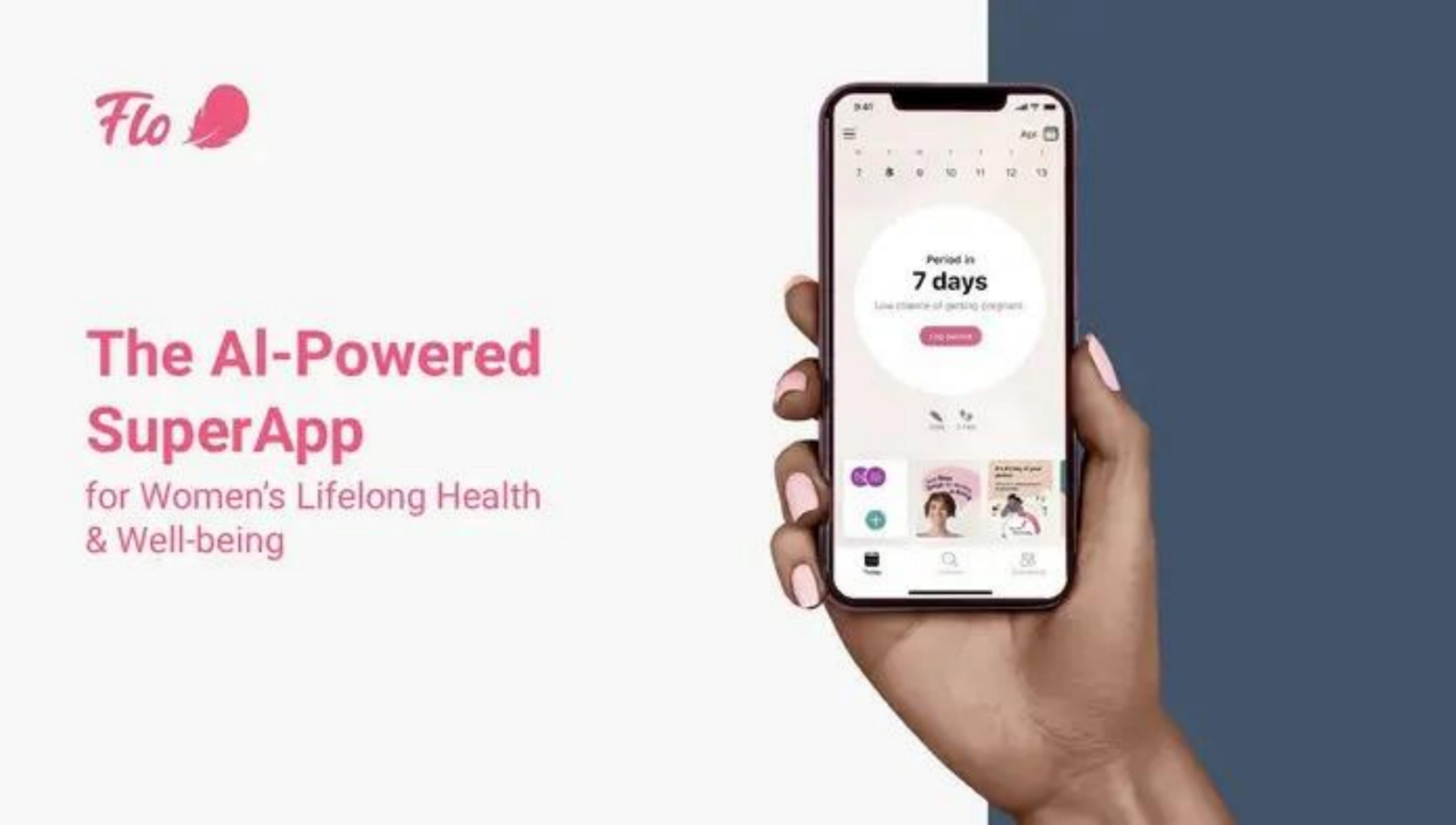
AI-powered women's health superapp covering cycle tracking, pregnancy, fertility, and menopause across the full female lifecycle.



professionals from Deloitte
Used by professionals from






About this model
Flo Health is an AI-powered women’s-health app covering cycle tracking, pregnancy, fertility, and menopause. Its lifecycle proposition creates repeated reasons for users to engage as their health needs change over time.
The core revenue stream is Flo Premium, a B2C subscription sold through Apple and Google app stores. Reported ARR and subscriber data imply a blended annual ARPU near $83 before app-store commissions, with a future B2B2C benefits channel adding optionality.
The model should forecast MAUs, premium conversion, subscription ARPU, monthly churn, and store fees. Marketing, content, AI and product costs should sit below gross revenue, while employer-benefits contracts can be modelled as a separate expansion stream.
A turnkey financial model
Live formulas, no hardcoded values
Outputs are driven by live formulas, so the workbook updates from its assumptions instead of relying on hardcoded results.
All assumptions in one tab
Inputs are clearly marked in the Assumptions tab and separated from calculations, making it clear what to change and what to leave intact.
Statements always balancing
For integrated-statement models, the balance sheet, cash flow, and supporting schedules tie through properly.
Distinct schedules for clarity
Debt, working capital, taxes, and cash flow can get messy quickly. We group calculations in clear schedules, not across disconnected tabs.
No hidden macros or external links
There are no unexplained external workbook links or macros to undermine auditability or portability.
Changes flow through the model
Update a key driver and see the impact carry through the forecast, financing, and return outputs. We never use hardcoded numbers in formulas.
About Flo Health
How to build a detailed financial model for Flo Health
A complete walkthrough of the business, drivers, and assumptions behind the downloadable Flo Health model - distilled from its pitch deck and publicly available information.
Product & value proposition
- Core: Period & cycle tracker, ovulation prediction, symptom logging.
- Lifecycle modes: Tracking Mode → Pregnancy Mode → Early Motherhood Mode → Menopause Mode (planned).
- Satellite products: Content Library, Courses on Health & Wellbeing, Secret Chats (anonymous community), Health Assistant (AI chatbot).
- AI/data layer: "Flo AI" ingests symptom logs, fitness data, social signals, wearables, surveys → builds a personal health profile per user; outputs cycle prediction, hormone predictions, disease signals (PCOS, endometriosis), content personalisation.
- Medical credibility: 80+ medical experts; content reviewed by leading European and North American medical schools.
- Privacy/security: Dedicated DPO and CISO (UK); ISO 27001/27701 in preparation.
Market
US market funnel (all figures):
- TAM (current age group): 66M - total US female population aged 15–45.
- TAM + Menopause: 135M - total US female population 14+ (with planned menopause mode).
- PAM (potentially addressable): 56.1M (82% of US women 15–45 track cycles via any method).
- SAM (current addressable): 38.6M (58.5% use apps to track cycles).
- Current Flo US users: 7.1M (≈11% of TAM).
- Global MAU: 38M worldwide across iOS + Android as of December 2020.
- Global prospective users: 1.7B.
Revenue model
- Primary: B2C subscription (premium tier "Flo Premium") sold via App Store (iOS) and Google Play (Android).
- Pricing: Not shown explicitly in deck. ARR of $58M on ~0.7M active subscribers implies blended gross ARPU of ~$83/year (≈$6.90/month).
- Store fee: Apple/Google take ~30% commission; all revenue figures in deck are gross (before store commission) unless noted otherwise.
- Planned B2B2C: Employee benefits channel targeted to represent 15% of revenue by YE 2023, with B2C at 85%.
- No ad revenue, in-app purchases, or marketplace revenue mentioned in deck.
Traction & metrics
All as of December 2020:
- Total installs: >160M
- Organic installs: 66%
- MAU (WW, iOS + Android): 38M
- MAU US: 7M
- ARR: $58M (+120% YoY) - cash-based, VAT-exclusive
- Active subscribers: 0.7M
- App Store rank: #1 Health & Fitness iOS WW by installs; #4 by revenue (Source: AppAnnie, Dec 2020)
- Ratings: 3M+ ratings, average 4.8/5; breakdown: AppStore 2.68M ratings, Google Play 1.66M ratings
- US penetration: 11% of women aged 15–45
- Branded traffic (iOS, US): 42% organic branded, 34% organic non-branded, 24% paid
- Brand awareness: 56% of period app users are aware of Flo; 22% use Flo; #1 recalled brand for period trackers
Subscription count trend (iOS + Android):
- Dec 2019: 231K → Dec 2020: 726K (+214% in 12 months)
- Monthly progression: 231K, 243K, 260K, 286K, 309K, 334K, 363K, 399K, 434K, 472K, 530K, 623K, 726K
Paying subscriber share in MAU:
- iOS WW: 1.38% (Dec 2019) → 2.86% (Dec 2020)
- iOS US: 1.90% (Dec 2019) → 4.74% (Dec 2020)
Monthly gross subscription revenue (cash, VAT-exclusive):
- Jan 2020: $2.3M → Dec 2020: $4.9M
- Implied run-rate at Dec 2020: ~$58.8M gross annualised
- 2021 forecast (deck): Jan $4.2M → Dec $8.5M (full-year 2021 forecast ≈$72M implied from monthly trajectory)
MAU growth:
- Sep 2016 launch; reached 38M by Nov/Dec 2020. Consistent MoM growth throughout.
Unit economics
No explicit CAC, LTV, or payback period stated in deck.
Derivable from deck data:
- Blended gross ARPU: ~$83/year
- Net ARPU (after ~30% store fee): ~$58/year
- Conversion rate (MAU → paying, iOS US Dec 2020): 4.74%
- Conversion rate (MAU → paying, iOS WW Dec 2020): 2.86%
- Organic install share: 66%, implying low blended CAC relative to pure paid-acquisition peers
- Annual subscription churn (target, year 2+): 20–25% relative churn per year (stated as target plateau, not current actuals)
Competition / moat
Competitive positioning:
- Scatter plot (AppAnnie iOS WW, Dec 2020): Flo sits in the "Unicorns" quadrant - highest downloads among cycle-tracking apps, MAU well above 16.6M axis midpoint; no other cycle-tracking app is close. Competitors cluster in pre-growth / average-performer quadrants.
- Revenue: Flo is in the "Heavy Hitters" zone (high MAU + revenue above $1.96M/month threshold); closest revenue competitor in cycle-tracking is well below.
Stated moats:
- Brand: #1 recalled brand in category; 56% awareness among period app users.
- Data flywheel: Multi-year longitudinal health data per user; AI-trained on proprietary dataset.
- Medical credibility: 80+ expert reviewers; academic research partnerships.
- Lifecycle lock-in: Modes designed to keep users across 40+ years (tracking → pregnancy → menopause).
- Organic growth: 66% organic installs; 42% branded search - low dependency on paid UA.
Named competitors: Not explicitly named. Category competitors implied (other cycle-tracking and health/fitness apps on AppAnnie scatter).
Team & funding ask / use of funds
Team:
- 270+ employees as of December 2020.
- Breakdown: 45% Product & Engineering, 25% Content/Medical/Partnerships, 18% Sales & Marketing, 12% Administration.
- International: UK (HQ/management), USA, Netherlands, Cyprus, Belarus, Lithuania.
- Avg engineering experience: 10 years.
- Tech stack: AWS/EKS, Kubernetes, Kafka, PostgreSQL, Redis, Python, Kotlin, Swift, TensorFlow, PyTorch, Spark, CatBoost, Amazon SageMaker.
Current valuation: $0.5B.
Recommended financial model
- Archetype + why: Subscription ARR model with freemium funnel. Revenue is 100% recurring subscription, driven by MAU growth × conversion rate × ARPU. This is a classic mobile freemium → premium subscription model analogous to a SaaS ARR model but with app-store gross/net mechanics. From 2023 onward a B2B2C revenue stream (employee benefits) should be modelled as a separate cohort with different ARPU and sales cycle.
- Forecast horizon & granularity: Monthly for Year 1 (2021 actuals/forecast already in deck); quarterly for Years 2–3 (2022–2023 targets in deck). Annual summary through 2025 for terminal / exit value context.
- Key drivers & assumptions:
| Driver | Seed value |
|---|---|
| MAU WW (Dec 2020) | 38M |
| MAU US (Dec 2020) | 7M |
| MAU WW target YE 2021 | >52M |
| MAU WW target YE 2023 | >115M |
| Active subscribers (Dec 2020) | 0.7M |
| Active subscribers target YE 2021 | >1.4M |
| Active subscribers target YE 2023 | >10M |
| ARR (Dec 2020, gross, cash, ex-VAT) | $58M |
| ARR target YE 2021 | >$103M |
| ARR target YE 2023 | >$400M (profitable) |
| YoY ARR growth (2019→2020) | +120% |
| Monthly gross subscription rev, Dec 2020 | $4.9M |
| Monthly gross sub rev, Dec 2021 (forecast) | $8.5M |
| iOS WW paying/MAU conversion (Dec 2020) | 2.86% |
| iOS US paying/MAU conversion (Dec 2020) | 4.74% |
| Organic install share | 66% |
| App store fee (Apple/Google) | 30% |
| Blended gross ARPU/year | ~$83 |
| Annual sub churn (steady-state, year 2+) | 20–25% |
| Annual sub churn (year 1, new cohorts) | 40–50% |
| Gross margin (after store fees, hosting, content) | 70–75% |
| S&M as % of revenue | 18–22% |
| R&D as % of revenue | 25–30% |
| G&A as % of revenue | 8–12% |
| B2B2C revenue share (YE 2023 target) | 15% |
| MAU → subscriber conversion, incremental improvement | +0.1–0.2pp per quarter (WW) |
- Scenarios (Base / Bull / Bear):
- Flex variables: MAU growth rate, conversion rate (free→paid), ARPU (pricing power), churn, store fee rate, B2B2C ramp speed.
- Base: Hits deck targets - $103M ARR YE 2021, $400M ARR YE 2023; conversion reaches ~3.5% WW by YE 2023.
- Bull: Faster menopause-mode TAM expansion + aggressive B2B2C adoption push ARR to $500M+ by YE 2023; US conversion exceeds 7%.
- Bear: MAU growth stalls (competitive or regulatory pressure on data privacy); conversion stays below 3% WW; ARR $200–250M by YE 2023; profitability delayed.
- Required sheets / outputs:
- Assumptions - all drivers centralised.
- MAU Cohort Build - monthly new installs, churn/reactivation, cumulative MAU by geography (WW, US, Other).
- Subscriber Funnel - MAU × conversion rate = paying subscribers; split iOS / Android.
- Revenue Build - subscribers × monthly ARPU × (1 – store fee) = net revenue; gross revenue line separate; B2B2C as additive stream from 2022.
- Cohort Retention - annual subscriber cohorts with year-1 and year-2+ churn rates to model NRR and LTV.
- P&L (Annual + Quarterly) - gross revenue, store fees, net revenue, COGS (hosting, content, medical), gross profit, S&M, R&D, G&A, EBITDA.
- KPI Dashboard - MAU, paying subs, ARR, conversion %, ARPU, churn, LTV/CAC ratio (where CAC estimable).
- Targets vs. Actuals Tracker - deck slide 26 targets vs. model outputs.
- Valuation - ARR multiple exit (SaaS comps; growth-stage femtech); implied equity value at $7B target.
Frequently asked
Is the Flo Health financial model free?+
Yes. The Flo Health model is a free Excel (.xlsx) download with live formulas. Sign up with your email and the workbook is yours to keep, review, and edit.
What's included in the model?+
A 5-year monthly forecast with P&L, cash flow and runway, valuation (exit multiple plus a DCF cross-check), MOIC/IRR returns, and unit economics, with live formulas throughout.
How was this model built?+
It was built from Flo Health's pitch deck and publicly available information, then structured to investment-banking standards as a fully editable Excel model.
Can I change the assumptions?+
Yes. You can change assumptions and the live formulas will recalculate in the downloadable Excel model.
Have more financial modelling questions? Contact us

Created by ex-finance professionals
Hey, I’m Alex and I created Finamodel.
Over my years in the finance industry I kept building the same models over and over again. Same structure, same assumptions, different logo. So I started building frameworks to turn them into clean, reusable templates.
Every model here is one I’d actually use for a client, and I personally vet each one before it goes up.
I’m not an expert in every industry, but I’ve built enough models to know what belongs in one. And when something is completely foreign to me, I reach out to my network for experts to work on our models with us.
Having a template library on hand cuts a first build from hours to minutes.
Need help finding your model? You’ll find me in the Finamodel app!
Other Health-tech Startup Financial Models
Browse another startup in the same category.
98point6
B2B SaaS platform licensing an AI-powered virtual care technology stack to health systems, pivoted from running a direct-to-employer virtual clinic.
A-Champs
IoT-powered gamified training device (ROXs PRO) for sports/health professionals, evolving into a B2C smart coach app for families.

AccuRx
Patient-centred communication platform connecting everyone involved in a patient's care, starting with near-universal penetration in UK GP practices.

Aeris
Swiss-made premium air purifiers sold through DTC, retail, and dealer channels, with a recurring filter consumable attached to a connected mobile app.

Akido Labs
Akido Labs is a data-driven prevention platform that integrates siloed healthcare, municipal, and non-profit data to enable proactive outreach and case management for vulnerable populations (homeless, chronically ill, etc.).

Alloy
Telehealth + DTC subscription platform delivering menopause hormonal treatment (MHT) and holistic care to U.S. women 40+.

Astek Diagnostics
Point-of-care diagnostic device (Jiddu system) that confirms bacterial infections and antibiotic sensitivity in ~1 hour across four body fluid types (urine, CSF, effluent, blood).

Atom Limbs
Atom Limbs is building the first AI-powered, neural-controlled prosthetic arm sold direct-to-consumer on a subscription model.