CKClean Kitchen Club Financial Model
Logistics/Mobility Startup Financials (Free Excel Download)
UK plant-based QSR brand operating eat-in, grab-and-go, and delivery formats across London, with plans for nationwide expansion.



professionals from Deloitte
Used by professionals from






About this model
Clean Kitchen Club is a UK plant-based QSR brand with eat-in, grab-and-go, and delivery formats. It aims to expand beyond London through a multi-format restaurant and delivery model.
The model should build locations by format and apply a new-site ramp to orders, average ticket, and delivery mix. Those drivers determine sales at mature and newly opened sites.
Forecast food cost, labour, rent, and delivery economics at each format. This lets the plan show whether growth comes from owned locations, grab-and-go demand, or delivery-led volume. Use consistent location assumptions so the London base and future expansion are comparable across the whole QSR network.
A turnkey financial model
Live formulas, no hardcoded values
Outputs are driven by live formulas, so the workbook updates from its assumptions instead of relying on hardcoded results.
All assumptions in one tab
Inputs are clearly marked in the Assumptions tab and separated from calculations, making it clear what to change and what to leave intact.
Statements always balancing
For integrated-statement models, the balance sheet, cash flow, and supporting schedules tie through properly.
Distinct schedules for clarity
Debt, working capital, taxes, and cash flow can get messy quickly. We group calculations in clear schedules, not across disconnected tabs.
No hidden macros or external links
There are no unexplained external workbook links or macros to undermine auditability or portability.
Changes flow through the model
Update a key driver and see the impact carry through the forecast, financing, and return outputs. We never use hardcoded numbers in formulas.
About Clean Kitchen Club
cleankitchen.club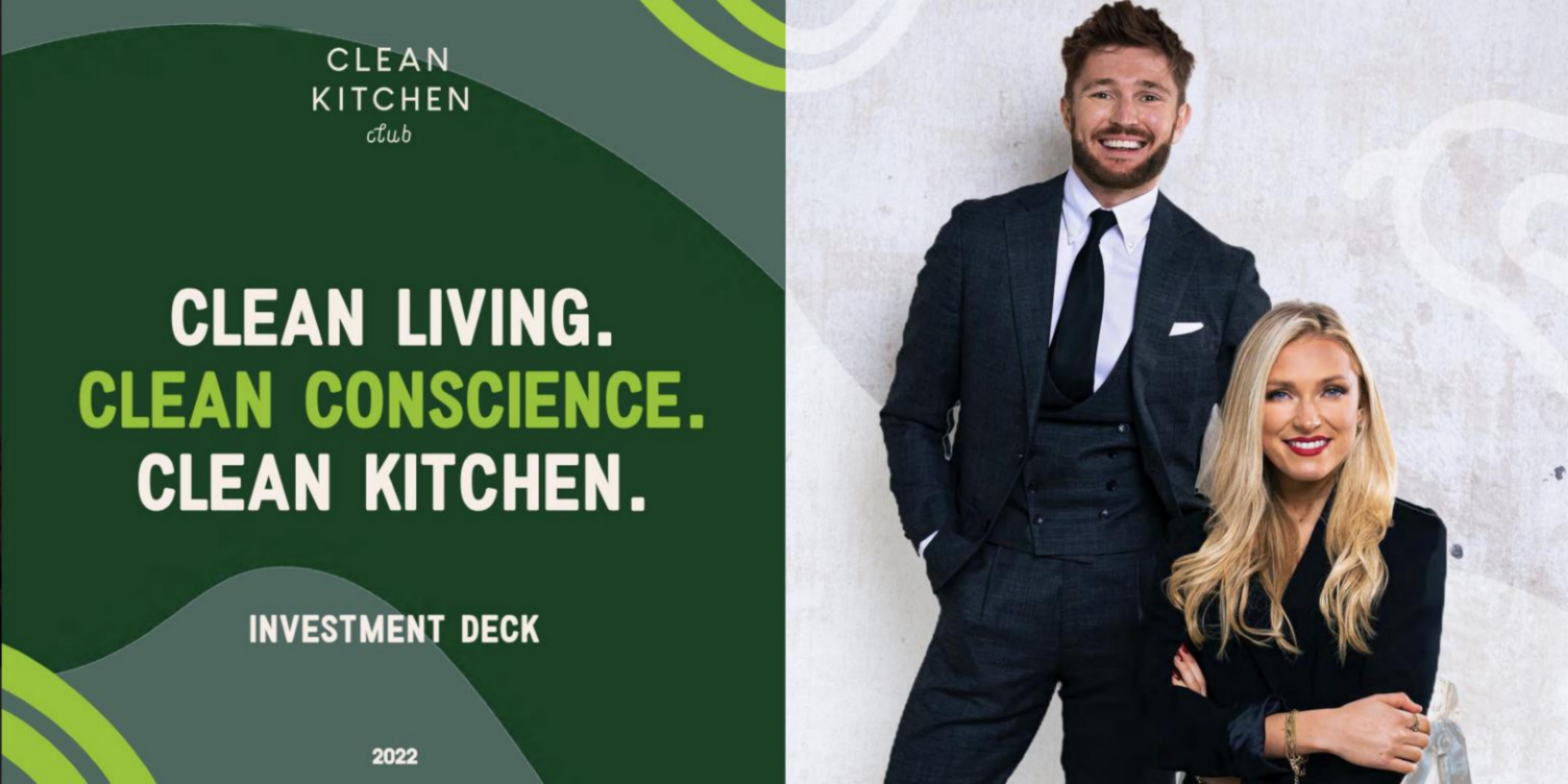
How to build a detailed financial model for Clean Kitchen Club
A complete walkthrough of the business, drivers, and assumptions behind the downloadable Clean Kitchen Club model - distilled from its pitch deck and publicly available information.
Product & value proposition
- 100% plant-based menu: burgers, chicken-style sandwiches, fish-style items, sides, açaí bowls, smoothies, and sandwich bar baguettes/bagels.
- Burger prices: £8.50–£10.50 standalone; meal upsells to £14–£16. Sides £3.50–£6.50.
- Multi-format: eat-in, grab & go, delivery (Deliveroo, Uber Eats), dark kitchens.
- Proprietary food-tech portfolio planned: own-brand sauces and meat substitutes beyond QSR.
- Sustainability differentiator: first restaurant with carbon labelling on menu; targeting B Corp by 2023.
- Brand built on founders' social-media following and TV personality co-founder (Verity Bowditch, Made In Chelsea).
Revenue model
Primary - restaurant / QSR sales
- In-store food & beverage sales across eat-in / grab-and-go formats.
- Delivery via third-party platforms (Deliveroo, Uber Eats).
- Dark kitchen / virtual brand expansion planned.
Secondary (planned)
- Retail: proprietary plant-based products into supermarkets (timeline: April–September 2022 phase).
- CPG / food-tech: own-brand sauces and meat substitutes.
Pricing (from menu, all GBP):
- Burgers: £8.50–£10.50 (standalone), £14–£16 (meal)
- Sides: £3.50–£6.50
- Açaí bowls: £8; Smoothies: £6; Baguettes: £7; Bagels: £6
No stated average order value (AOV), delivery commission rates, or retail margin data in deck.
Traction & metrics
- 4.8 rating on both Deliveroo and Uber Eats; 500+ reviews on each platform.
- 500 people attended new site launch event.
- "Thousands of weekly orders" at new site.
- £4k profit in week one of new site launch.
- TikTok: #1 most-followed plant-based brand; 60.2k followers; 1.8M views in the last 30 days.
- YouTube: 368k+ subscribers.
- Podcast 'Get me to Vegan': #13 on podcast business charts at launch; 10k+ weekly audience.
- Instagram: 30.3k followers (visible in screenshot, @cleankitchenuk).
- Website: 25k+ organic monthly views, zero paid ads / SEO spend.
- Combined founder social following: 800k+ across channels.
- 100k+ followers across brand platforms.
No revenue figures, cumulative sales, or number of locations operating at time of deck.
Unit economics
- £4k profit stated for week one of new site launch. - currency ambiguous (likely GBP), no cost breakdown given.
- Marketing spend described as "virtually zero" - organic/community-led growth.
- No CAC, LTV, food cost %, labour %, rent, or EBITDA margin data in deck.
Competition / moat
Direct competitors named: Pret a Manger, Leon, Joe (Joe & The Juice), The Vurger Co., neat burger.
Moat claims:
- Only at-scale vegan/plant-based QSR brand in UK (no credible incumbent).
- Built with near-zero marketing spend via founder personal brands and community.
- Multi-format execution (delivery, dine-in, grab & go) vs. single-format competitors.
- Proprietary product pipeline (sauces, meat substitutes) creates IP layer beyond restaurant ops.
- Sustainability credentials and carbon labelling as brand differentiation.
Team & funding ask / use of funds
Team:
- Mikey Pearce - Founder & CEO; hospitality background; 800k+ combined personal social following.
- Verity Bowditch - Co-Founder & Head of Sustainability; British TV personality (Made In Chelsea).
- Nolan Spratt - Operations Director; multi-site hospitality track record.
- Chase Hunter - Operations Director; owned/operated 15 venues over 10 years.
- Grace Beverley - Investor & Board Advisor; Forbes 30 Under 30 (retail/e-commerce); founder of two D2C fitness brands.
Recommended financial model
- Archetype + why: Multi-site QSR / restaurant roll-up P&L with a retail/CPG revenue layer. The business is a site-count-driven restaurant model (revenue = sites × weekly covers × AOV) combined with a nascent delivery and retail revenue stream. A 3-statement integrated model is appropriate given capex-heavy site roll-out (fit-out costs), working capital needs, and need to show path to site-level and consolidated EBITDA. Not SaaS, not marketplace, not SPAC.
- Forecast horizon & granularity: Monthly for Years 1–2 (2022–2023, matching the pipeline slide); quarterly for Years 3–4 (2024–2025). Site-by-site build for Year 1 given named pipeline; cohort-level from Year 2.
- Key drivers & assumptions:
| Driver | Value / Source |
|---|---|
| Sites open at model start (2022) | 1 confirmed (Soho/Piccadilly implied); exact count not stated |
| New site openings per year | 7 sites in 2022, ~10 in 2023, ~10 in 2024, ~13 in 2025 |
| Average weekly orders per site | "Thousands" at launch site; |
| Marketing spend | Virtually zero organic; |
| Week-one profit (single site) | £4k |
- Scenarios (Base / Bull / Bear - which variables flex):
- Base: Site openings per plan (7/10/10/13), AOV £13, 1,800 weekly orders/site, 17% site EBITDA margin at maturity.
- Bull: Accelerated rollout (1–2 additional sites/year), retail CPG line achieves supermarket listings in H2 2022, AOV £14.50, delivery mix climbs to 50%.
- Bear: Rollout slips by 6 months per cohort, AOV compresses to £11 (competitive/consumer pressure), delivery commissions rise to 35%, site EBITDA margins stay at 10%.
- Required sheets / outputs:
- Assumptions - all drivers in one tab, no hardcoding.
- Site Roll-up - per-site revenue, ramp schedule, site-level P&L (revenue, food cost, labour, rent, site EBITDA).
- Delivery Revenue - separate build for platform delivery with commission netting.
- Retail / CPG - simple revenue build for Year 2+.
- Consolidated P&L - aggregated revenue → gross profit → EBITDA → EBIT (including central overhead: management team, marketing, head office).
- Balance Sheet - capex, fit-out depreciation, working capital (payables-heavy, minimal receivables for restaurant).
- Cash Flow Statement - capex per site, operating CF, funding requirements.
- Funding Waterfall - show how much equity/debt is required to fund site roll-out given capex per site and ramp EBITDA.
- Dashboard - site count over time, system-wide weekly orders, revenue, EBITDA, cash runway.
Frequently asked
Is the Clean Kitchen Club financial model free?+
Yes. The Clean Kitchen Club model is a free Excel (.xlsx) download with live formulas. Sign up with your email and the workbook is yours to keep, review, and edit.
What's included in the model?+
A 5-year monthly forecast with P&L, cash flow and runway, valuation (exit multiple plus a DCF cross-check), MOIC/IRR returns, and unit economics, with live formulas throughout.
How was this model built?+
It was built from Clean Kitchen Club's pitch deck and publicly available information, then structured to investment-banking standards as a fully editable Excel model.
Can I change the assumptions?+
Yes. You can change assumptions and the live formulas will recalculate in the downloadable Excel model.
Have more financial modelling questions? Contact us

Created by ex-finance professionals
Hey, I’m Alex and I created Finamodel.
Over my years in the finance industry I kept building the same models over and over again. Same structure, same assumptions, different logo. So I started building frameworks to turn them into clean, reusable templates.
Every model here is one I’d actually use for a client, and I personally vet each one before it goes up.
I’m not an expert in every industry, but I’ve built enough models to know what belongs in one. And when something is completely foreign to me, I reach out to my network for experts to work on our models with us.
Having a template library on hand cuts a first build from hours to minutes.
Need help finding your model? You’ll find me in the Finamodel app!
Other Logistics/Mobility Startup Financial Models
Browse another startup in the same category.

BusRight
SaaS platform for K-12 school district transportation management - routing, real-time tracking, driver tablets, parent notifications.

Cloudsmith
Cloud-native software supply chain management platform - secure, managed package distribution for engineering teams.
Enron
Enron Communications ("ePower") is a wholly owned subsidiary of Enron Corp. pitching an application delivery platform built on a national Pure IP fiber optic network.
Hangry
Indonesia's first multi-brand virtual restaurant operator ("House of Winning Brands") running delivery-only F&B brands out of shared kitchen infrastructure.

Hologram
IoT cellular connectivity platform that abstracts SIM management, carrier selection, and device fleet operations into a single software layer.

HTEC
Technology services and product engineering firm providing outsourced R&D, product development, and engineering delivery to corporates, scaleups, and global enterprises.
Liefergrün
Sustainable, customer-oriented last-mile delivery solution for e-commerce, using cargo bikes and e-vans with microhub infrastructure.
Little Spoon
Direct-to-consumer fresh organic baby and kids' food subscription, expanding into vitamins/supplements and a parenting content platform.


